

A project led by:
October 1, 2023 - March 31, 2024
From the Ground UP is a convergence of local community stakeholders and artists led by Ann Street Gallery Artist Researcher in Residence (ARiR) Jean-Marc Superville Sovak. The project brings Superville Sovak’s creative research and practice together with community members dedicated to imagining, rendering, and presenting collaboratively-designed visions for remembering and honoring African- Americans buried in, and disinterred from, what was historically known as Newburgh’s “Colored Burial Ground” through conversation and the arts.
From the Ground UP is hosted by Ann Street Gallery and consists of three fluid project phases. The first phase launched in October 2023 with a series of community gatherings, presentations, and events that will continue through February 2024. The second phase of the project transforms the Gallery space into a lab, workshop, and exhibition space for Superville Sovak’s research, his socially engaged art practice, his creative output, and the display and performance of commissioned works from other interdisciplinary artists and cultural producers. The third and final phase of the project includes creating digital and analog archives of the project to record the public’s interactions, the artist’s research and process, and the developments of the project in the form of a website and printed materials. The project archives aim to serve as a model for collective forms of memorialization, a resource, and symbolic form of restorative justice for the City of Newburgh.
Superville Sovak’s project seeks to engage histories that have been erased from dominant historical narratives, specifically Black lives during the period shortly after the gradual abolition of slavery in New York State (1827) and the Civil War, a period that coincides with the Newburgh “colored” cemetery’s usage.
The project asks: How can collectively inspired memorials truthfully function? How should the dead, once desecrated, now be honored? What were the lived experiences that intersected with the segregated cemetery? What is the reparative capacity of a monument and how can memorializing gestures, space, or objects serve that capacity to its fullest potential? How can the arts and spaces designed for the exhibition of art facilitate community conversation, healing, imagining, and creativity? From the Ground UP is conceived as an open-source feedback loop to display a diversity of ideas and creative forms of what publicly-inspired and collaboratively-designed memorials could look like, including stories, offerings, speculative proposals, performances, readings, discussions, and more.
![]()
Jean-Marc Superville Sovak
Ann Street Gallery Artist Researcher in ResidenceOctober 1, 2023 - March 31, 2024
From the Ground UP is a convergence of local community stakeholders and artists led by Ann Street Gallery Artist Researcher in Residence (ARiR) Jean-Marc Superville Sovak. The project brings Superville Sovak’s creative research and practice together with community members dedicated to imagining, rendering, and presenting collaboratively-designed visions for remembering and honoring African- Americans buried in, and disinterred from, what was historically known as Newburgh’s “Colored Burial Ground” through conversation and the arts.
From the Ground UP is hosted by Ann Street Gallery and consists of three fluid project phases. The first phase launched in October 2023 with a series of community gatherings, presentations, and events that will continue through February 2024. The second phase of the project transforms the Gallery space into a lab, workshop, and exhibition space for Superville Sovak’s research, his socially engaged art practice, his creative output, and the display and performance of commissioned works from other interdisciplinary artists and cultural producers. The third and final phase of the project includes creating digital and analog archives of the project to record the public’s interactions, the artist’s research and process, and the developments of the project in the form of a website and printed materials. The project archives aim to serve as a model for collective forms of memorialization, a resource, and symbolic form of restorative justice for the City of Newburgh.
Superville Sovak’s project seeks to engage histories that have been erased from dominant historical narratives, specifically Black lives during the period shortly after the gradual abolition of slavery in New York State (1827) and the Civil War, a period that coincides with the Newburgh “colored” cemetery’s usage.
The project asks: How can collectively inspired memorials truthfully function? How should the dead, once desecrated, now be honored? What were the lived experiences that intersected with the segregated cemetery? What is the reparative capacity of a monument and how can memorializing gestures, space, or objects serve that capacity to its fullest potential? How can the arts and spaces designed for the exhibition of art facilitate community conversation, healing, imagining, and creativity? From the Ground UP is conceived as an open-source feedback loop to display a diversity of ideas and creative forms of what publicly-inspired and collaboratively-designed memorials could look like, including stories, offerings, speculative proposals, performances, readings, discussions, and more.
From the Ground UP is made possible with support from:


From the Ground UP
December 1, 2023 - March 31, 2024Exhibition Materials:
Promotional Video
Exhibition Checklist
Curated Reading List
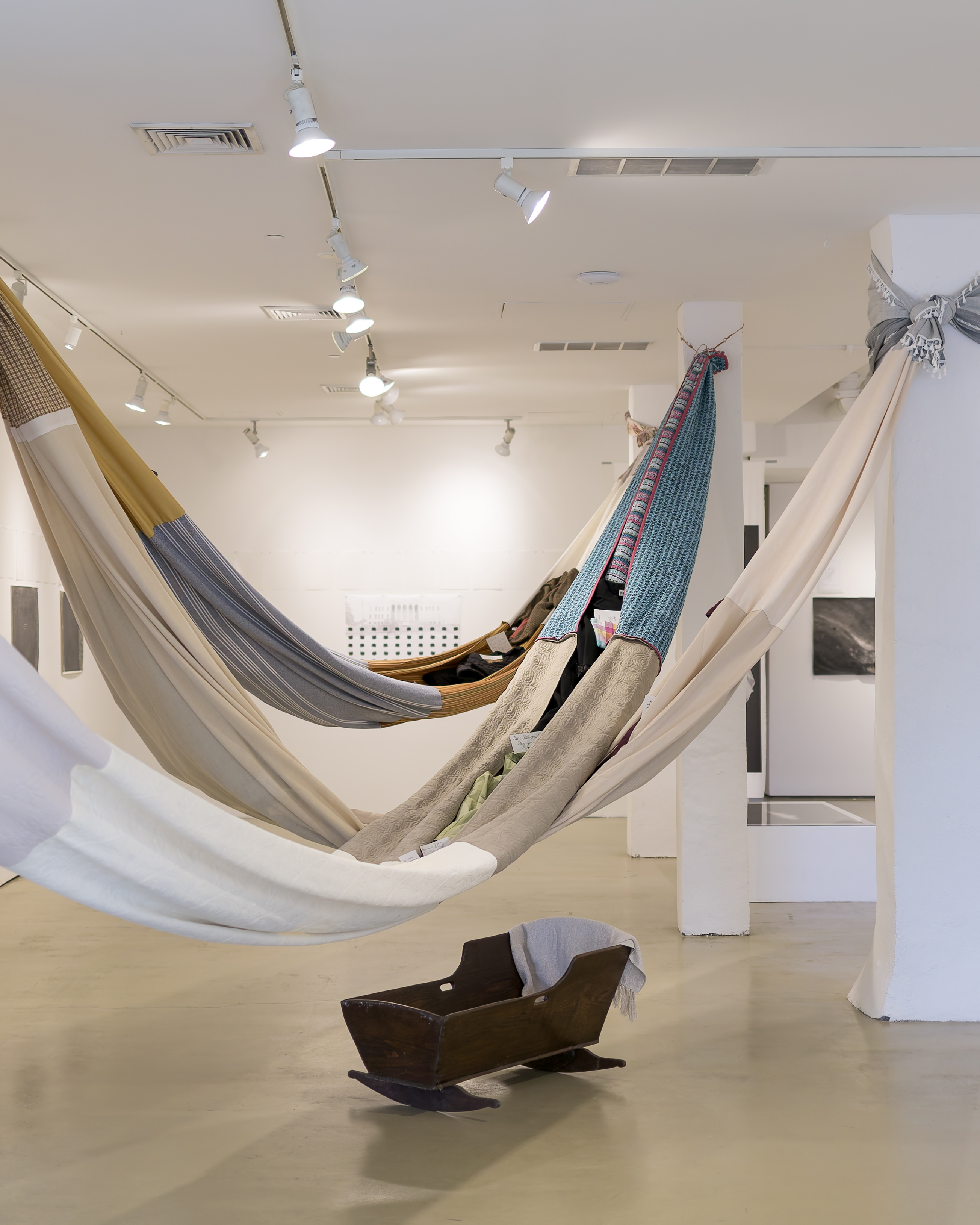
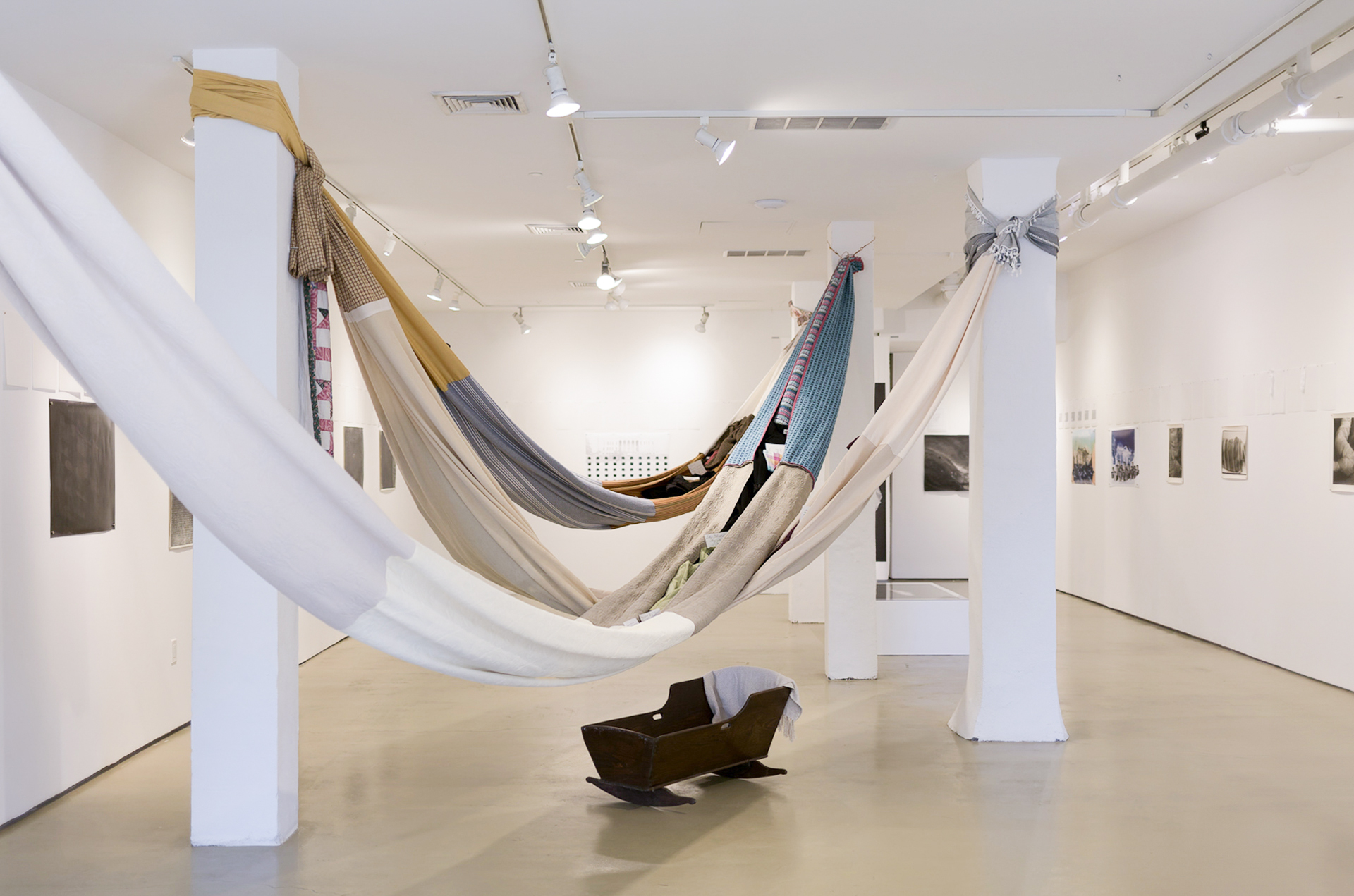
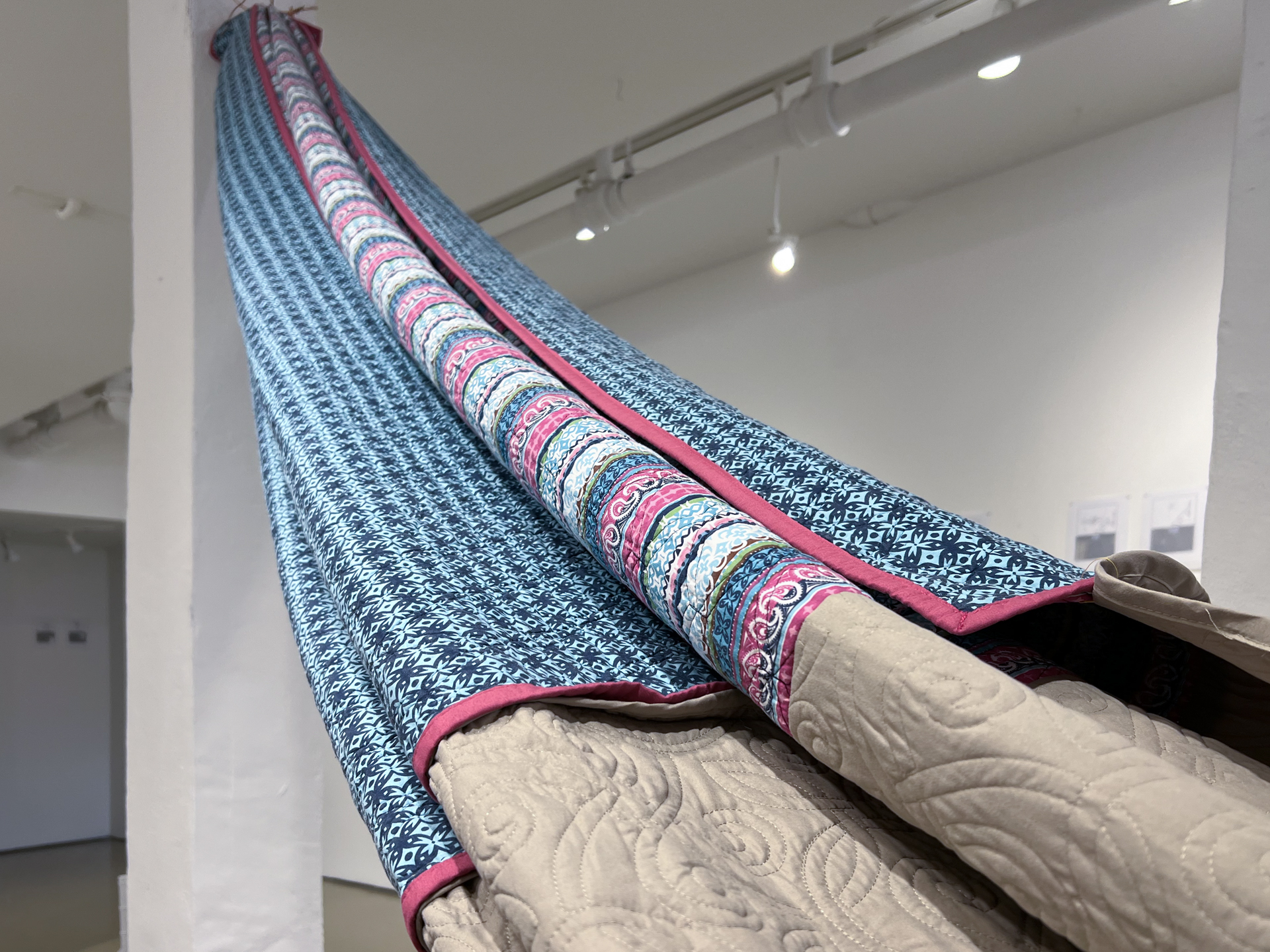
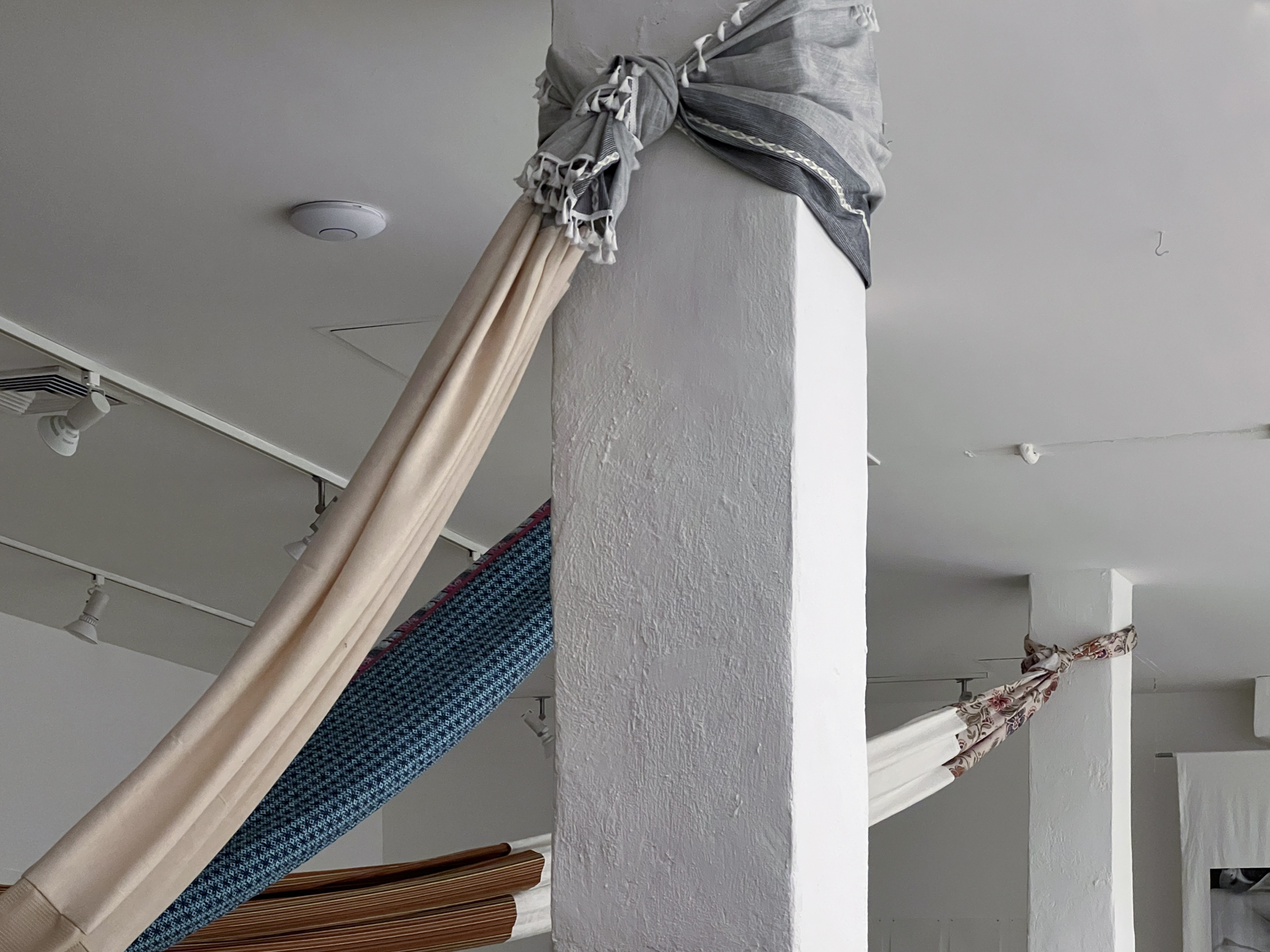
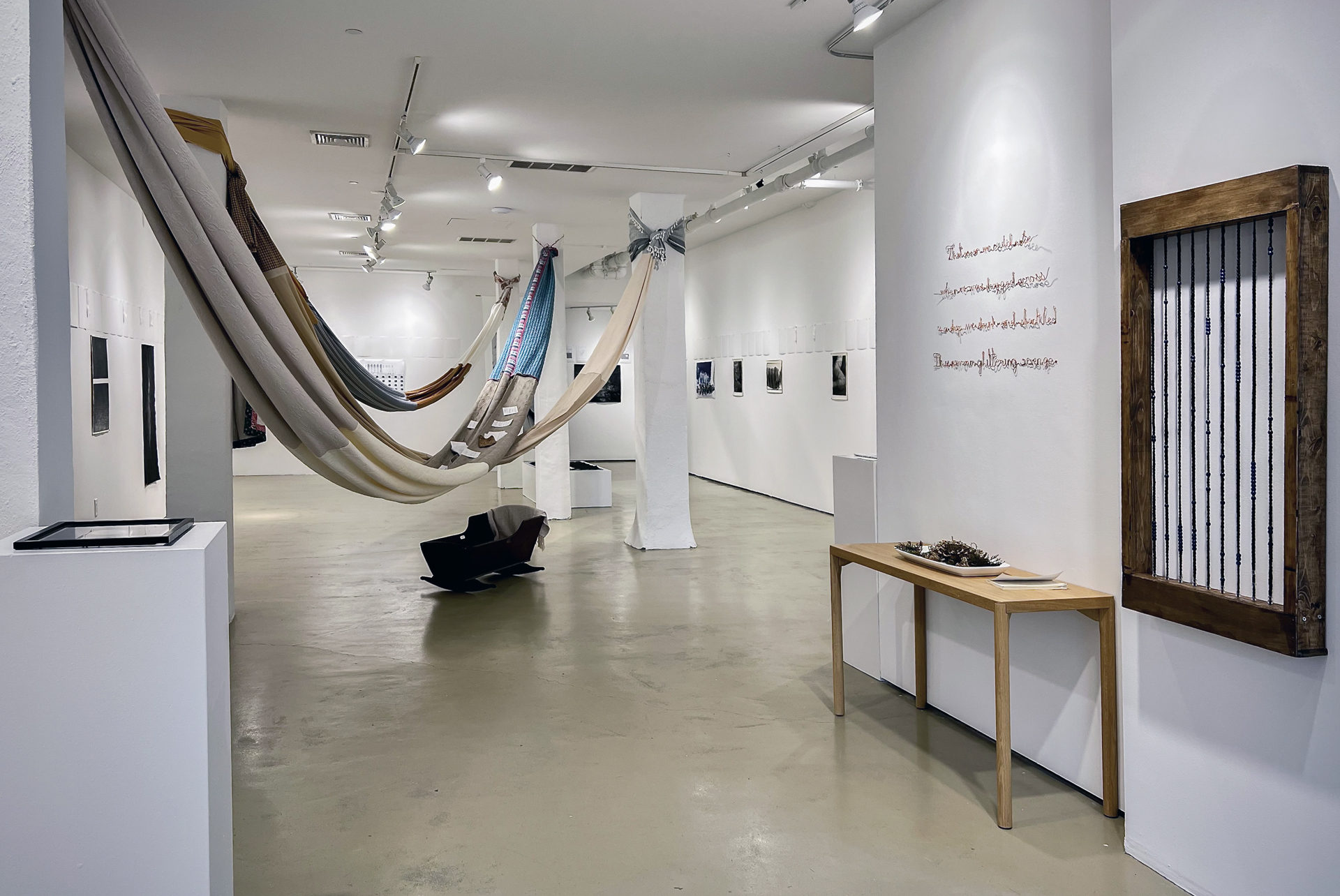
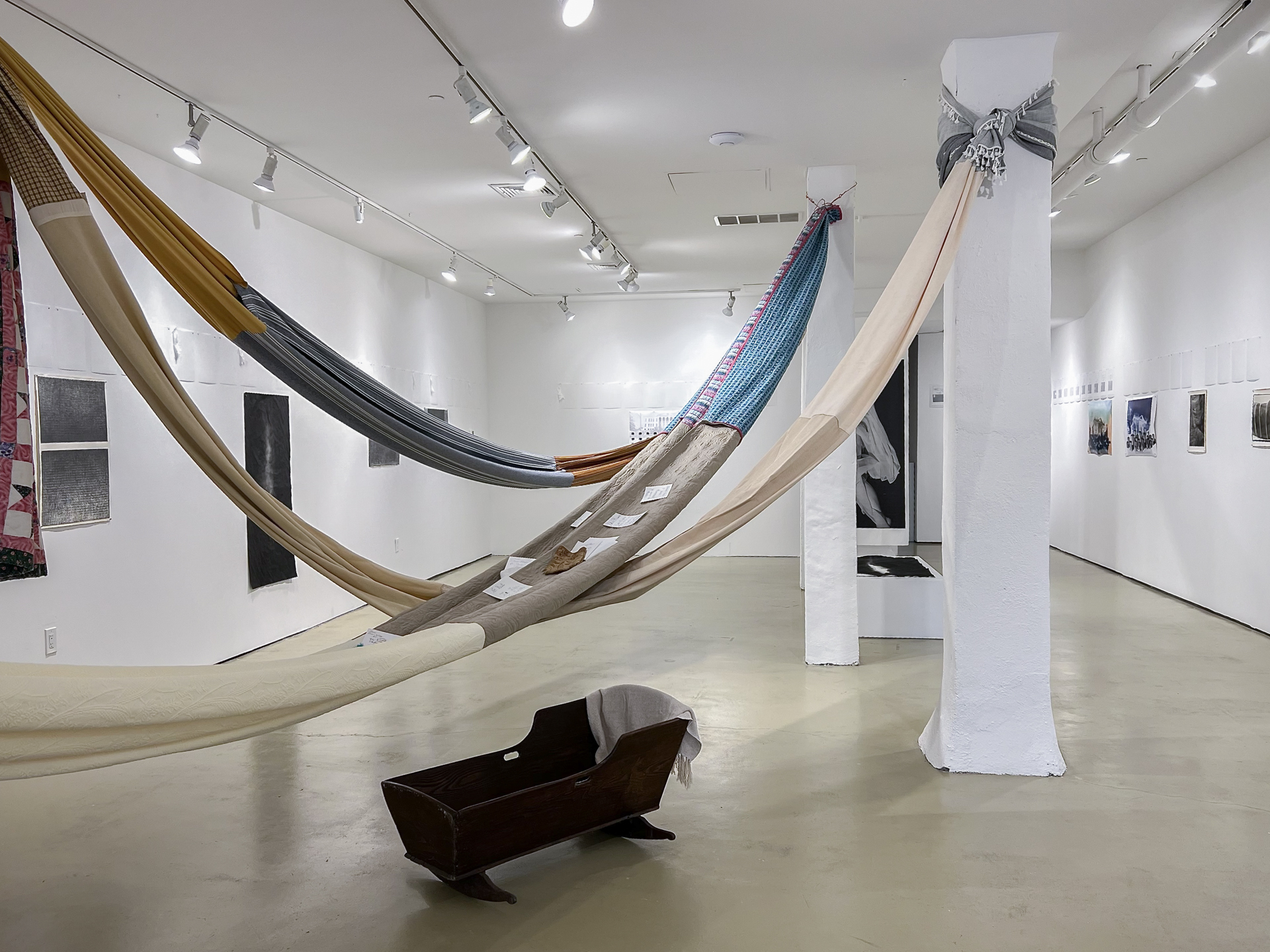
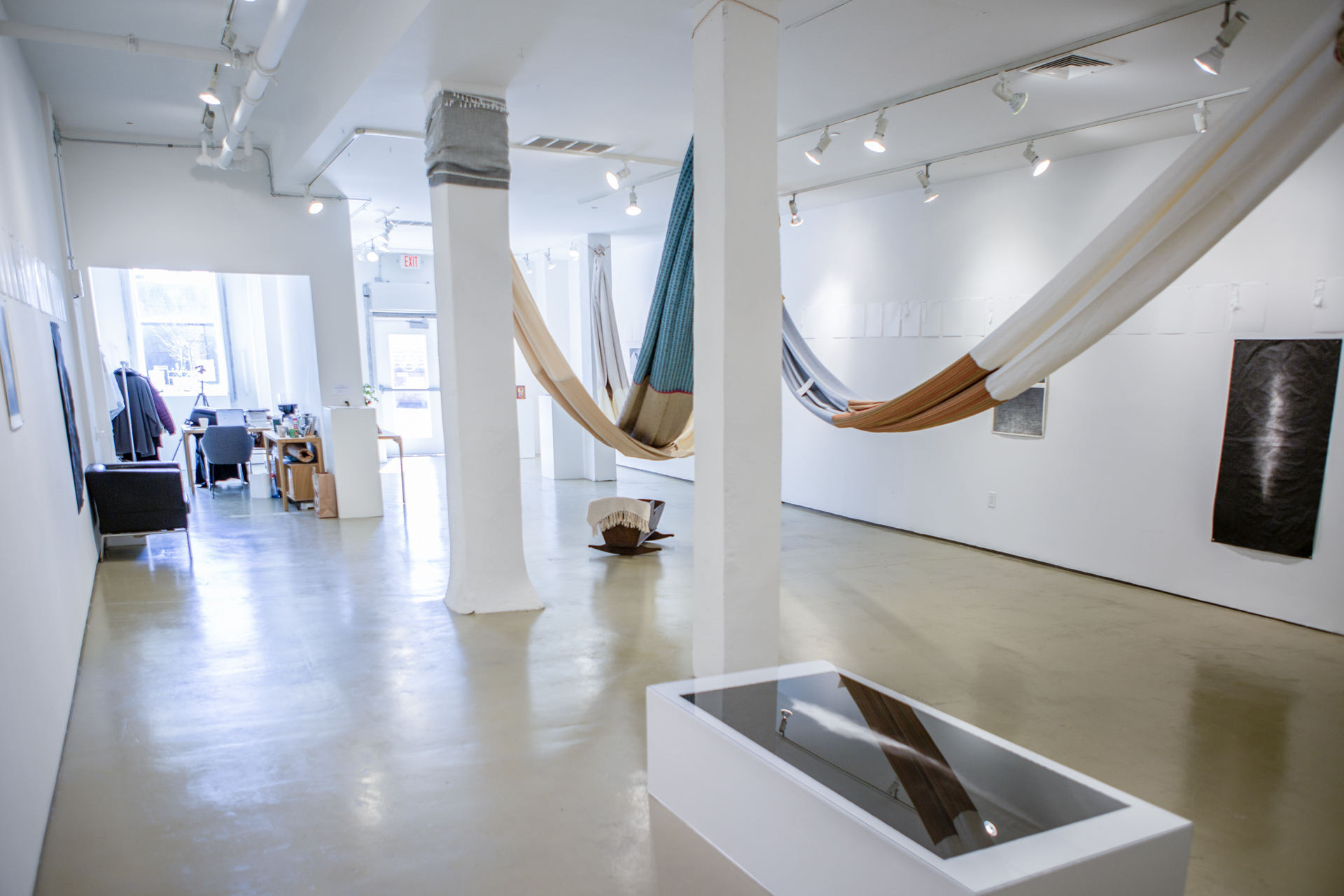
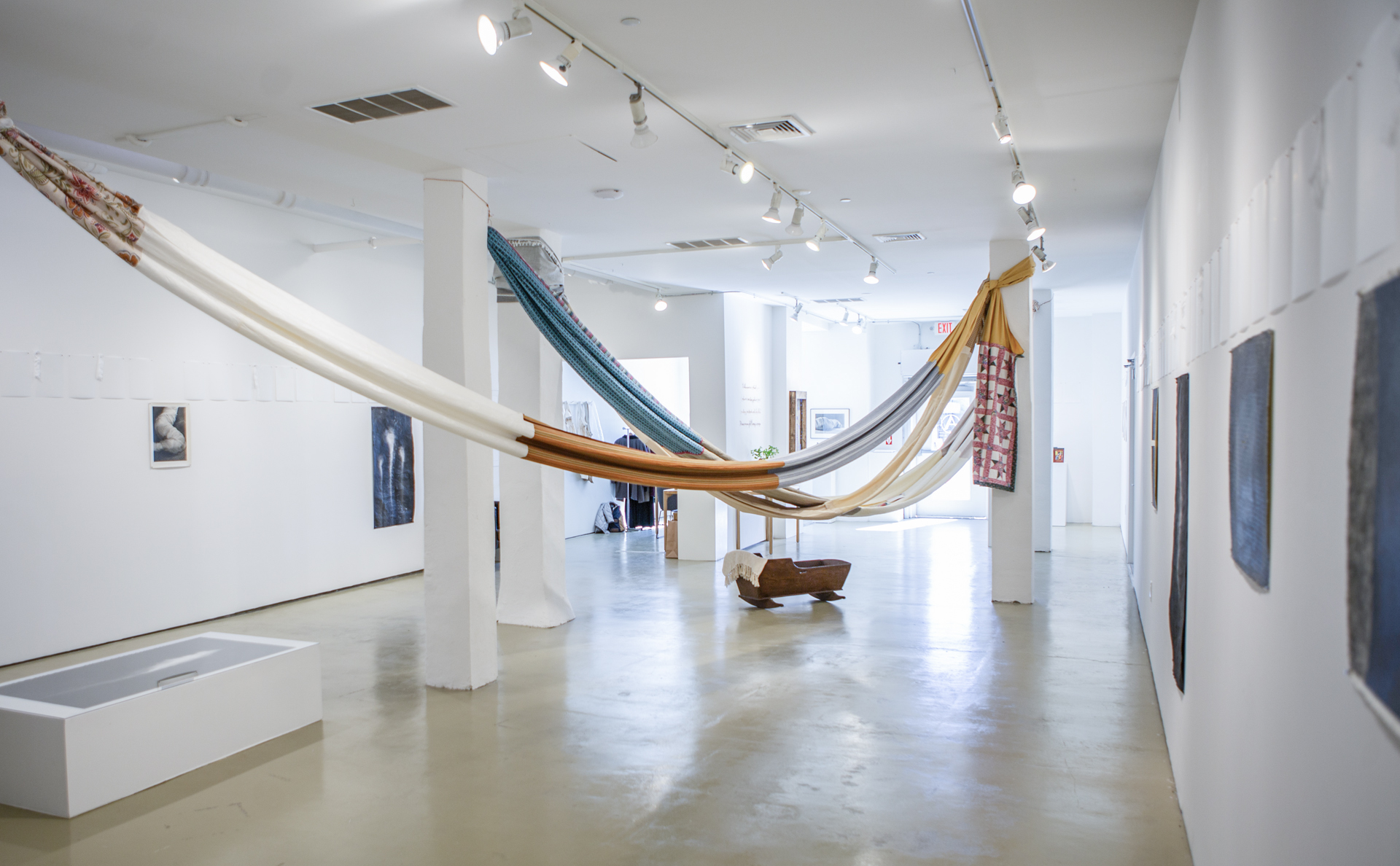
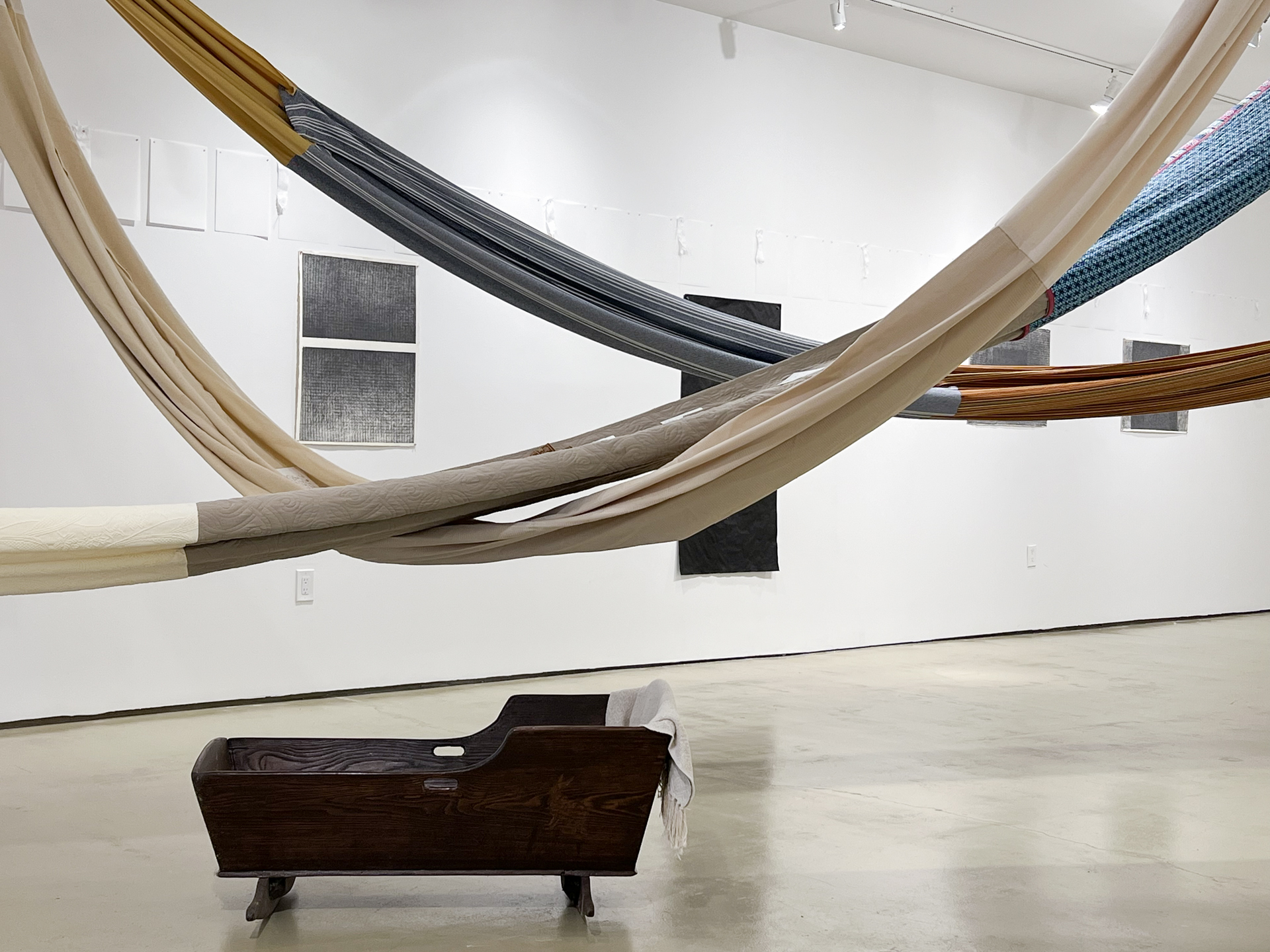
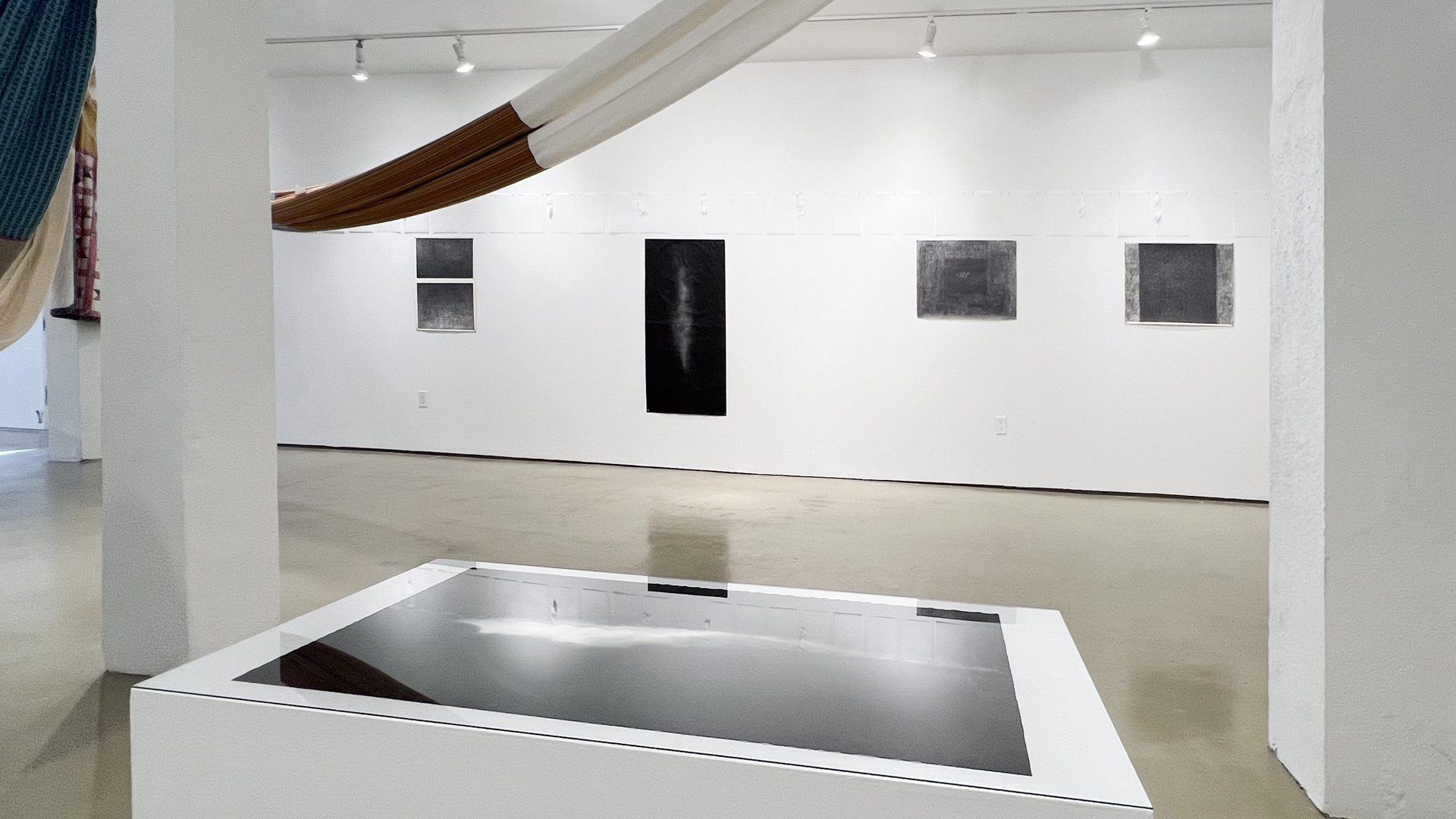
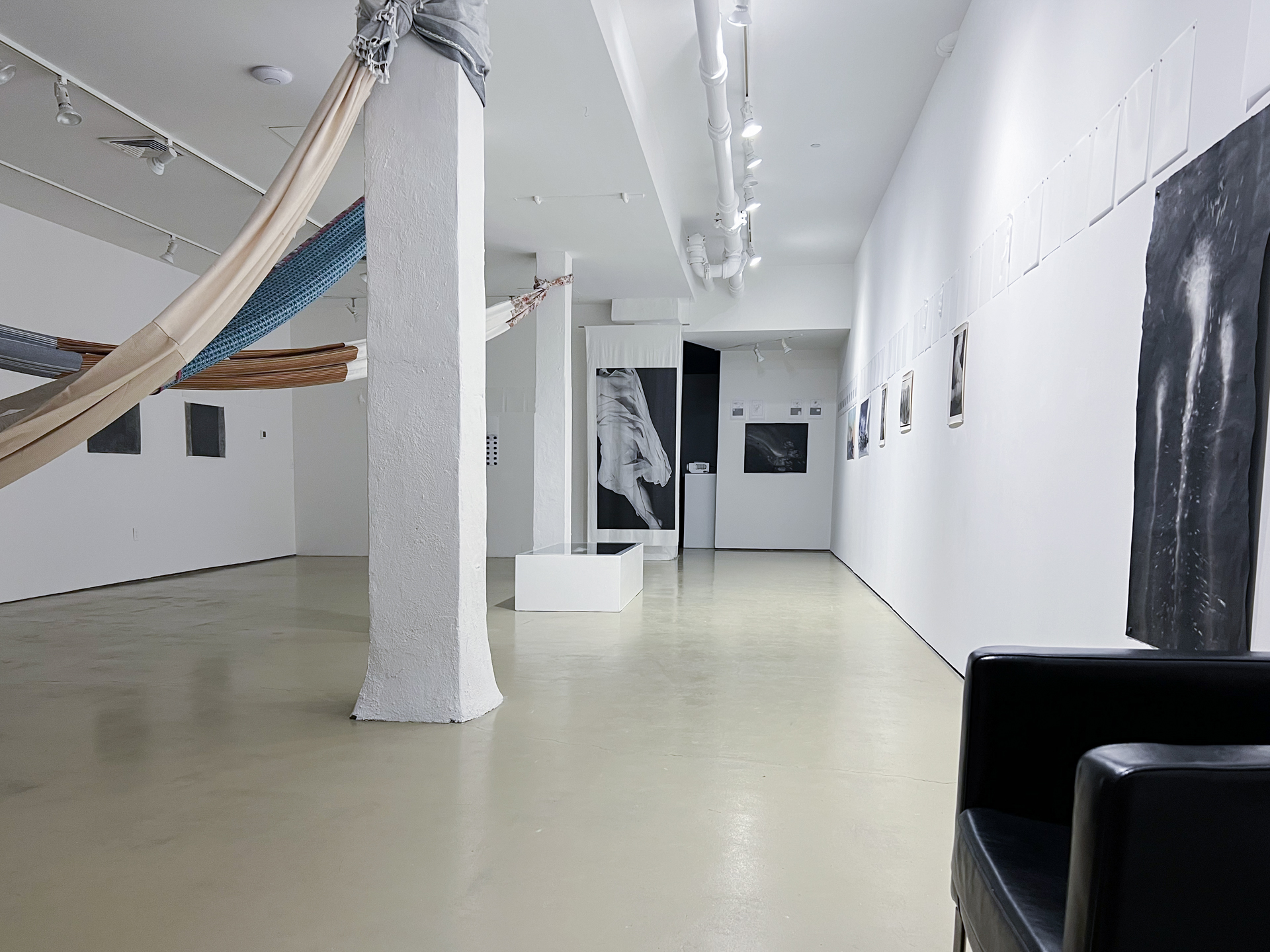
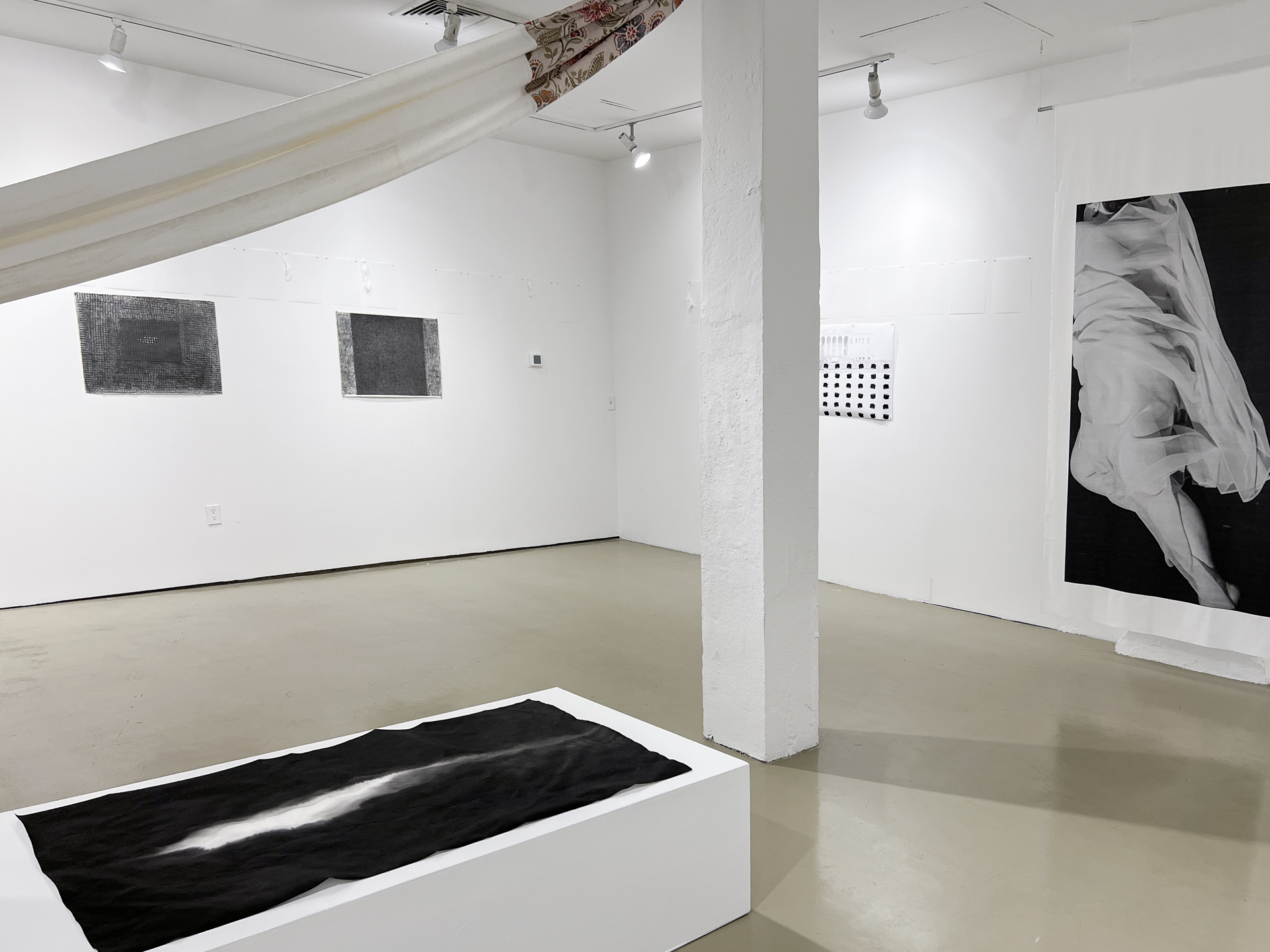
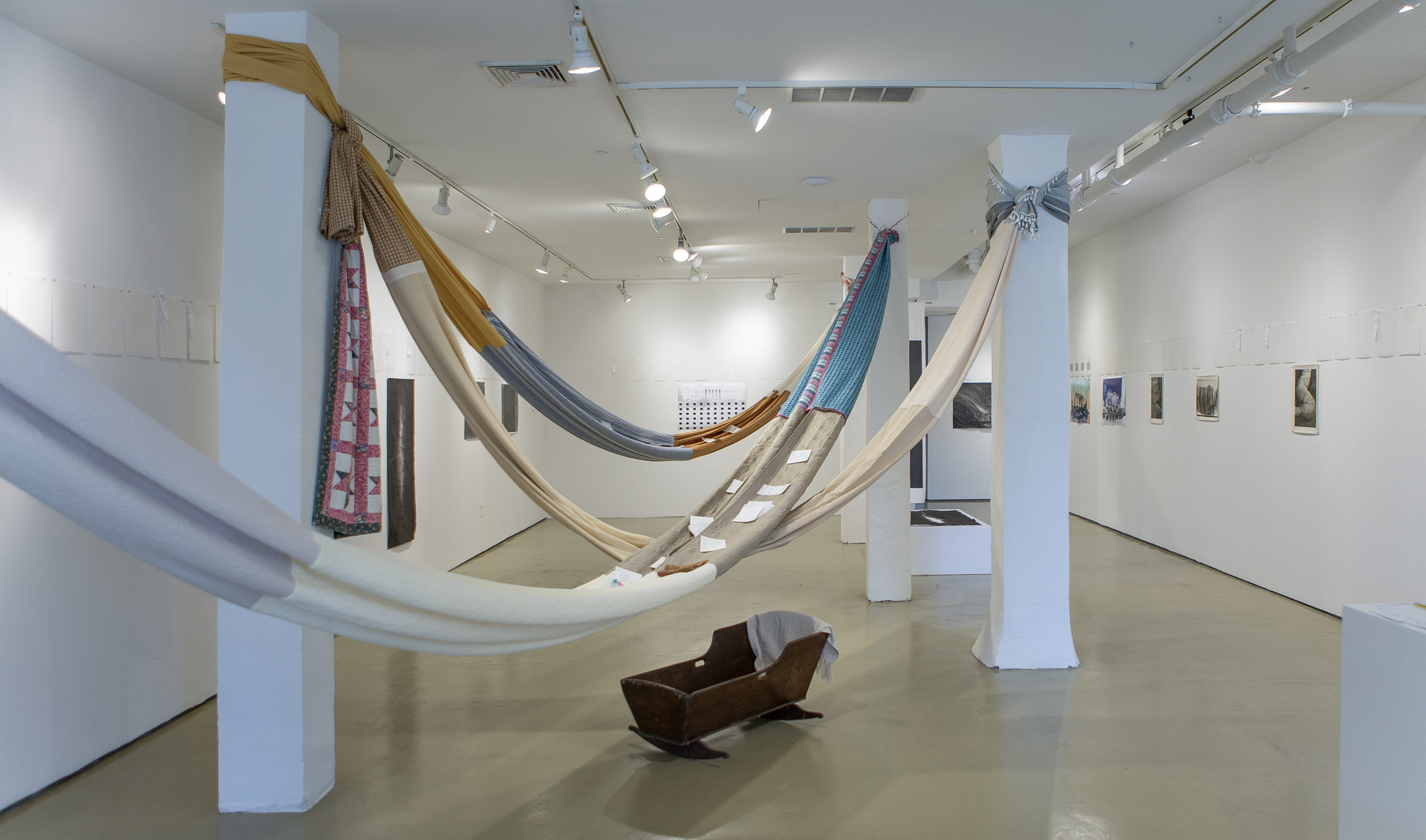
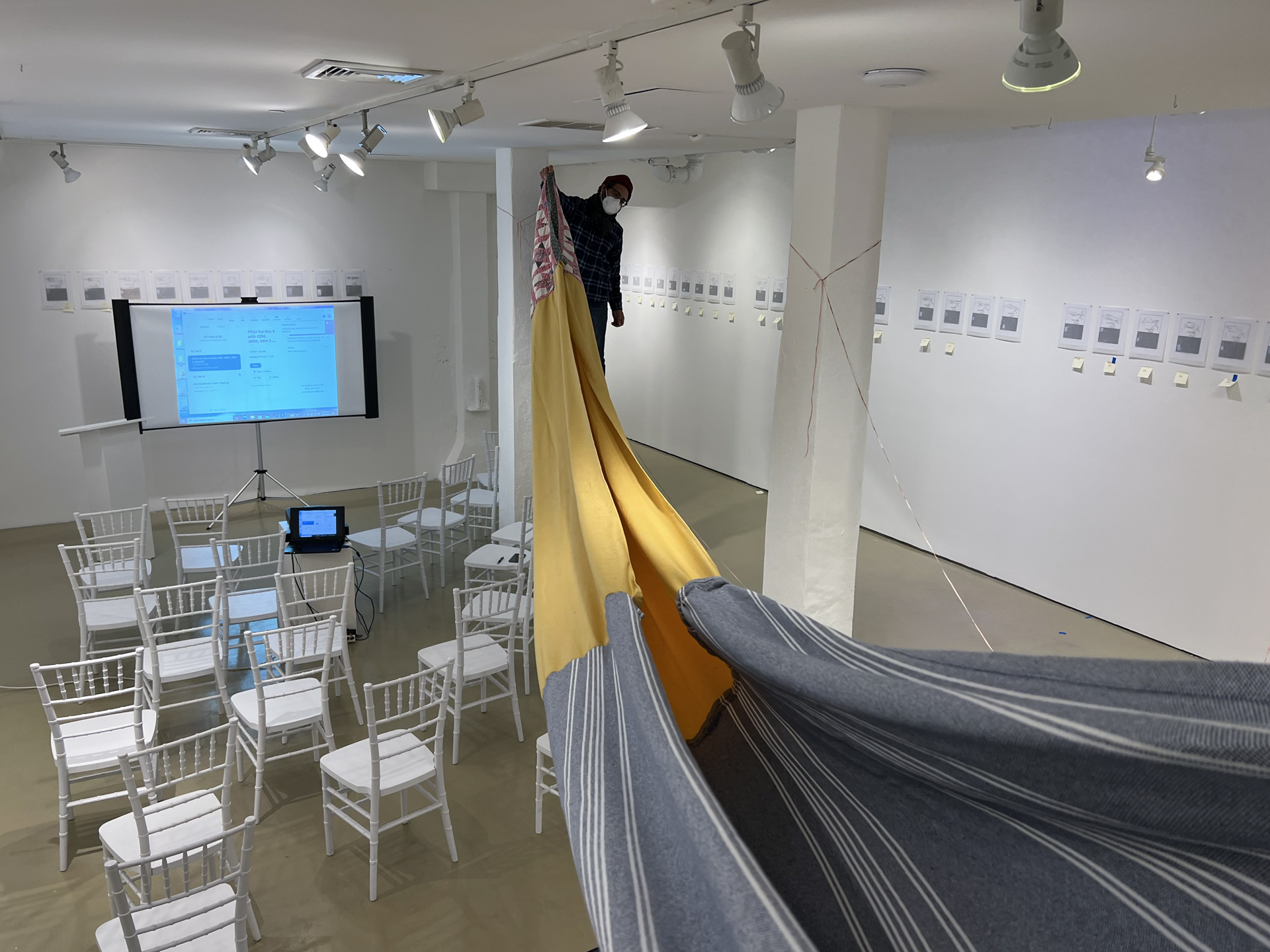
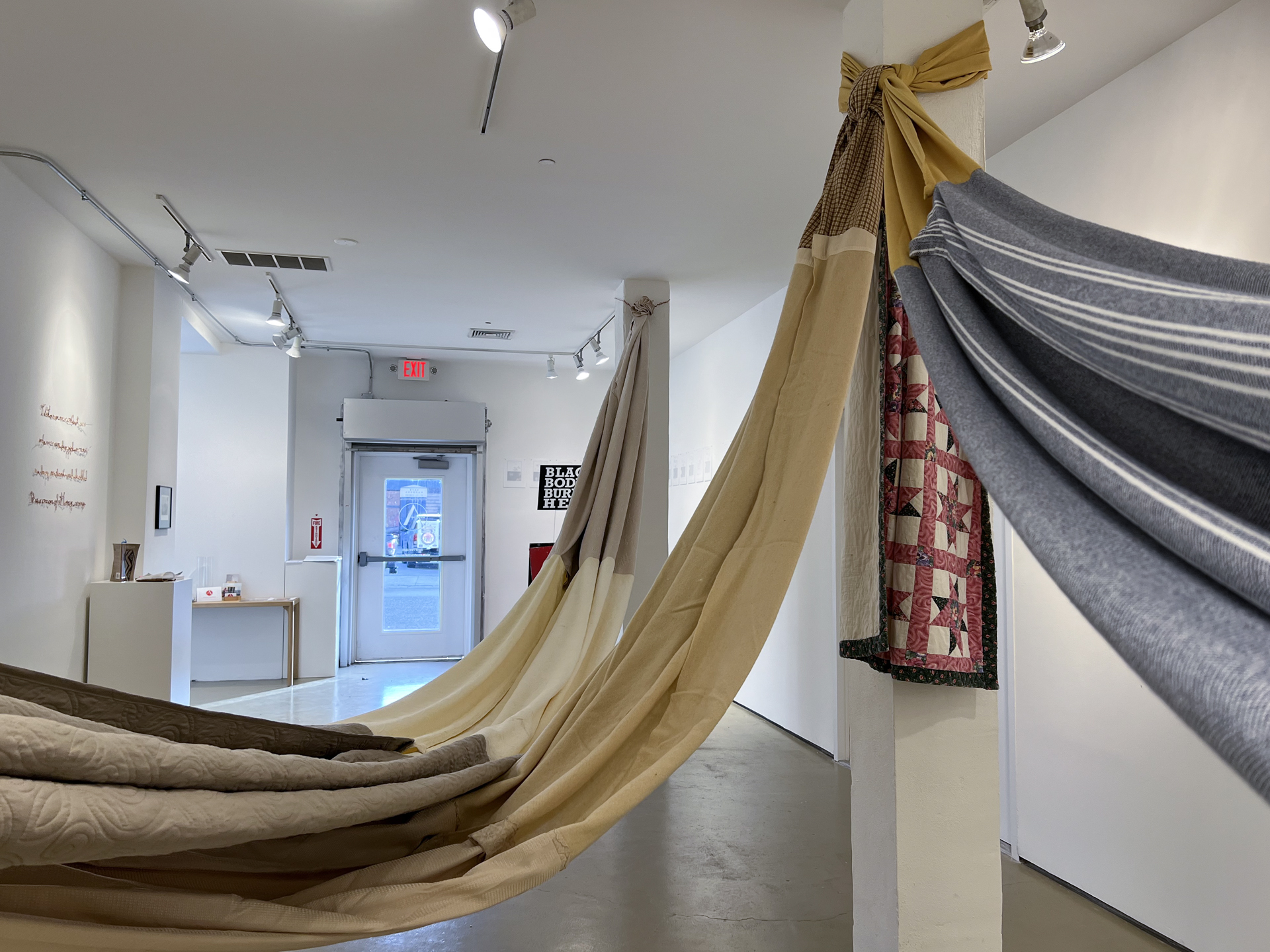
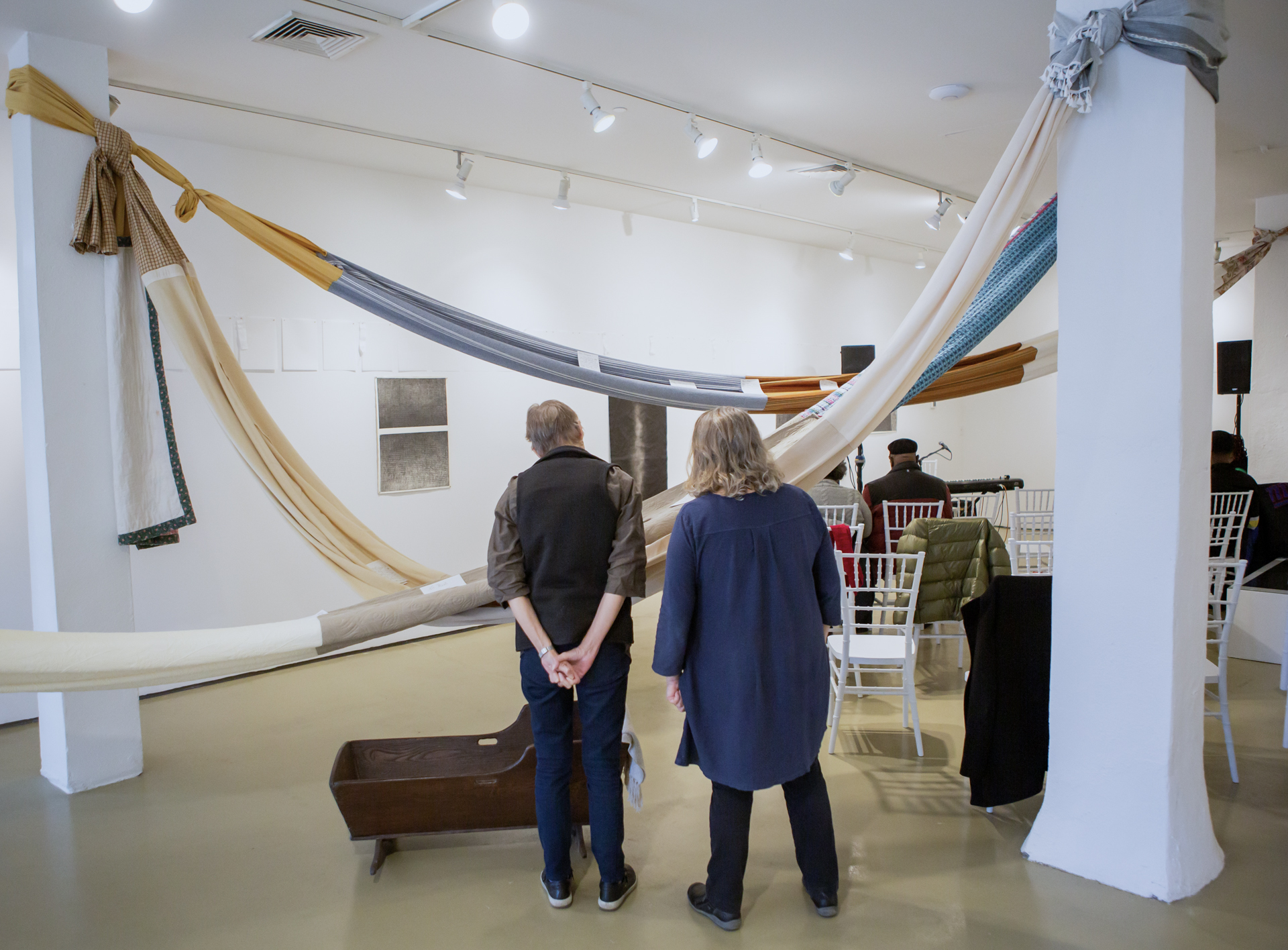
From the Ground UP activated the gallery with a series of events amidst an evolving installation by Ann Street Gallery Artist Researcher in Residence, Jean-Marc Superville Sovak. The project was dedicated to imagining and collectively creating memorials for honoring African-Americans buried in, and disinterred from, Newburgh’s “Colored Burial Ground”. The exhibition included a shifting presentation of archeological documentation and historical records, an installation inspired by burial shrouds and conjuring bundles, a growing display of community offerings and messages, and the exhibition of commissioned artworks by regional artists responding to Superville Sovak's research and speculation on the Burial Ground.
The exhibition was curated by Superville Sovak and Gallery Director Alison McNulty and included works by Lillian Alberti, Michelle Corporan, Stevenson Estime, Donna Francis, Shani Richards, and Edwin Torres. Also on display was a collection of books from A Little Light Bookstore and Educational Center for Culture, History, and Freedom by Que Bey-Ali. Our Open Reading Room & Media Space featured documentation of From the Ground UP lectures and performances as well as a Curated Reading List of Superville-Sovak’s residency project research materials within our library of curated resources from previous exhibitions.
The image gallery to the right corresponds to the Exhibition Checklist.
All From the Ground UP programming was free and open to the public.
From the Ground UP is made possible with support from:













Jean-Marc Superville Sovak
From the Ground UP was a convergence of local community stakeholders and artists led by Ann Street Gallery’s first Artist Researcher in Residence, Jean-Marc Superville Sovak.
The project brought Superville Sovak’s creative research and practice together with community members dedicated to imagining, rendering, and presenting collaboratively-designed visions for remembering and honoring African- Americans buried in, and disinterred from, Newburgh’s “Colored Burial Ground” through conversation and the arts.
Superville Sovak’s project sought to engage histories that have been erased from dominant historical narratives, specifically Black lives during the period shortly after the gradual abolition of slavery in New York State (1827) and the Civil War, a period that coincides with the Newburgh “colored” cemetery’s usage.
The project asks: How can collectively inspired memorials truthfully function? How should the dead, once desecrated, now be honored? What were the lived experiences that intersected with the segregated cemetery? What is the reparative capacity of art? How can the arts and spaces designed for the exhibition of art facilitate community conversation, healing, imagining, and creativity? From the Ground UP is conceived as an open-source feedback loop to display a diversity of ideas and creative forms of what publicly-inspired and collaboratively-designed memorials could look like, including stories, offerings, speculative proposals, performances, readings, discussions, and more.
Jean-Marc Superville Sovak is a multidisciplinary artist and teaching professional whose work represents silent histories of multi-racial identities that make up the DNA of this country as well his own. His “a- Historical Landscapes” involve altering original 19th-century landscape engravings to include images from Anti-Slavery publications. His public artwork includes organizing a “Burial for White Supremacy”, retracing steps on the Underground Railroad at Hudson Valley historic sites, monuments to Afro-Dutch pioneers in Rockland County, and a memorial to the earliest Africans to arrive in Rhode Island. A graduate of Bard College (M.F.A. Film/Video), Jean-Marc is the 2023 recipient of Art Mid-Hudson’s Empowering Artist Award and an Individual Artist Commission. Jean-Marc’s art has been exhibited at RecessArt, Brooklyn, the Aldrich Contemporary Art Museum, Arts Westchester, Socrates Sculpture Park, and the Katonah Museum of Art. Jean-Marc has been a guest curator at the Dorsky Museum and has been Visiting Artist at Bard College, SUNY New Paltz, Columbia University and Vassar College.
http://www.supervillesovak.com
@supersovak
@FTGU2024











Lillian Alberti
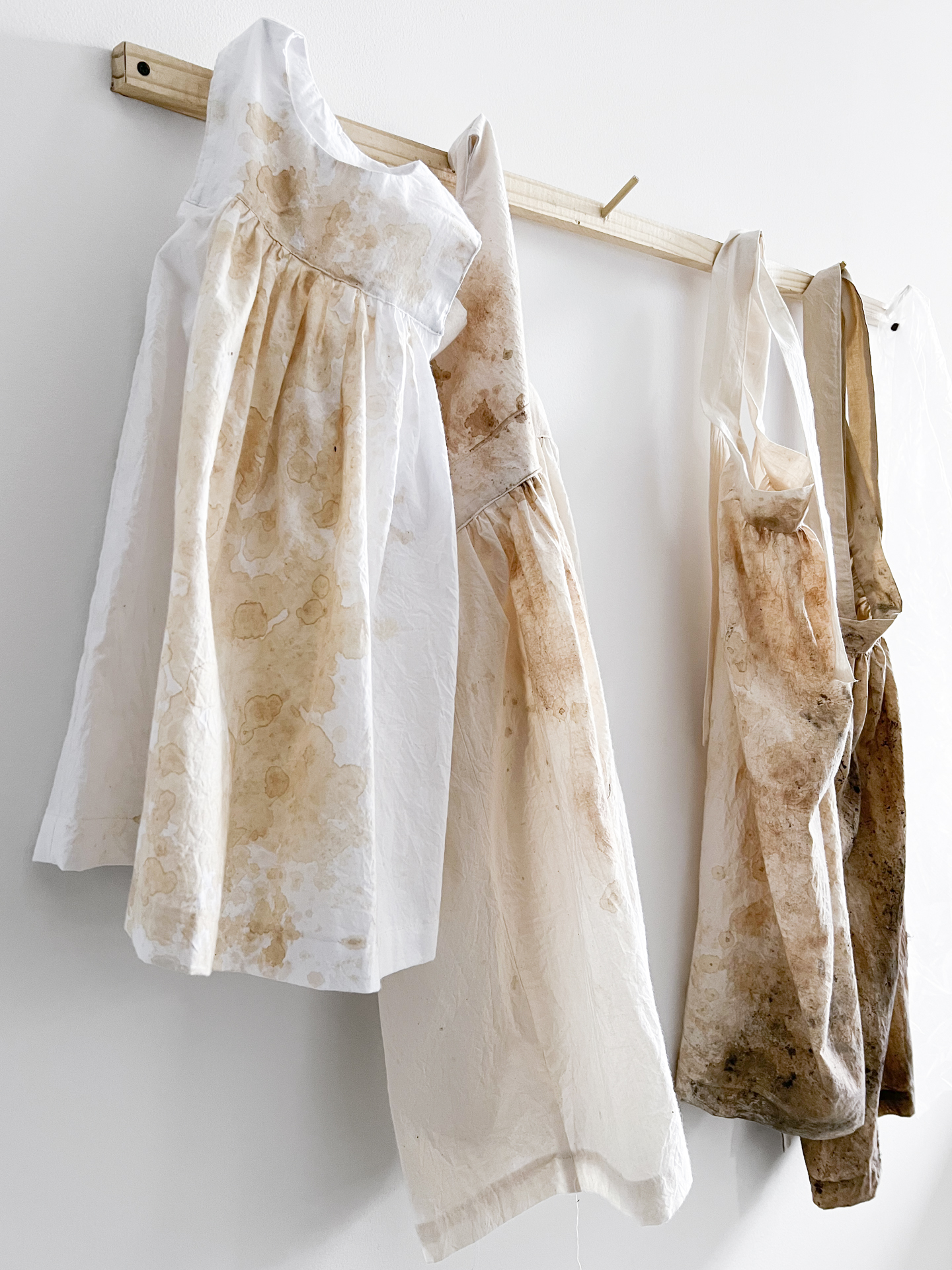
From this brief entry in the Alms House Examiner’s log book, I imagined Margaret Johnston was an obscure indentured woman whose voice was never heard. I depicted her life as I imagined it through an article of clothing imposed upon her, beginning in childhood.
The smaller white pinafore represents Margaret’s innocence; displaying evidence of small tasks she performs as a child in a household where I imagine her indentured.
The second pinafore is soiled with more responsibilities, as Margaret grapples with the reality that she labors while the other household children are free to play.
The first apron from the left exhibits how, as a young woman, Margaret carries the shame, burden, and hardship of her daily life.
The second apron, torn and deeply stained, reveals the life Margaret endured, accepting the fact that old age offers her no comfort.
The diaphanous fabric symbolizes the eternal peace and rest that comes in death: she is free at last.
Each stain, each rip, was strategically placed and layered onto the apron to indicate specific and difficult tasks that Margaret may have struggled with on any particular day. Each mark was indelible, not just on the surface of the garments, but, deeply, as I imagined them, into the fabric of her life.
Years ago, as a fashion student at Parsons School of Design in New York City, I happened upon an “Art” doll displayed in Tiffany’s storefront window. That chance discovery instantly drew me to the art of doll making, and I've been creating one-of-a-kind Art dolls ever since.
Throughout my years at Parsons and while working in the fashion industry, I taught myself the art of doll making, working mainly with Cellu-Clay papier-mâché. I left the industry after fifteen years to be a stay-at-home mom and while at home, I immersed myself in my craft. I created whimsical figures with coarsely-textured faces and large heads. Using tricks of the fashion trade, I designed and made their costumes, even knitting sweaters and creating shoes with real laces! My intention has never been to imitate realism, but rather to add a whimsical touch to the beauty that is often found in imperfection.
In recent years, experimenting with heavy gauge wire has taught me that a well- proportioned armature is crucial to creating a successful doll. I explored the new contemporary paper clays available today and worked on developing more expressive hands. Now my dolls, while no less exaggerated in detail, have evolved dramatically: smoother surfaces, enlarged feet and delicate hands. I now favor rich fabrics and enjoy an opulent look.
After years of refining my craft, I was inducted as a juried member of the Original Doll Artist Council of America. The excitement in reinventing myself, the thrill in creating, and the joy of teaching doll-making workshops across the country has made my doll-making journey more fulfilling than ever!
https://www.a-lil-whimsy.com/
https://cottagehill.wordpress.com/

Entry from Newburgh Alms-House Commissioners’ “Examination” Log, Examiner’s Findings 1853 to 1858:
July 13 1856 Entry for Margaret Johnston
(Colored) [Born 1786]
Born in Orange Co aged
70 yrs has been intemperate for many years
She has resided in New Windsor until
about 1.5 yrs she has worked D Stewart in
this town made application for burial
relief granted
Margaret Johnston (Colored)
Michelle Corporan
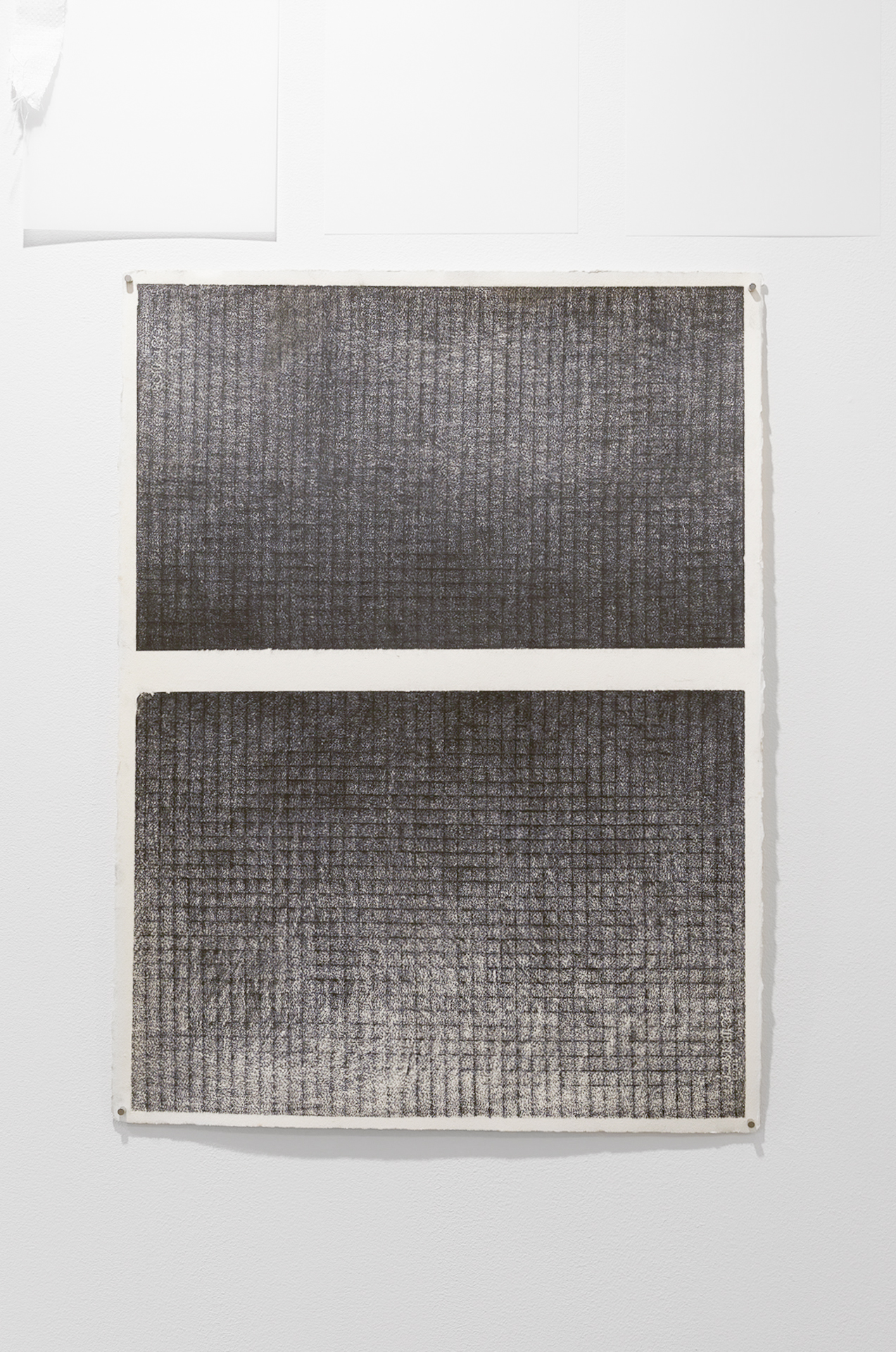
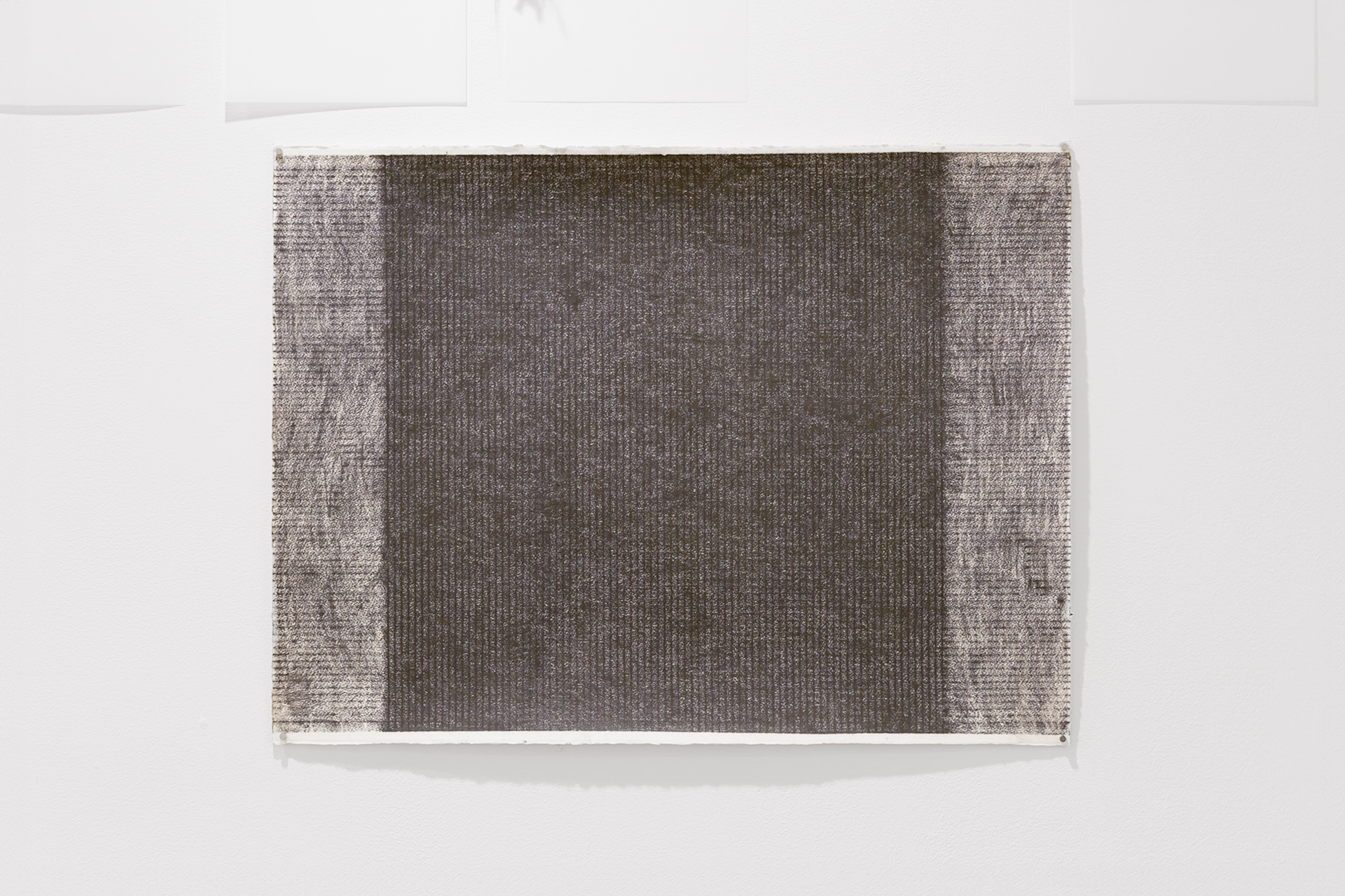
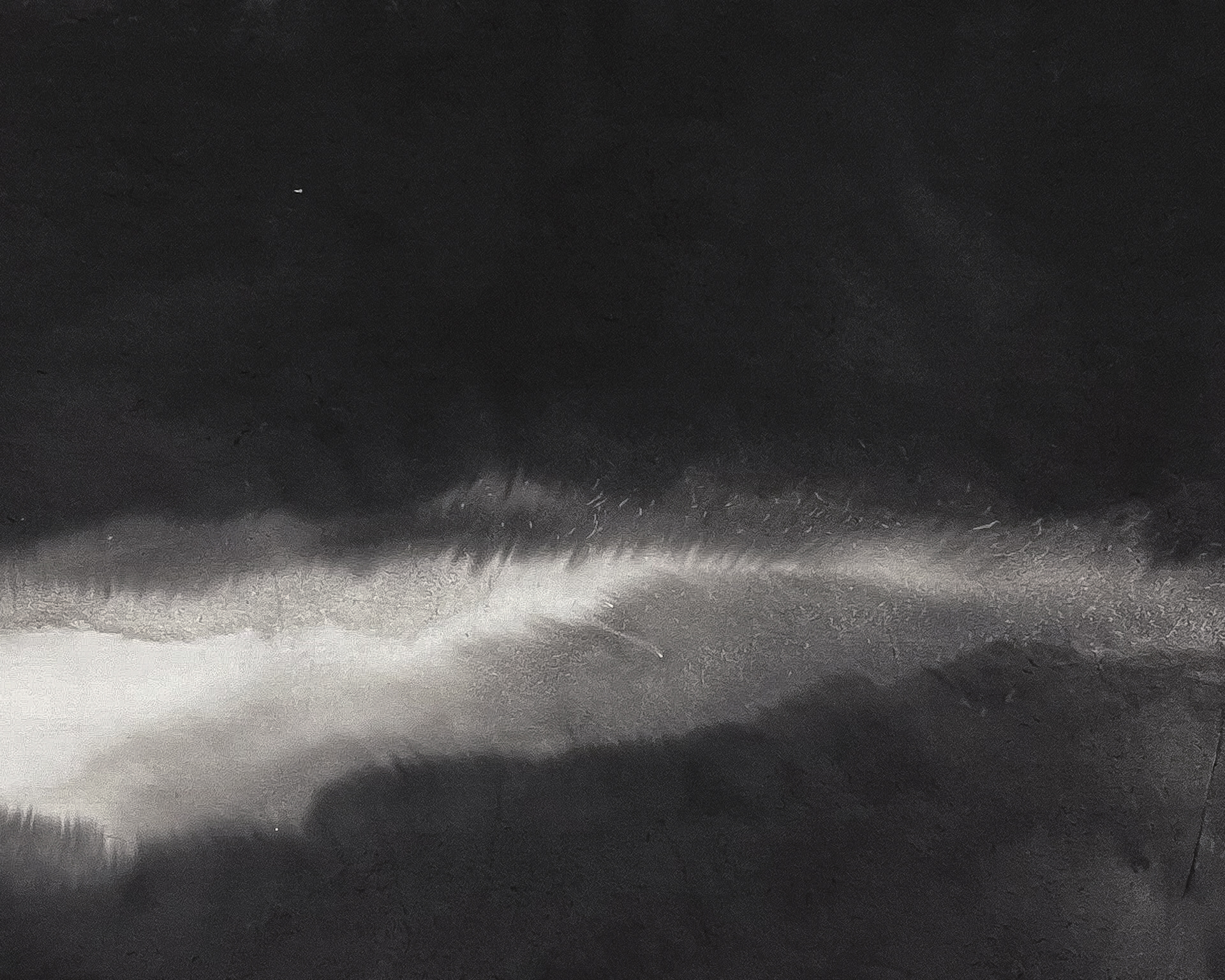
Amorphous shapes were conjured from the site. I allowed the energies to channel through me and I transferred them onto paper through my brush. I envisioned energetic fields of shapes circulating and moving hidden within the darkness and cracks of light around the site.
From the ground up, through the cracks there was light, they were found, exhumed, and set free, at last. This is what I am depicting in this work, this is what I conjured and channeled from the site.
Michelle Corporan (b. 1984, Dominican Republic) is an artist based in New York. Her artistic exploration revolves around the interplay of dark and light through multimedia, works on paper, and moving visuals. Through an interdisciplinary practice, Michelle’s oeuvre Investigates self-representation, time, place, and infinity. Michelle primarily utilizes rice paper and dark Sumi-e painting techniques, highlighting negative space, as a way to deconstruct the human psyche from the dualities and perceptions of time and place.
Michelle pursued design at Parsons School of Design in 2010 and currently runs her creative agency, MCCreative. In 2016 she undertook five years of Sumi-e training with Koho Yamamoto in Soho, New York City. Michelle has resided in Newburgh for the past four years.
Michelle recently participated in the Ann Street Gallery Emerging Artist Fellowship and exhibited her project in fellowship exhibition, “Re:Manifest” (2023). She has performed at White Box Gallery, NYC (2017) and shown work at Space776 Gallery, Brooklyn (2017). In April 2023 Michelle did art website design, and communication design for “Koho Yamamoto’s 101 Springs” at The Leonovich Gallery, New York City. Michelle is actively expanding her artistic endeavors as she delves into various aspects of her practice, including film, moving visuals, audiovisuals, and landscapes.
https://michellelcorporan.com/
@mc.imgs


Stevenson Estime
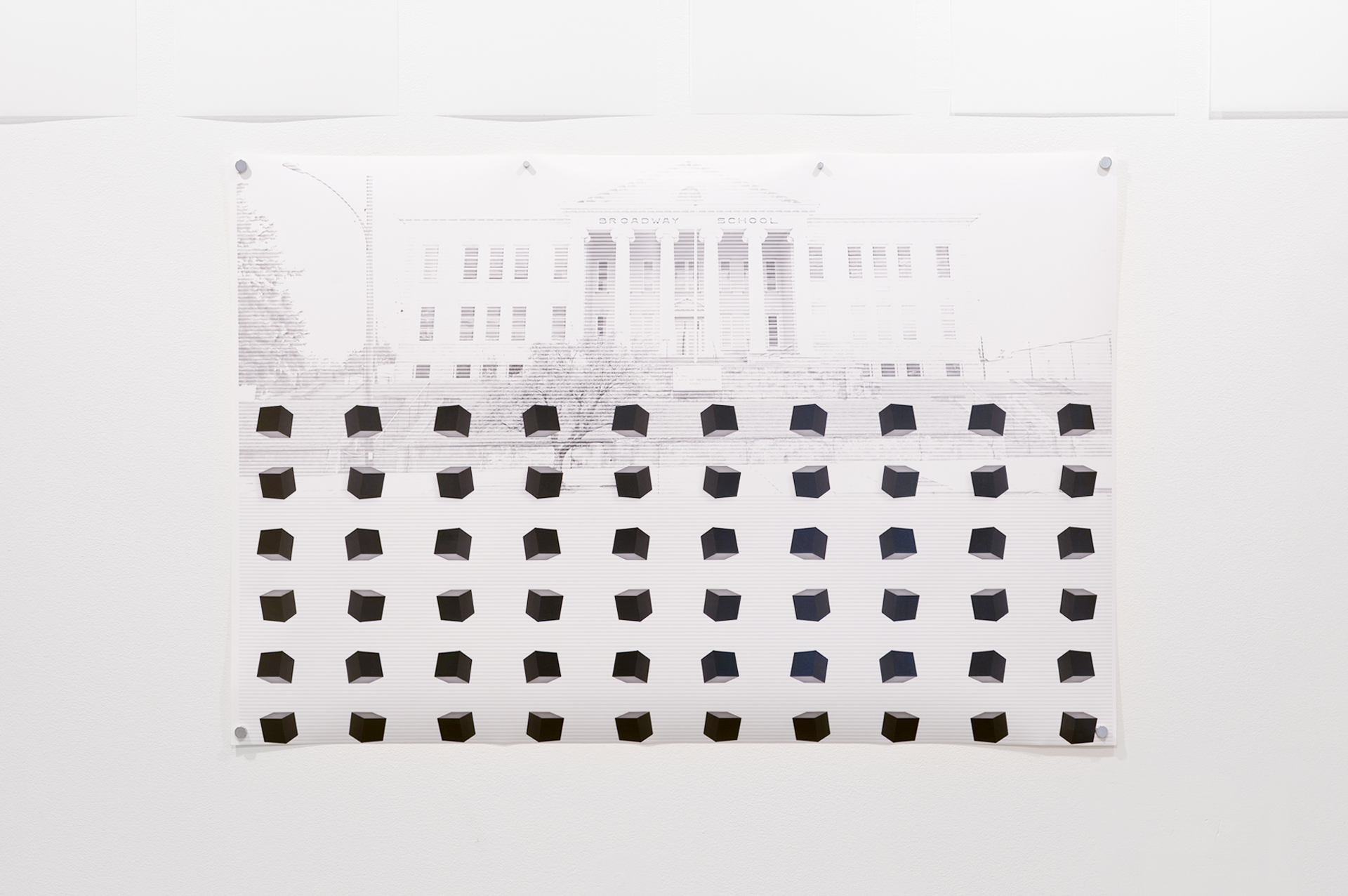
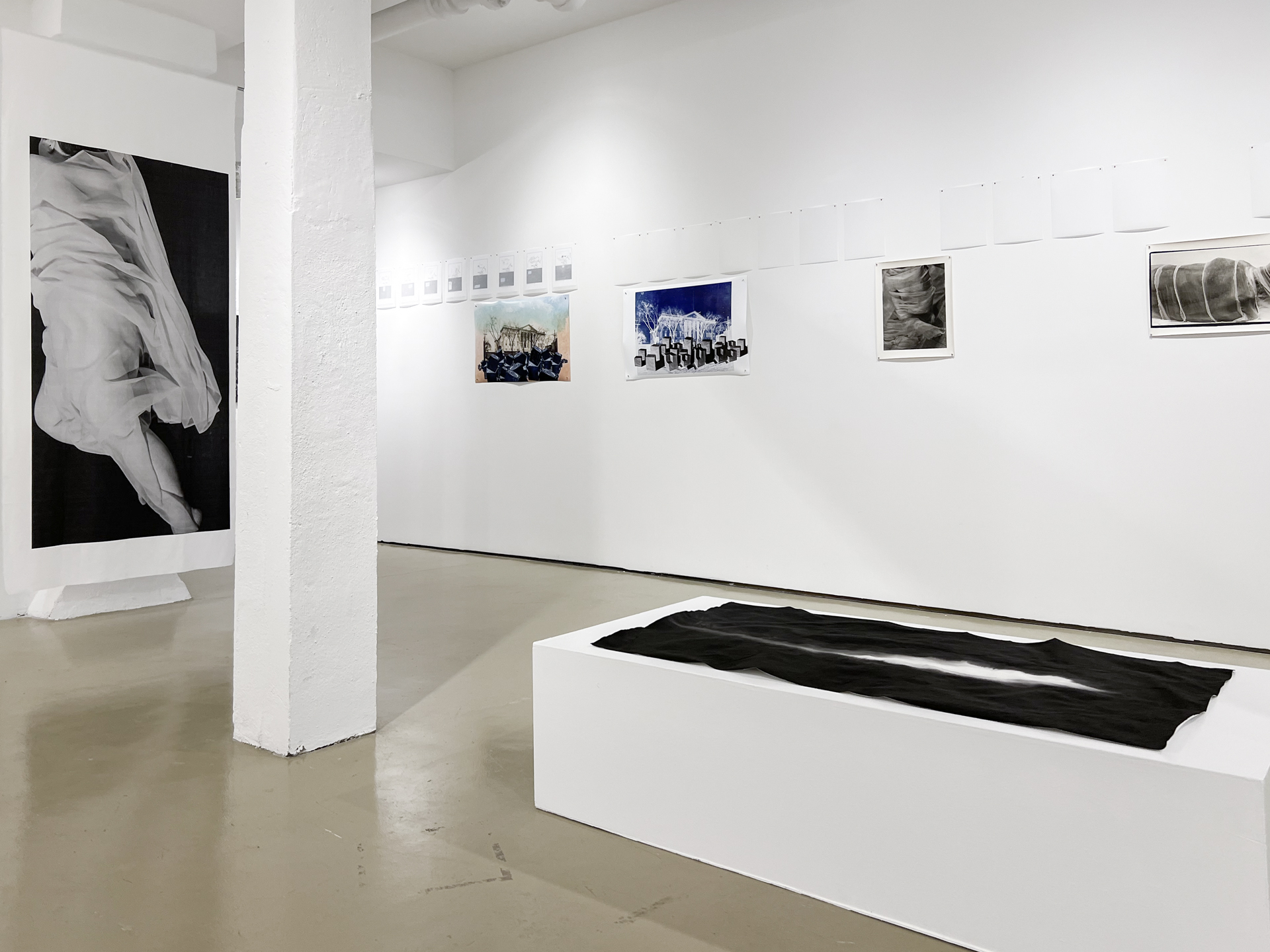
In response to the city of Newburgh's 2008 acknowledgment of the Newburgh "Colored" Burial Ground and recent research and attention to the site surfacing through the project, “From the Ground UP”, I created a series of images to memorialize and symbolically depict factual historical information. The cube-like forms and grids in this artwork reference the evidence of coffins uncovered under the Newburgh City Court House, which was previously the Broadway School, and before that, the Burial Ground.
The shapes and forms symbolically and literally represent the contributions of black bodies to America's development and foundation. The white majority rule, coupled with the threat of violence and lack of Black advocacy, facilitated propaganda to conceal, obfuscate, and wipe out the acknowledgment and contributions of Black Americans. These commissioned pieces help visualize historical Black accounts and the burial sites found underneath 300 Broadway in Newburgh, New York. It is never too late to acknowledge inaccuracies and correct injustices to show decency and respect.
I’m a collage artist and painter from New York. I sample content from a wide range of sources and employ a freewheeling cut and past aesthetic in my process. I enjoy design and composition, and source material is plentiful, the world is saturated with images -- I sample and juxtaposition those images to highlight dichotomies, similarities, and ironies I perceive. The previously mentioned helps me determine which images I choose to work with. I work with physical materials, paint supplies, and digitally to make a wide range of two-dimensional artwork inspired by history, popular culture, Hip-Hop, and identity.
http://stevensonestime.com/
@stevensonestime
Donna Francis
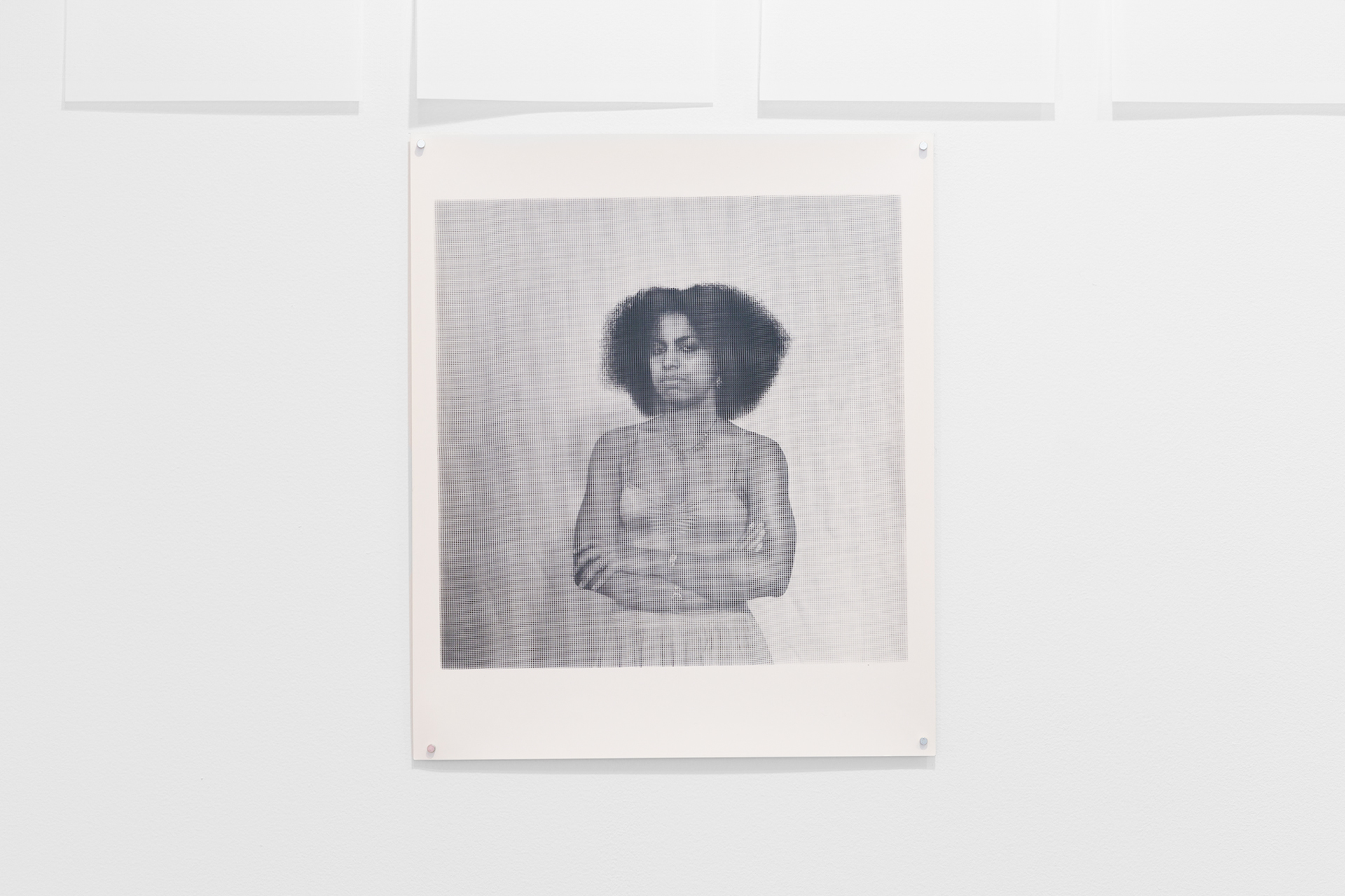
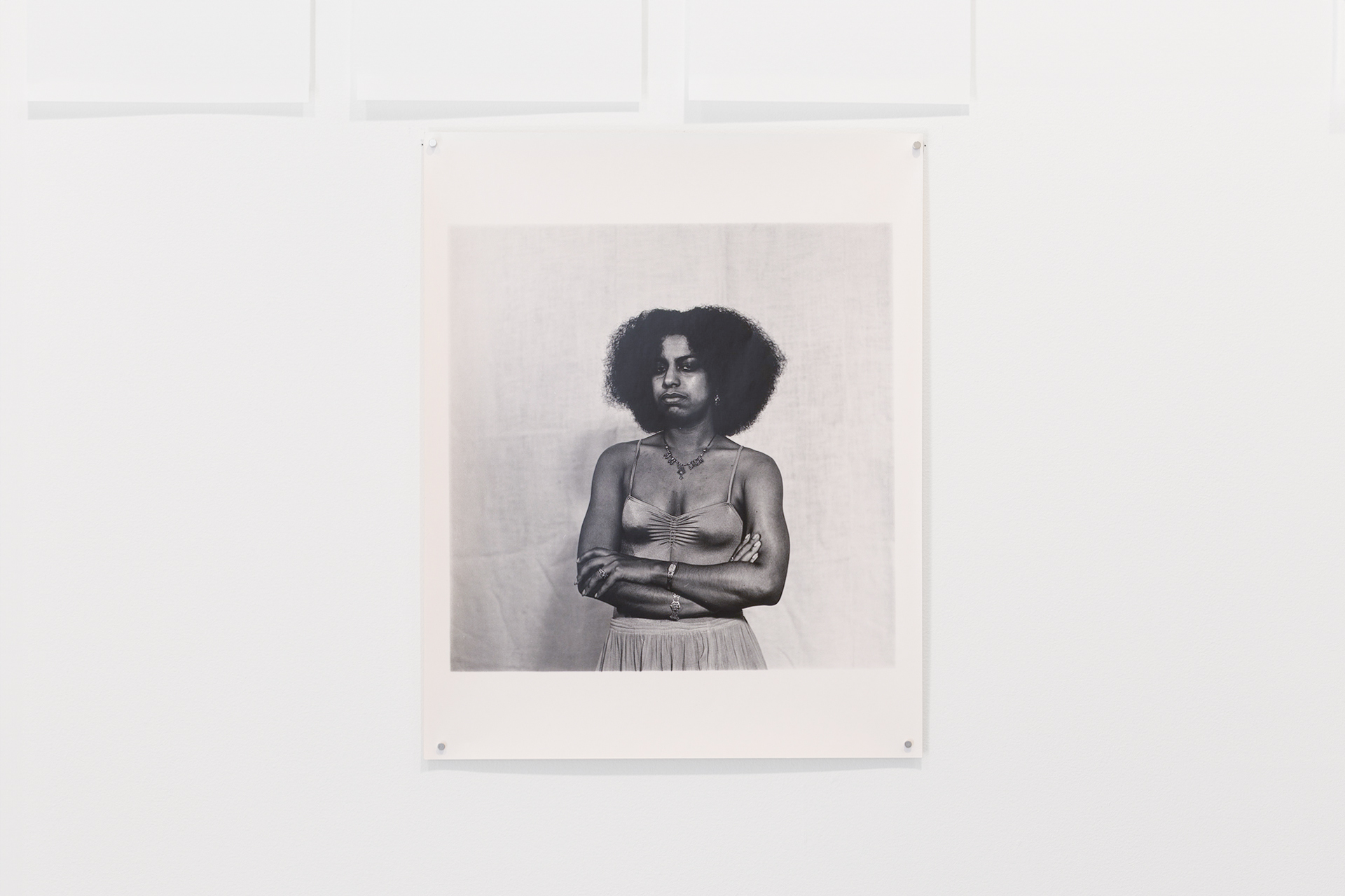
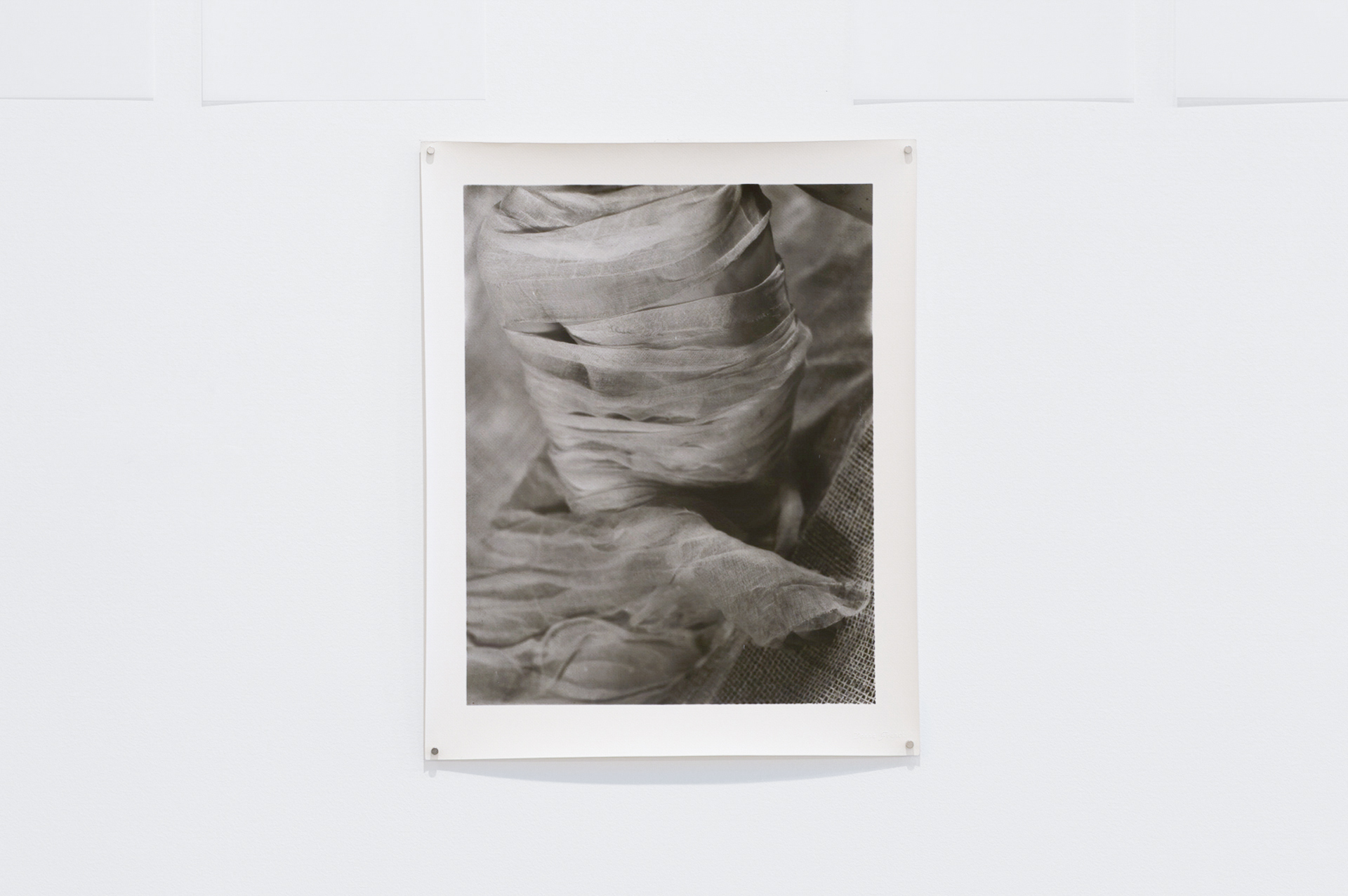
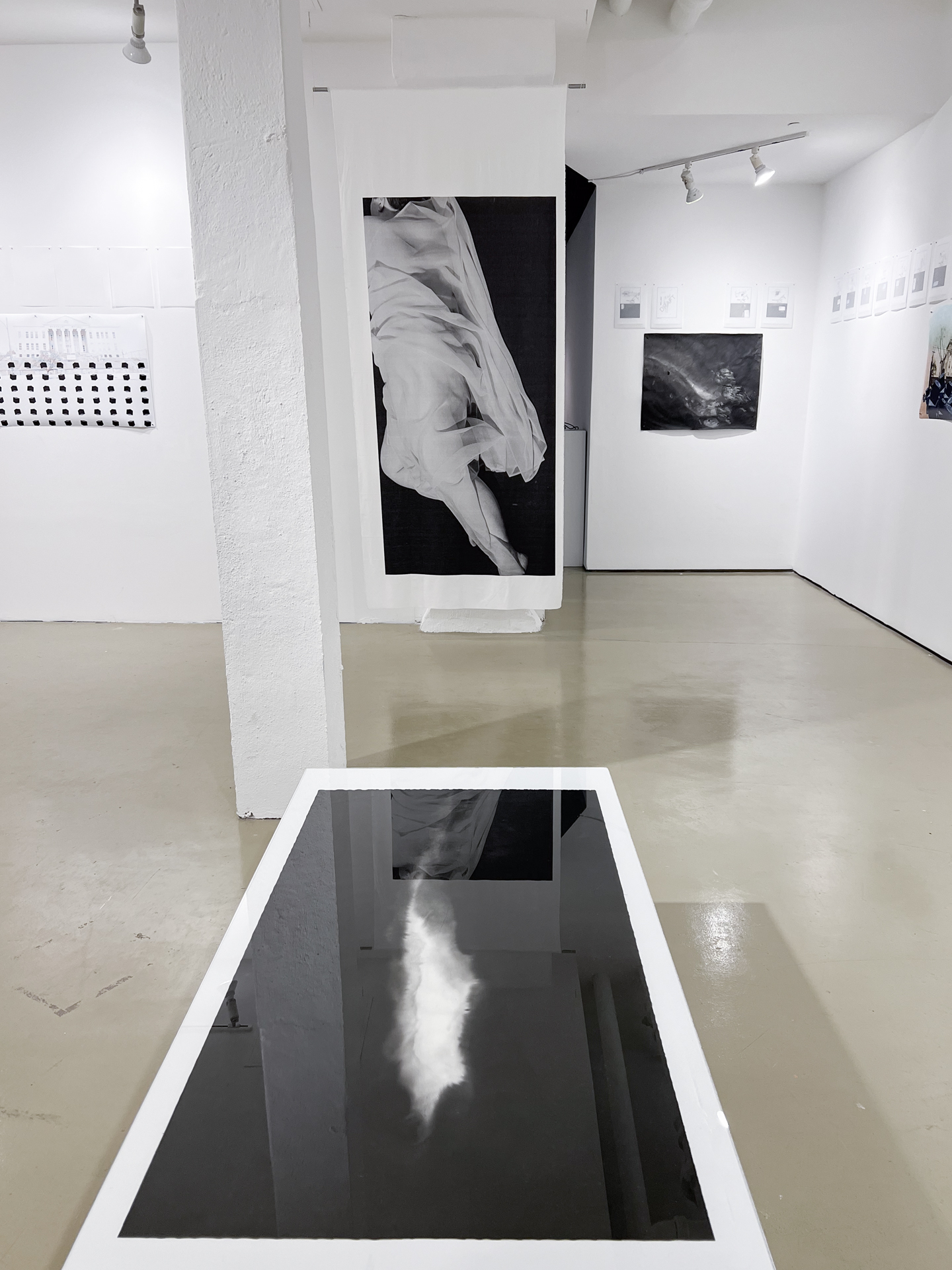
The works on display in From the Ground UP are part of a larger series of nudes taken from the late 70’s through the early 90’s. Wrapping the figure was part of my experimentation with form and texture. Some of the figures are wrapped in gauze, others in chiffon. The figures are reclining or seated on burlap fabric, wrapped like mummies. The play of texture and form makes it hard to discern what is top, bottom, front or back of each figure presented here. These figures are printed on Kodak Ektalure Series X paper. I chose this particular paper because of its texture, and slightly sepia tonal range. Sadly this paper is no longer manufactured.
The very large printed figure was shot on a black background, wrapped in chiffon, and printed on a textured cotton fabric roughly 3.5’x7’. What intrigues me most about this particular photograph is that the figure appears to be floating.
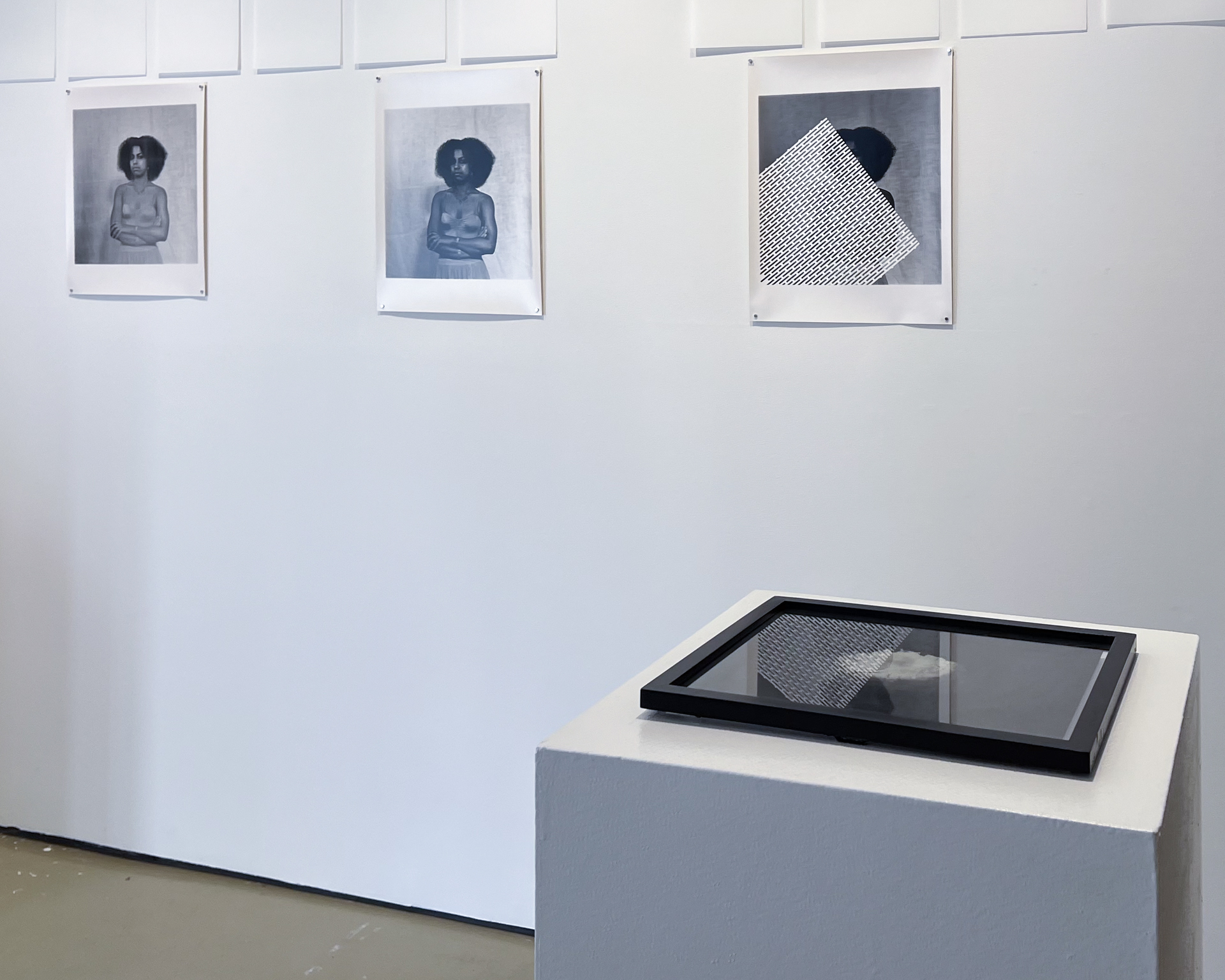
The portraits of Adriene, I feel is still an unfinished work. As you can see I tried different techniques, but I haven’t found one that in my mind works. She is here, she is obscured, she is blurred. But none of these really work. I know this one I will have to come back to.
(American, born 1952) I was born and raised in New York City’s Lower East Side, which at that time was a very diverse neighborhood, and offered many opportunities to explore different ways of expressing oneself. As a child I was exposed to painting, writing, carpentry, puppetry, and leatherworking. I always knew I would be an artist, so It was great to be given the chance to explore. Upon graduating from Seward Park H.S. I was lucky enough to be accepted to attend the School of Visual Arts in the fall of 1970. At SVA I focused on fine art until I was exposed to photography sometime during the end of my first year. This was a pivotal moment in my development as an artist. I think that because I had been exposed to so many different ways of seeing, and understanding art I am a more contemplative photographer. I take my time. I try to understand the shot in front of me, and the eventual finished piece.
https://www.donnafrancisphotography.com/
@dfrancis2000

Shani Richards
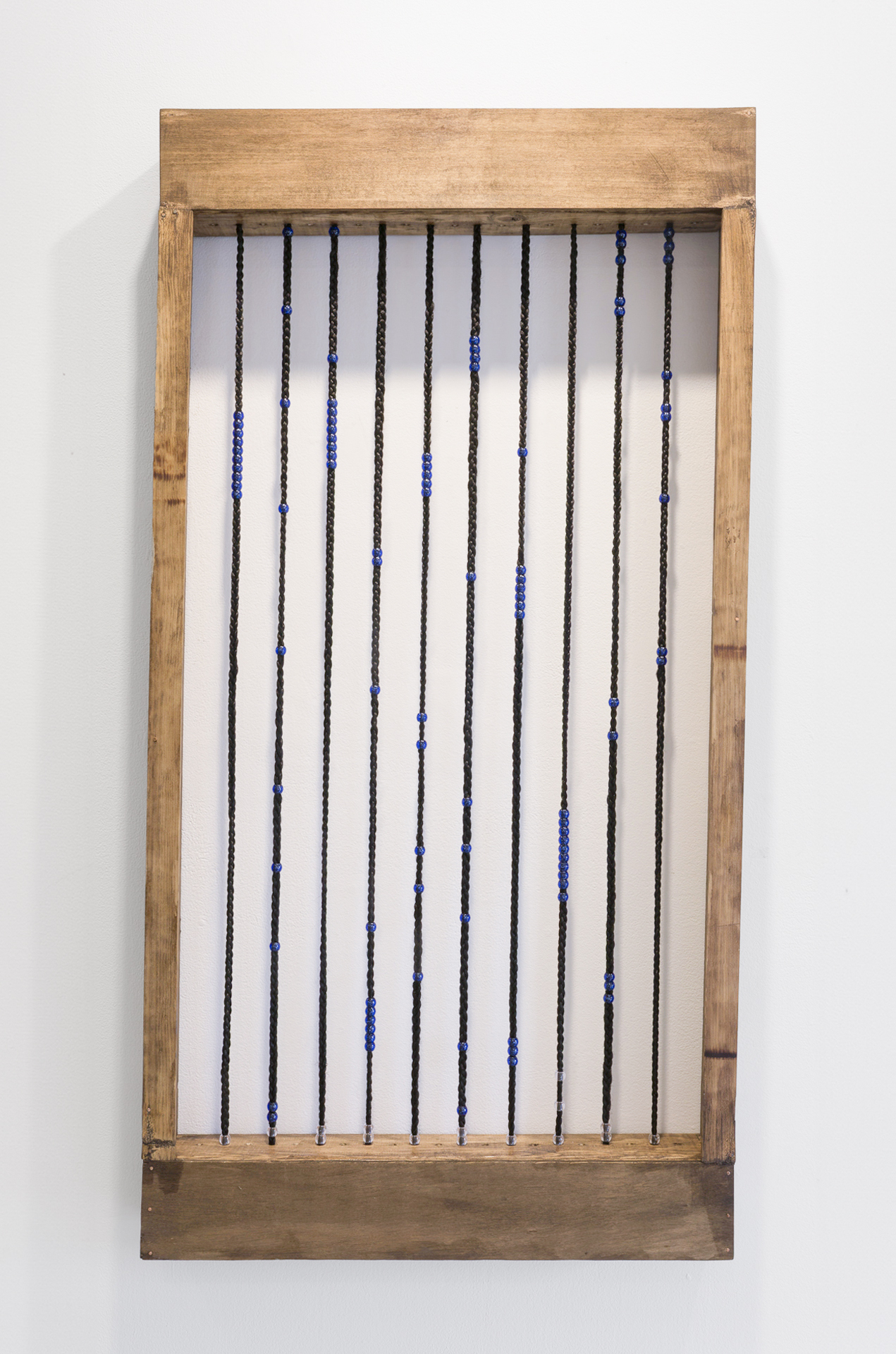
Counting has been central when it comes to the number of African burials in what was historically known as the Newburgh “Colored” Burial Ground: 115 individuals’ remains, 108 burial sites excavated, 99 exhumed - how many remain?
Abacus is a hand-operated calculating tool which was used from ancient times in the ancient Near East, China, Russia and Africa. An Abacus commonly consists of a two-dimensional array of slidable beads.
The Archaeological report on the Burial Ground contains lists of artifacts and materials found in the excavated sites with the bones of those laid to rest. Beads were one of the materials found that intrigued me. Beads were commonly worn by Africans, even babies. Beads are present in life and in death.
Hair is political and Black African hair such as braids, dreads, and kinky hair is still discriminated against. This is an abacus made with materials that asks a question: how many remain?
Shani Richards was born and raised in Akron, Ohio. She received a BFA in metalsmithing at the University of Akron and MFA in metal from the State University of New York, New Paltz. Afterwards Shani returned to her hometown Akron, Ohio. In 2018 she was awarded a Community Fellowship with The League of Creative Interventionists. With the year-long fellowship Shani developed a youth project called Akron’s Growing Chefs and partnered with non-profit community organization The W.O.M.B. In 2020 Shani was awarded art residency with The Akron Soul Train. Shani was one of six artists selected to be a part of The Sculpture Center 2022 Emerging Artists Solo Exhibition Series. In 2023 Shani was a visiting craft fellow at SUNY New Paltz and was selected for a six month fellowship at Ann Street Gallery in Newburgh, NY. In 2024 Shani was awarded a New York Council of the Arts Grant.
https://www.shani-richards.com/
@shani.richards


Edwin Torres
Burial Chant is a two-channel audio piece where two vocal recordings are heard at the same time. The effect is to use the audio medium to mobilize anxiety for the listener while honoring long lives left undiscovered. On one channel a poem is recited which uses the log entries from the Newburgh Alms House; the poem reconstructs the language used for the lives portrayed, subversively removing names while repeating basic facts, further removing a people's identity while questioning our own. On the other channel a list is recited which uses language from the burial descriptions in The Archeological Records. The recitation is purposely cold and emotionless presenting the materiality of the gravesites as rhythmic grids, tombs as linear metrics. The intertwined paths of both recordings in one headspace reflects upon a sense of claustrophobia and incompletion evoked from the lost history of the burial ground.
Edwin Torres is a lingualisualist born in New York City and author of 15 poetry collections including; Quanundrum: i will be your many angled thing (Roof Books, awarded a 2022 American Book Award), Xoeteox: the infinite word object (Wave Books) and Ameriscopia (University of Arizona Press). He is also editor of The Body In Language: An Anthology (Counterpath Press). Poetry fellowships include; Arts MidHudson, The Foundation for Contemporary Arts, The DIA Foundation, and his current multi-disiciplinary ecopoetics project, "Feel Recordings In The Evershift," received a 2024 NYSCA Individual Artist Grant. His collaborations with cultural nomads from The Guggenheim Museum, The Bowery Poetry Club, The Coney Island Ferris Wheel, and countless venues globally and at home, have contributed to the development of his bodylingo poetics. Anthologies include; The Difference Is Spreading: 50 Contemporary Poets on Fifty Poems, New Weathers: Poetics from the Naropa Archives, Poets In The 21st Century: Poetics of Social Engagement, Kindergarde: Avant Garde Poems & Plays for Children and Aloud: Voices from The Nuyorican Poets Cafe. He teaches poetry at Columbia University and is currently living in Beacon, NY.
https://brainlingo.wixsite.com/edwintorresbio/about
@brainlingo_
Alison McNulty
Ann Stret Gallery Director Alison McNulty’s 20+ years of experience as an artist and educator is at the core of what makes the Artist Researcher in Residence program possible. Far beyond the role of facilitator, McNulty serves as the program’s principal trustee, consistently grounding the program’s priorities by validating the most urgent questions, identifying potential contributors and collaborators, and focusing the scale and routes which best allow projects to manifest, all while mindfully gauging the capacities of required assets and allocated budgets. Unique to the region’s historic artistic legacy, Ann Street Gallery’s Artist Researcher in Residence Program as stewarded by McNulty, represents a platform for artists who wish to perform services that reach beyond what and whom an art gallery is often thought to serve.
@mcnulty_alison
https://annstreetgallery.org/
https://alisonmcnulty.com/
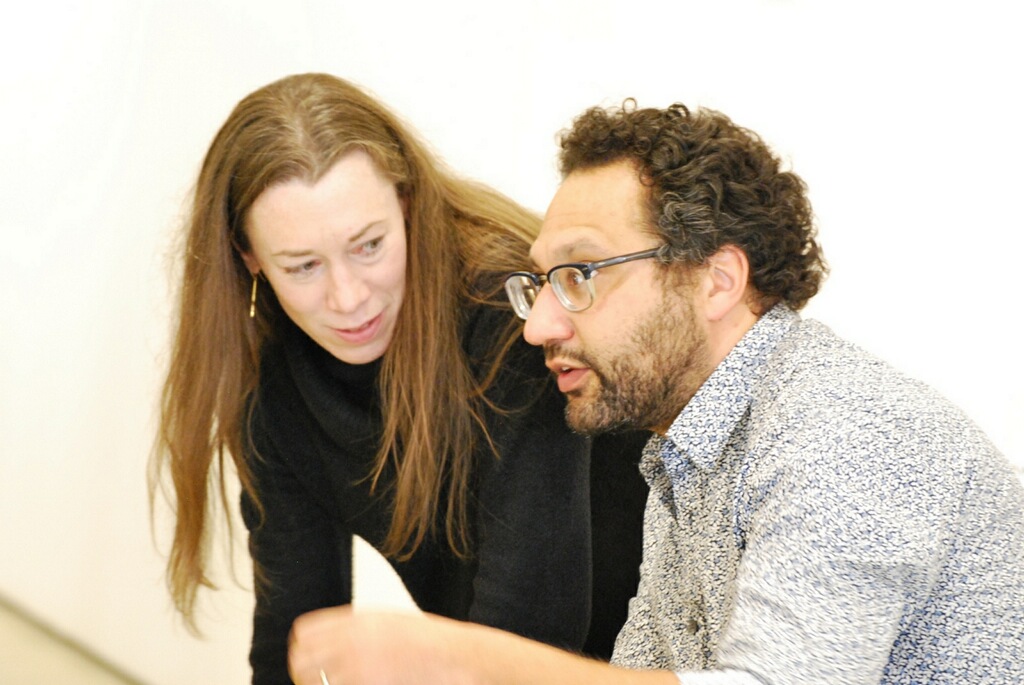
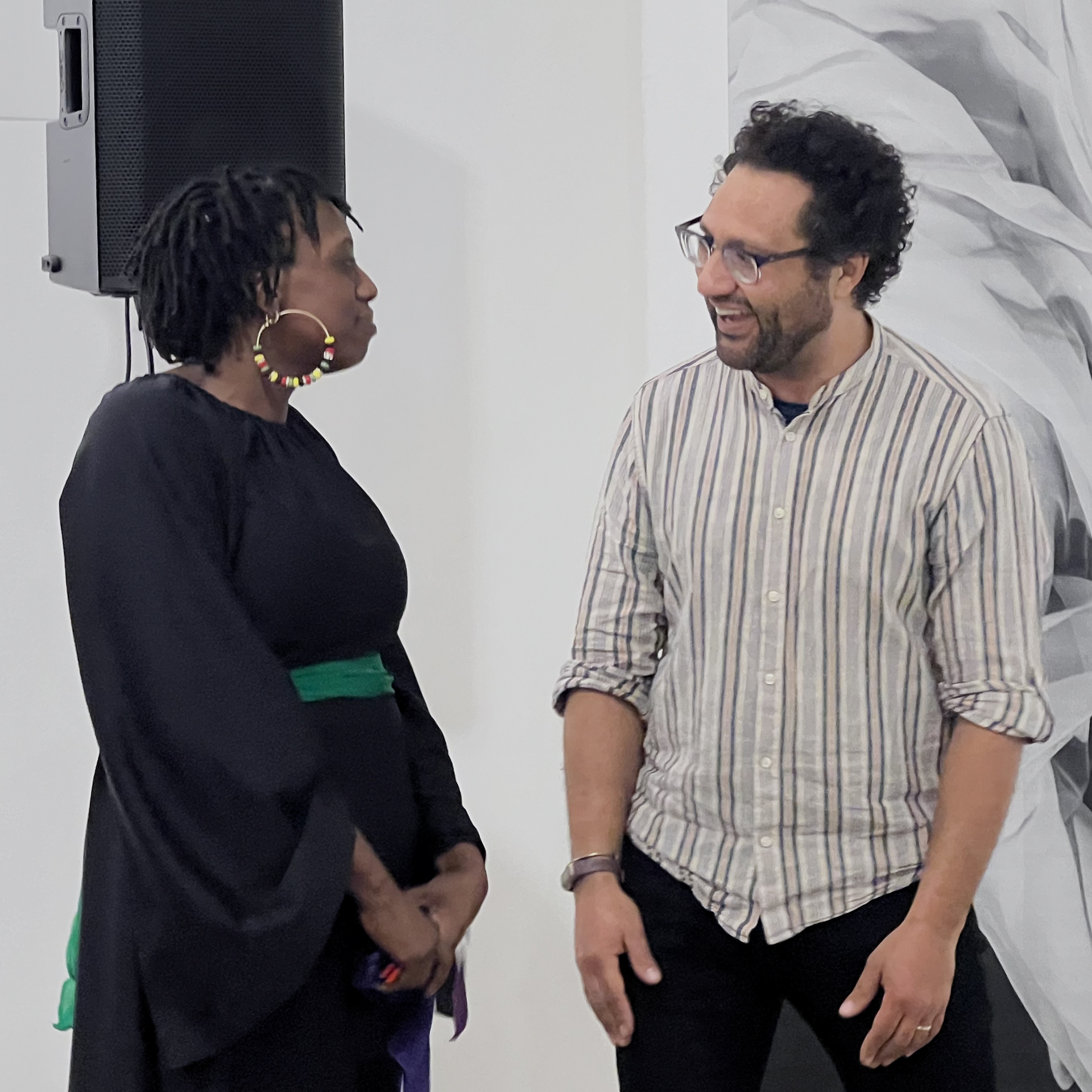
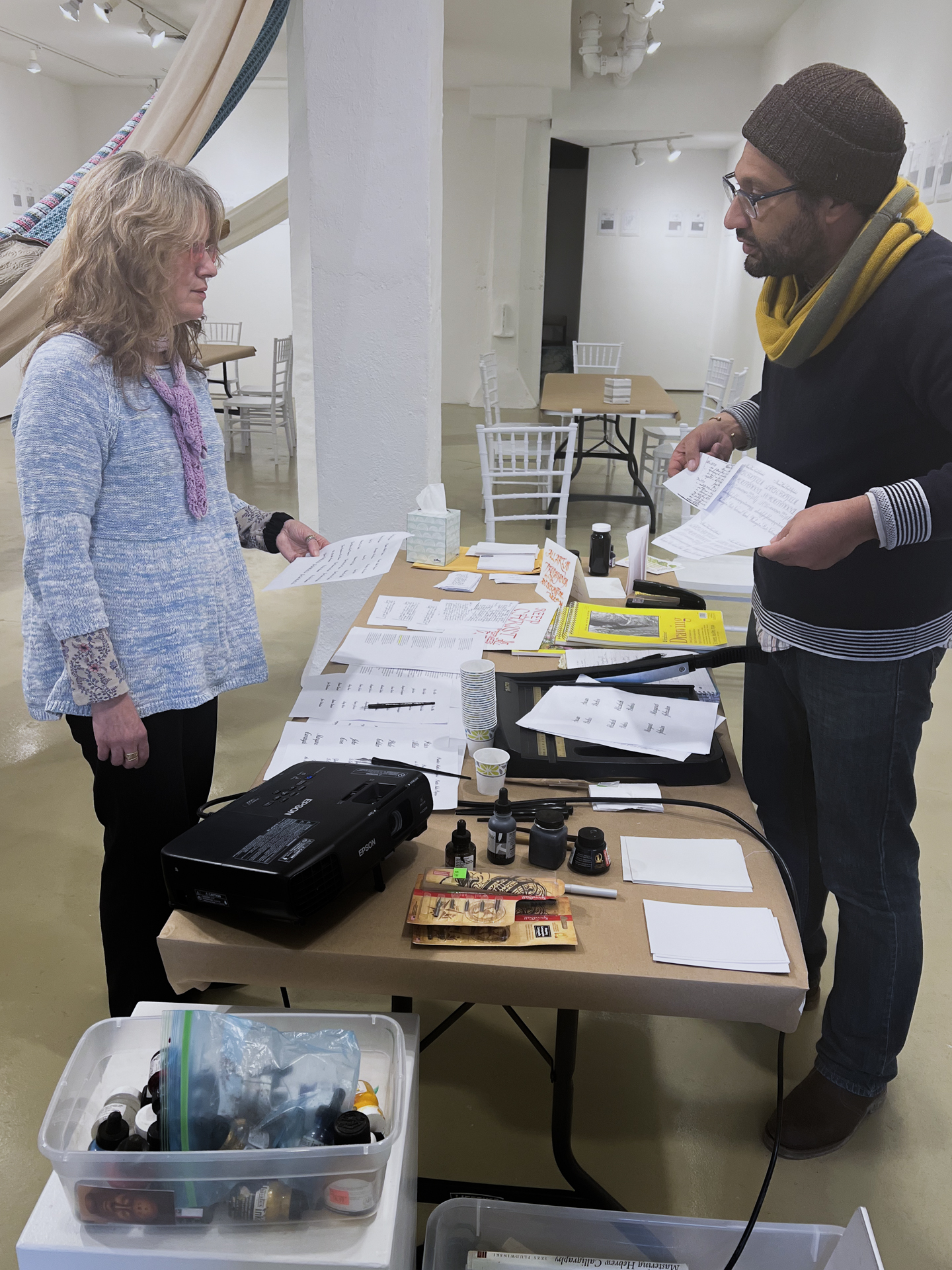
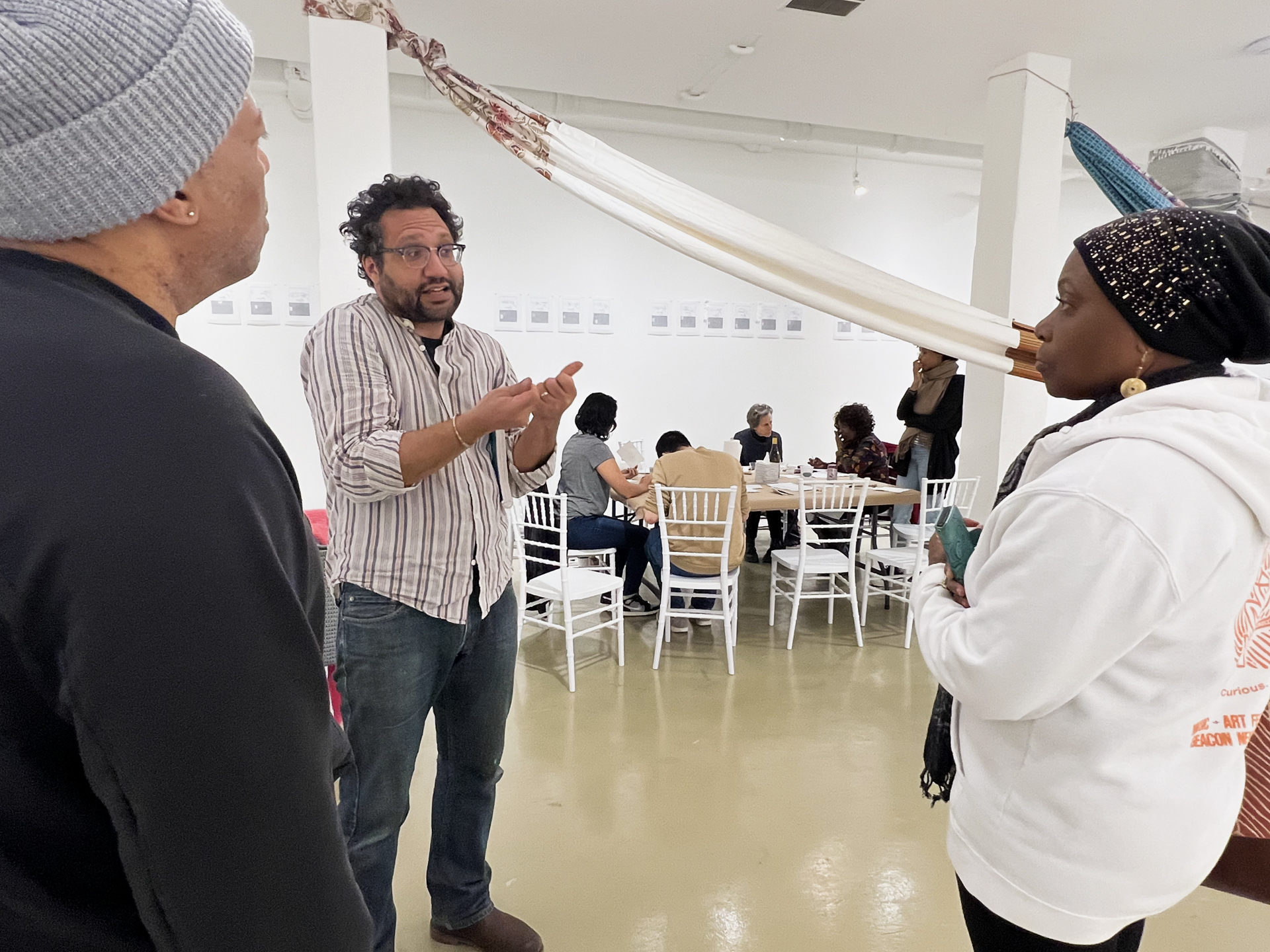
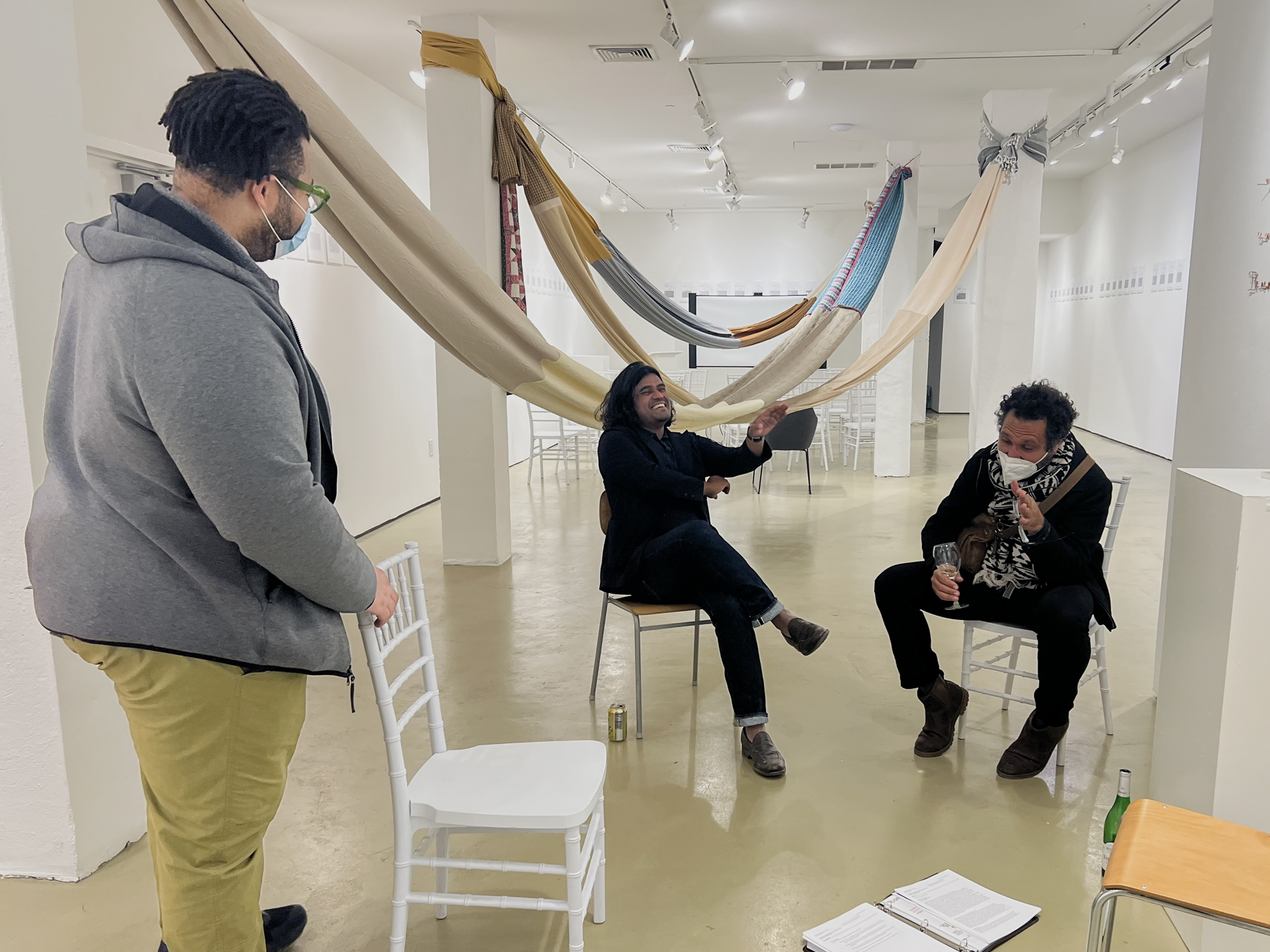
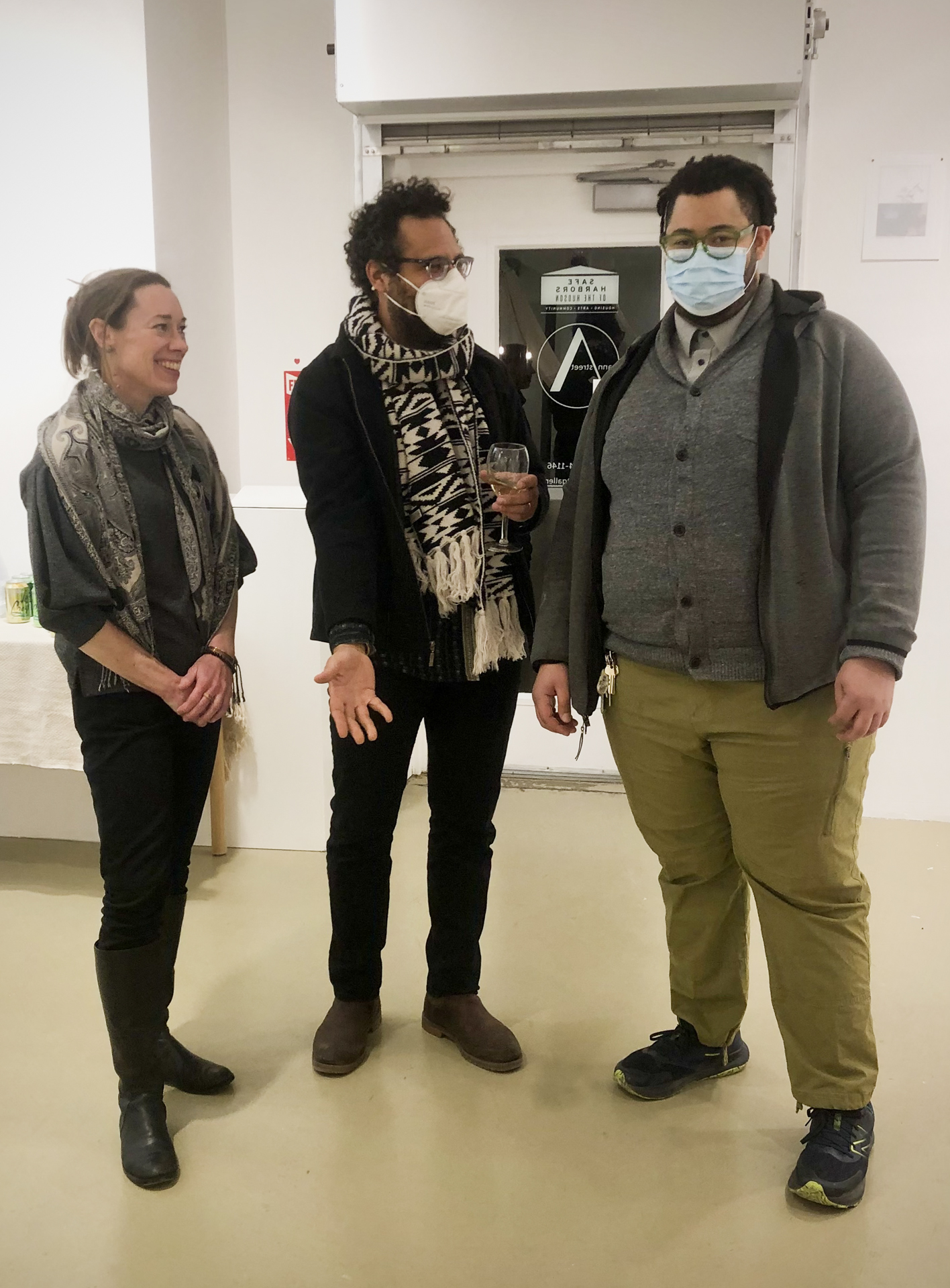
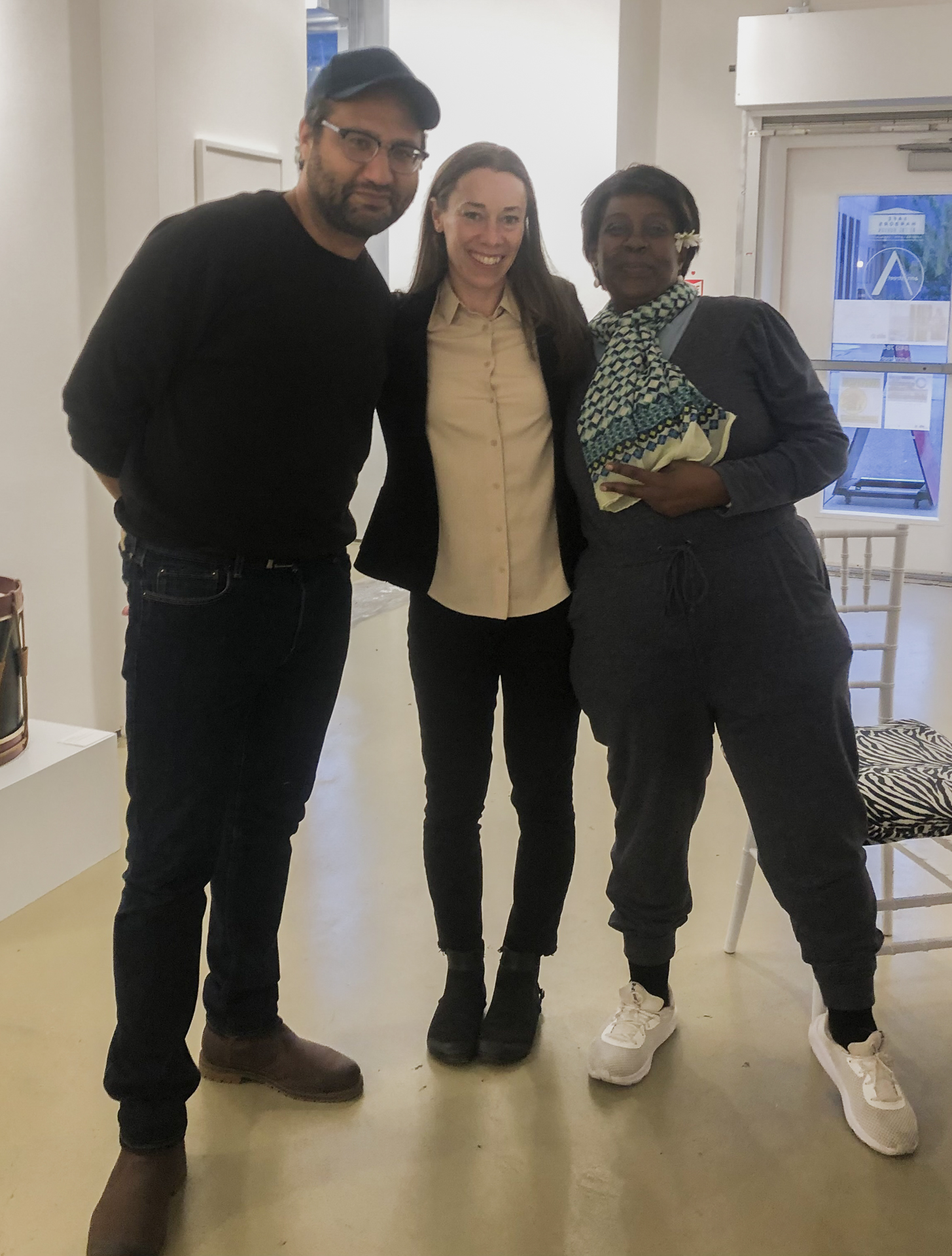
Alison McNulty consults with Artist Researcher in Residence, Jean-Marc Superville Sovak during a community gathering
Community Offerings
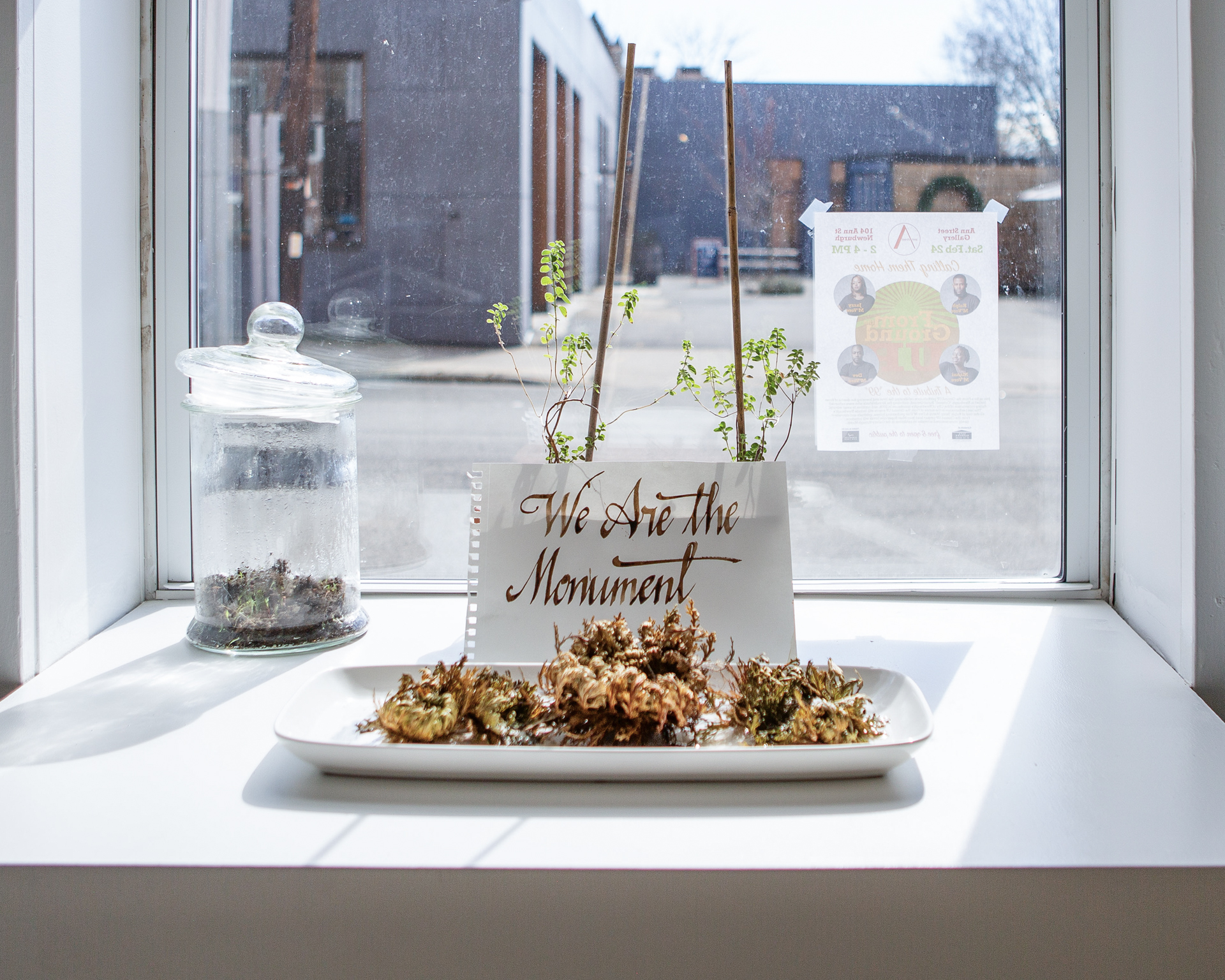
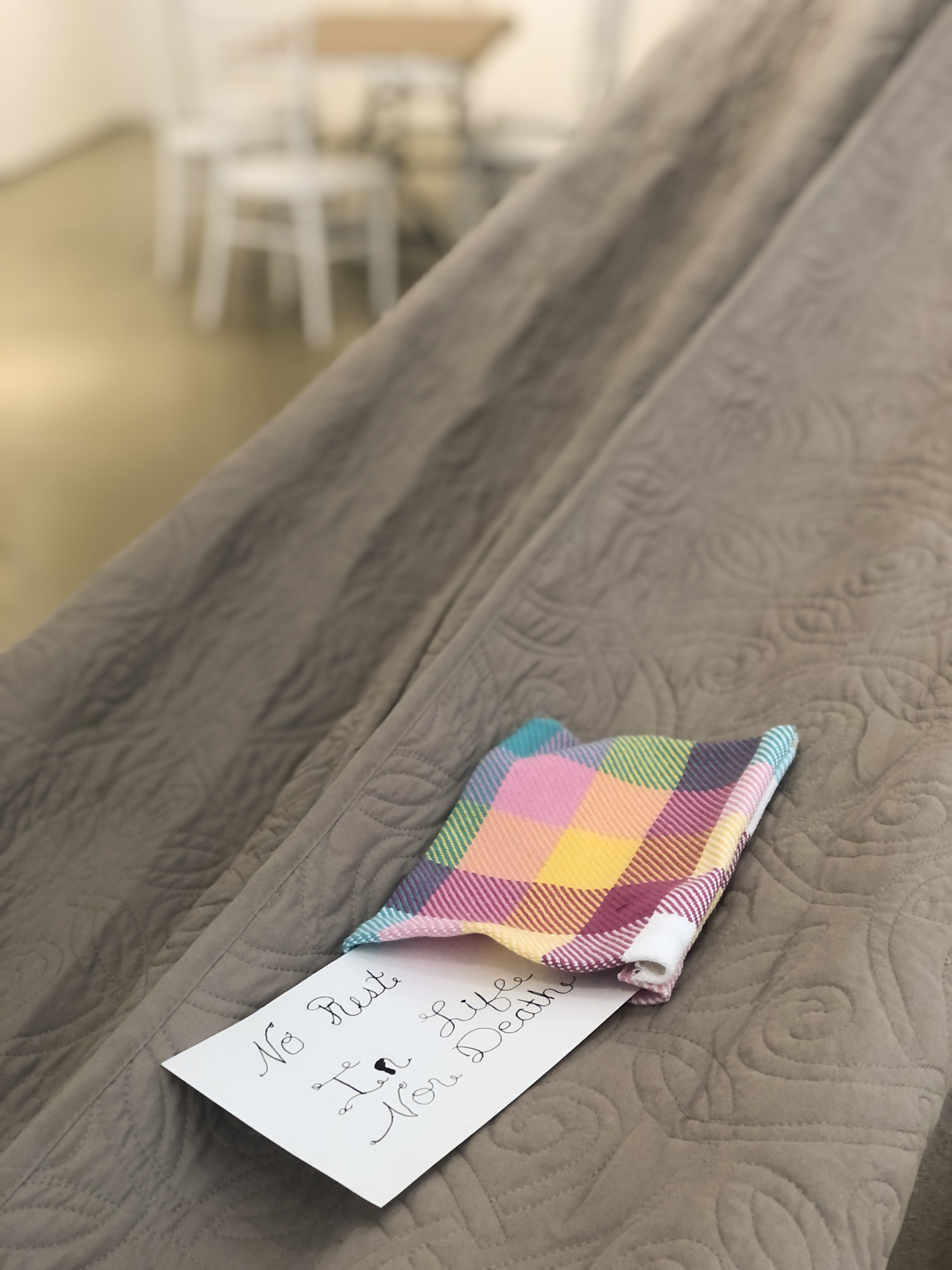
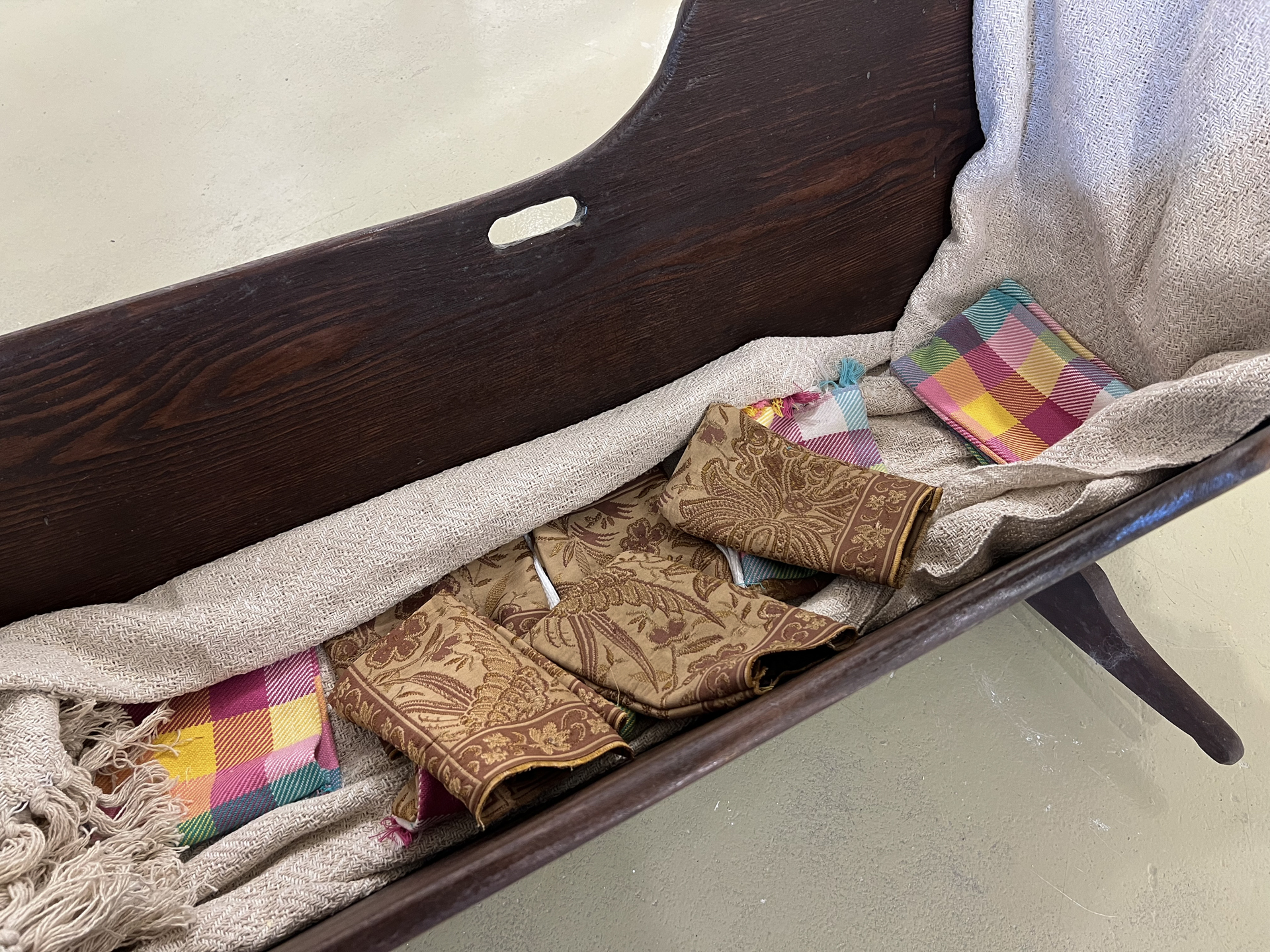
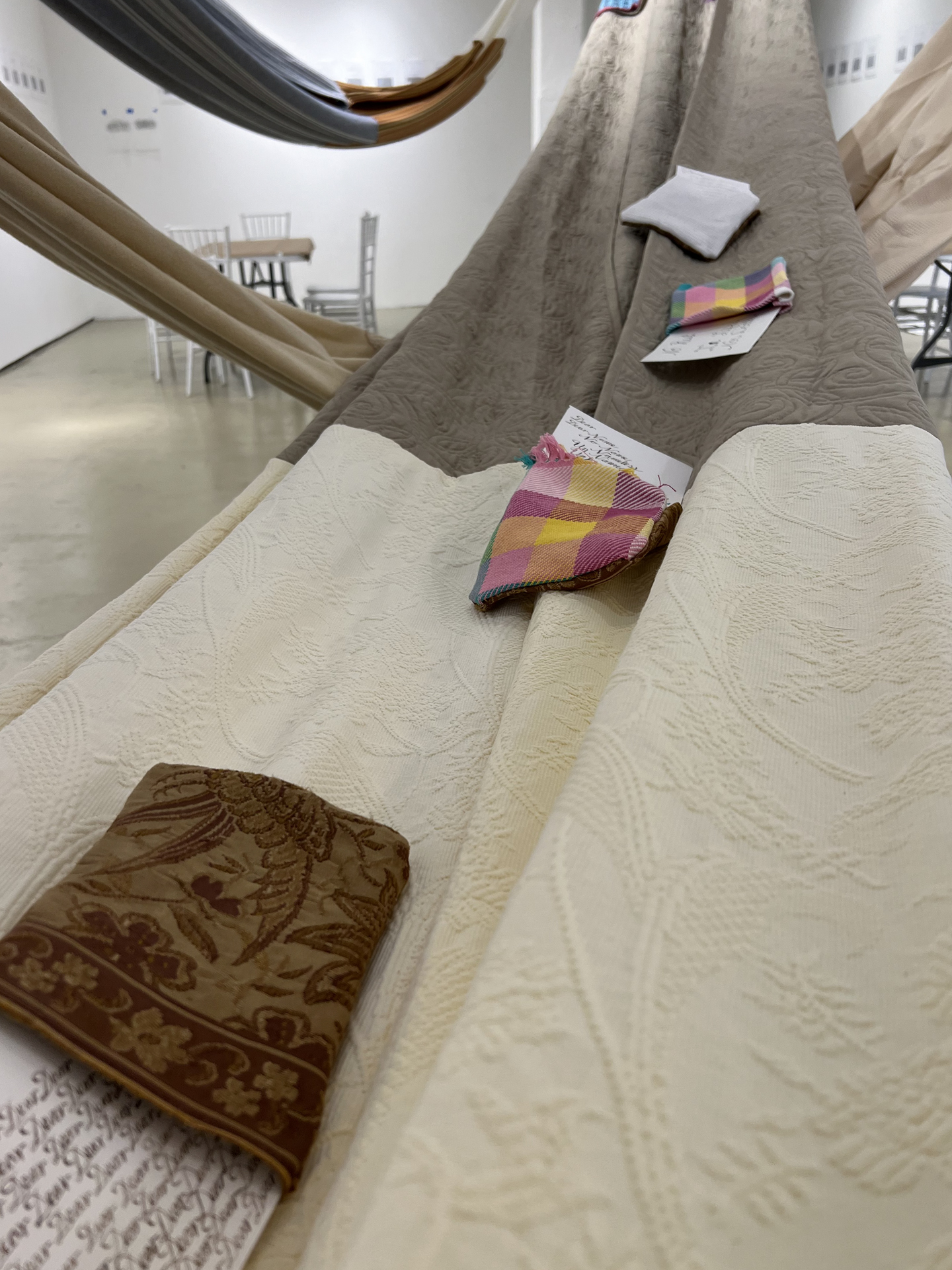
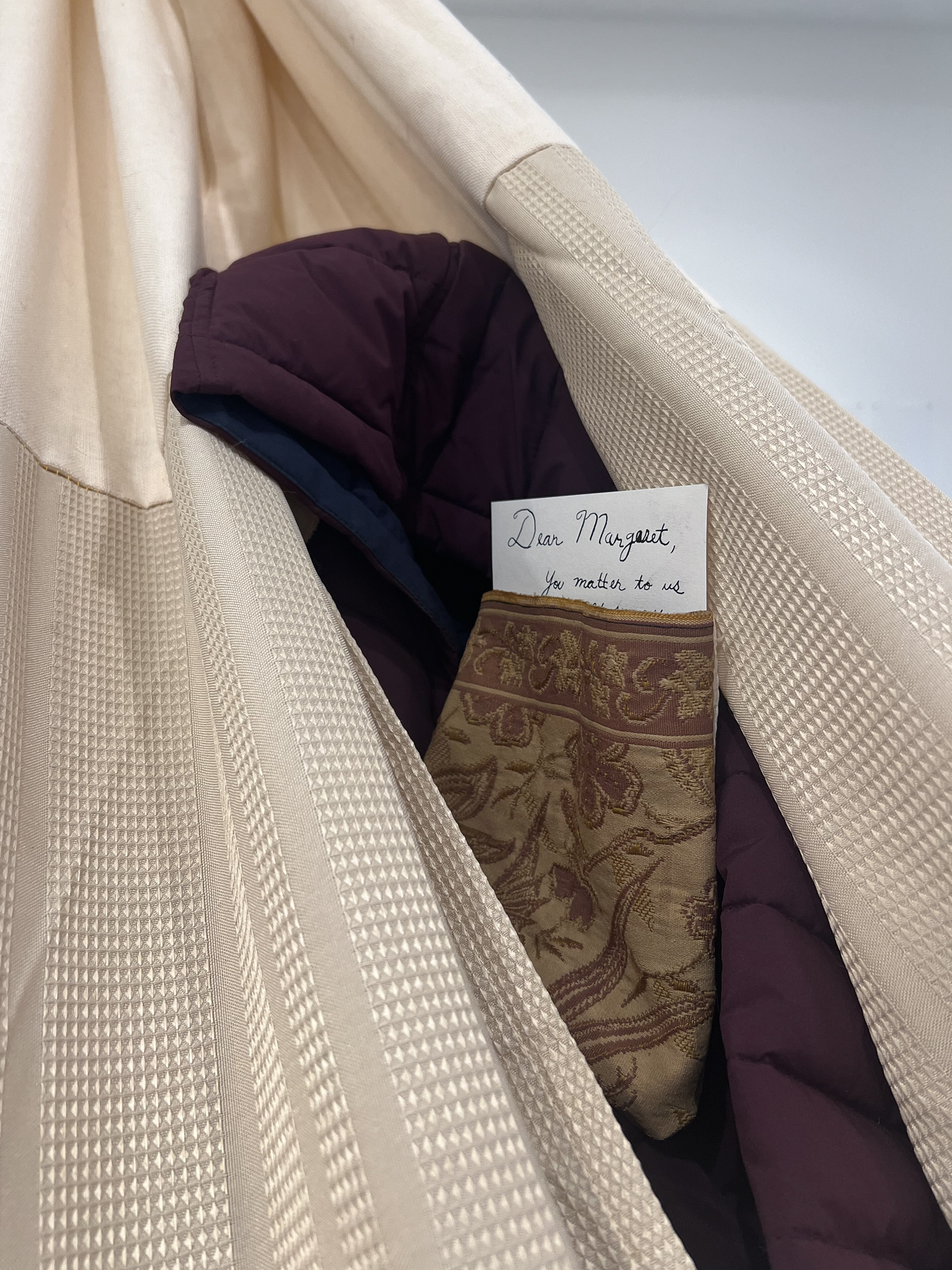
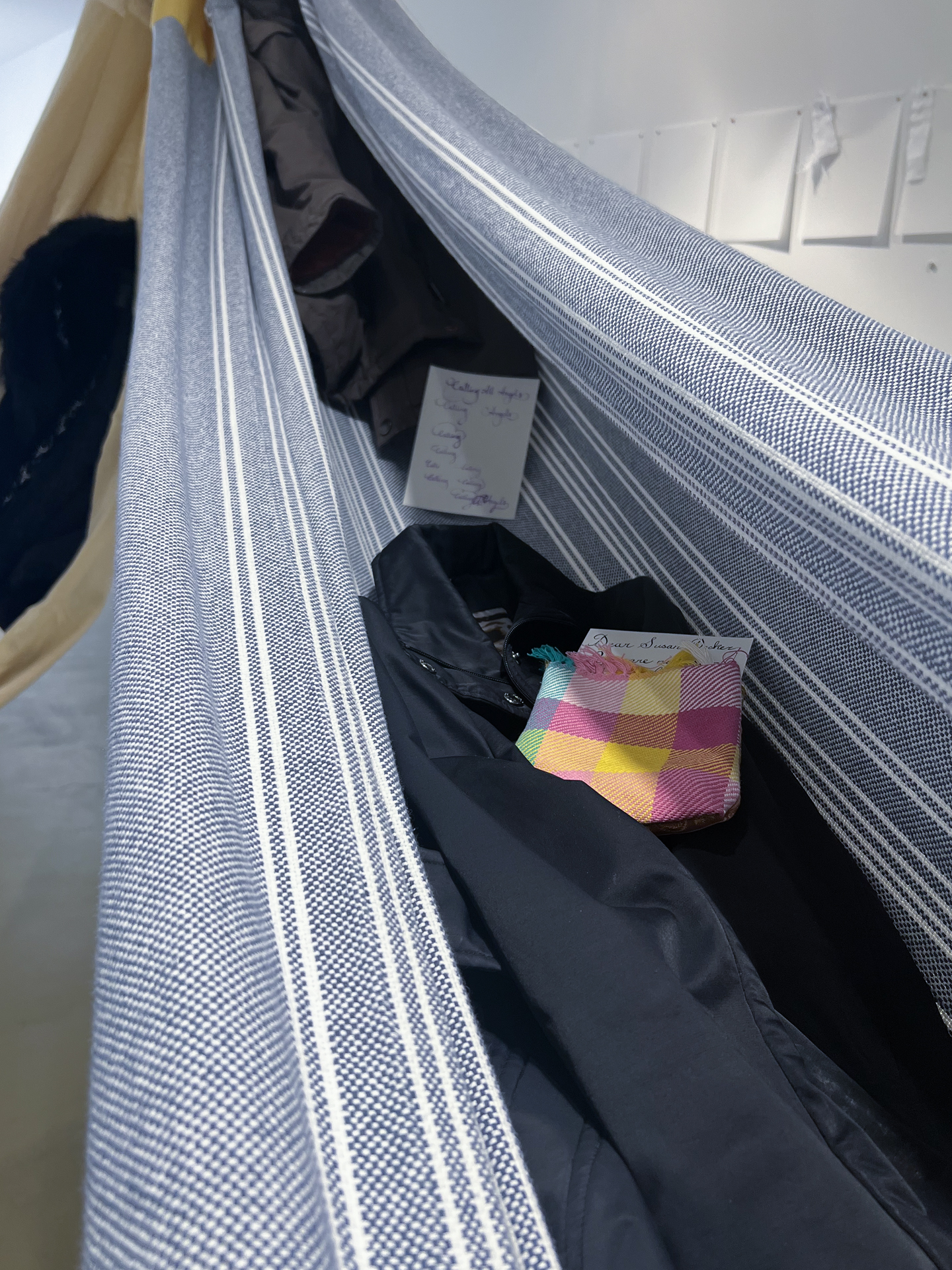
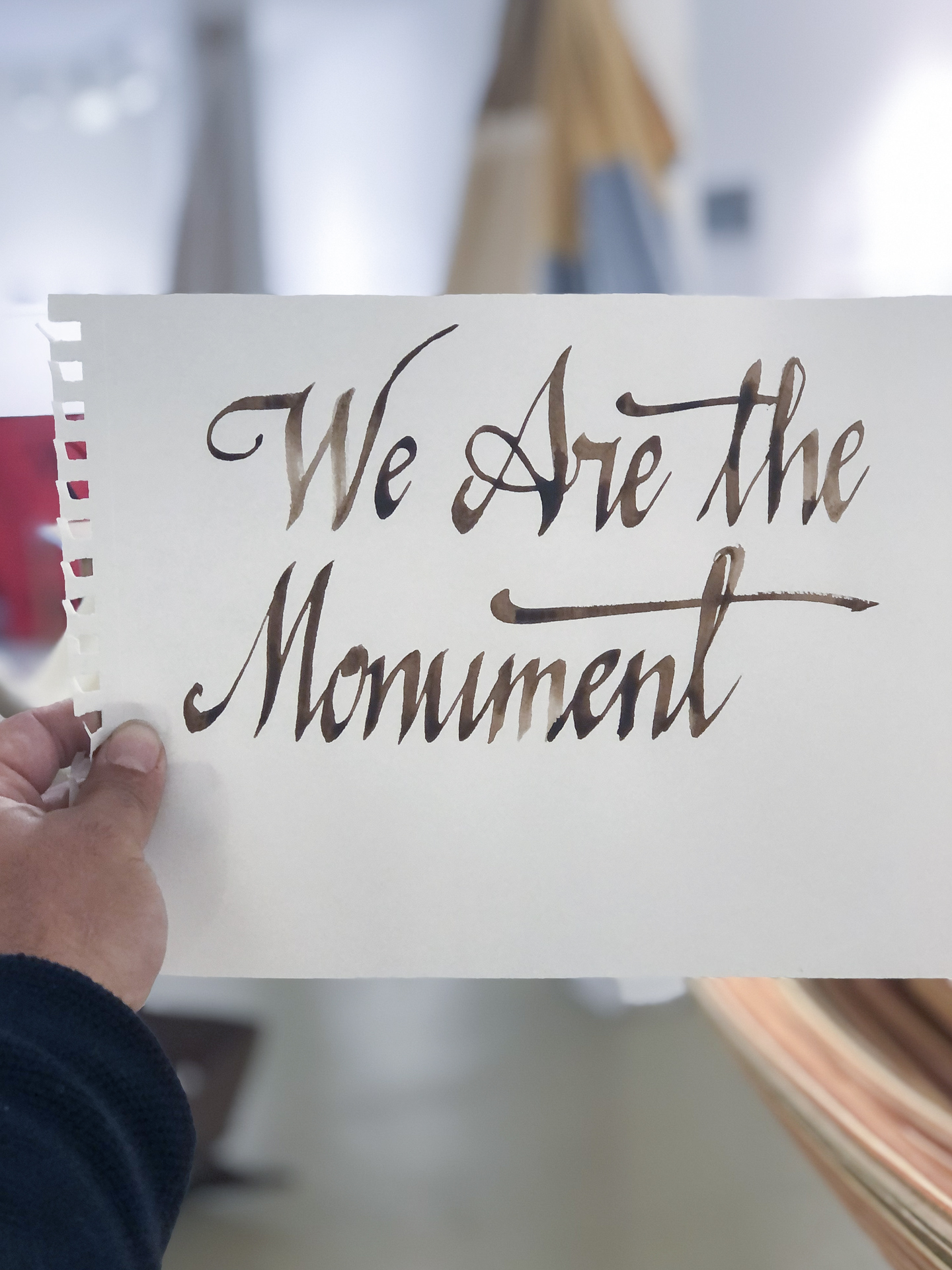
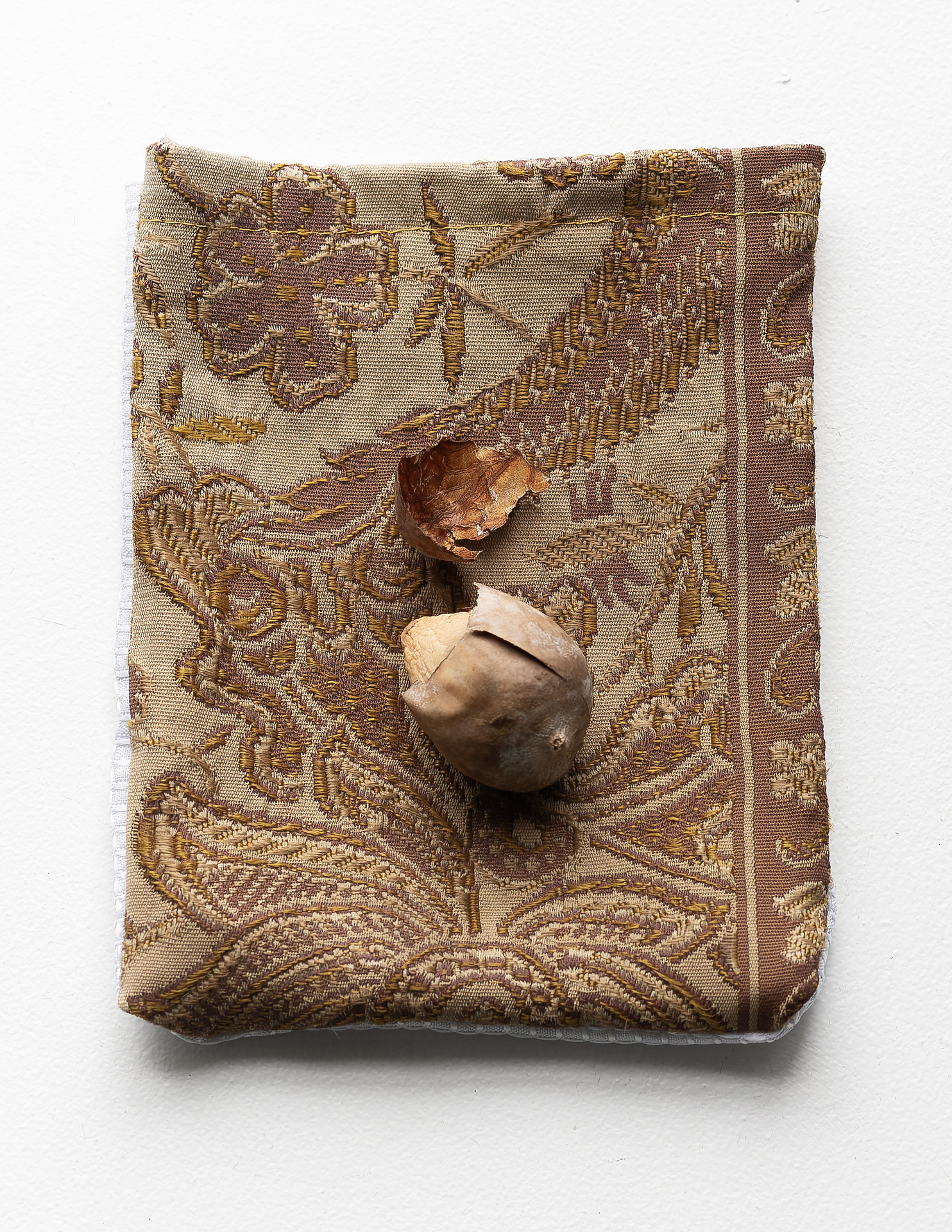
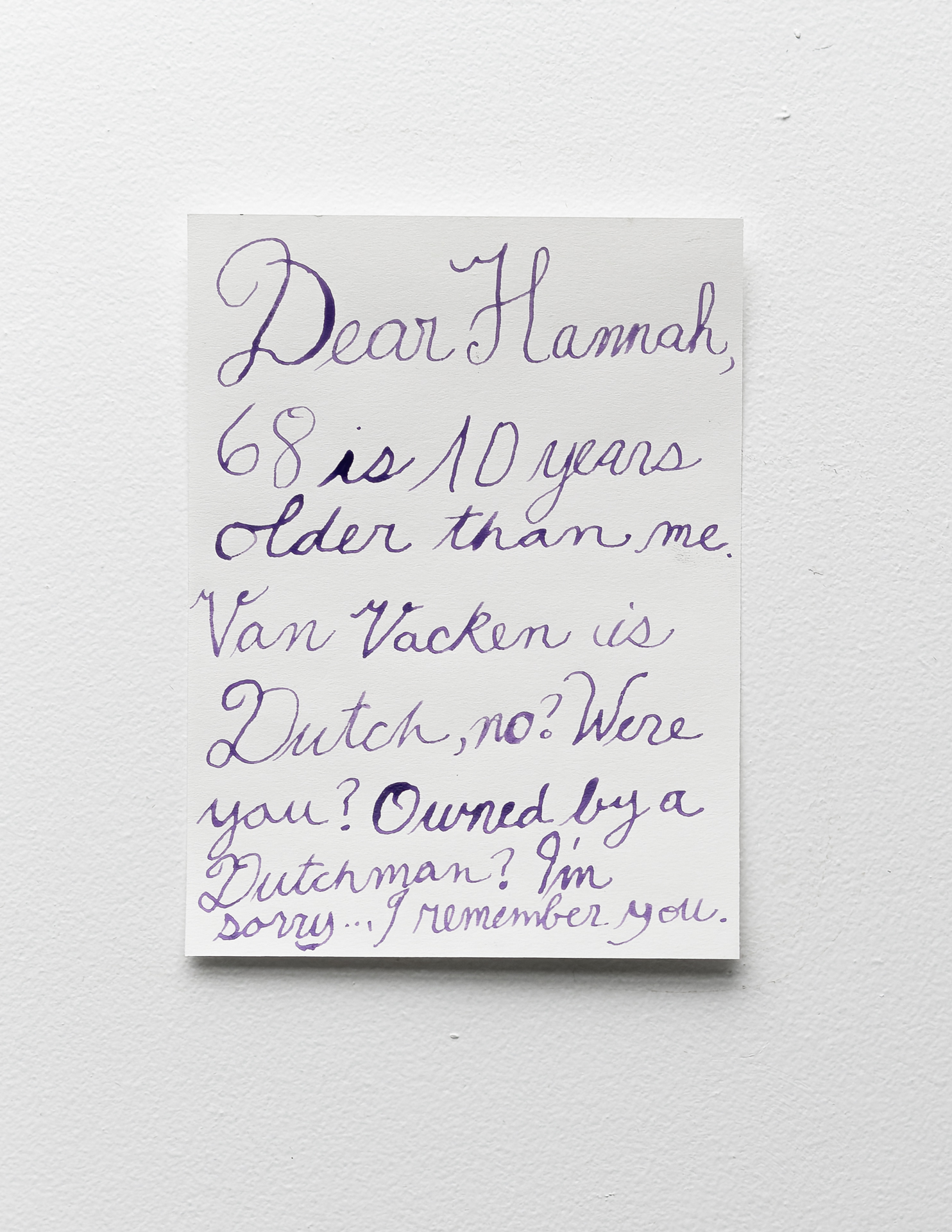
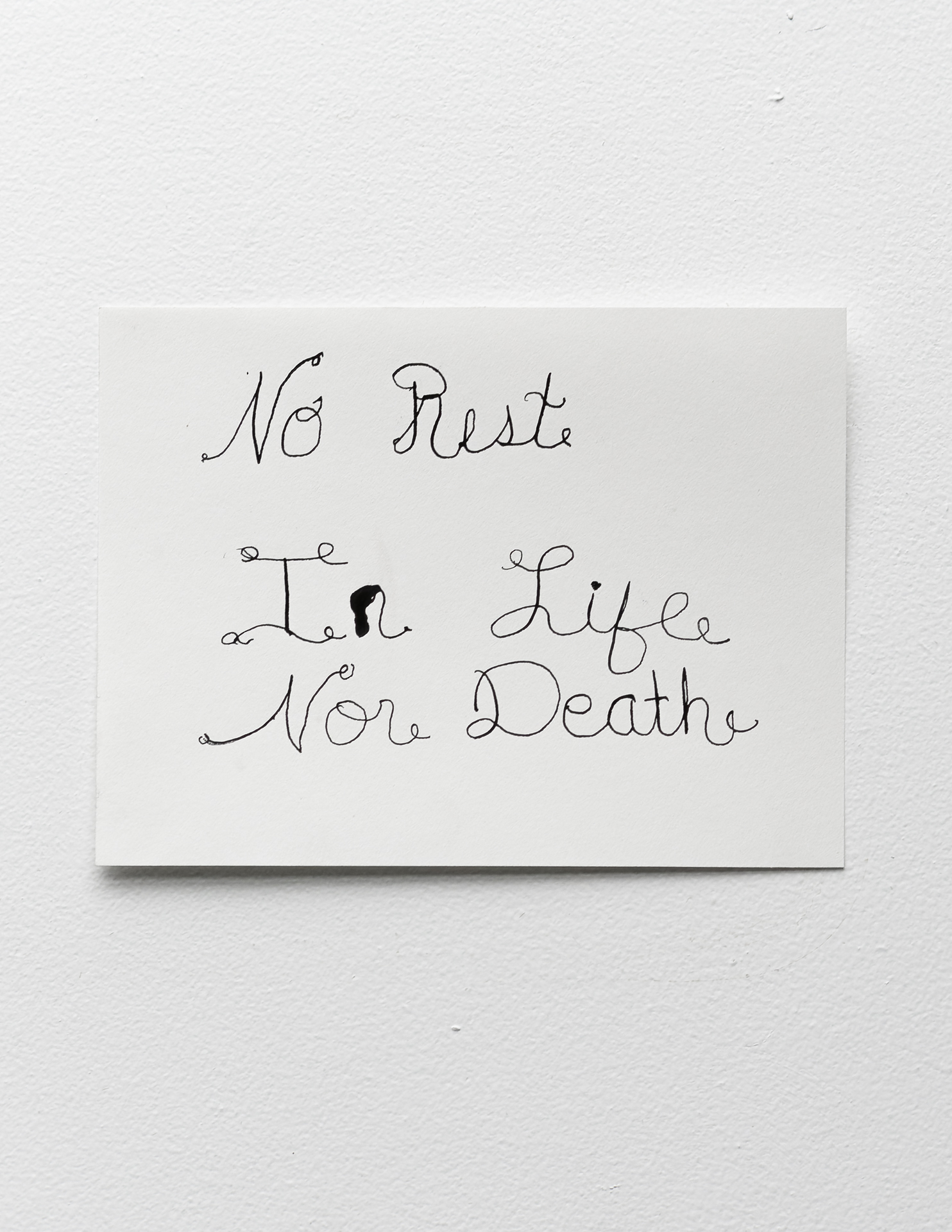
The public is invited to bring small offerings, letters, or message for the ancestors buried in, and disinterred from, the Newburgh “Colored” Burial Ground. These offerings will be displayed in/around Superville Sovak’s burial shroud/conjuring bundle installation, documented, and can be returned upon request. The community is encouraged to contribute and engage with the project in the following ways:
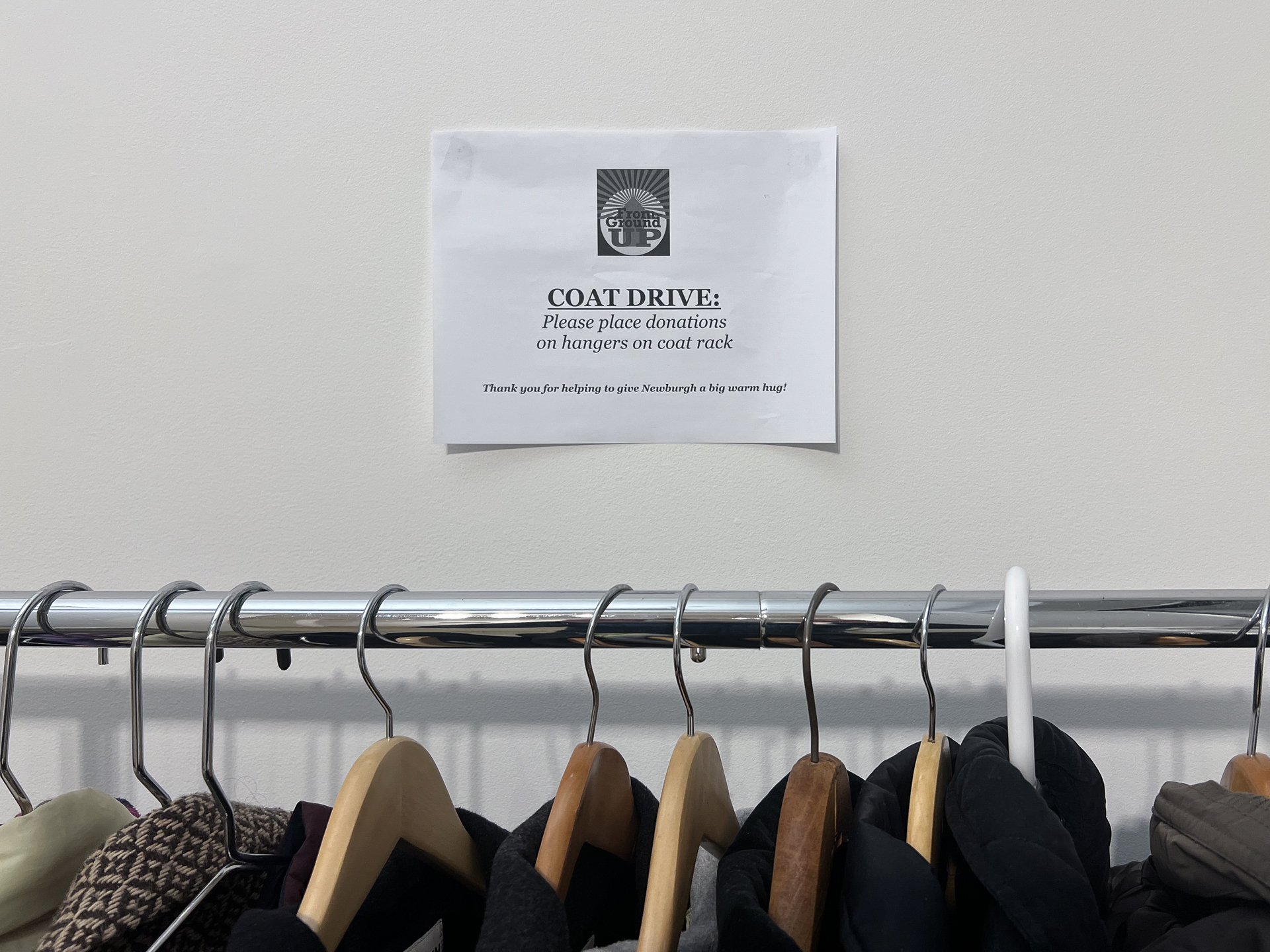
- Coat Collection: As a participatory and durational form of memorialization, the gallery requests donations of gently used winter coats to distribute in the vicinity.
- Conjuring Bundles: Visitors to the exhibition are invited contribute to Superville Sovak’s sprawling burial shroud-inspired web of woven reclaimed fabric in a contemporary interpretation of what archaeologists refer to as “conjuring bundles”, or offerings left at burial sites by mourners. While these “bundles” have historically included such items as the last used or favorite objects of the deceased (pottery, pipes, lamps, buttons, coins, seashells), visitors are invited to contribute their own message or devotional object to the deceased in anticipation of the eventual reburial of those disinterred from the burial site in 2008 during the construction of the Newburgh City Courthouse in 2008.
- Visioning Ceremonies: Superville Sovak is using the gallery as a space of reflection and invites artists, musicians, performers, healers, writers, poets, and other creative individuals to collaboratively discuss, imagine, and literally or metaphorically sketch with him visions and propositions for remembering and honoring those buried in and disinterred from the Burial Ground.











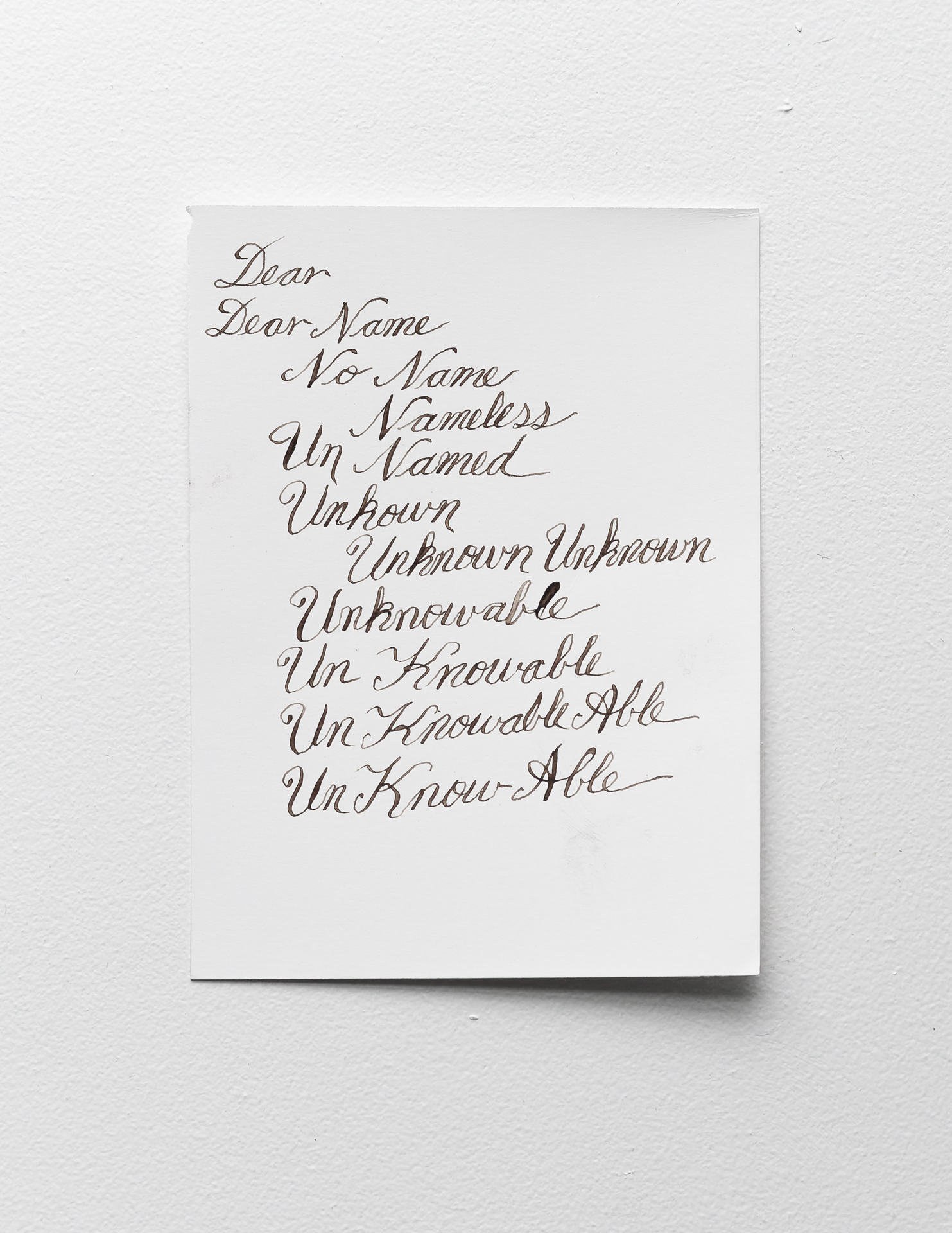

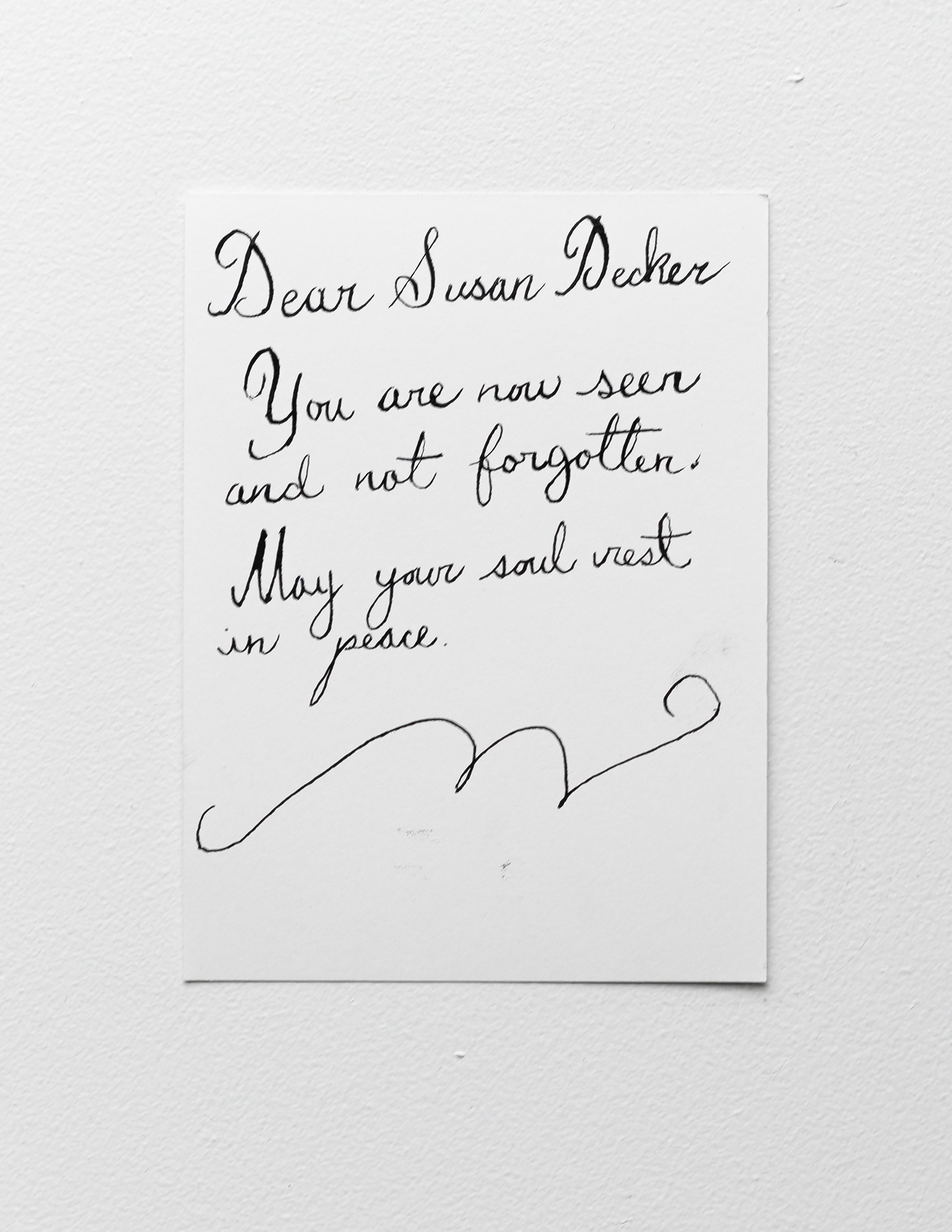
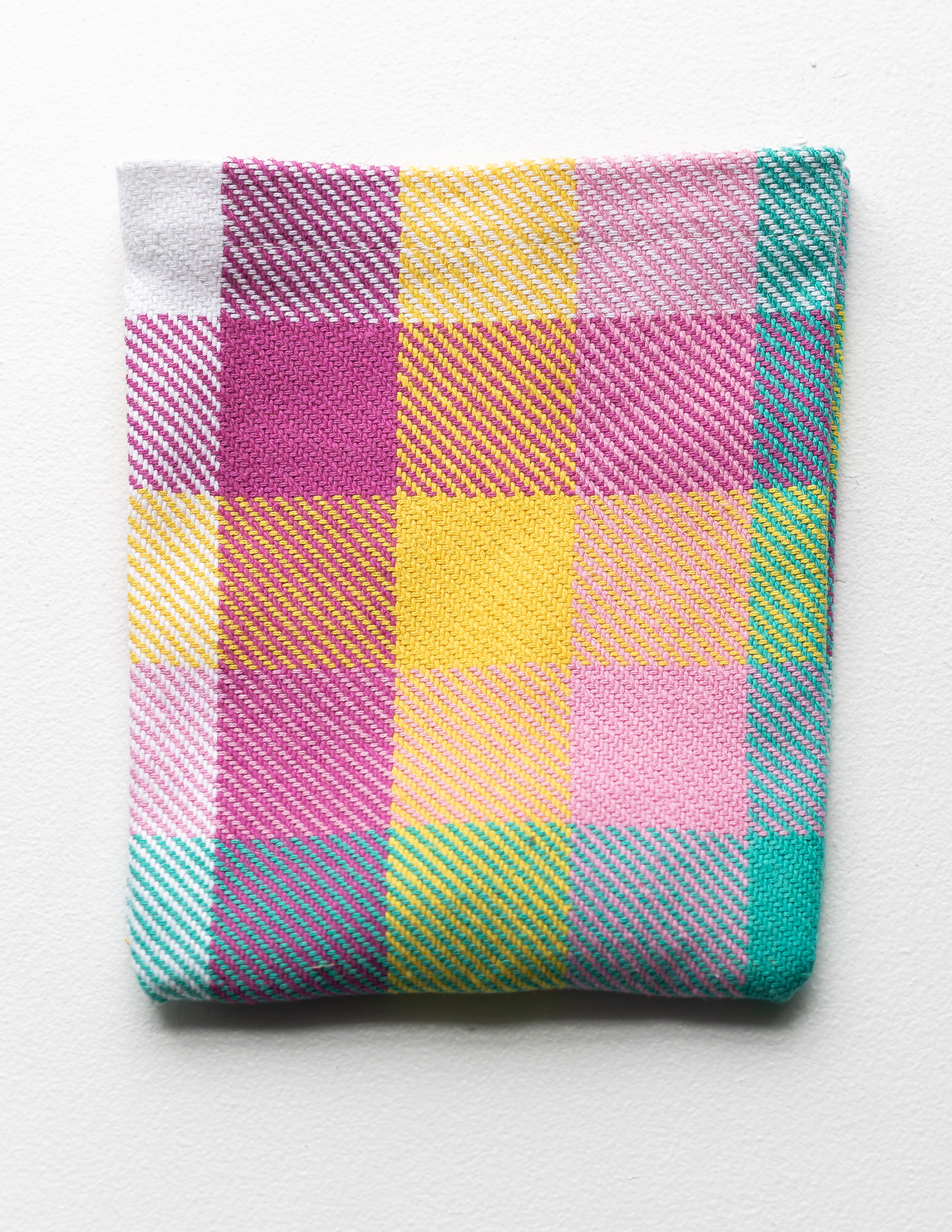


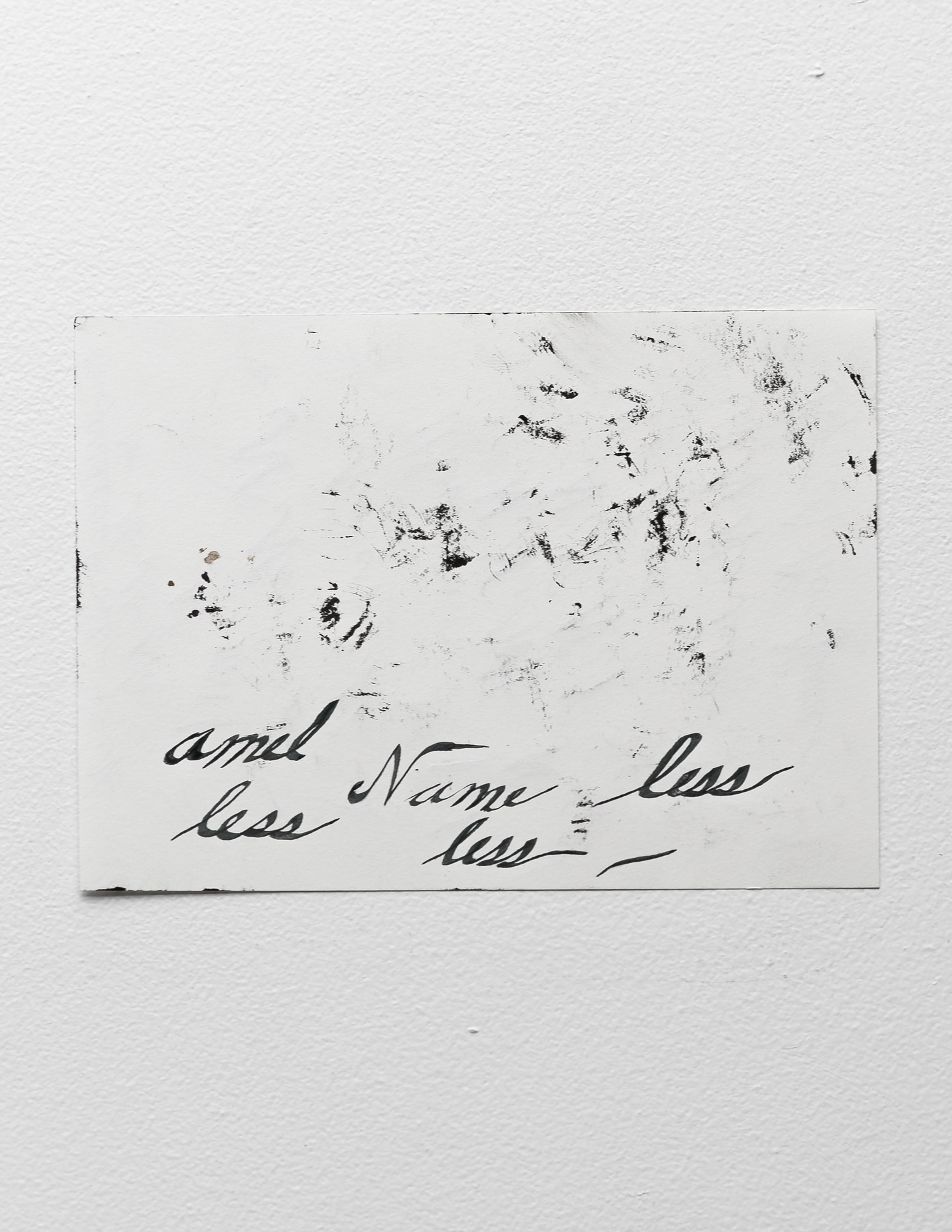


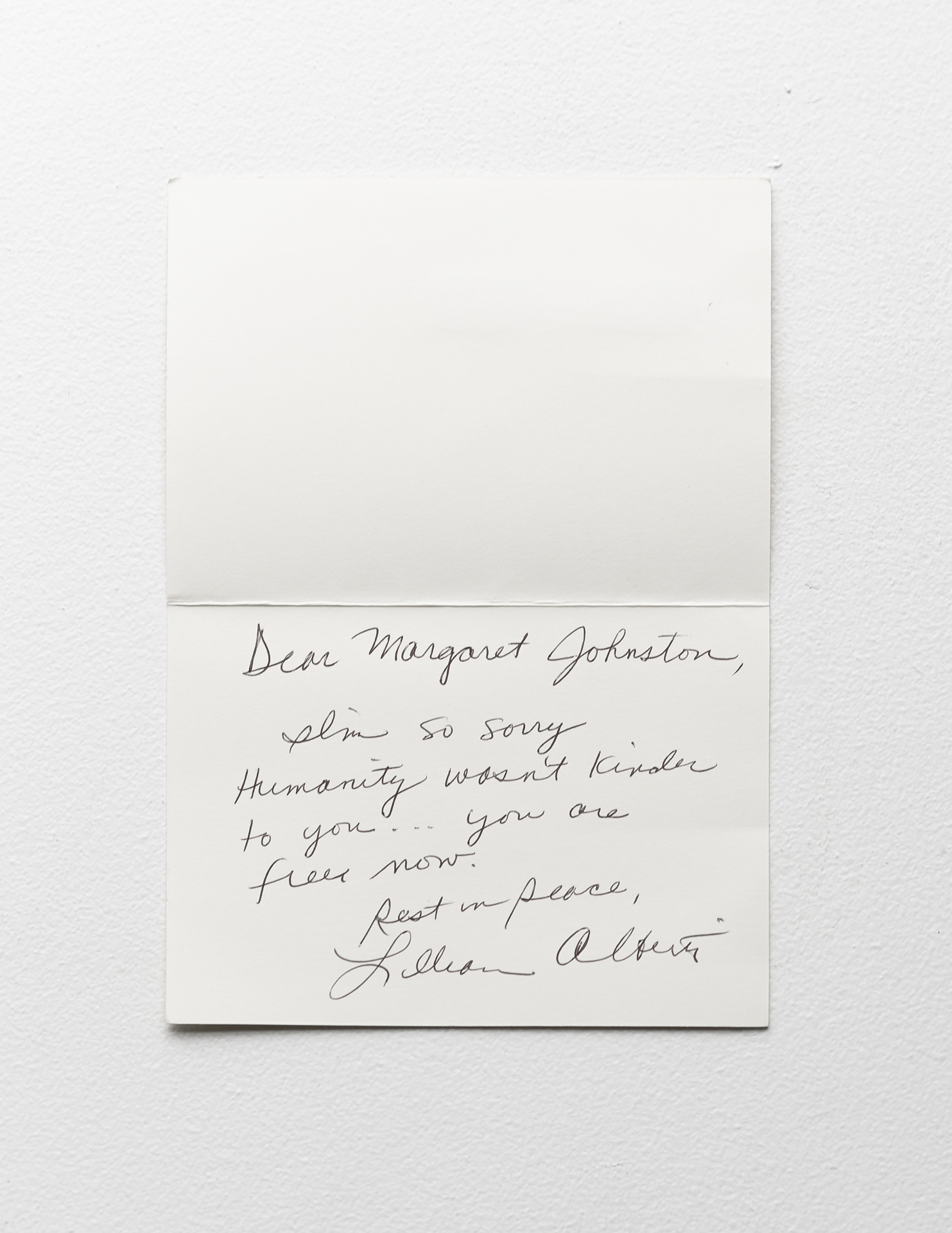


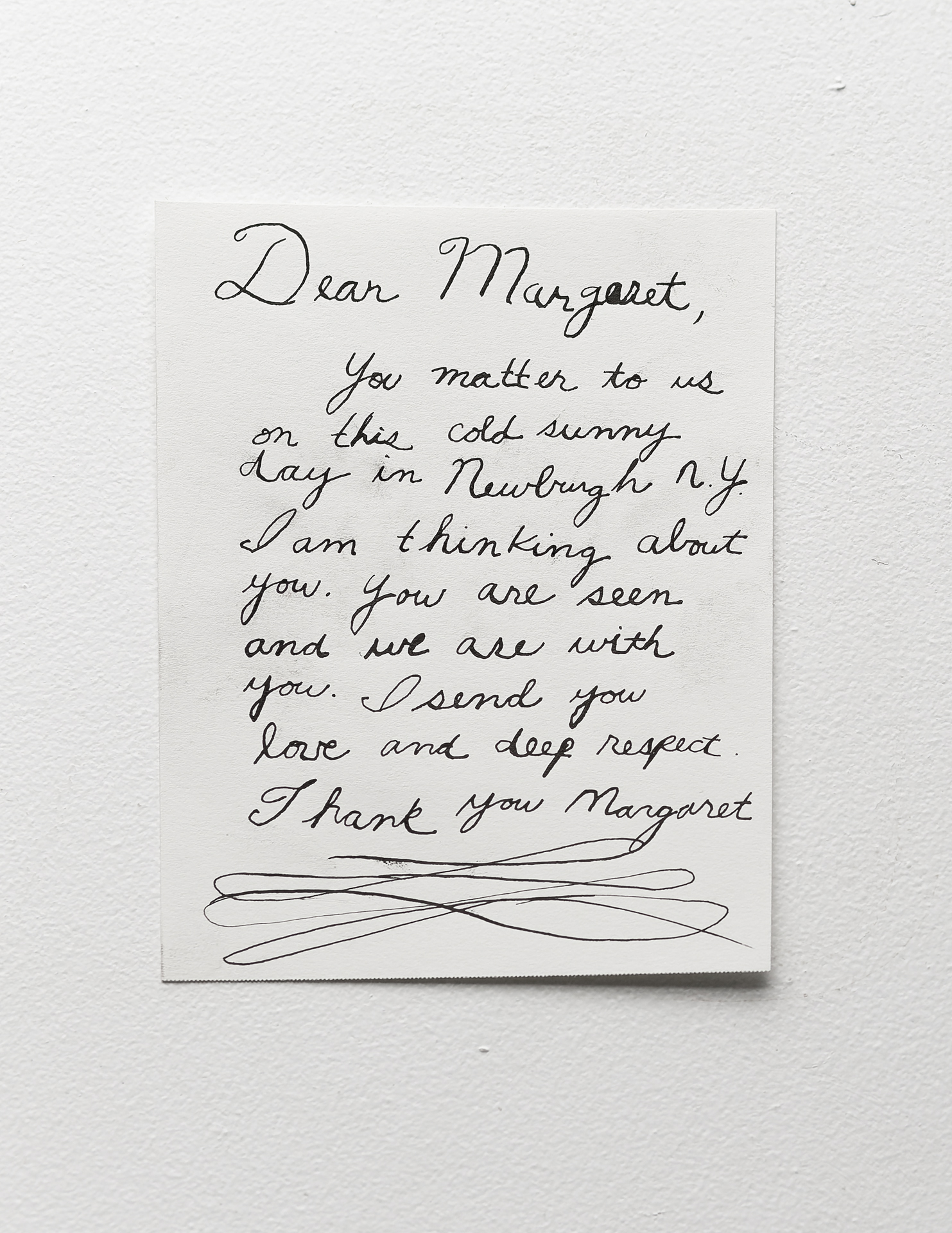


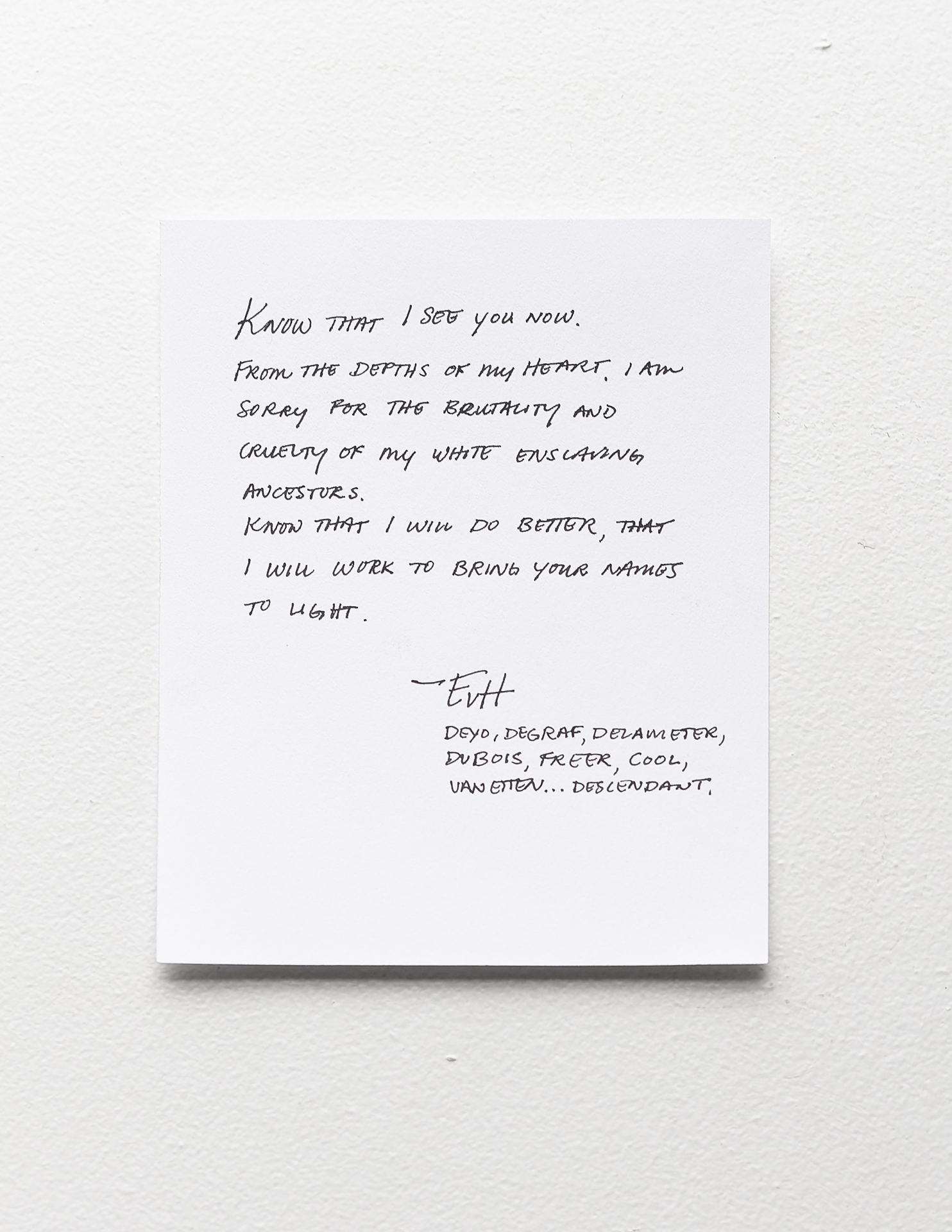


Francois Deschamps
Since 2010, in the extended project Photo-Rapide, Deschamps has been giving, rather than taking, photographs. Free collaborative portraits are printed on the spot and placed in a frame of the participant’s choice from a selection of frames based on cultural interests. In the Photo-Rapide work produced during From the Ground UP, Deschamps sought to bear witness to the sense of community that emerged from Saturday events at the Ann Street Gallery. The result is a community of images that reflect the lived community created by the exhibit.
Deschamps taught photography and related media at the State University of New Paltz from 1980 to 2020. He has received two fellowships from the National Endowment for the Arts, as well as three fellowships from the New York Foundation for the Arts. In 2010 he was awarded a Fulbright grant to Mali and in 2018 another Fulbright grant to Czech Republic. He has published over 15 artist books with the Borowsky Center at University of the Arts, Nexus Press, Visual Studies Workshop Press, State University of New York Press, and Auckland University Press, to name a few. Most recently, Model Theory was published by Visual Studies Workshop Press in 2023. Photo-Rapide: Francois Deschamps was a one-person show at the Dorsky Museum in 2013.
https://francoisdeschamps.net/
@francoisdeschamps


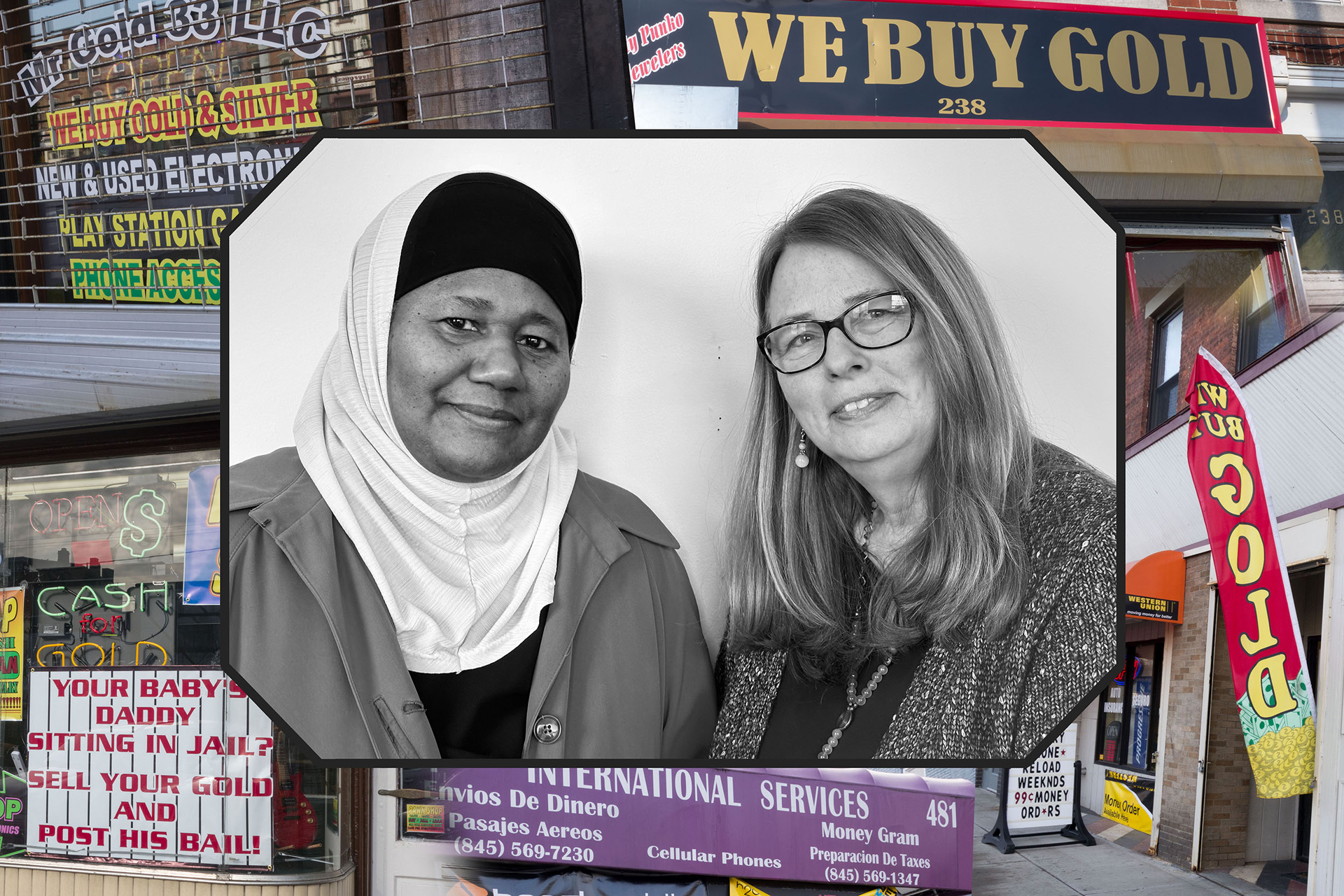
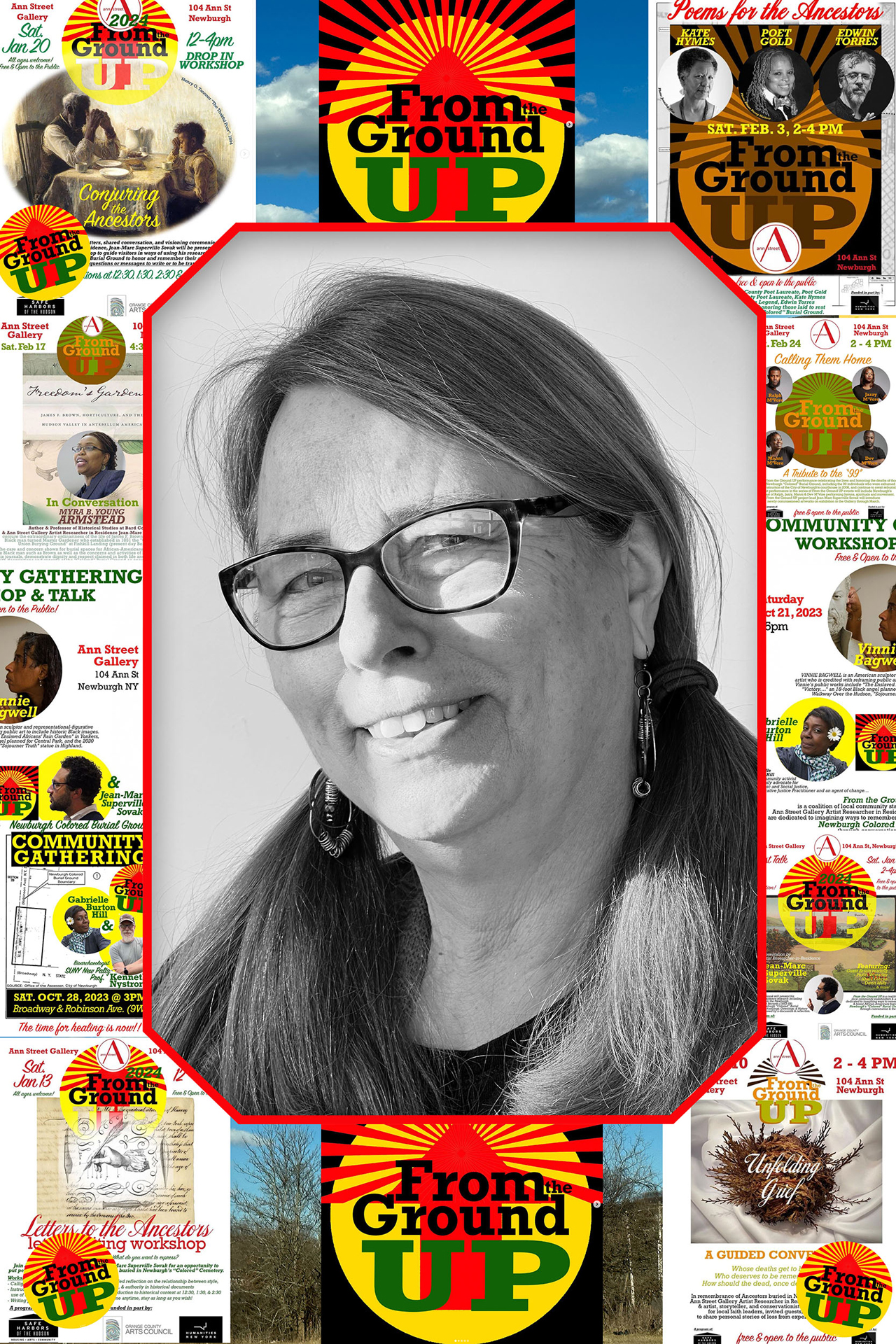


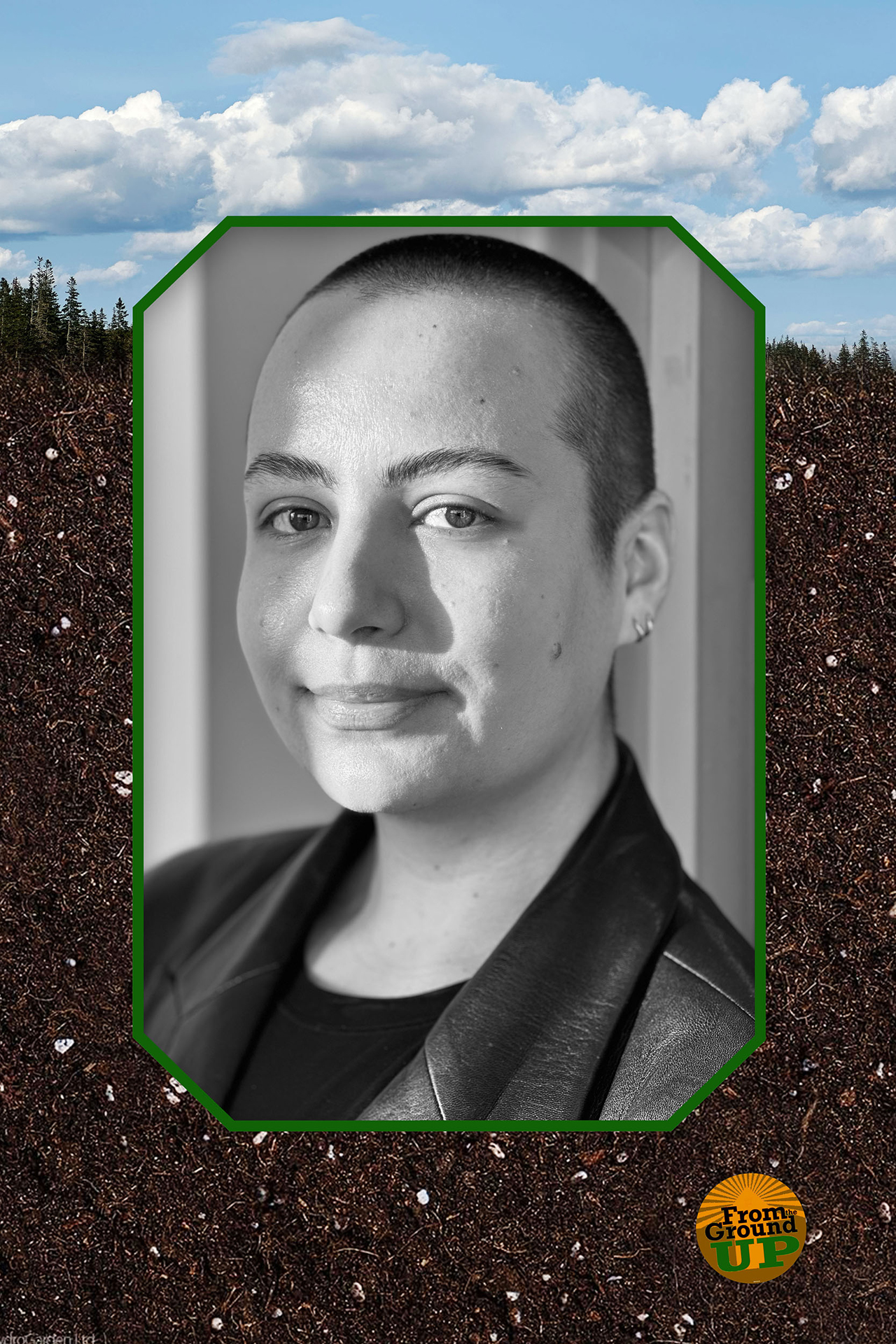


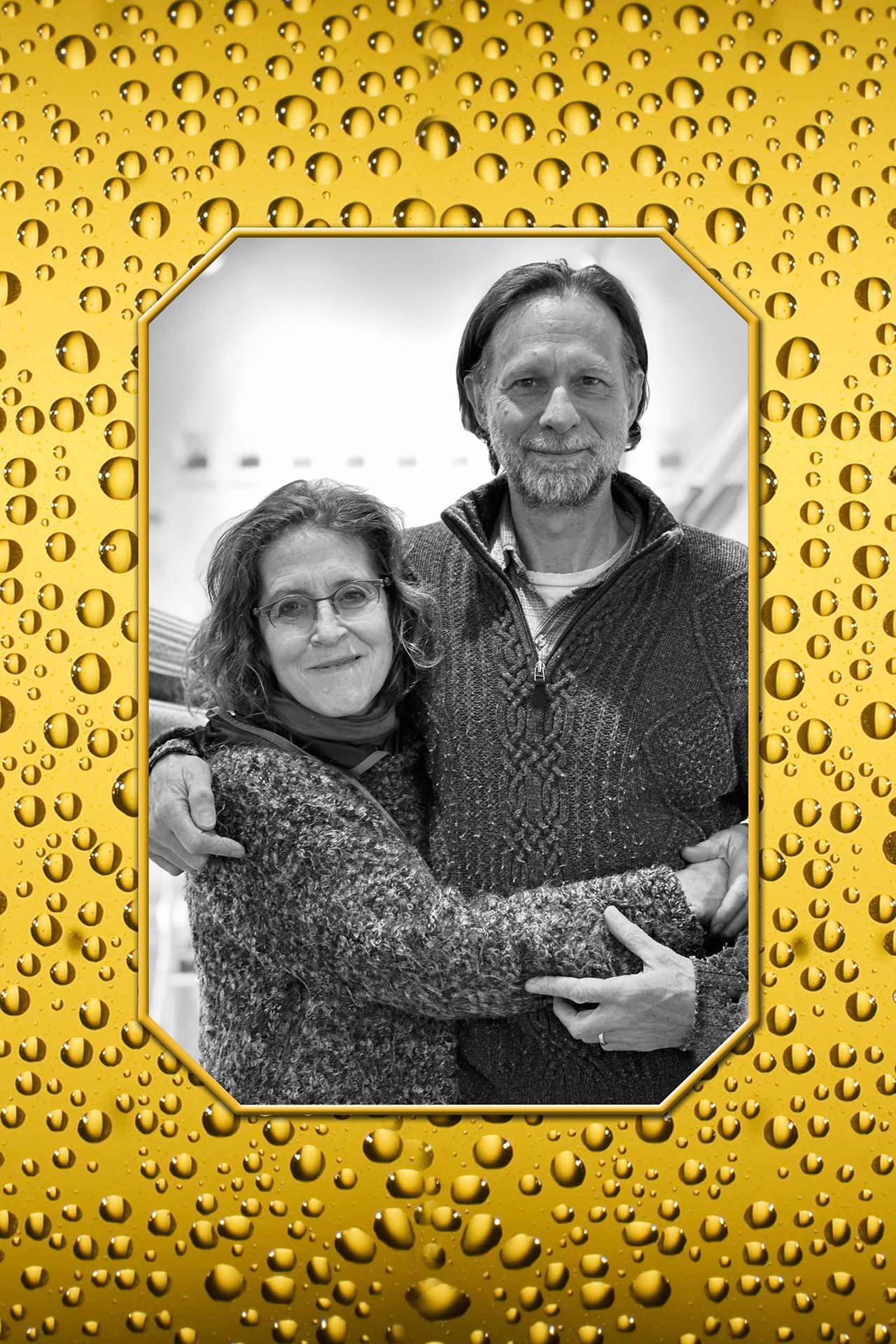


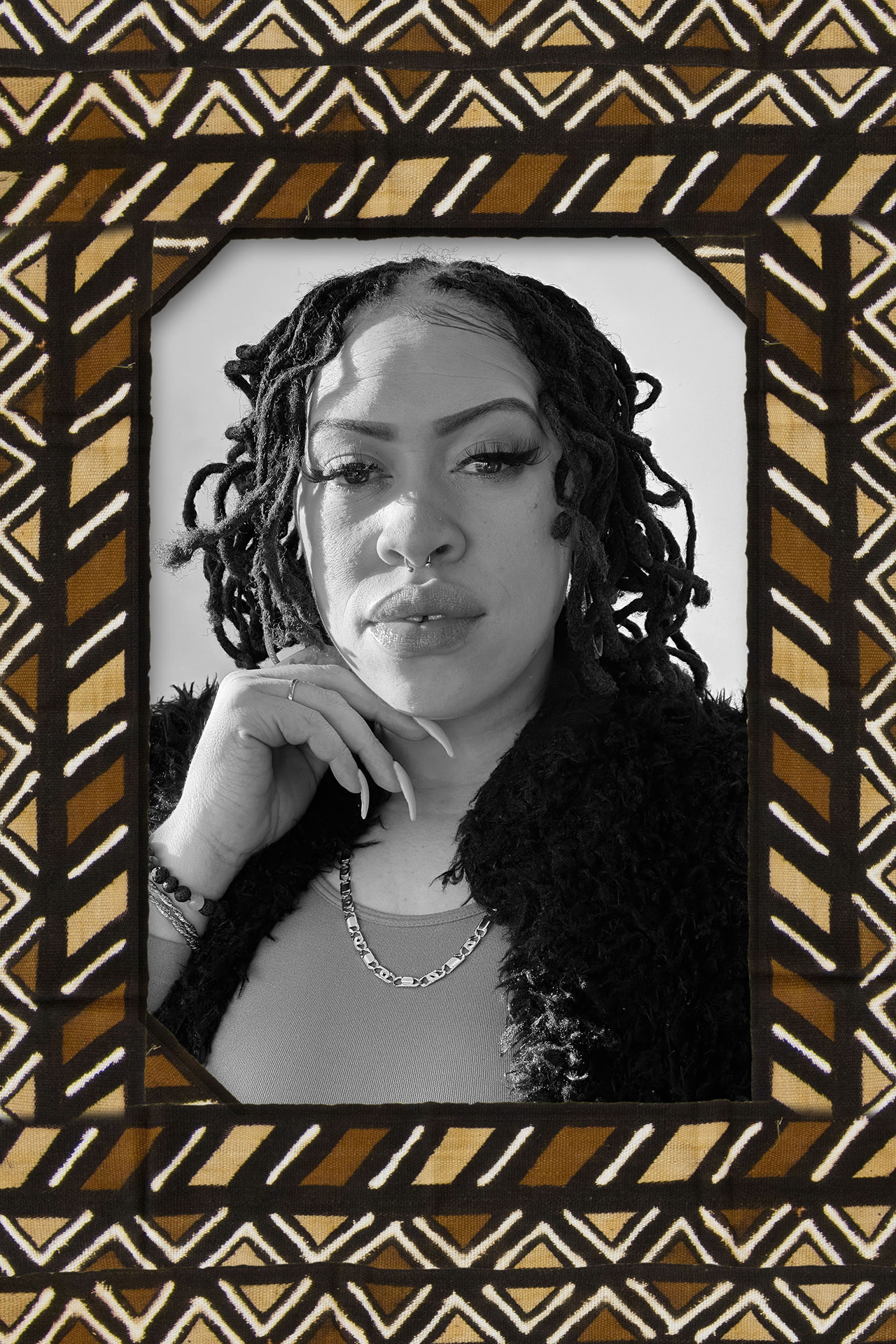


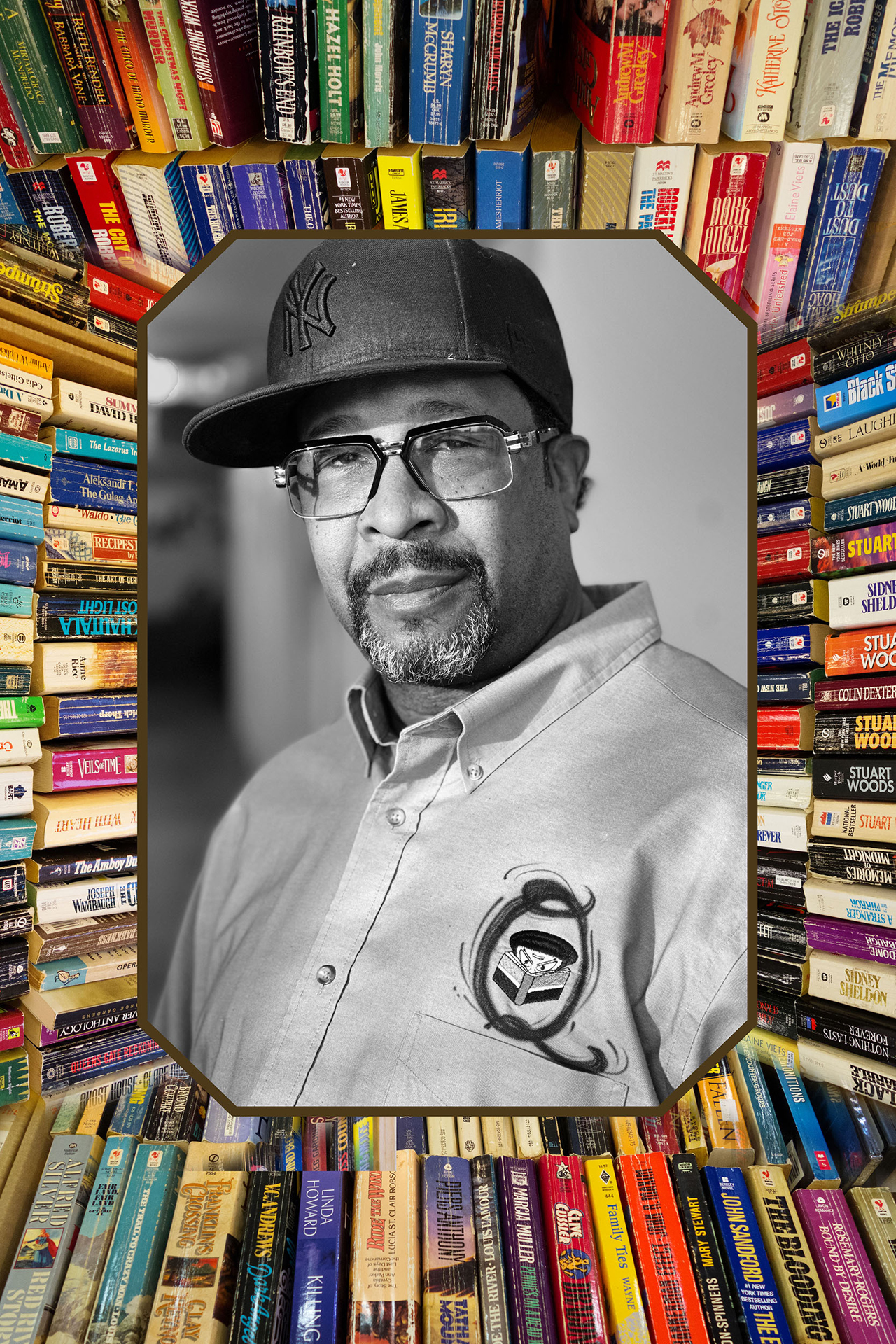


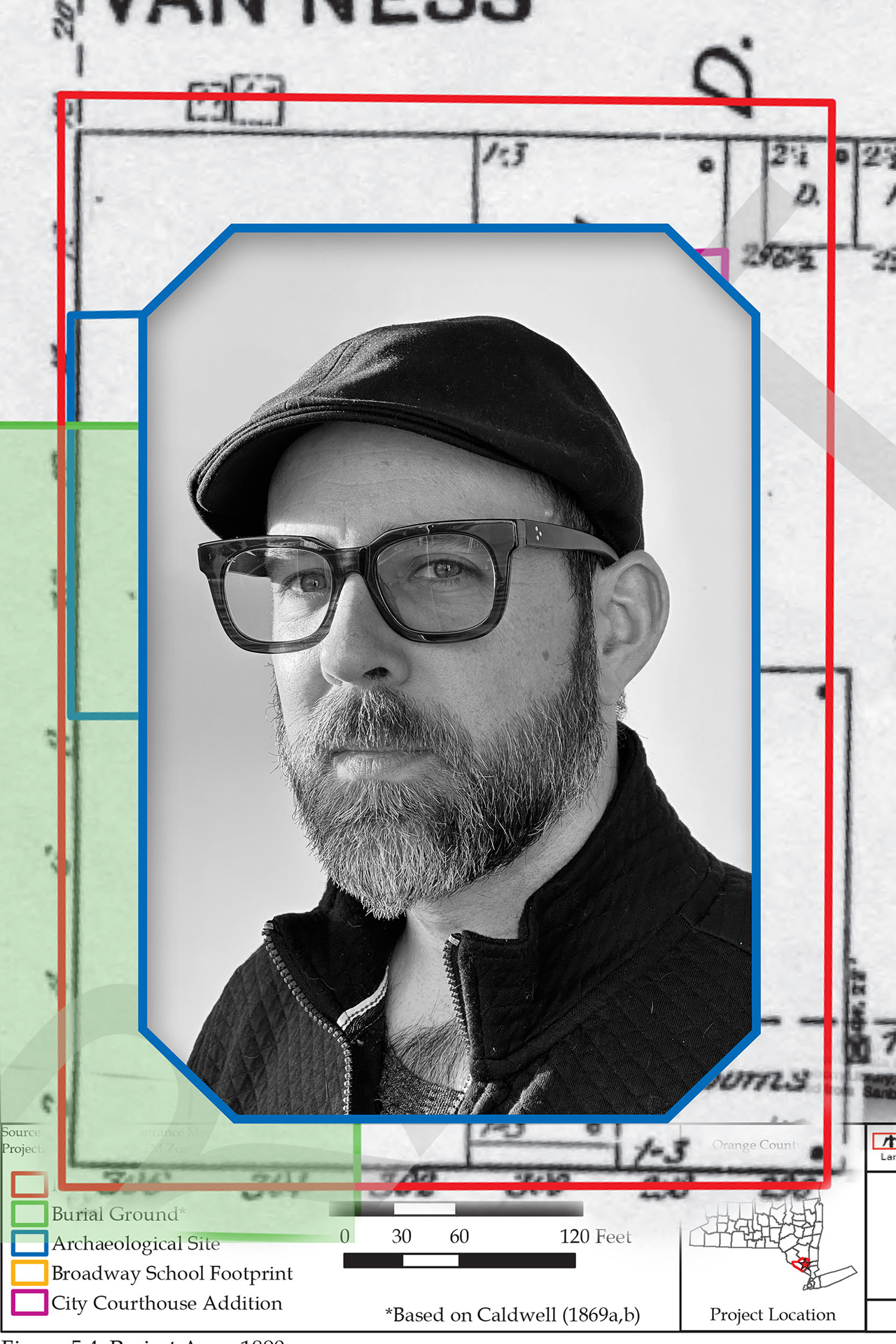
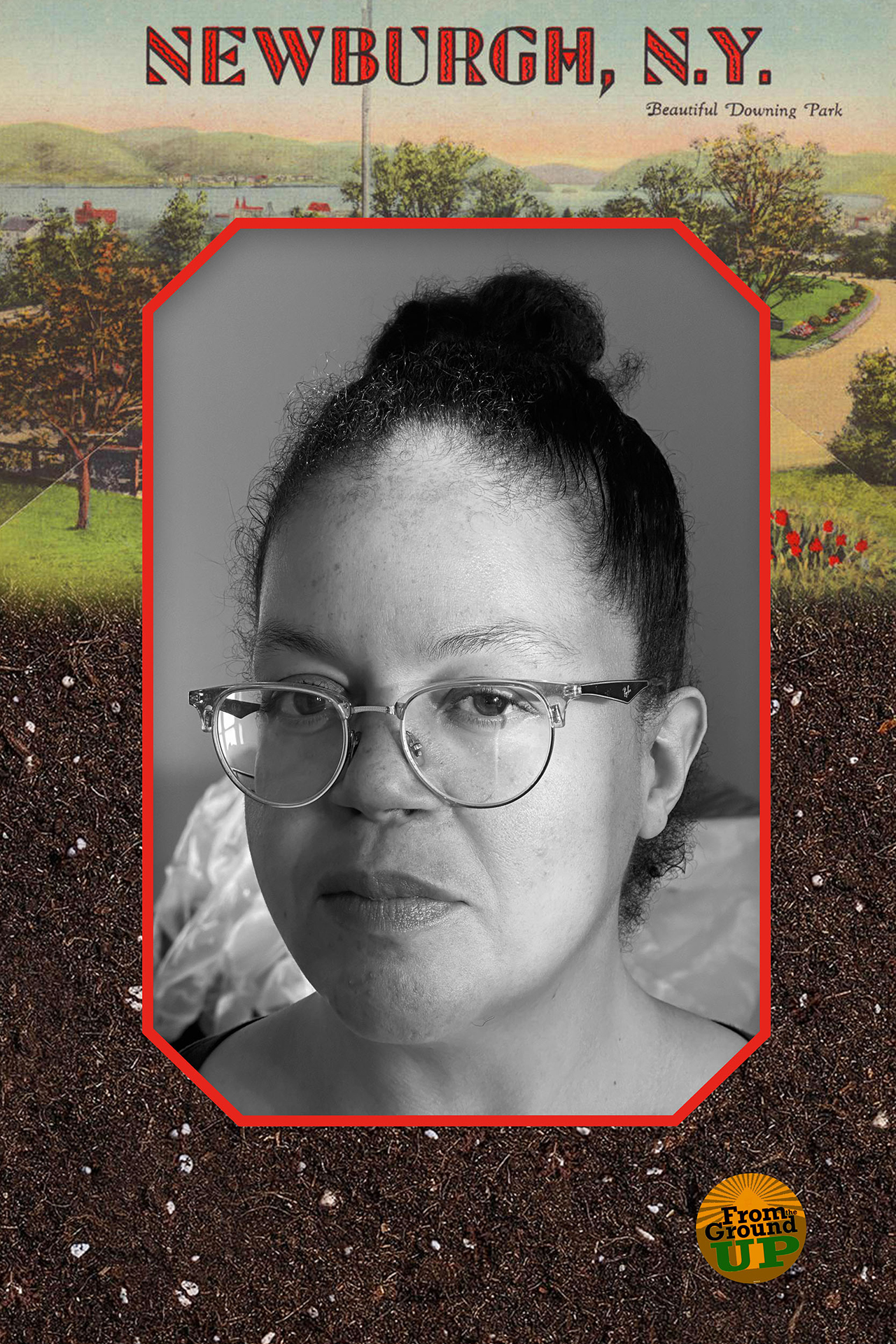

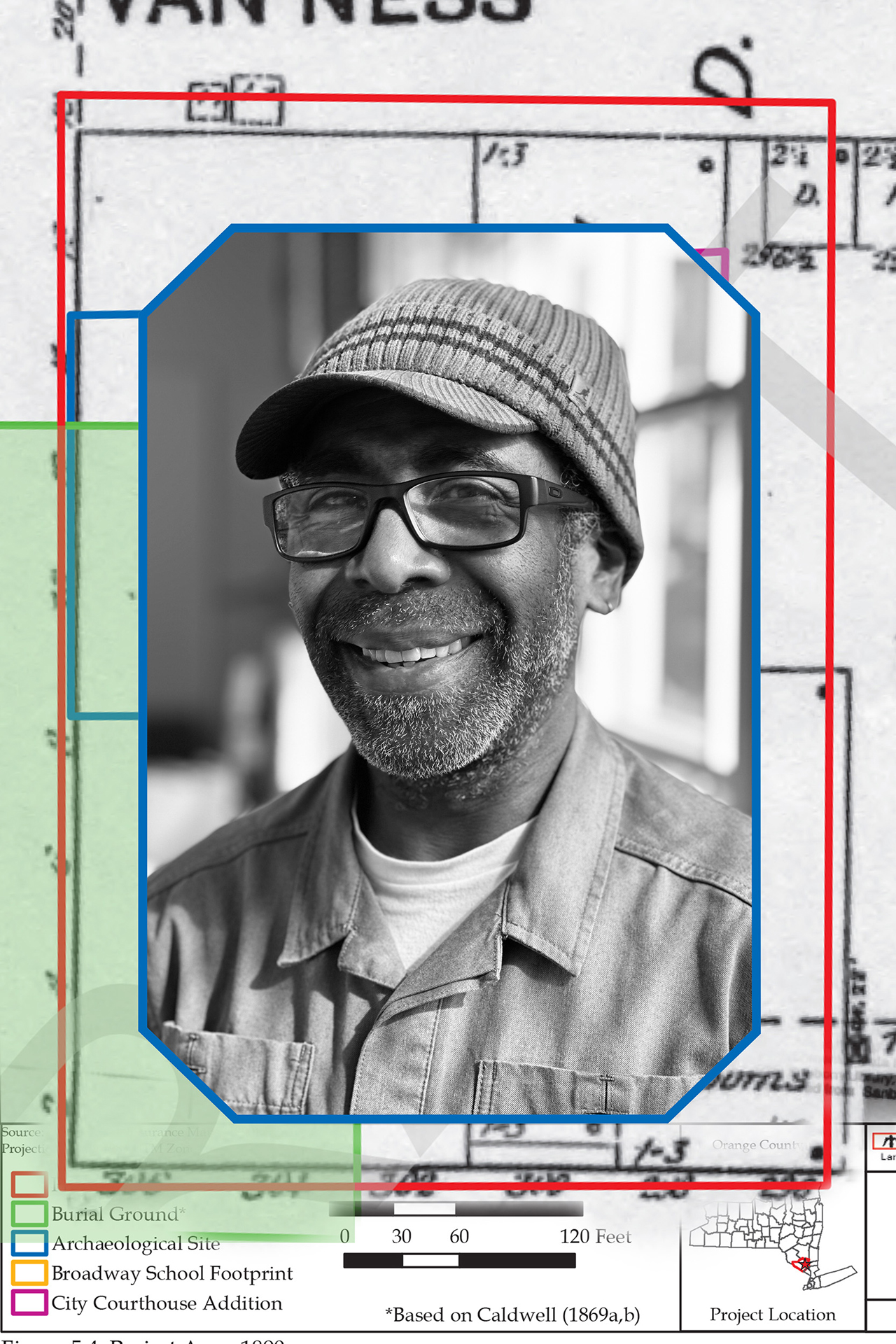
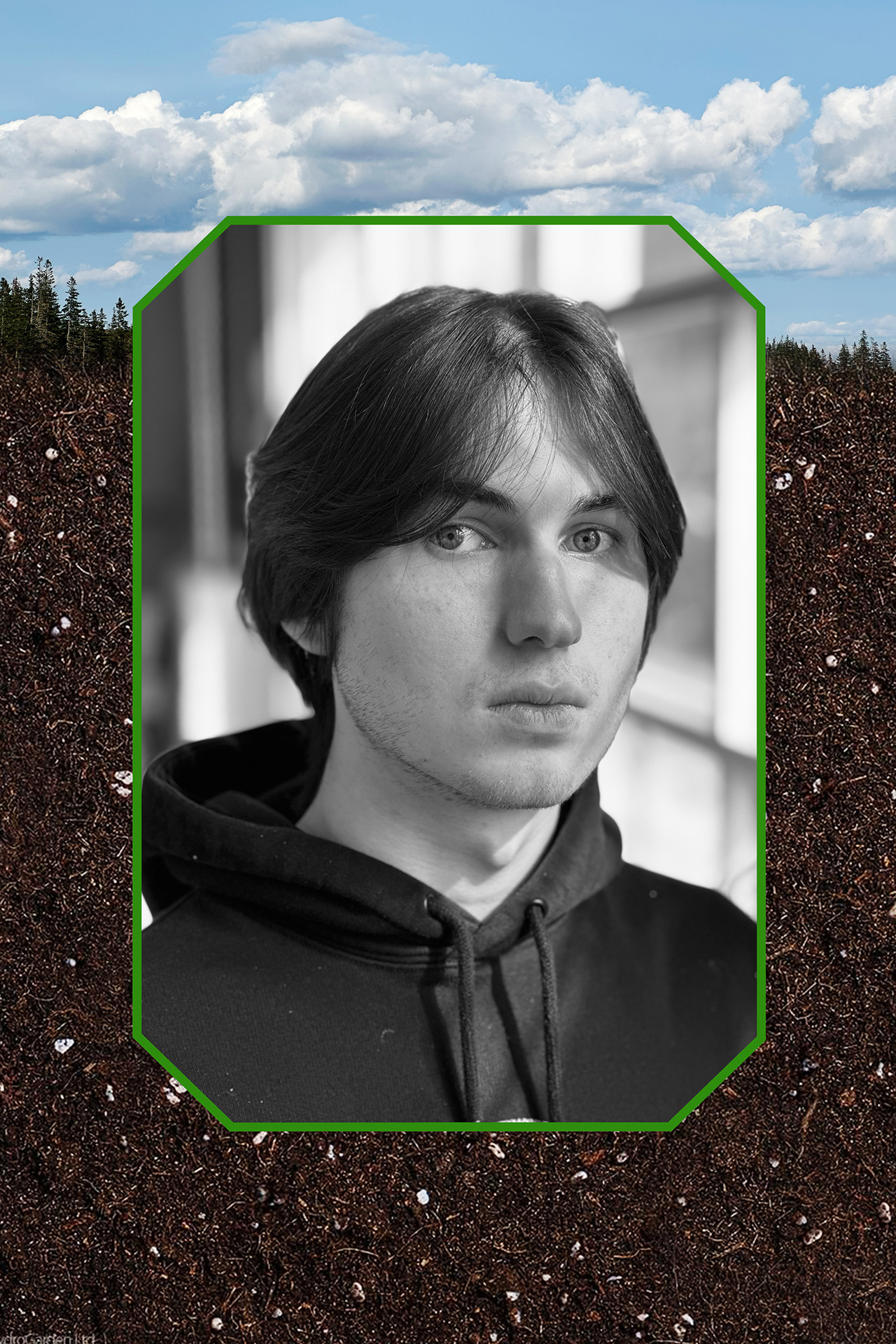
Photo Rapide: From the Ground UP, Newburgh
Digital archive and prints, dimensions variable
2023-24
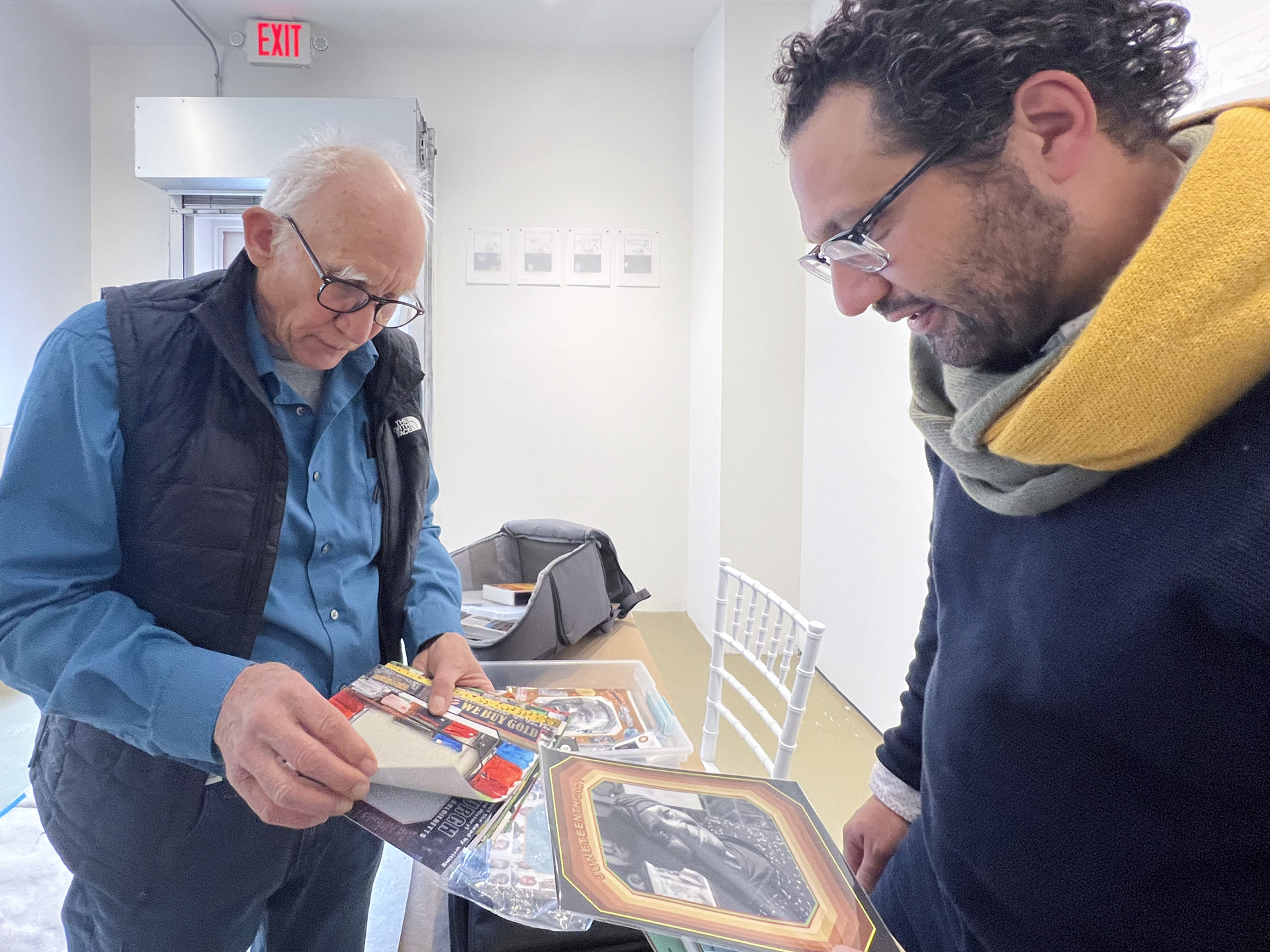

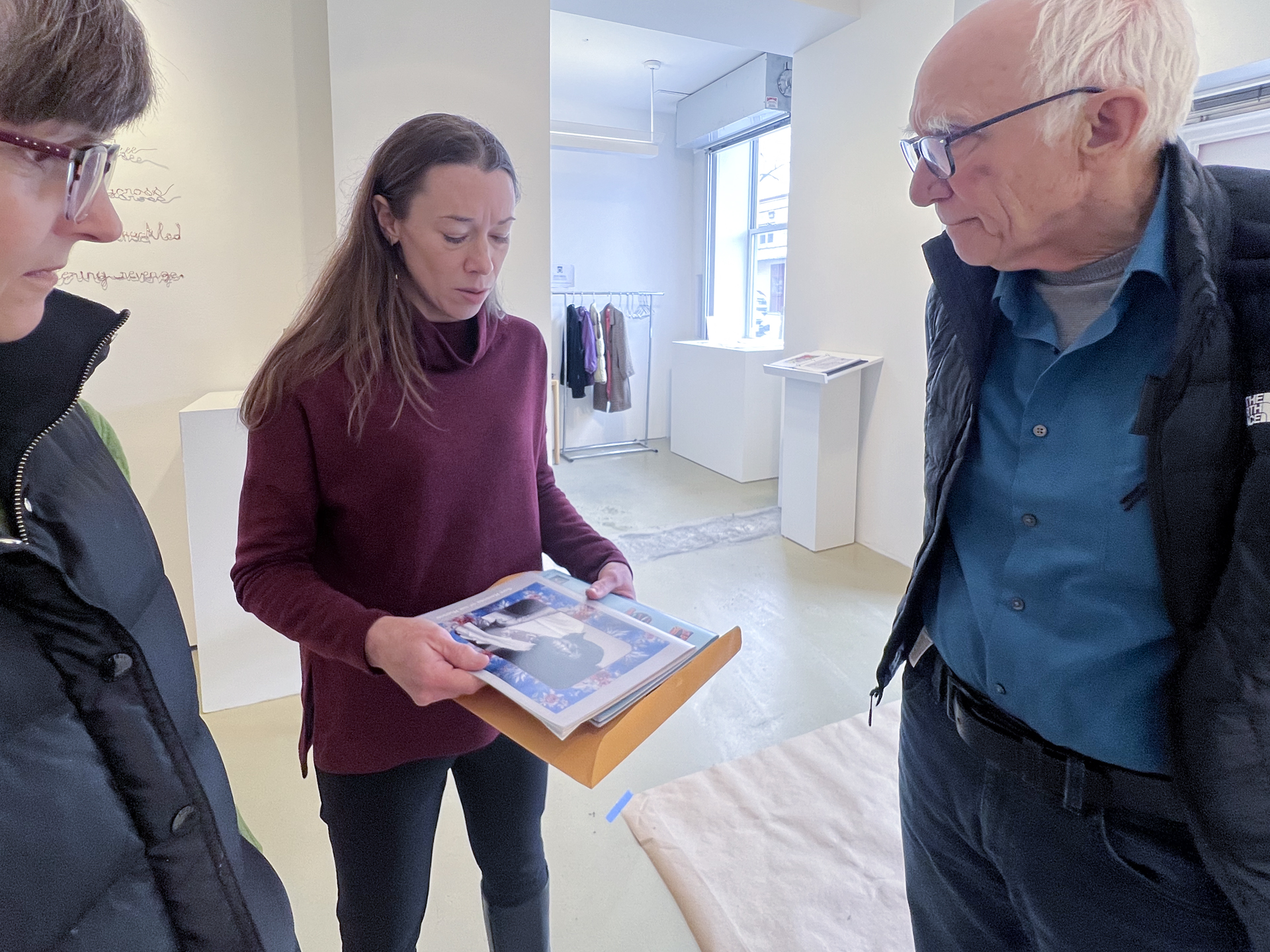


Evolution of the Gallery Space & Exhibition
Hosted by Ann Street Gallery, From the Ground UP is hosted by Ann Street Gallery and consists of three fluid project phases. The first phase launched in October 2023 with a series of community gatherings, presentations, and events that will continue through February 2024. The second phase of the project transforms the Gallery space into a lab, workshop, and exhibition space for Superville Sovak’s research, his socially engaged art practice, his creative output, and the display and performance of commissioned works from other interdisciplinary artists and cultural producers. The third and final phase of the project includes creating digital and analog archives of the project to record the public’s interactions, the artist’s research and process, and the developments of the project in the form of a website and printed materials. The project archives aim to serve as a model for collective forms of memorialization, a resource, and symbolic form of restorative justice for the City of Newburgh.





Press for From the Ground UP
HYPERALLERGIC
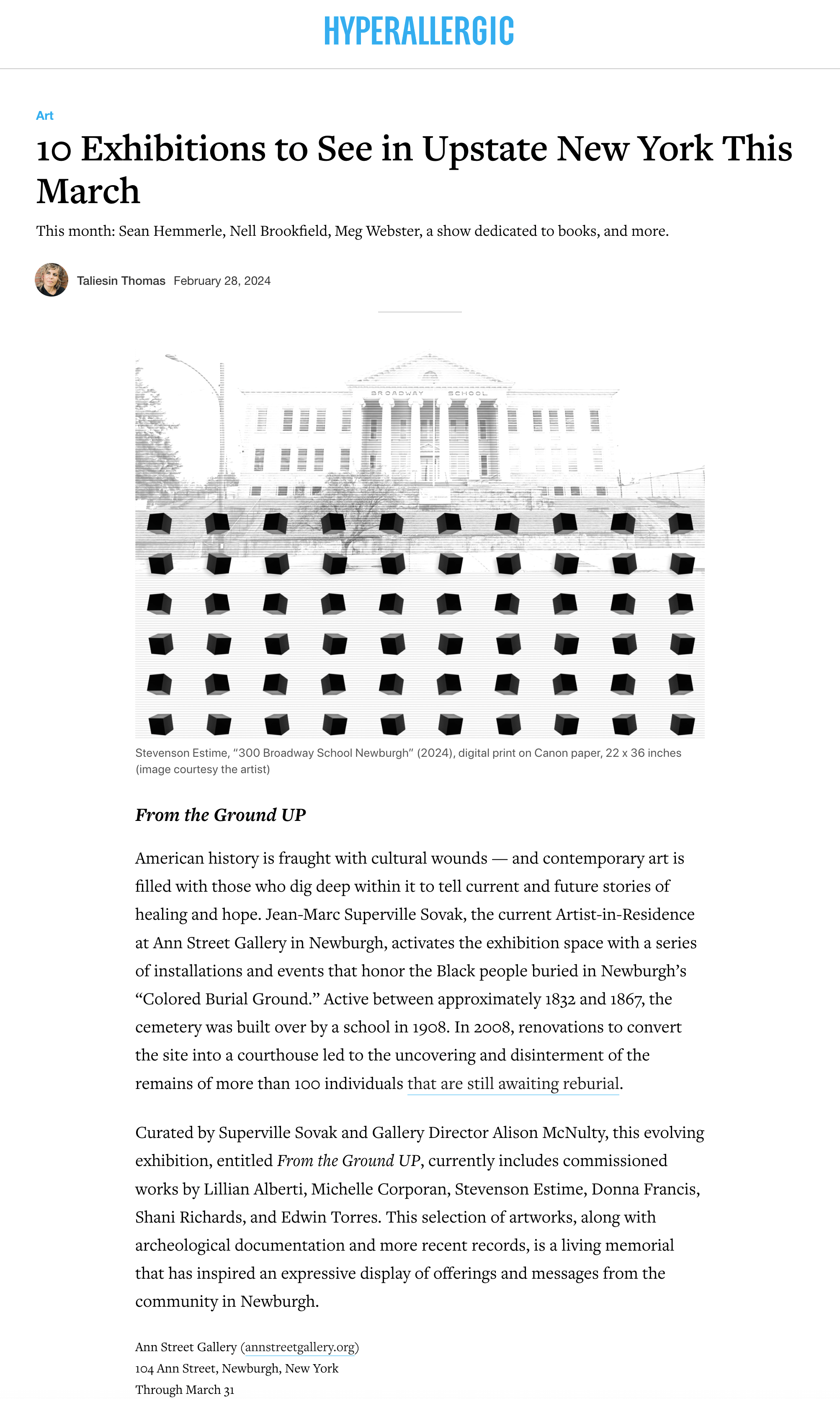
10 Exhibitions to See in Upstate New York This March
Taliesin Thomas February 28, 2024
LIFE ON THE HUDSON
Forgotten no more
Tim Lamorte
March 4, 2024
TWO COATS OF PAINT
Hudson Vallery and Vicinity Selected Gallery Guide March 2024
March 1, 2024
iHEART RADIO
Peter and the Poet Gold
“Unforgetting in Newburgh” | Guest Jean-Marc Superville Sovak Tells of the Reclaiming of a 19th Century “Colored” Cemetery
February 1, 2024 (25 mins)
“Unforgetting in Newburgh” - Part 2 | Guest Jean-Marc Superville Sovak Tells of the Reclaiming of a 19th Century “Colored” Cemetery
February 9, 2024 (25 mins)
HUDSON VALLEY TIMES.com
From the Ground Up
Dec 16, 2023
Jan 11, 2024
From the Ground UP is made possible with support from:
![]()
![]()

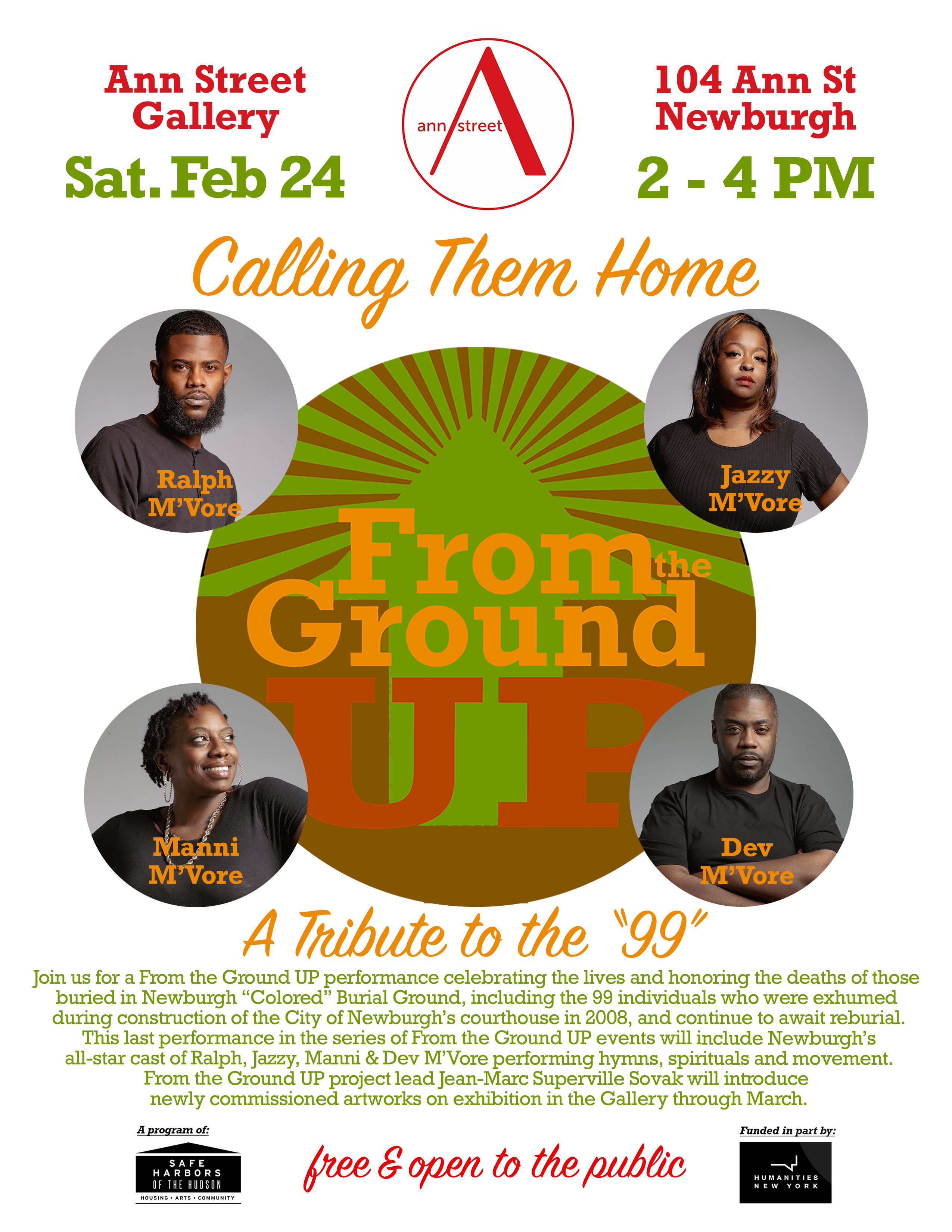
Calling Them Home: A Tribute to the “99”
Saturday
February 24, 2024
2-4pm
Ann Street Gallery
Free & open to the public.
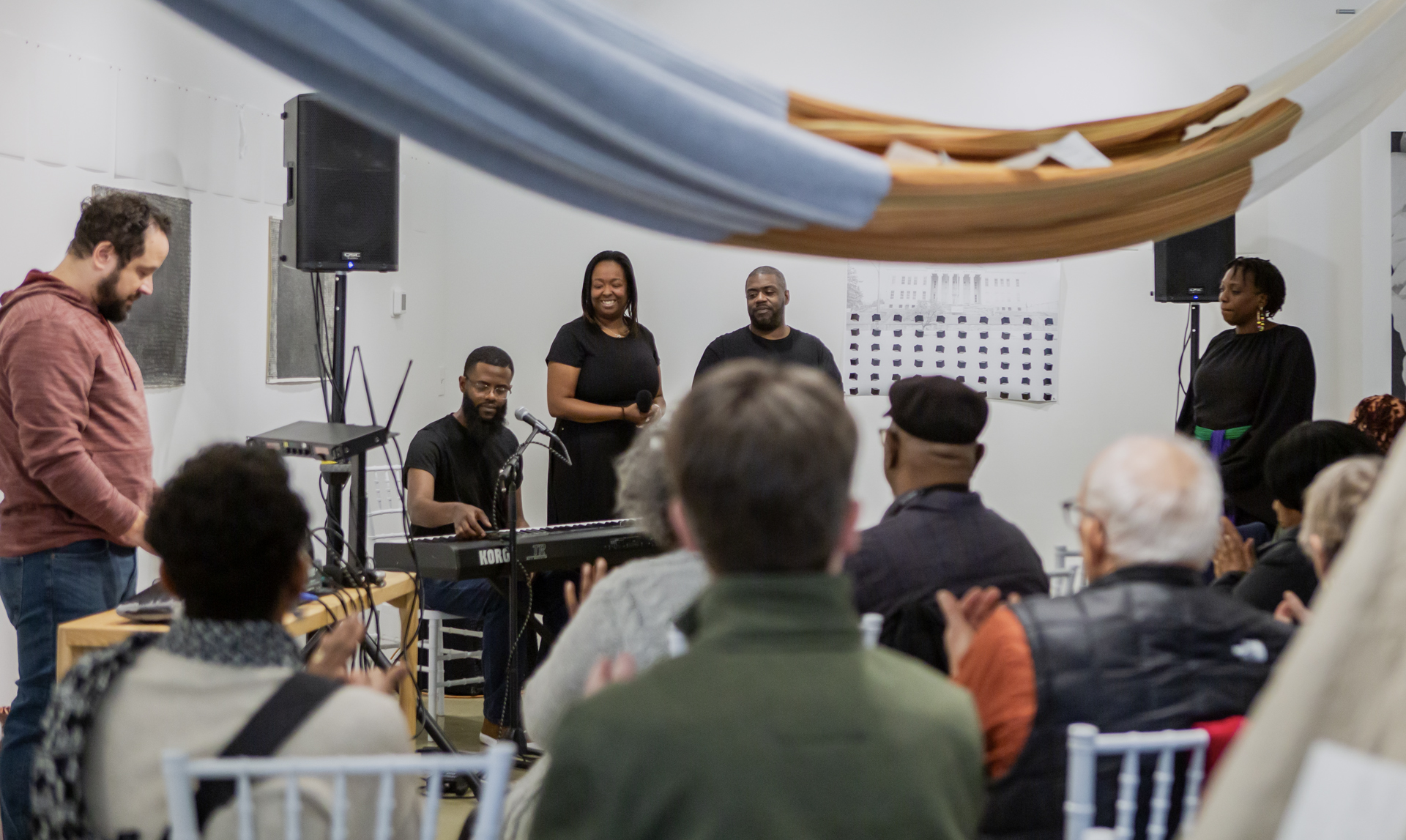
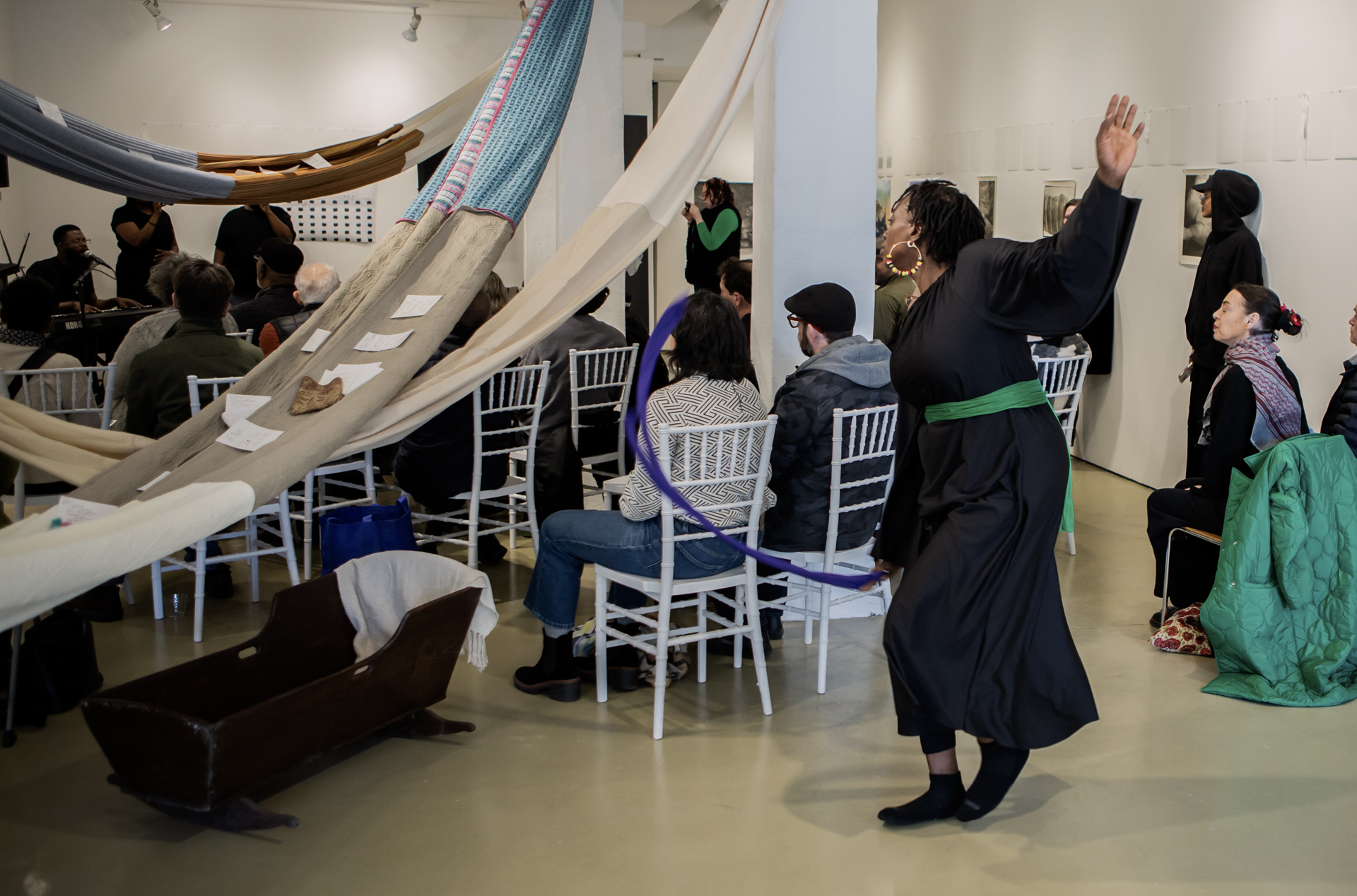
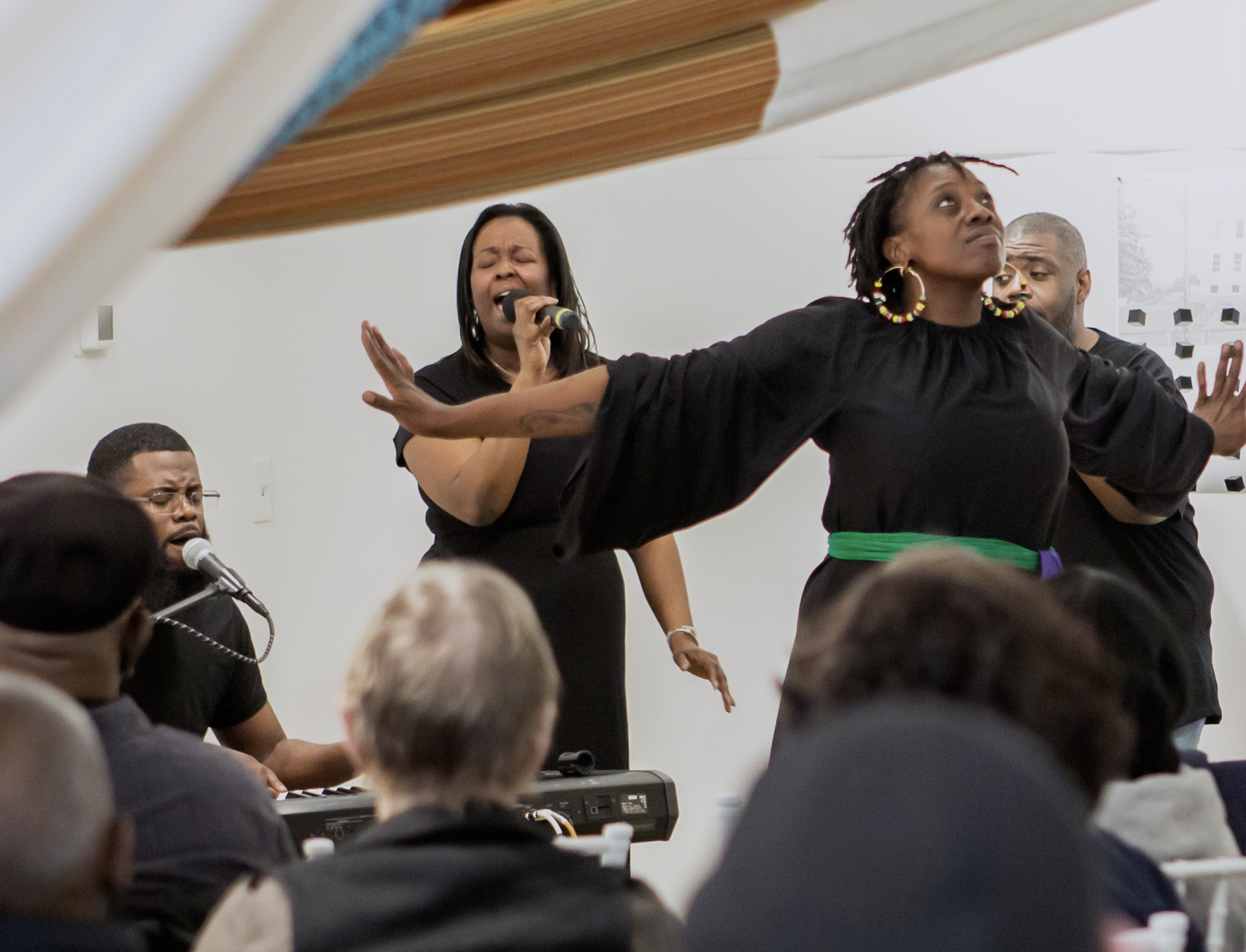
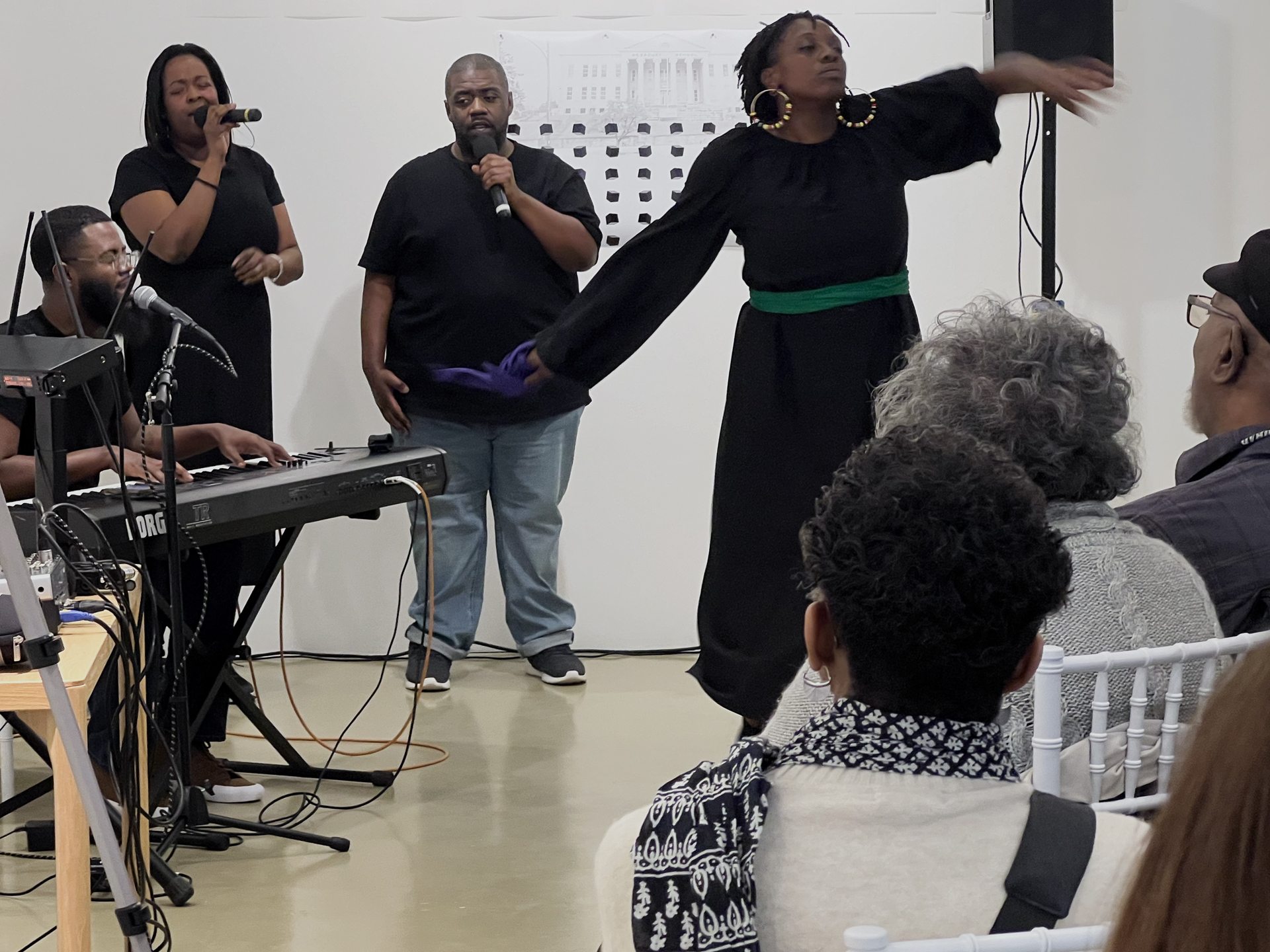
Join us for a From the Ground UP performance celebrating the lives and honoring the deaths of those buried in Newburgh “Colored” Burial Ground, including the 99 individuals who were exhumed during construction of the City of Newburgh’s courthouse in 2008, and continue to await reburial.
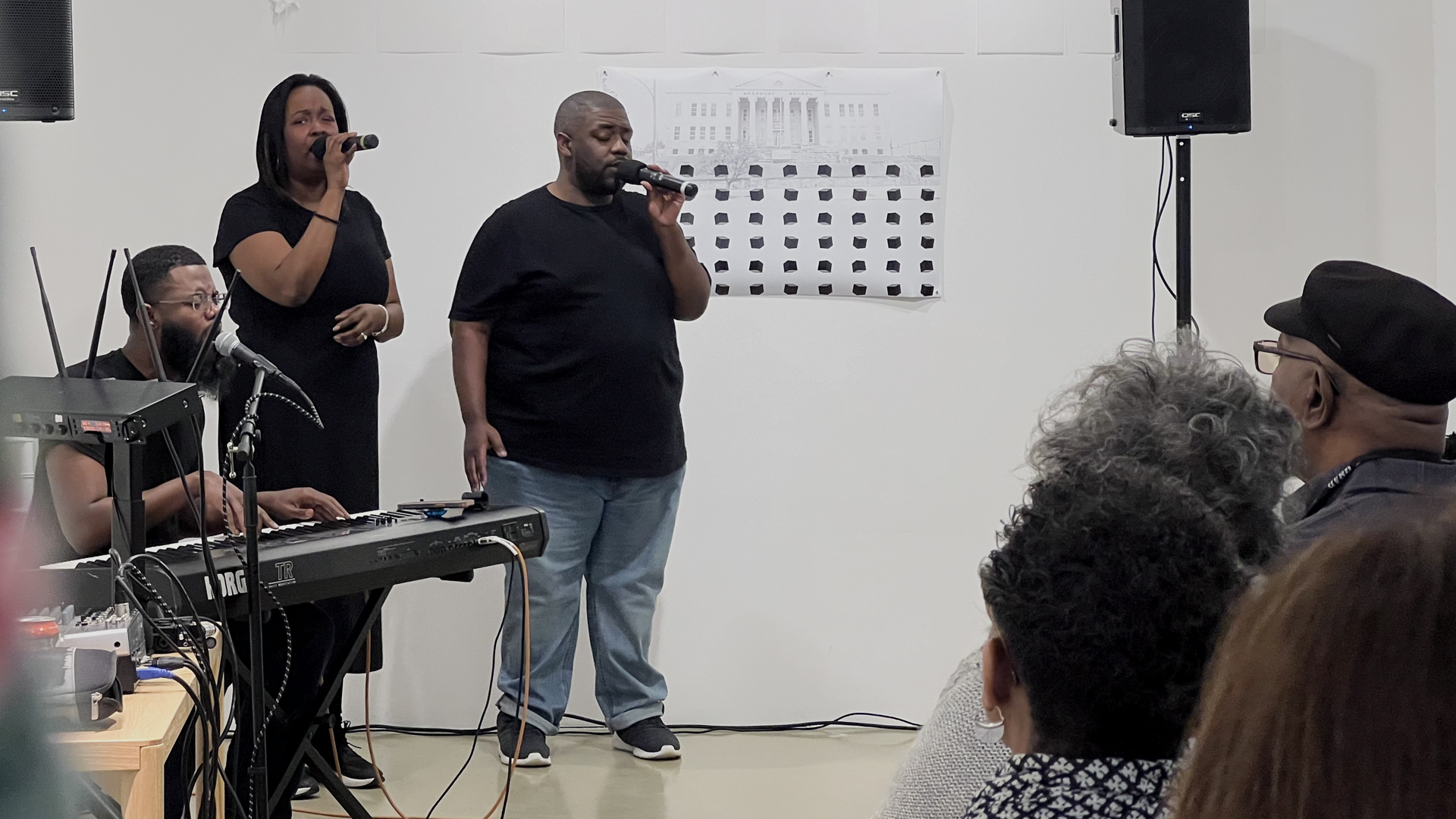
This last performance in the series of From the Ground UP events will include Newburgh’s all-star cast of Ralph, Jazzy, Manni & Dev M’Vore performing hymns, spirituals and movement. From the Ground UP project lead Jean-Marc Superville Sovak will introduce newly commissioned artworks on exhibition in the Gallery through March.
The Gallery exhibition will continue to be open Saturdays and Sundays 12-4 through March 31.
@ftgu2024 is a convergence of local community stakeholders and artists led by Ann Street Gallery Artist Researcher in Residence, Jean-Marc Superville Sovak @supersovak. The project brings Superville Sovak’s creative research and practice together with community members dedicated to imagining, rendering, and presenting collaboratively-designed visions for remembering and honoring African- Americans buried in, and disinterred from, Newburgh’s “Colored Burial Ground” through conversation and the arts.
Please visit our Opportunites page to read about our Open Calls for participation in the project. Visitors can bring your offerings, letters, sketches, ideas, and questions on Saturdays & Sundays 12-4. We will continue to host events every Saturday through February.
No reservation needed. All are welcome!







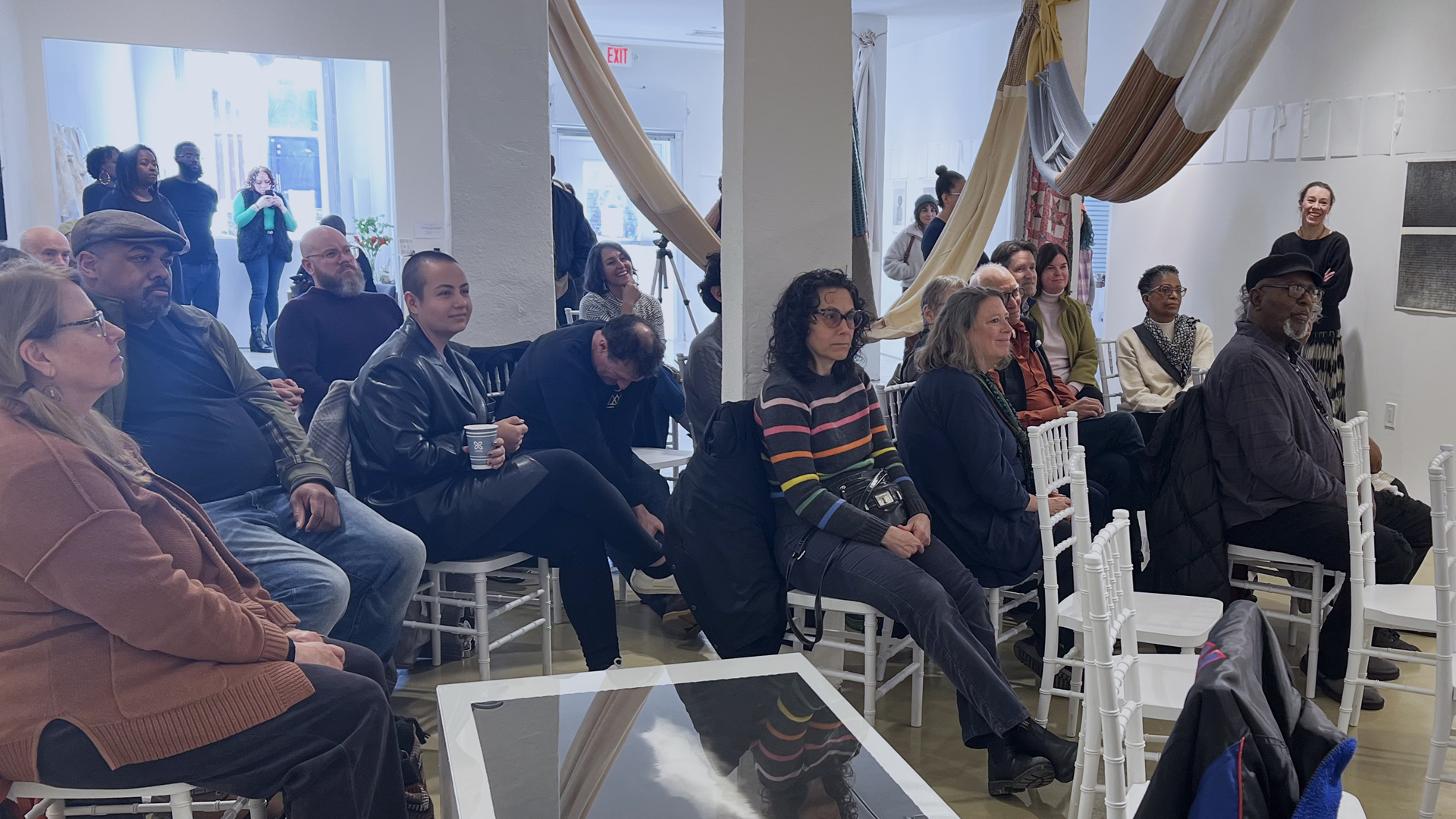





Myra B. Young Armstsead, Author of Freedom’s Gardener; James F. Brown, Horticulture, and the Hudson Valley in Antebellum America & Professor of Historical Studies at Bard College, & Ann Street Gallery Artist Researcher in Residence, Jean-Marc Superville Sovak
Saturday
February 17, 2024
4:30-5:30pm
Ann Street Gallery
Free & open to the public.
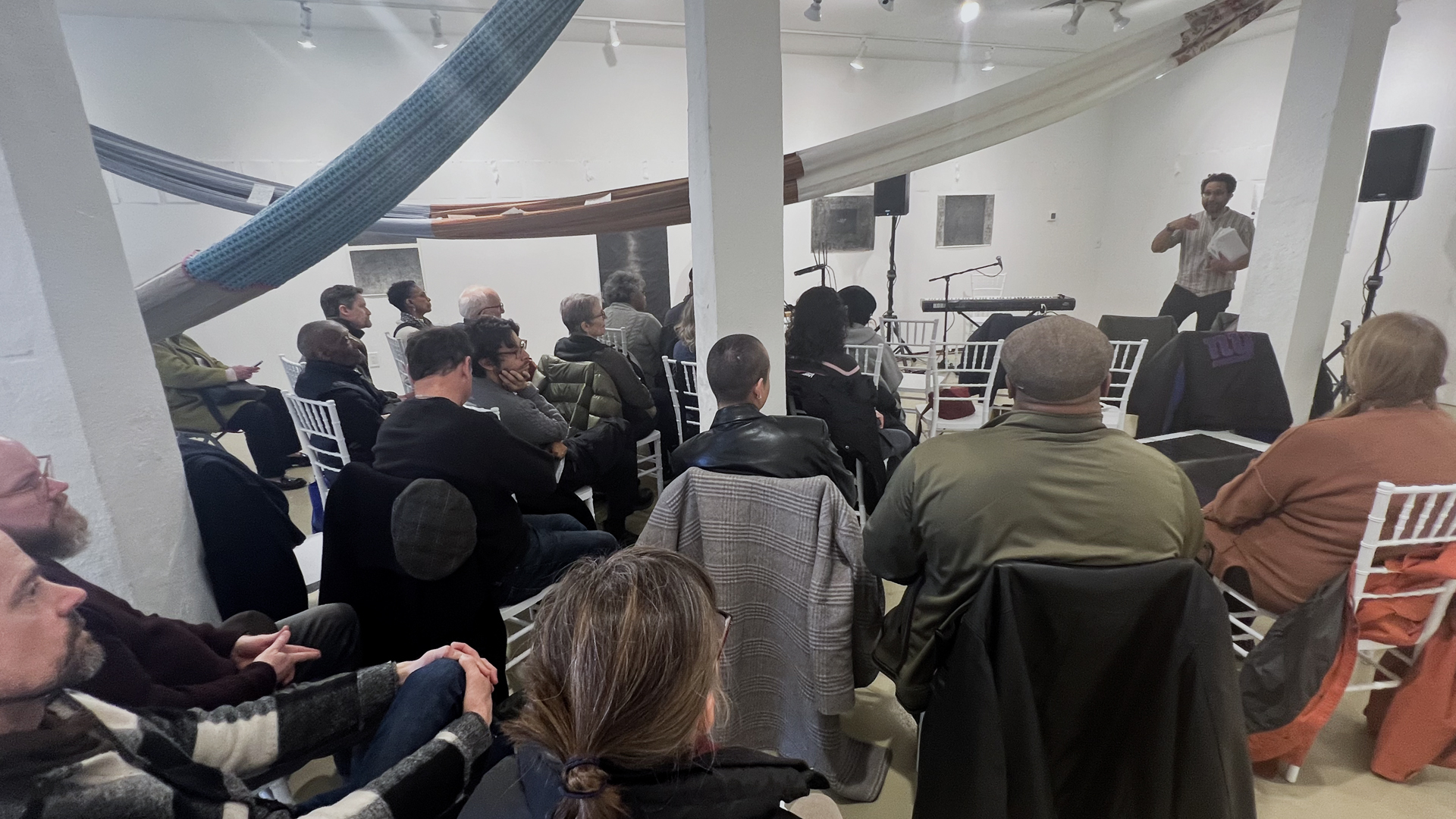
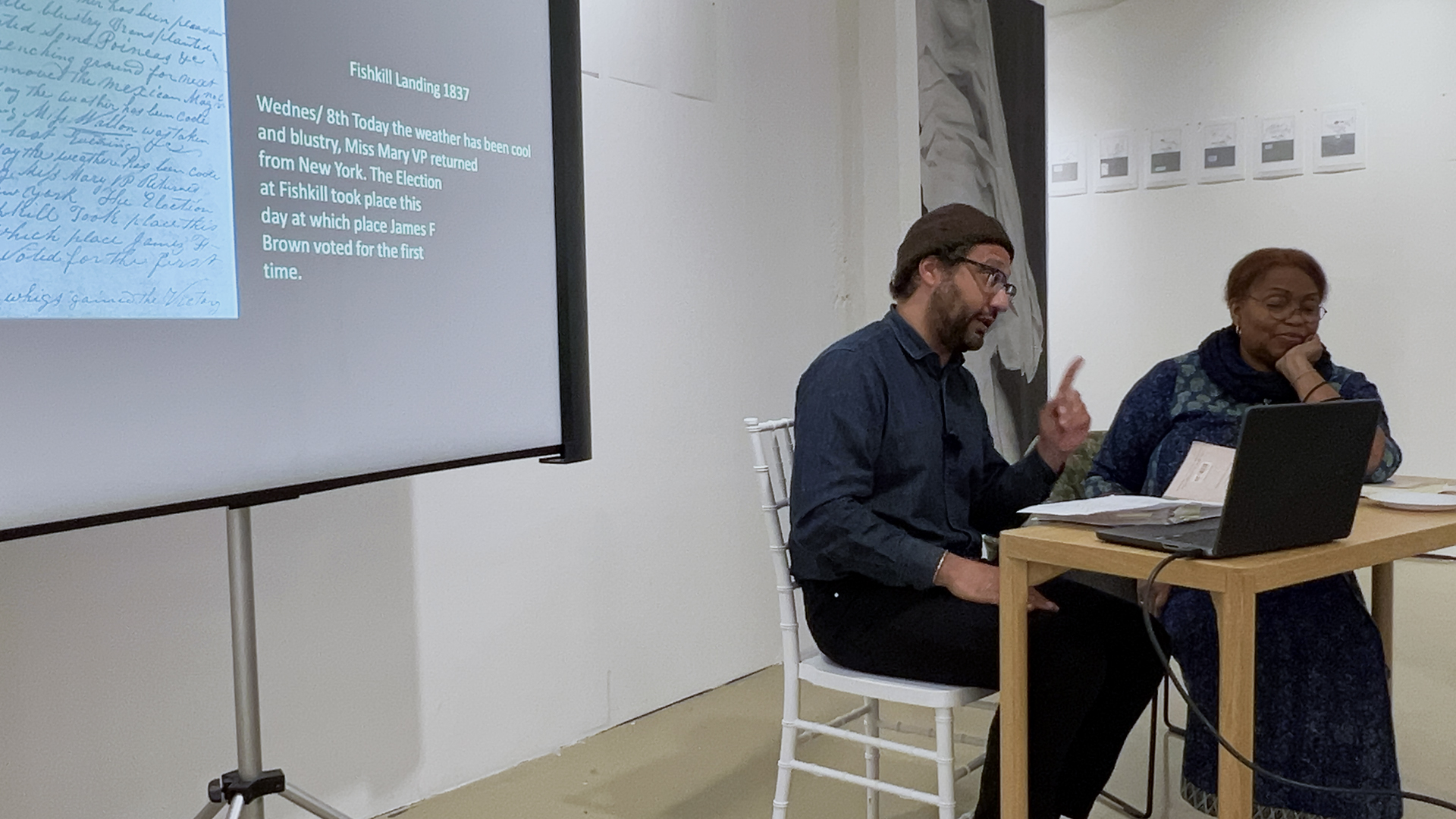
Dr. Armstead and Superville Sovak will conjure the extraordinary ordinariness of the life of James F. Brown, an emancipated Black man turned Master Gardener who established in 1851 the "Colored Peoples Union Burying Ground" at Fishkill Landing (present day Beacon, NY).
The care and concern shown for burial spaces for African-Americans by an enfranchised, free Black man such as Brown as well as the concerns and activities of his days as chronicled in his journals, demonstrate dignity and respect claimed in both life and death, which contrast with descriptions and records of the "Colored” Burial Ground as operated by Newburgh’s Almshouse until 1867. The comparison invites us to look closer at evidence that the Ancestors buried in Newburgh’s “Colored” Burial Ground were cared for by their loved ones while also considering a vision for how they could have been shown proper care and respect under the city's charge.
@ftgu2024 is a convergence of local community stakeholders and artists led by Ann Street Gallery Artist Researcher in Residence, Jean-Marc Superville Sovak @supersovak. The project brings Superville Sovak’s creative research and practice together with community members dedicated to imagining, rendering, and presenting collaboratively-designed visions for remembering and honoring African- Americans buried in, and disinterred from, Newburgh’s “Colored Burial Ground” through conversation and the arts.
Please visit our Opportunites page to read about our Open Calls for participation in the project. Visitors can bring your offerings, letters, sketches, ideas, and questions on Saturdays & Sundays 12-4. We will continue to host events every Saturday through February.
No reservation needed. All are welcome!


Unfolding Grief
Saturday
February 10, 2024
2-4pm
Ann Street Gallery
Free & open to the public.
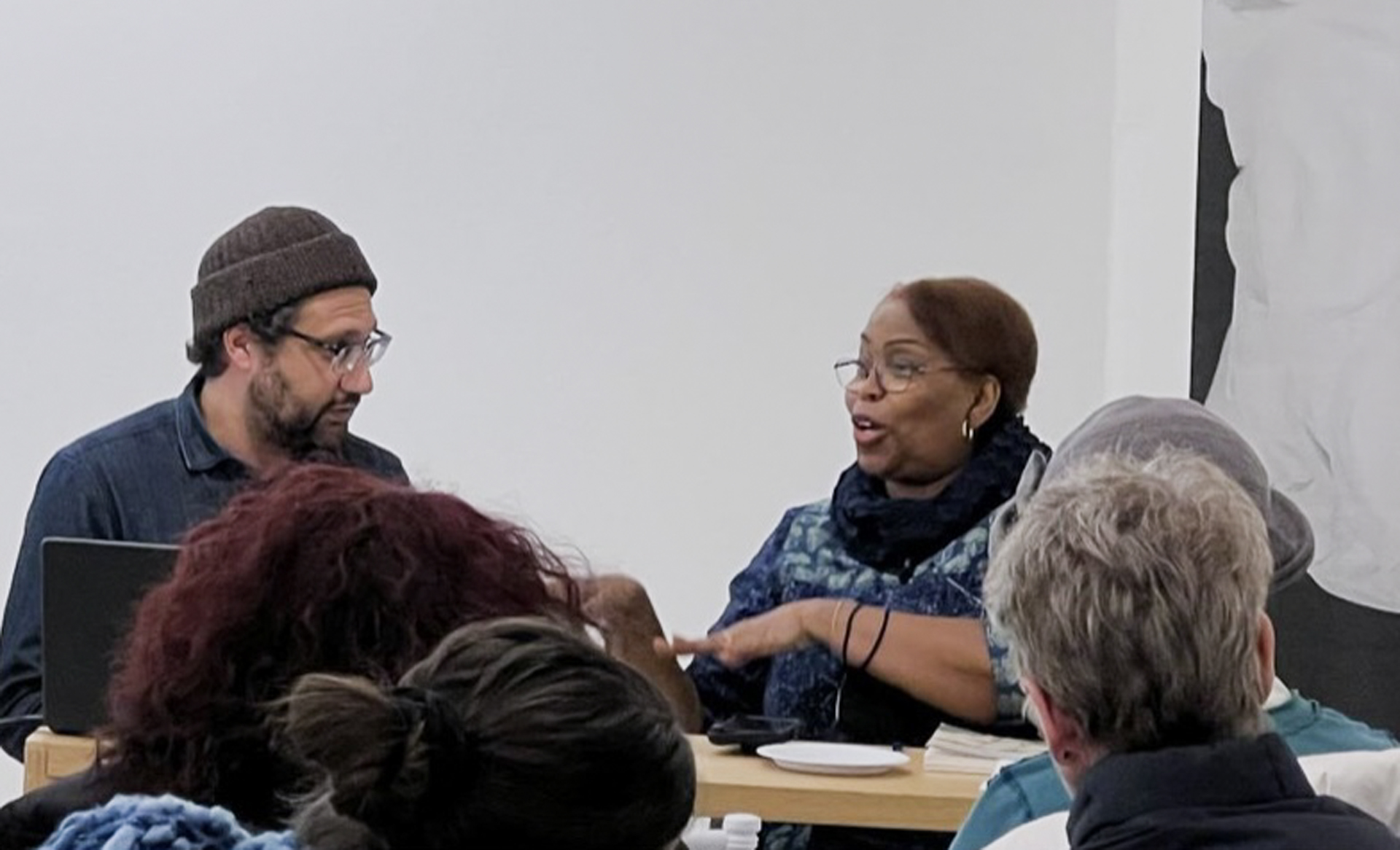
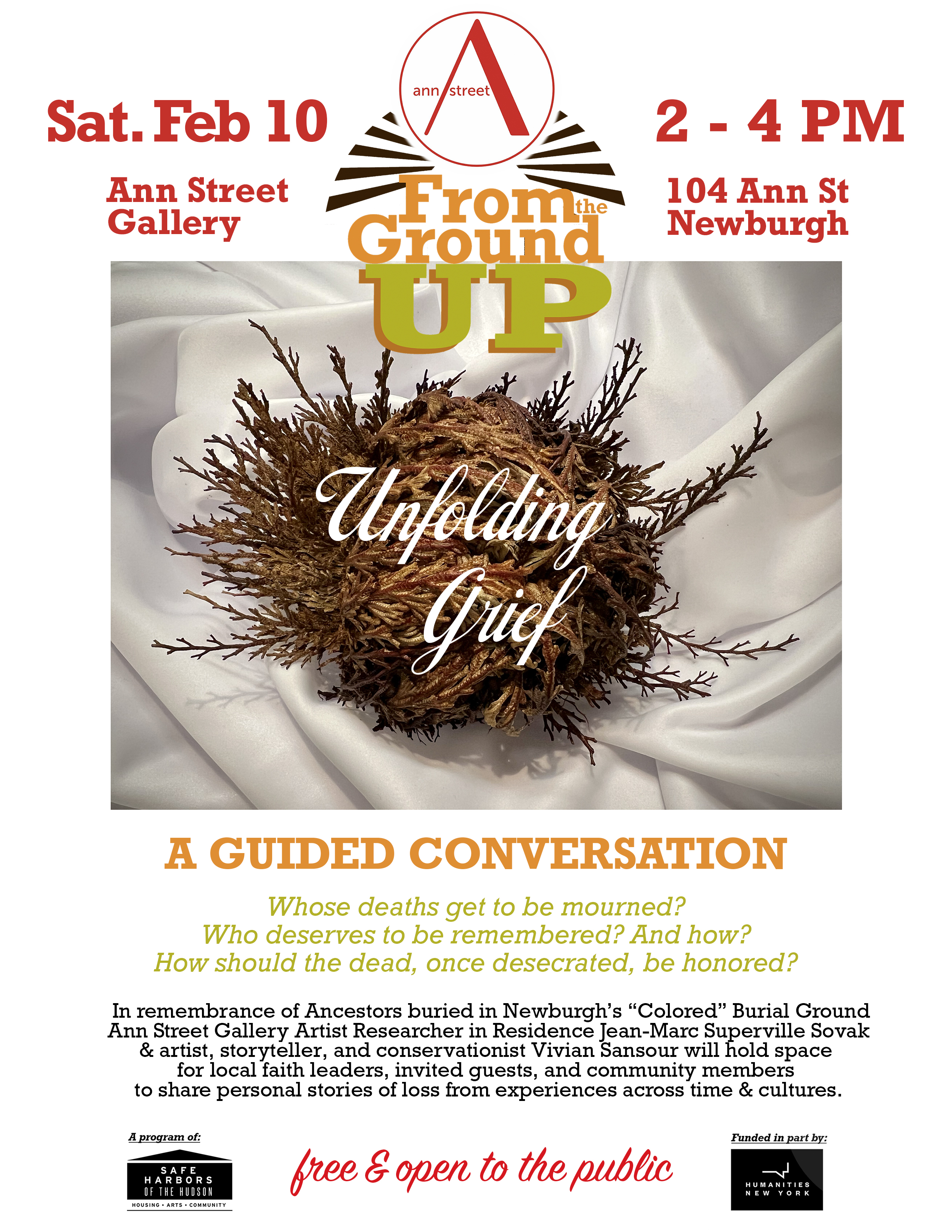
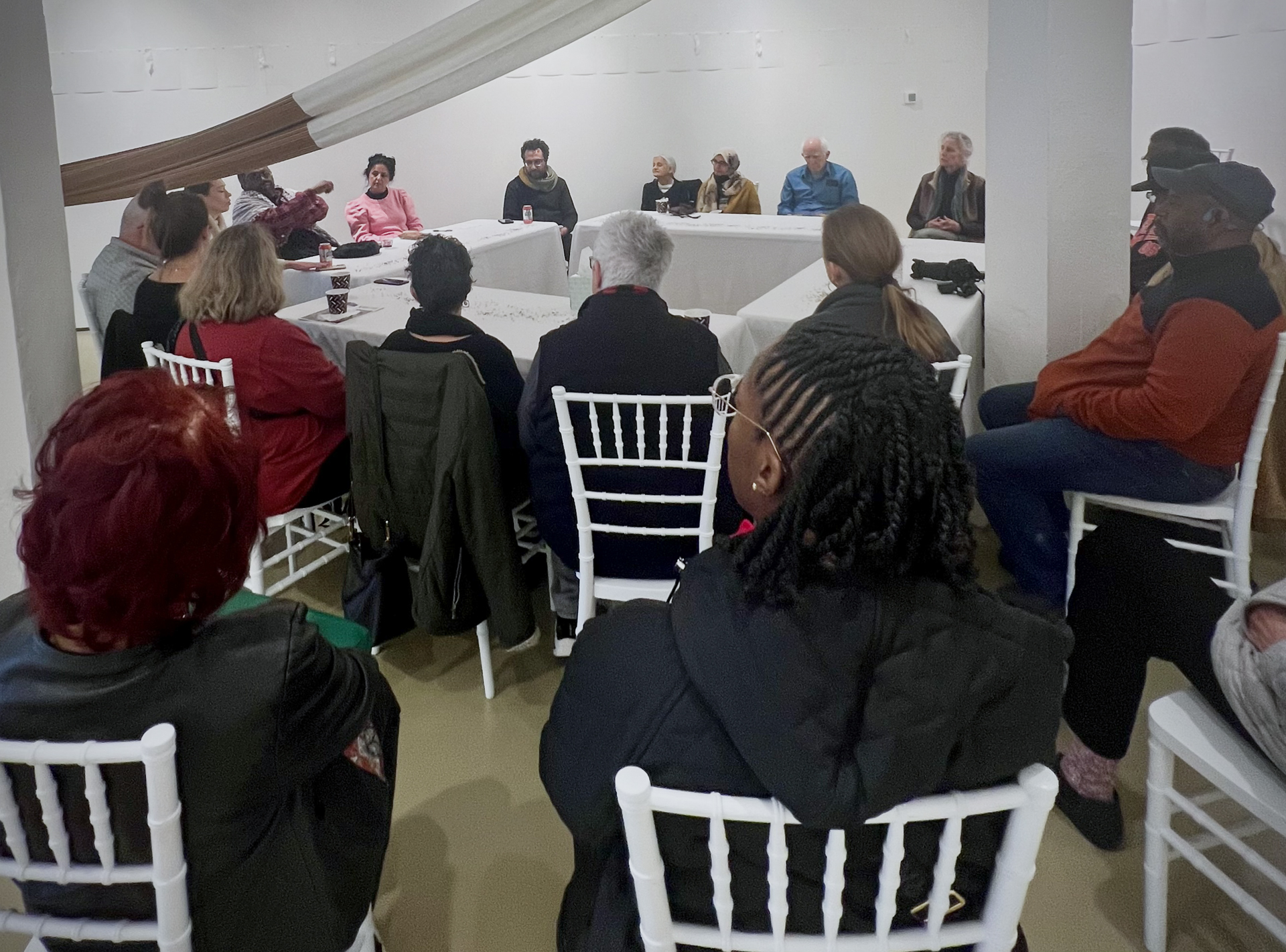
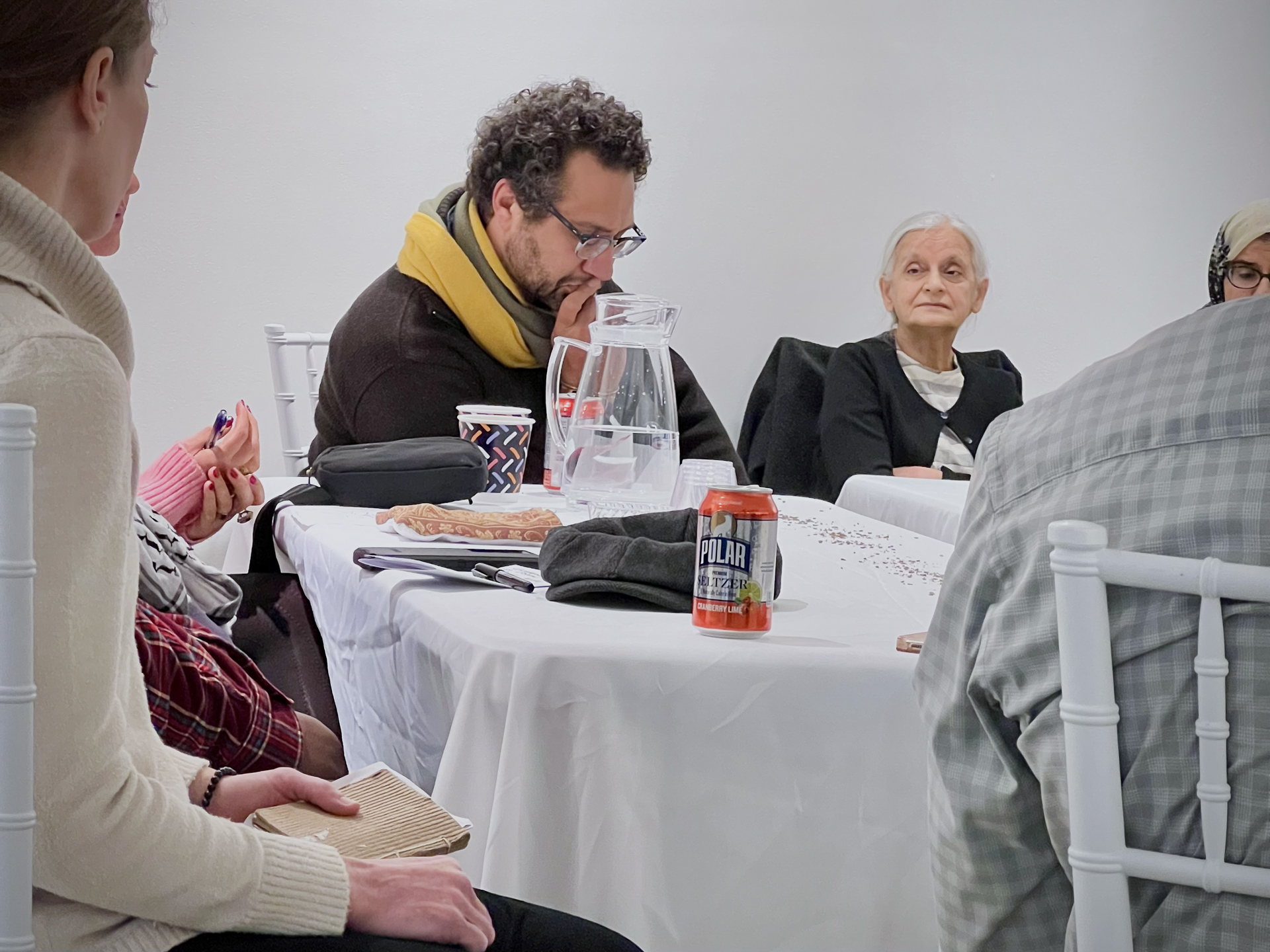
We invite the public to a community conversation in the Gallery. In remembrance of Ancestors buried in Newburgh's "Colored" Burial Ground, Ann Street Gallery Artist Researcher in Residence Jean-Marc Superville Sovak & artist, storyteller, and conservationist Vivian Sansour will hold space for local faith leaders, invited guests, and community members to share personal stories of loss from experiences across time & cultures.
The conversation and stories that will be shared from direct experience aim to collectively consider:
- Whose deaths get to be mourned?
- Who deserves to be remembered? And how?
- How should the dead, once desecrated, be honored?
Please join us on Saturday to listen and converse within the evolving Gallery installation for the project From the Ground UP, which currently includes an installation by Jean-Marc Superville Sovak, photographs by Donna Francis, sumi ink drawing by Michelle Corporan, and a collection of books on loan from A Little Light Bookstore & Educational Center for Culture, History, & Freedom in Newburgh.
@ftgu2024 is a convergence of local community stakeholders and artists led by Ann Street Gallery Artist Researcher in Residence, Jean-Marc Superville Sovak @supersovak. The project brings Superville Sovak’s creative research and practice together with community members dedicated to imagining, rendering, and presenting collaboratively-designed visions for remembering and honoring African- Americans buried in, and disinterred from, Newburgh’s “Colored Burial Ground” through conversation and the arts.
Please visit our Opportunites page to read about our Open Calls for participation in the project. Visitors can bring your offerings, letters, sketches, ideas, and questions on Saturdays & Sundays 12-4. We will continue to host events every Saturday through February.
No reservation needed. All are welcome!





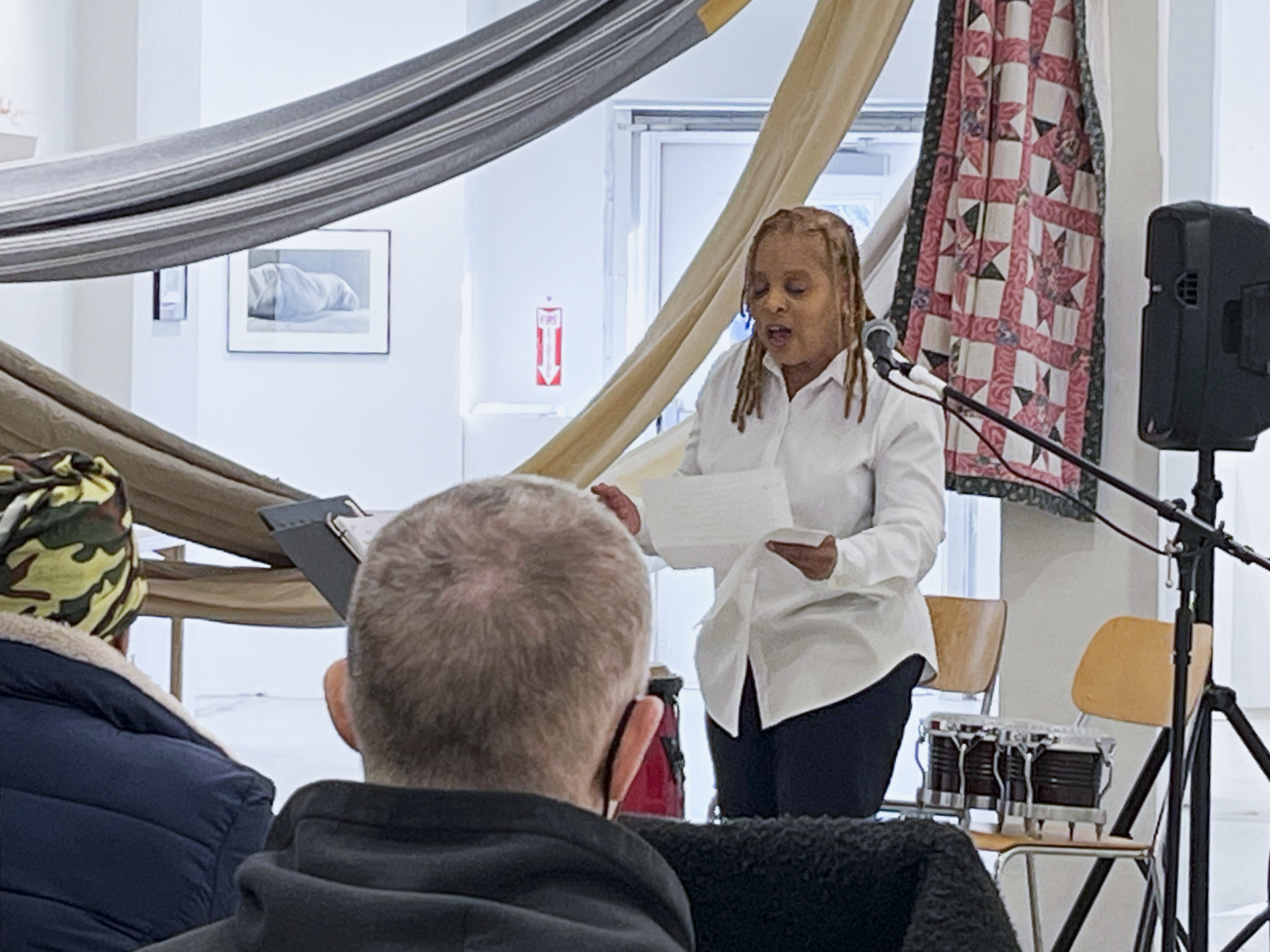
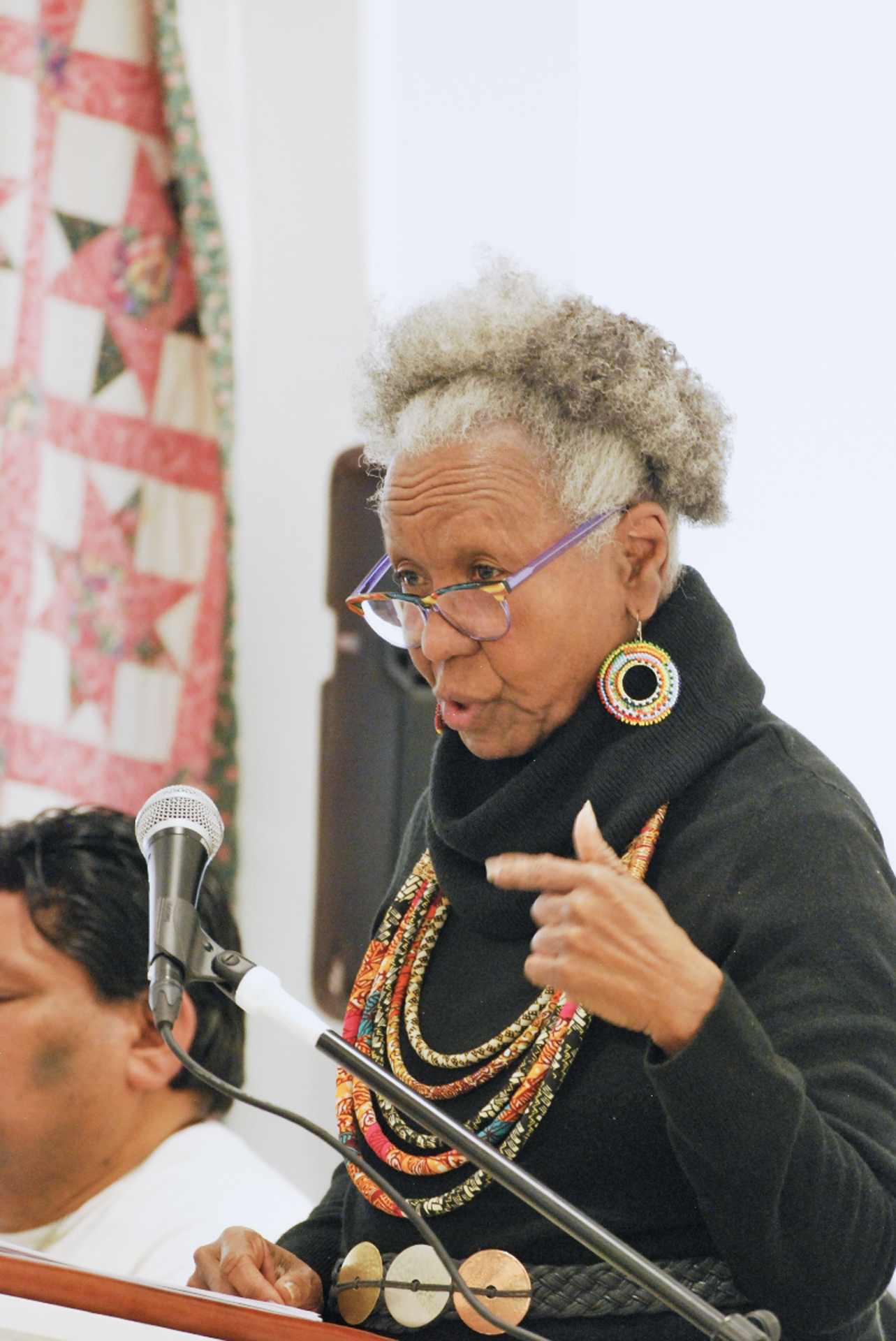
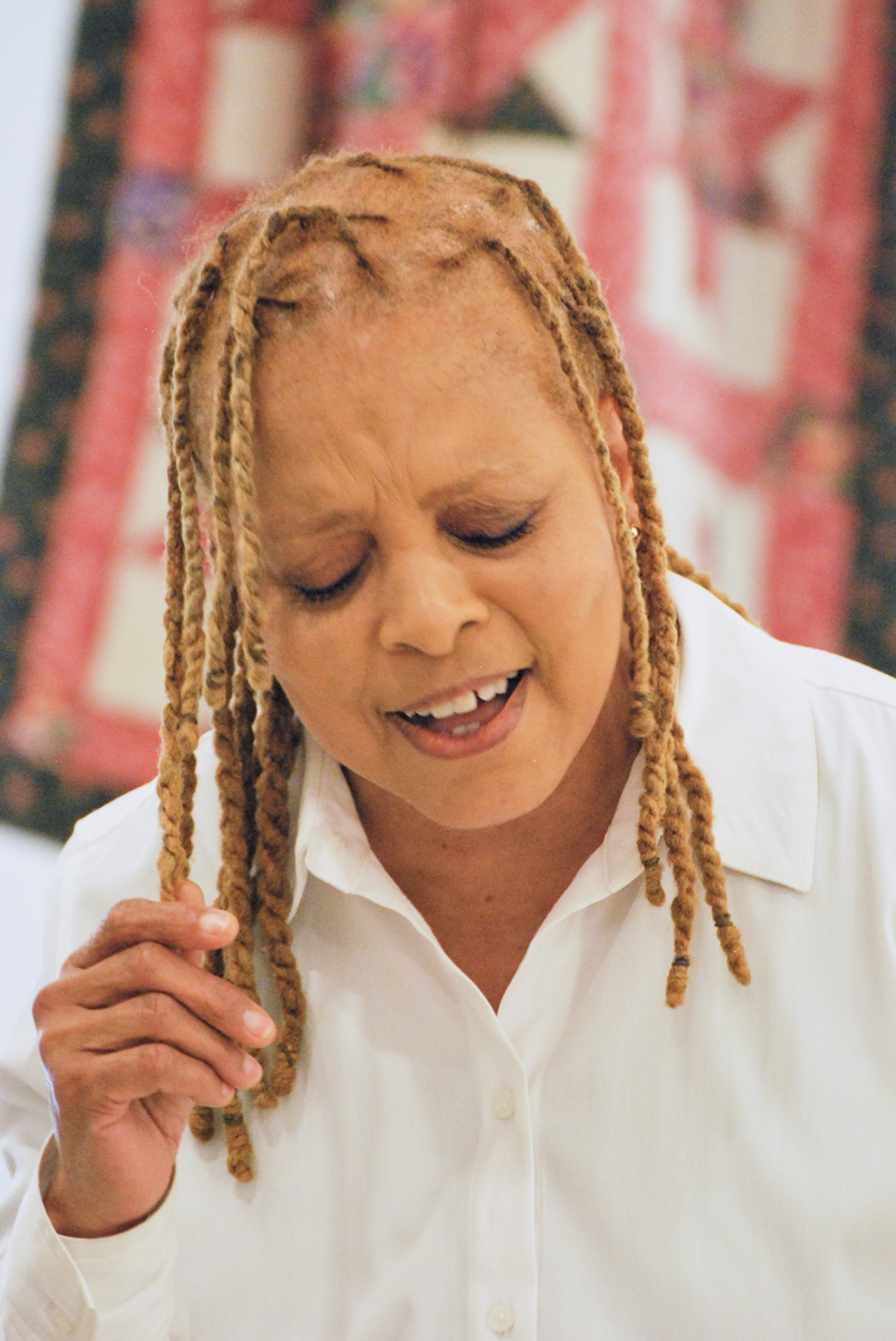
Poems for the Ancestors
Saturday
February 3, 2024
2pm
Ann Street Gallery
Free & open to the public.
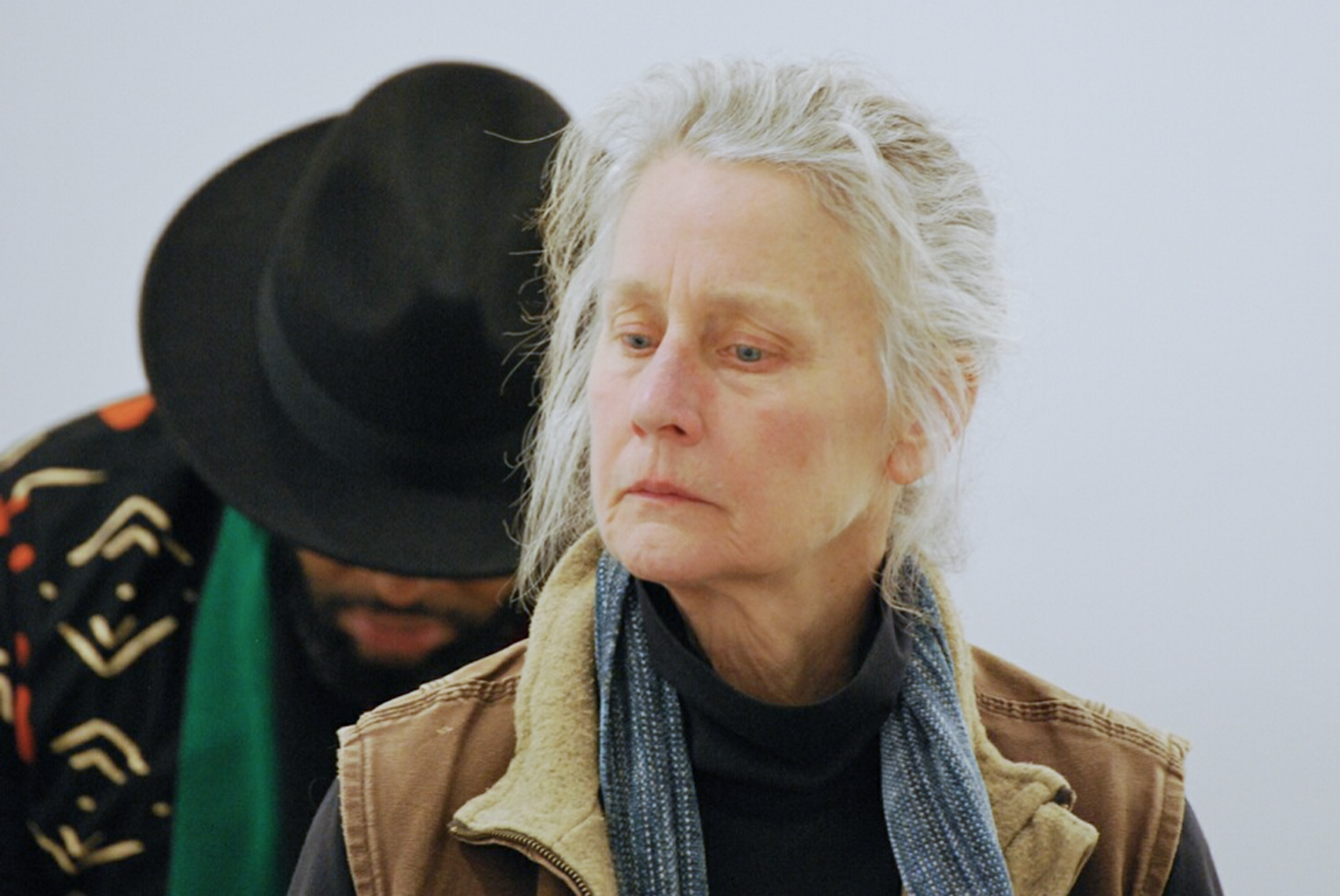
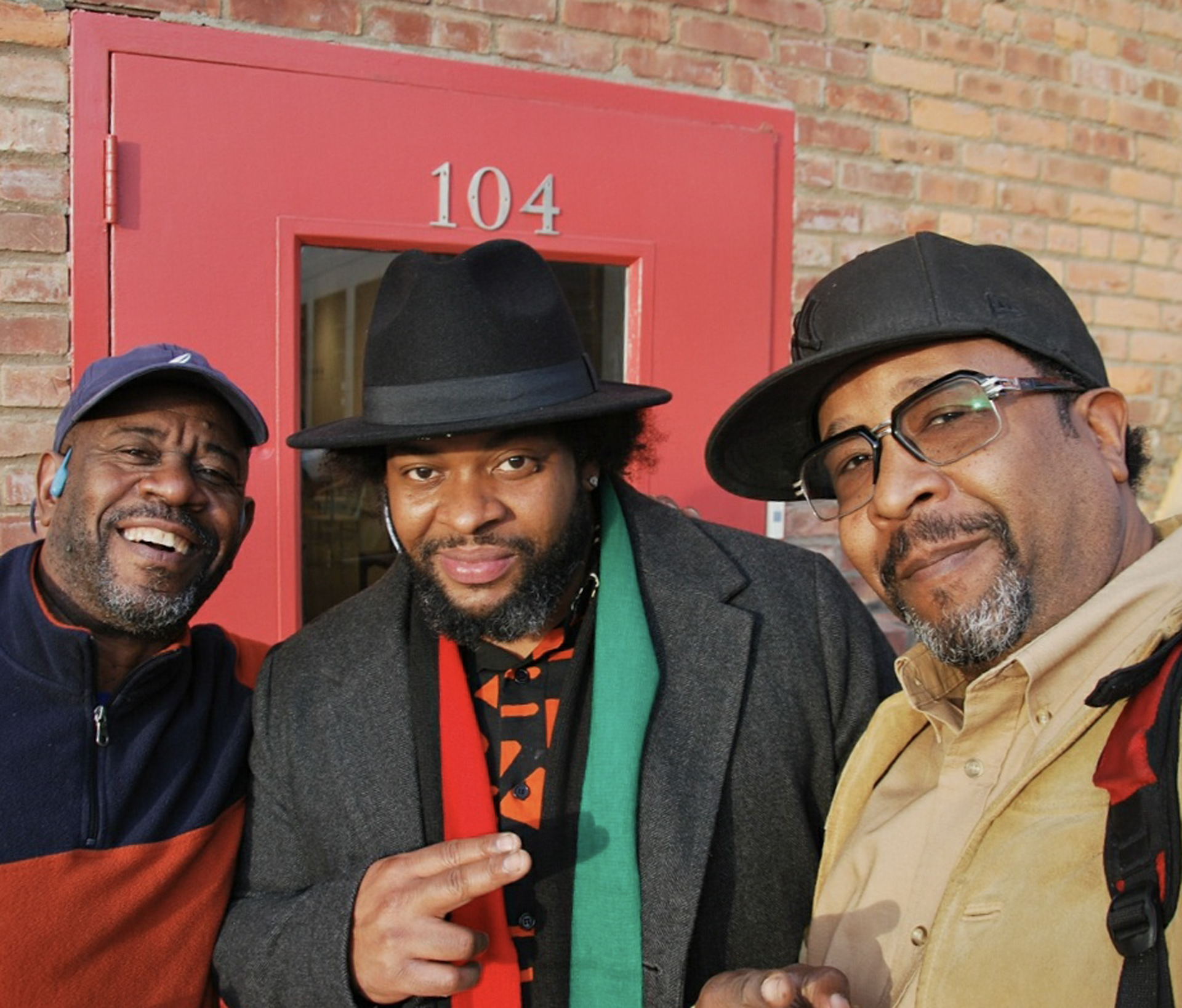
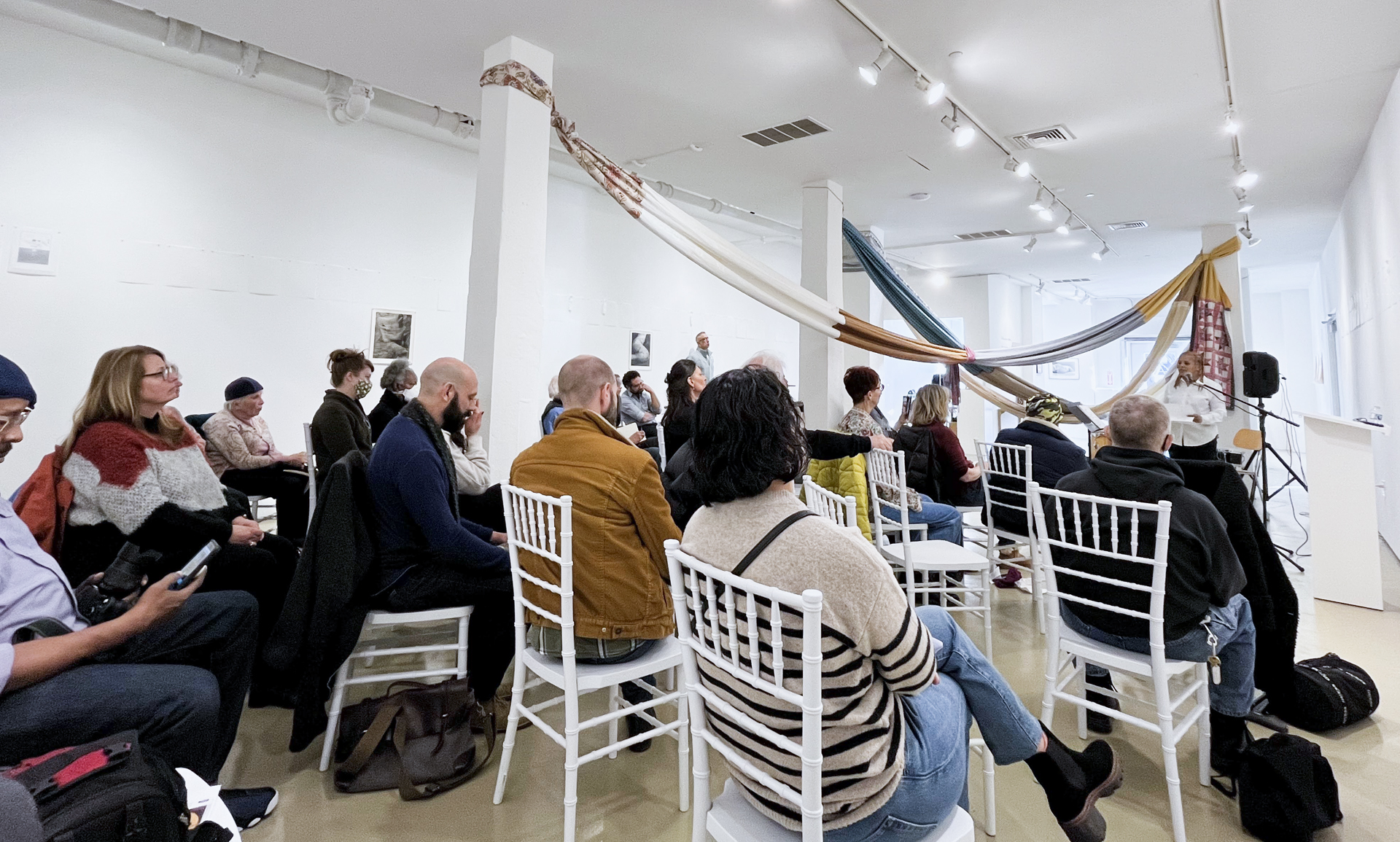
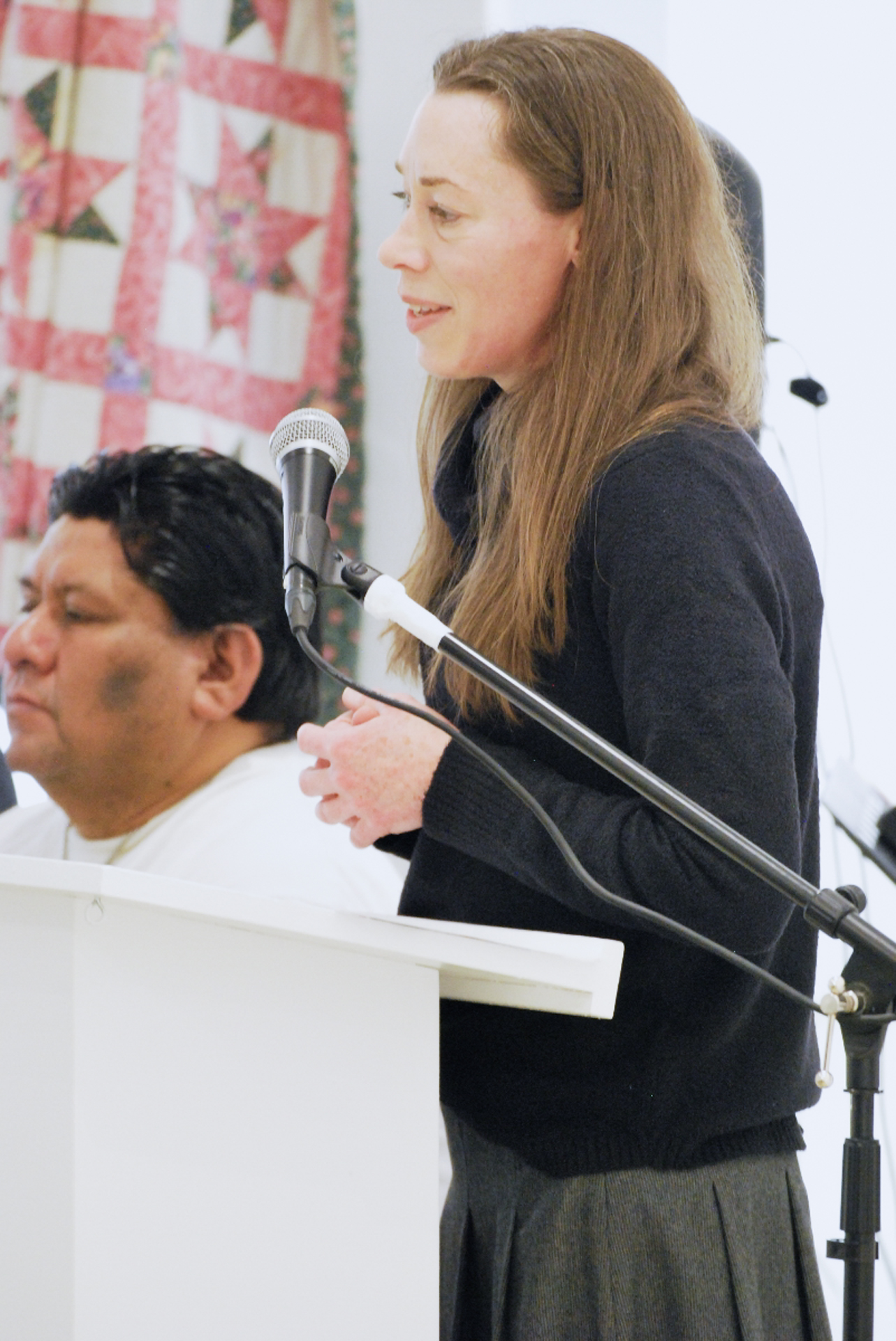
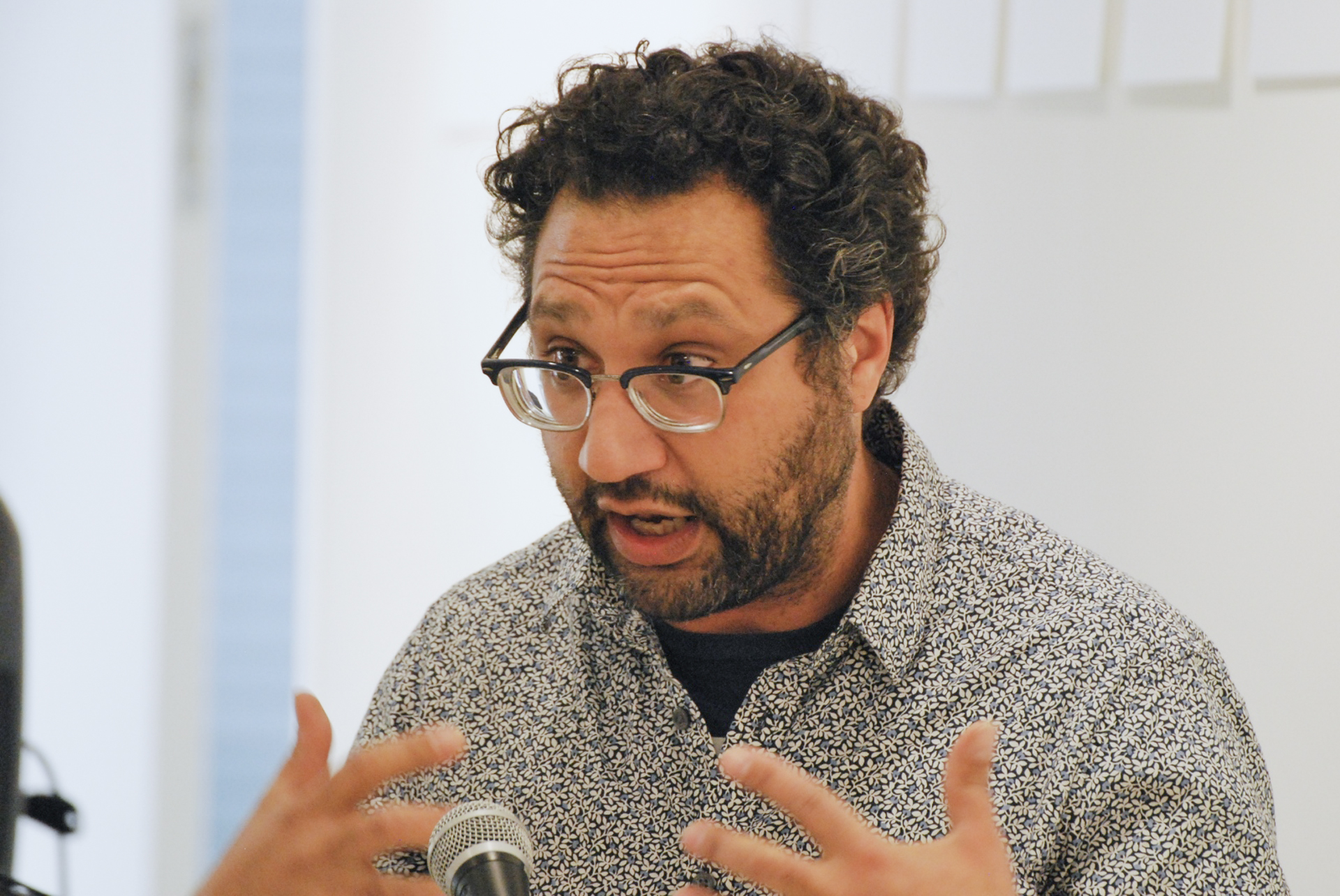
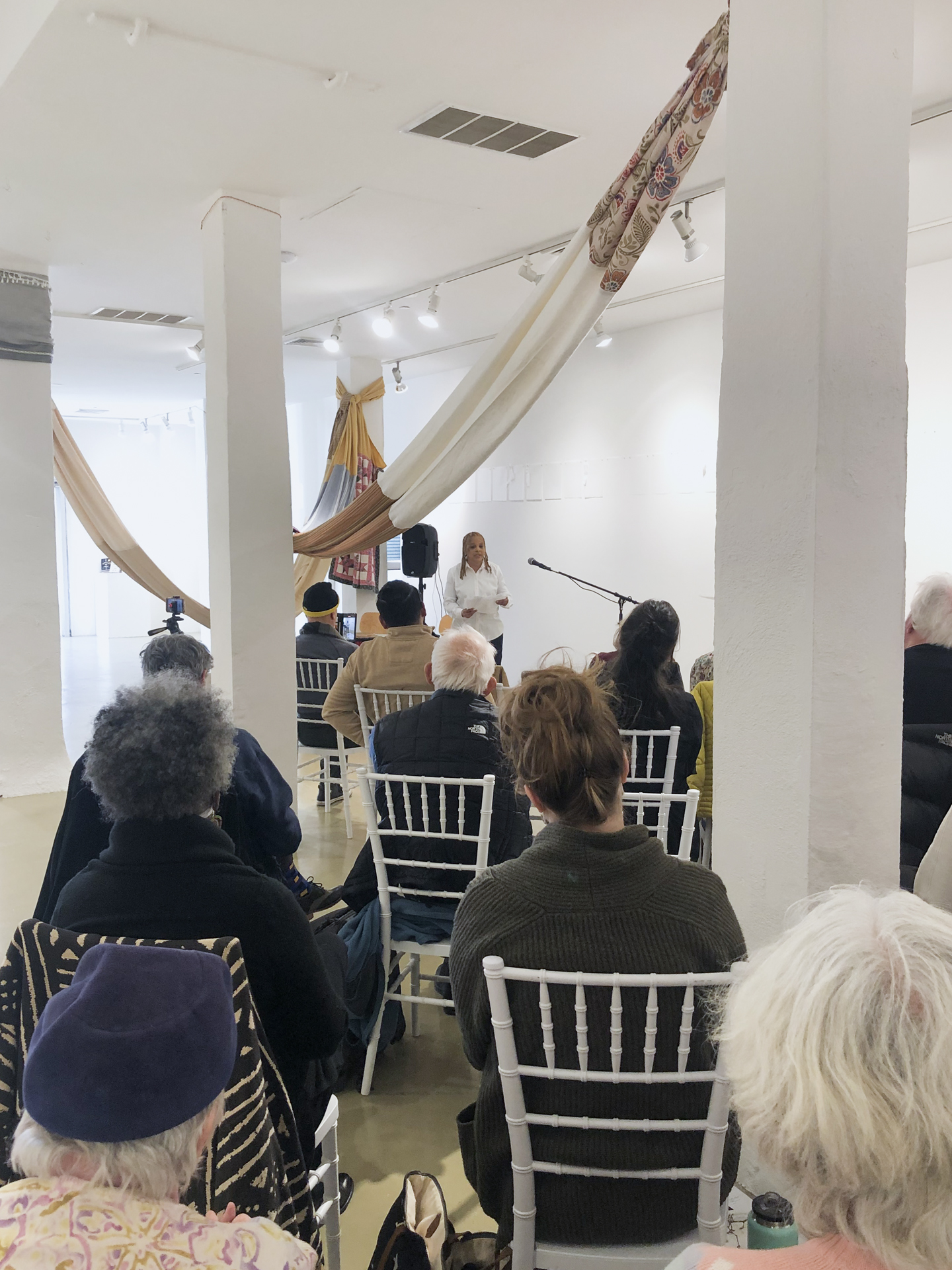
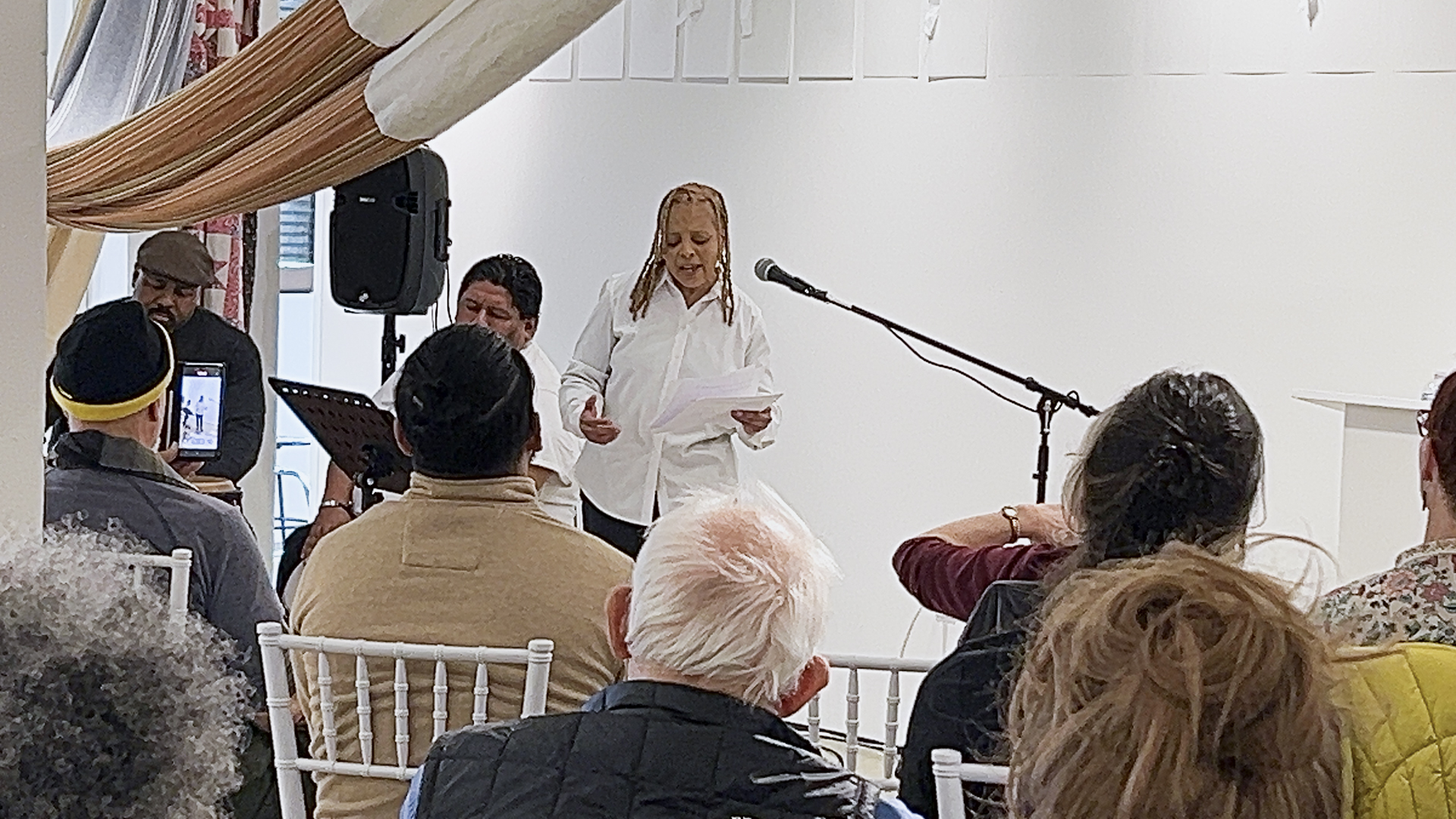
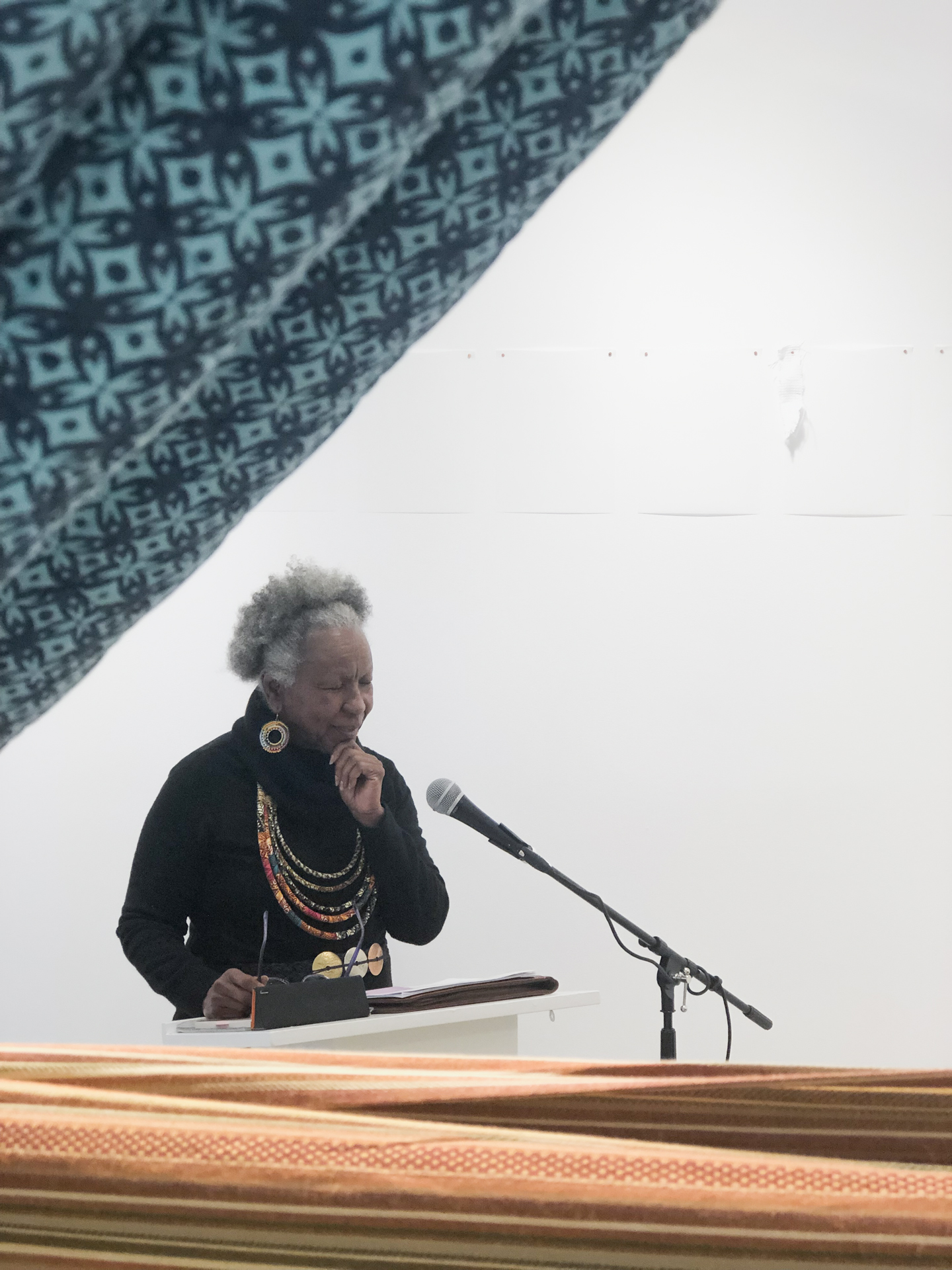
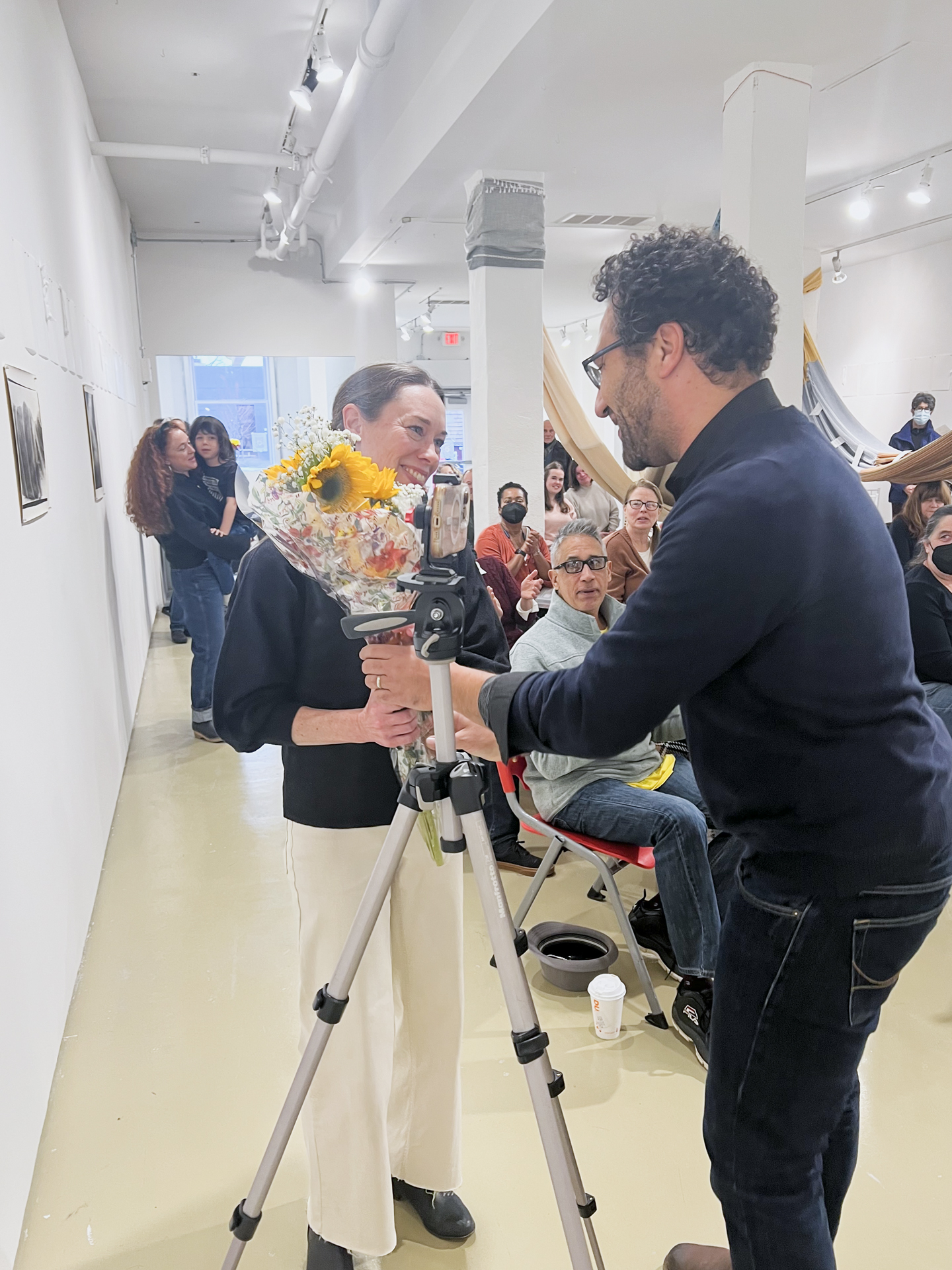
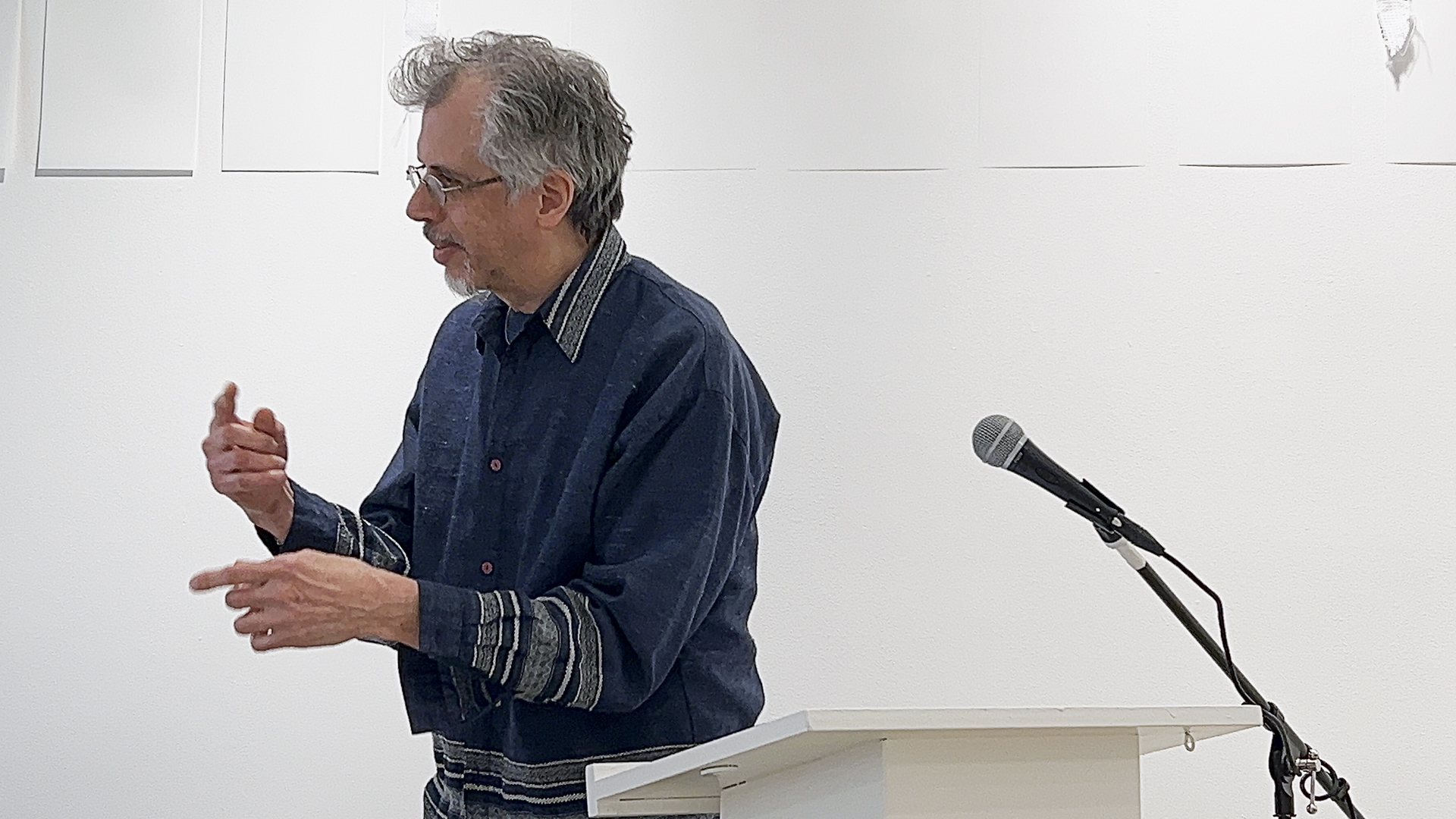
We are thrilled to invite the public to a free poetry reading in the Gallery on Saturday, February 3rd at 2pm to conjure, remember, and honor those laid to rest in Newburgh’s “Colored” Burial Ground. Kate Hymes, Ulster County Poet Laureate, Poet Gold, Dutchess County Poet Laureate, and Edwin Torres, Nuyorican Legend, will be performing and reading new and existing works in response to Artist Researcher in Residence, Jean-Marc Superville Sovak’s research on the Burial Ground, speculation on who may be buried there, and the context and circumstances of their burials.
Please join us on Saturday for this unique reading performance amidst the evolving Gallery installation for the project From the Ground UP, which currently includes an installation by Jean-Marc Superville Sovak and photographs by Donna Francis.
@ftgu2024 is a convergence of local community stakeholders and artists led by Ann Street Gallery Artist Researcher in Residence, Jean-Marc Superville Sovak @supersovak. The project brings Superville Sovak’s creative research and practice together with community members dedicated to imagining, rendering, and presenting collaboratively-designed visions for remembering and honoring African- Americans buried in, and disinterred from, Newburgh’s “Colored Burial Ground” through conversation and the arts.
Please visit our Opportunites page to read about our Open Calls for participation in the project. You can bring your offerings, letters, sketches, ideas, and questions on Saturdays & Sundays 12-4. We will continue to host events every Saturday through February.
No reservation needed. All are welcome!

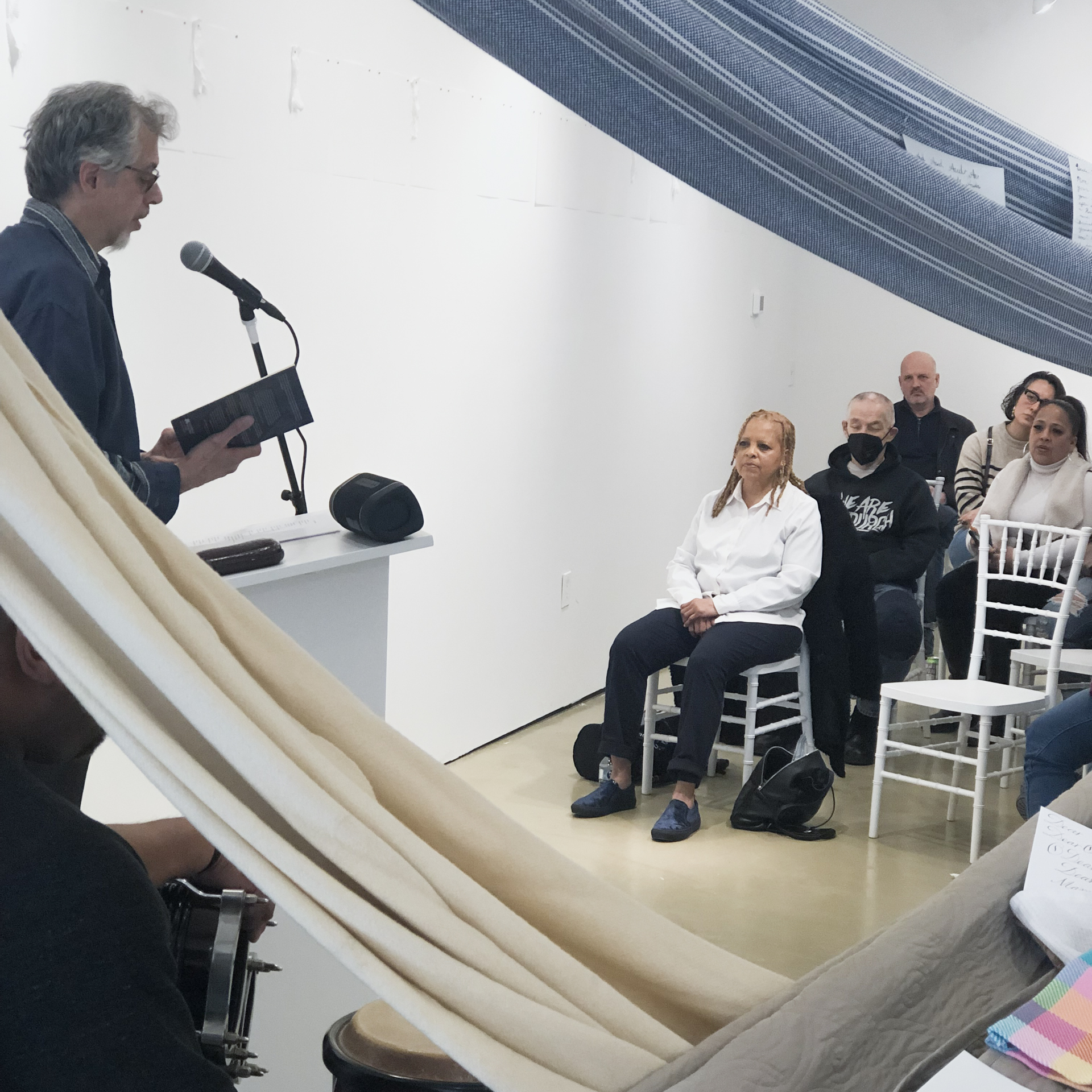



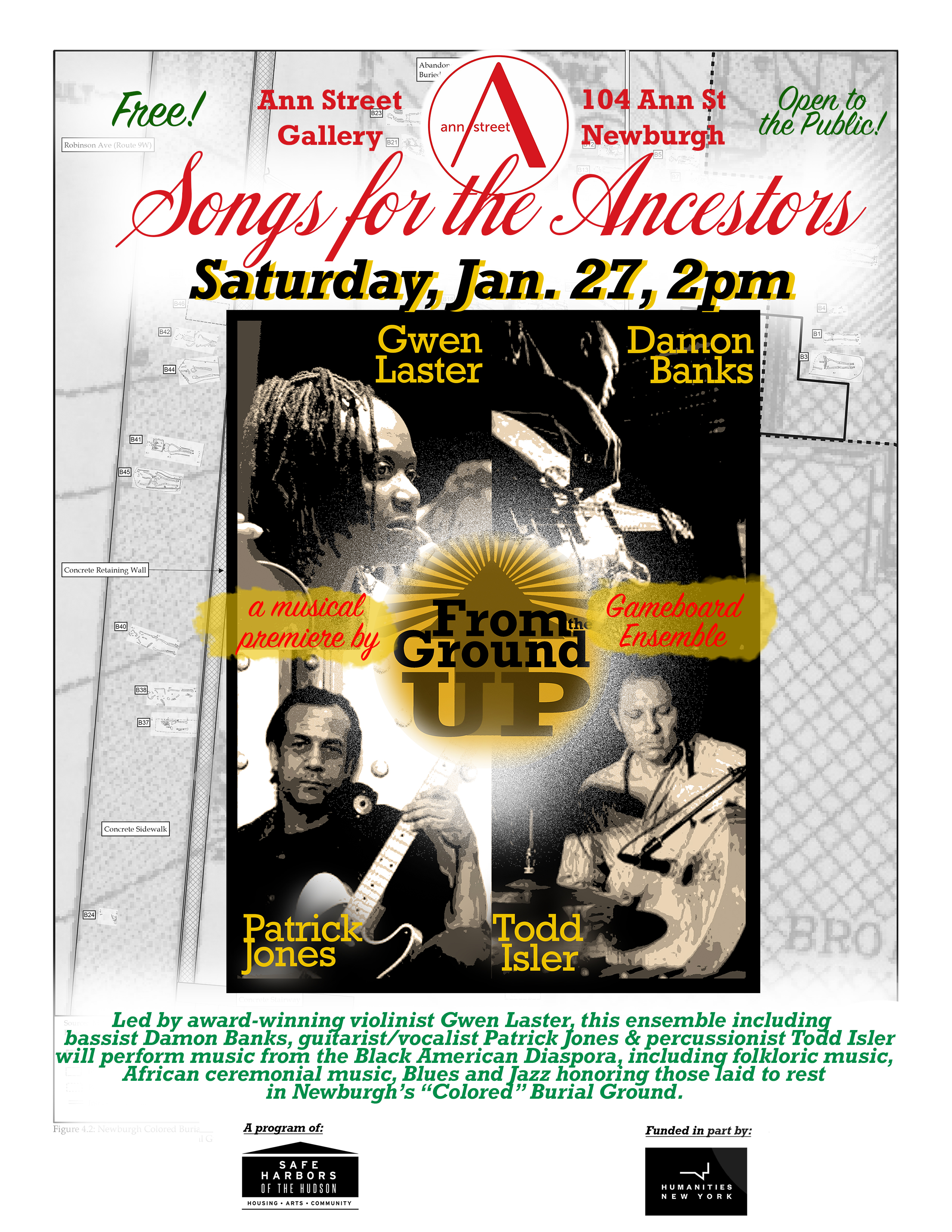
Songs for the Ancestors
Saturday
January 27, 2024
2pm
Ann Street Gallery
Free & open to the public.
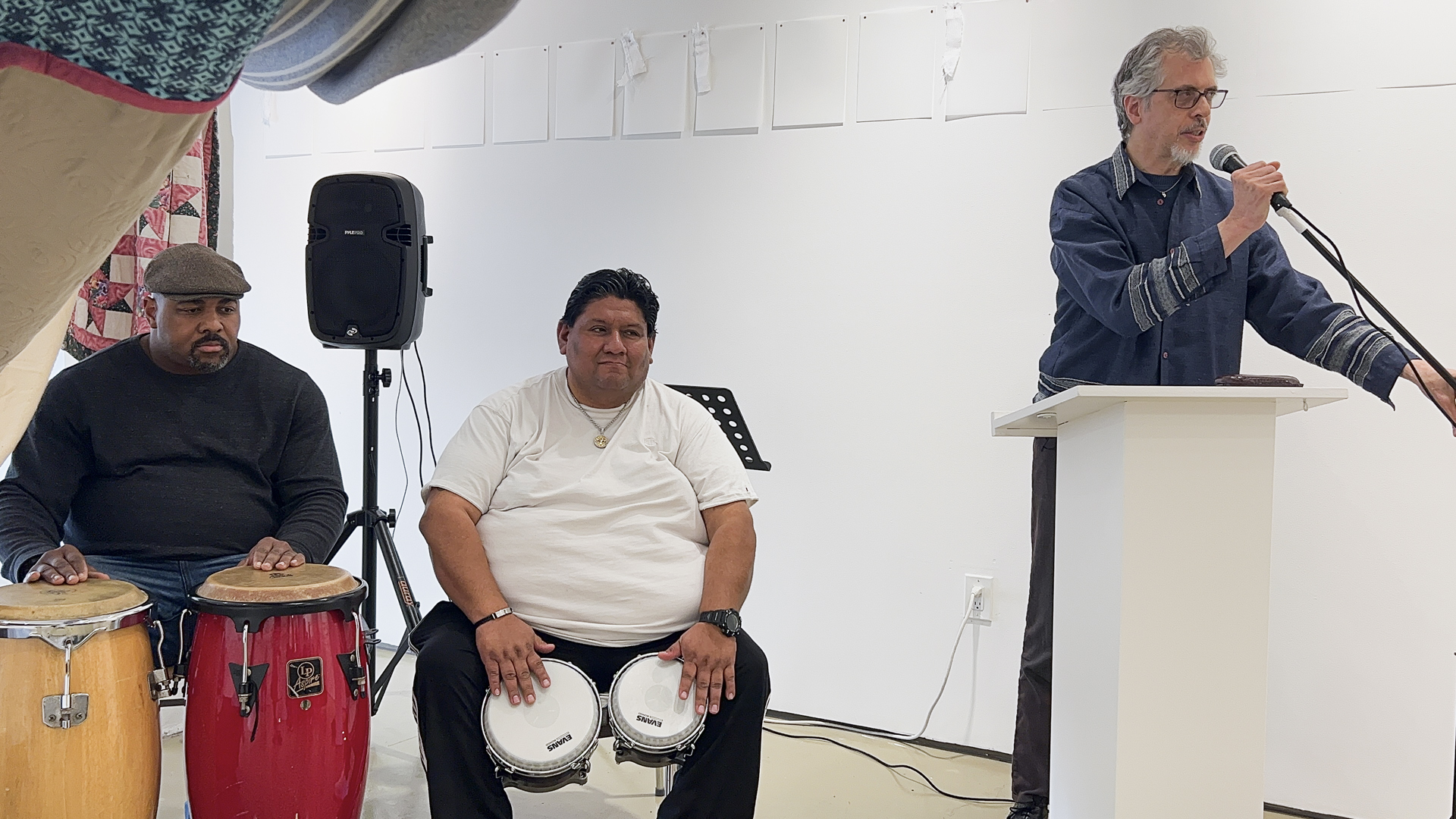
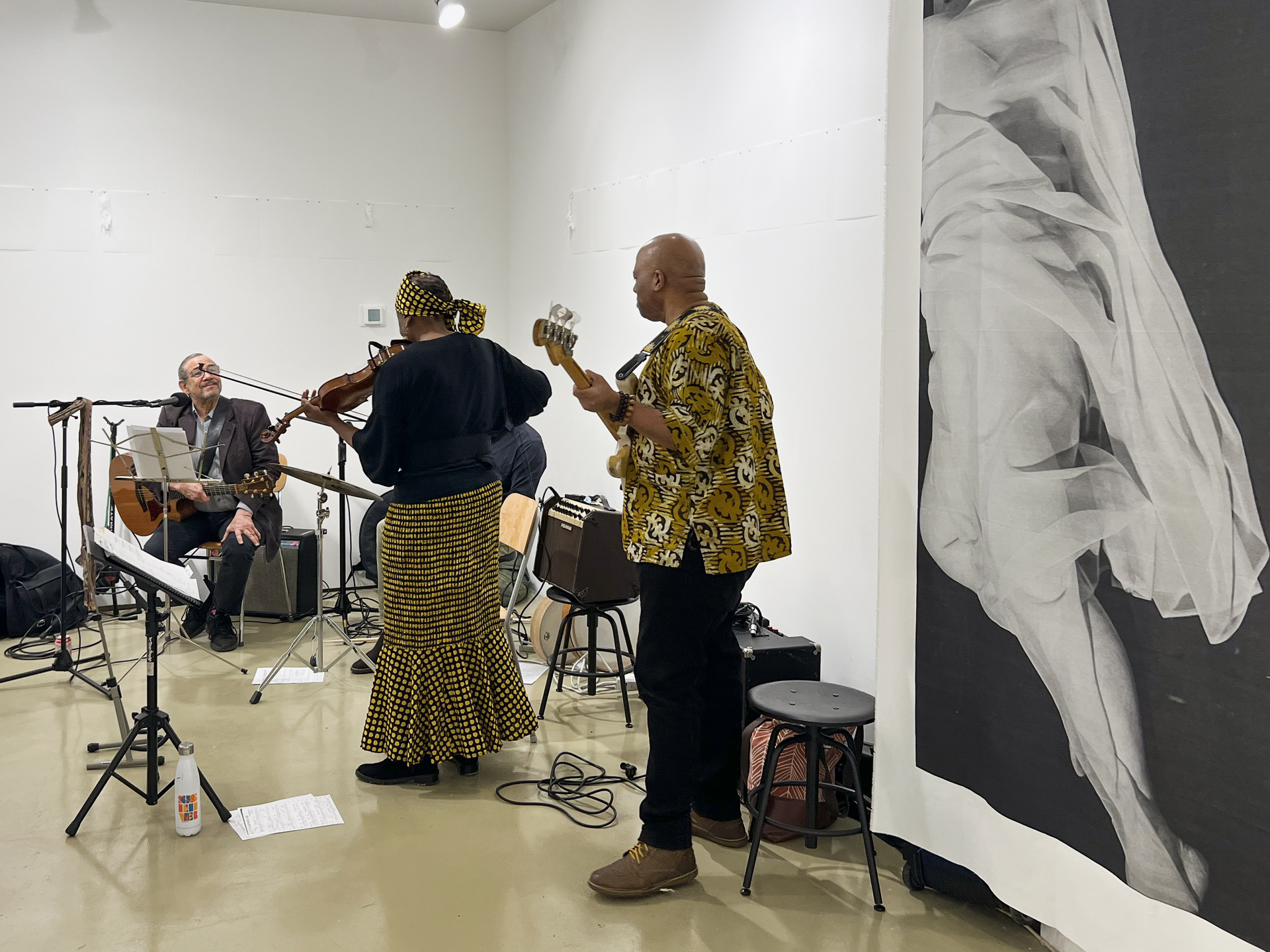
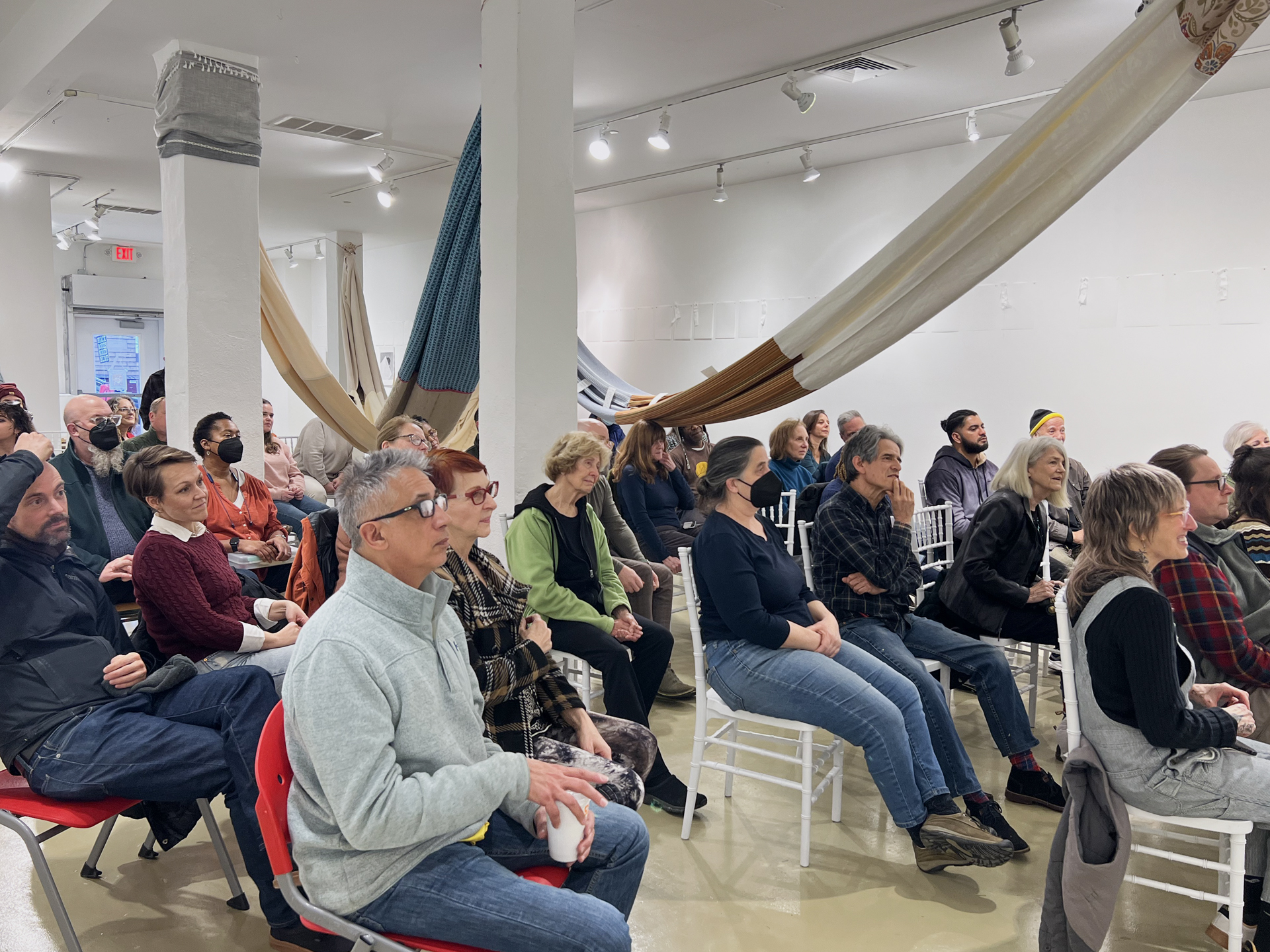
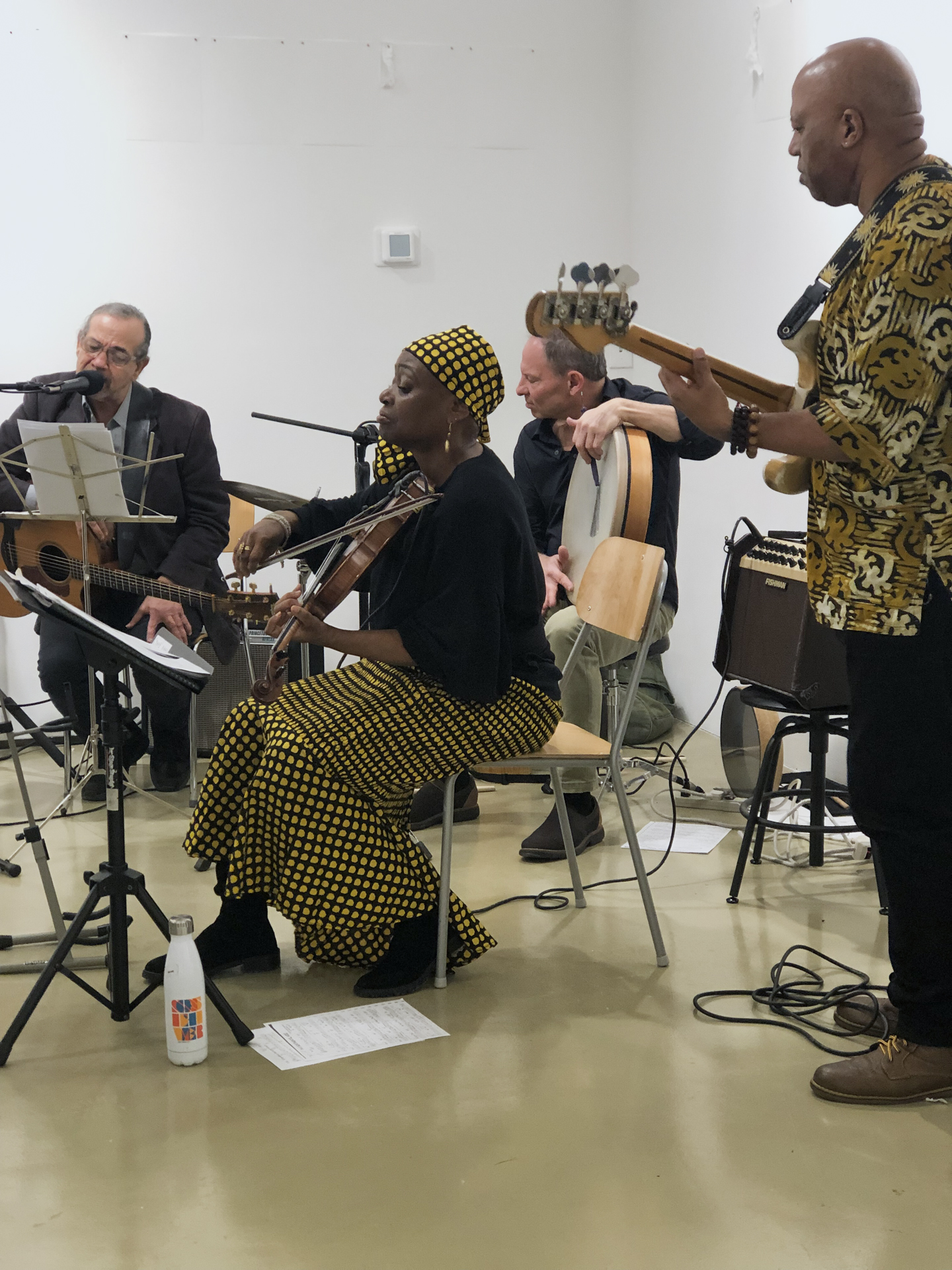
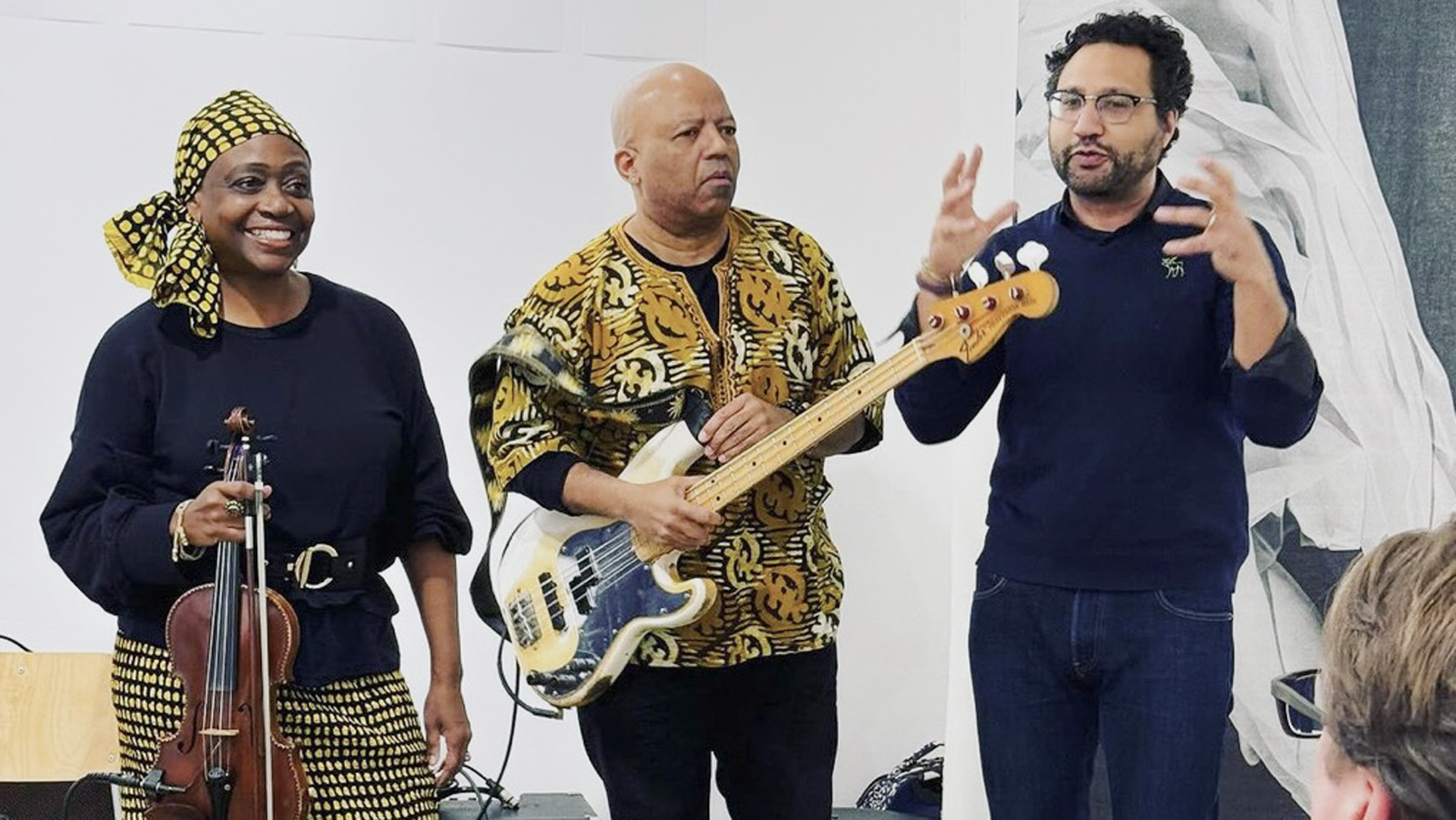
We are thrilled to invite the public to a free ensemble performance in the Gallery on Saturday, January 27th at 2pm to Honor the Ancestors. Led by award-winning violinist, Gwen Laster, this ensemble includes bassist Damon Banks, guitarist/vocalist Patrick Jones, & percussionist Todd Isler. The ensemble will perform music from the Black American Diaspora, including folkloric music, African ceremonial music, Blues, and Jazz to honor those laid to rest in Newburgh’s “Colored” burial ground.
Please join us on Saturday for this unique performance amidst the evolving Gallery installation for the project From the Ground UP.
@ftgu2024 is a convergence of local community stakeholders and artists led by Ann Street Gallery Artist Researcher in Residence, Jean-Marc Superville Sovak @supersovak. The project brings Superville Sovak’s creative research and practice together with community members dedicated to imagining, rendering, and presenting collaboratively-designed visions for remembering and honoring African- Americans buried in, and disinterred from, Newburgh’s “Colored Burial Ground” through conversation and the arts.
Please visit our Opportunites page to read about our Open Calls for participation in the project. You can bring your offerings, letters, sketches, ideas, and questions on Saturdays & Sundays 12-4. We will continue to host events every Saturday through February.
No reservation needed. All are welcome!




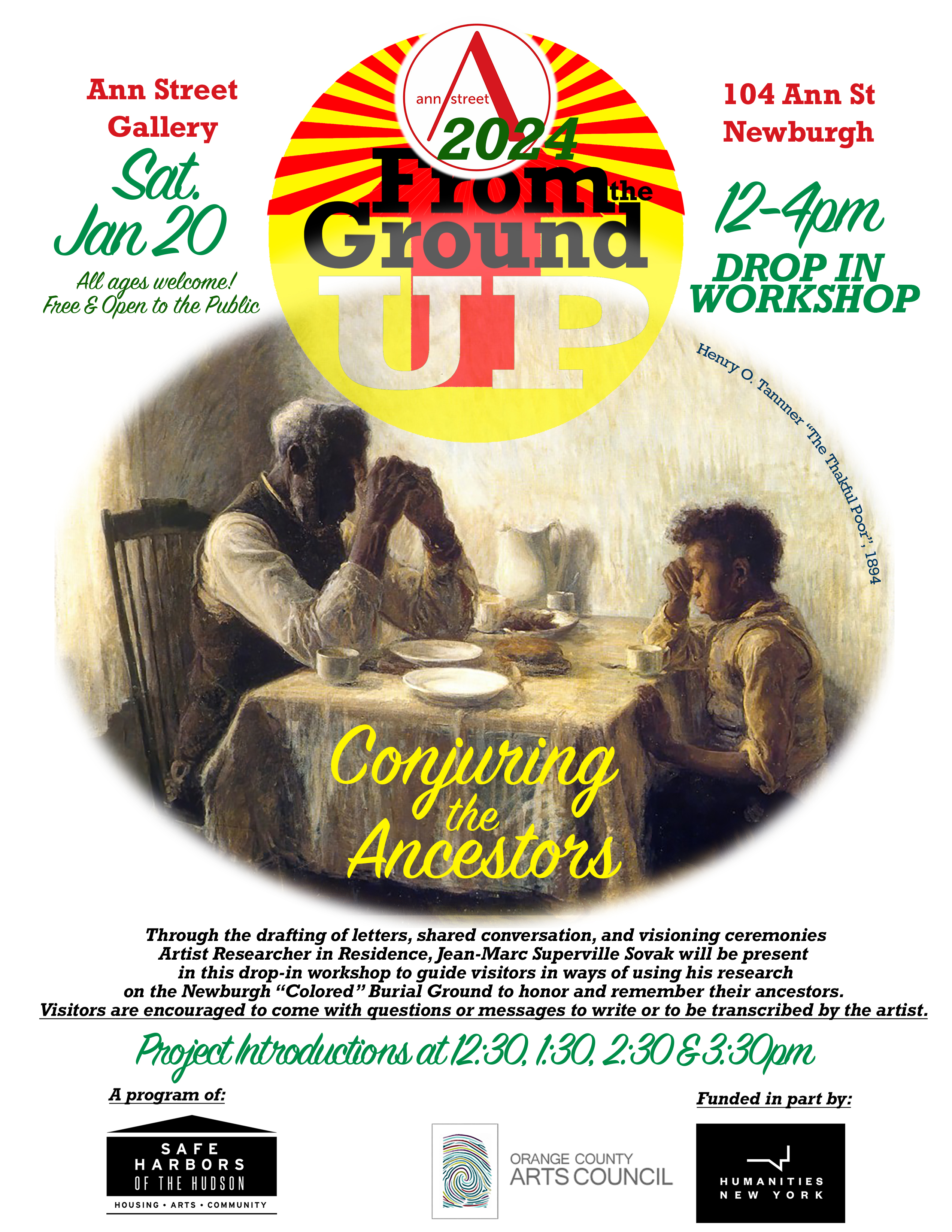
Conjuring the Ancestors
Saturday
January 20, 2024
12-4pm
Ann Street Gallery
Free & open to the public.
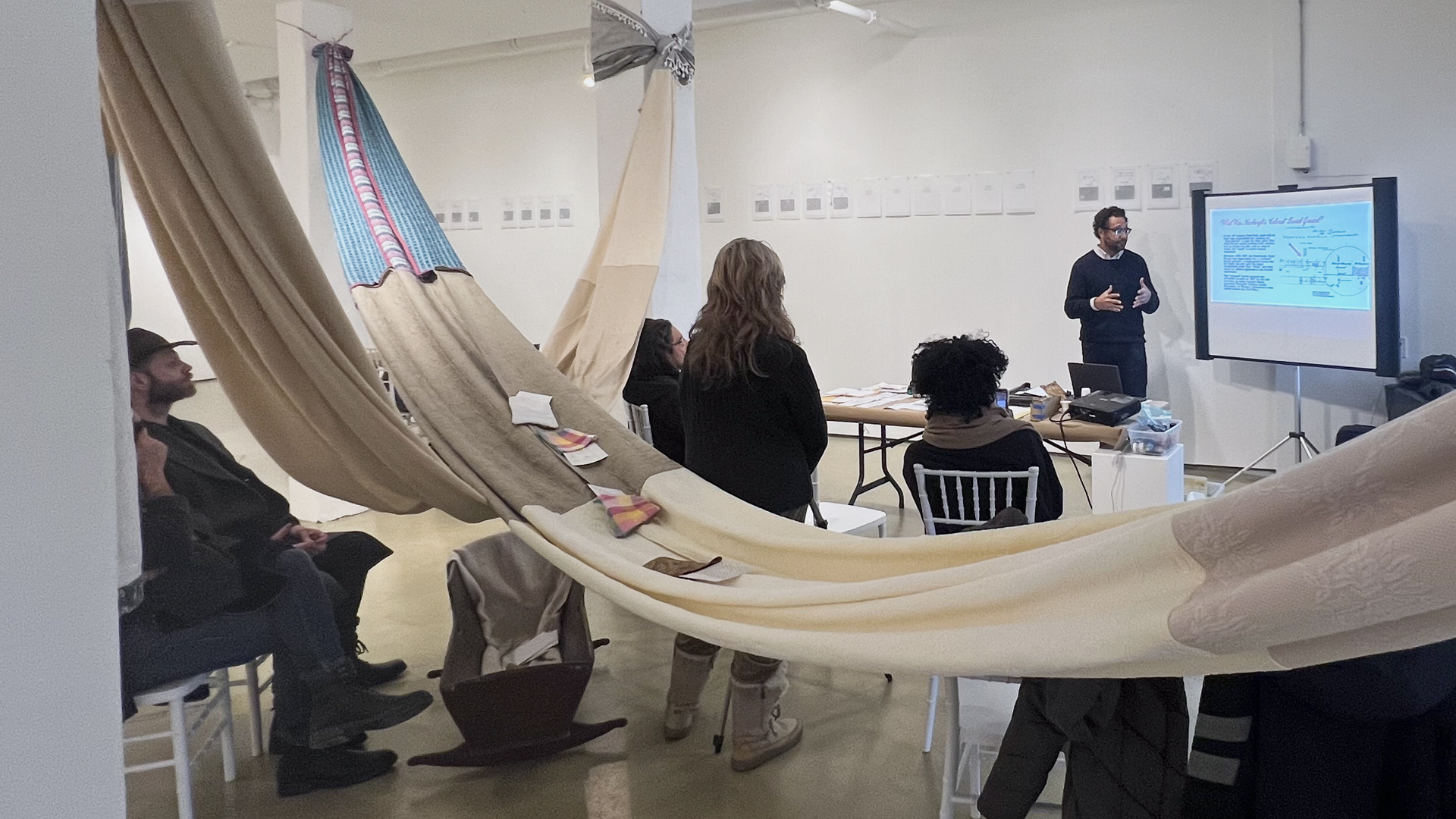
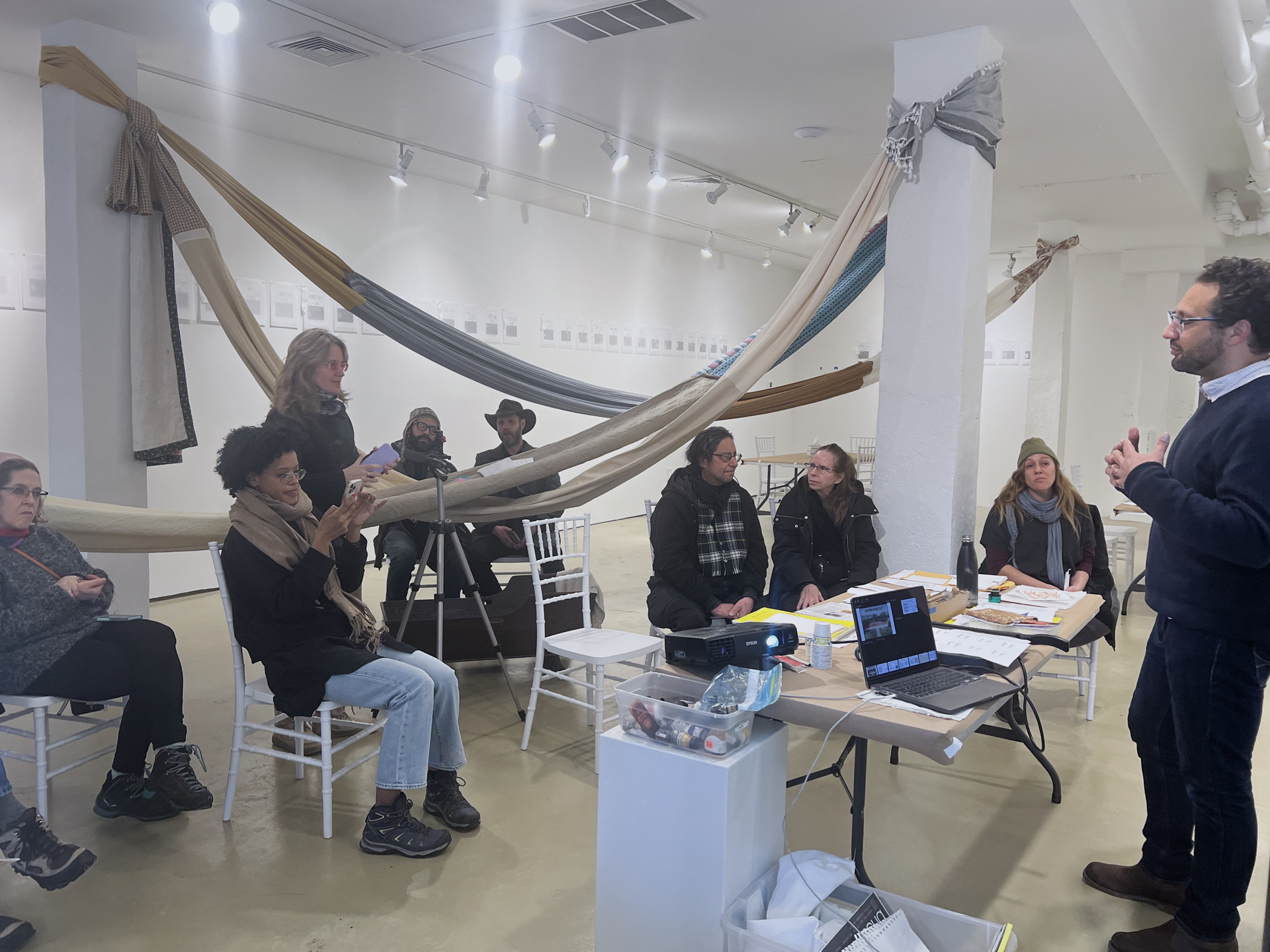
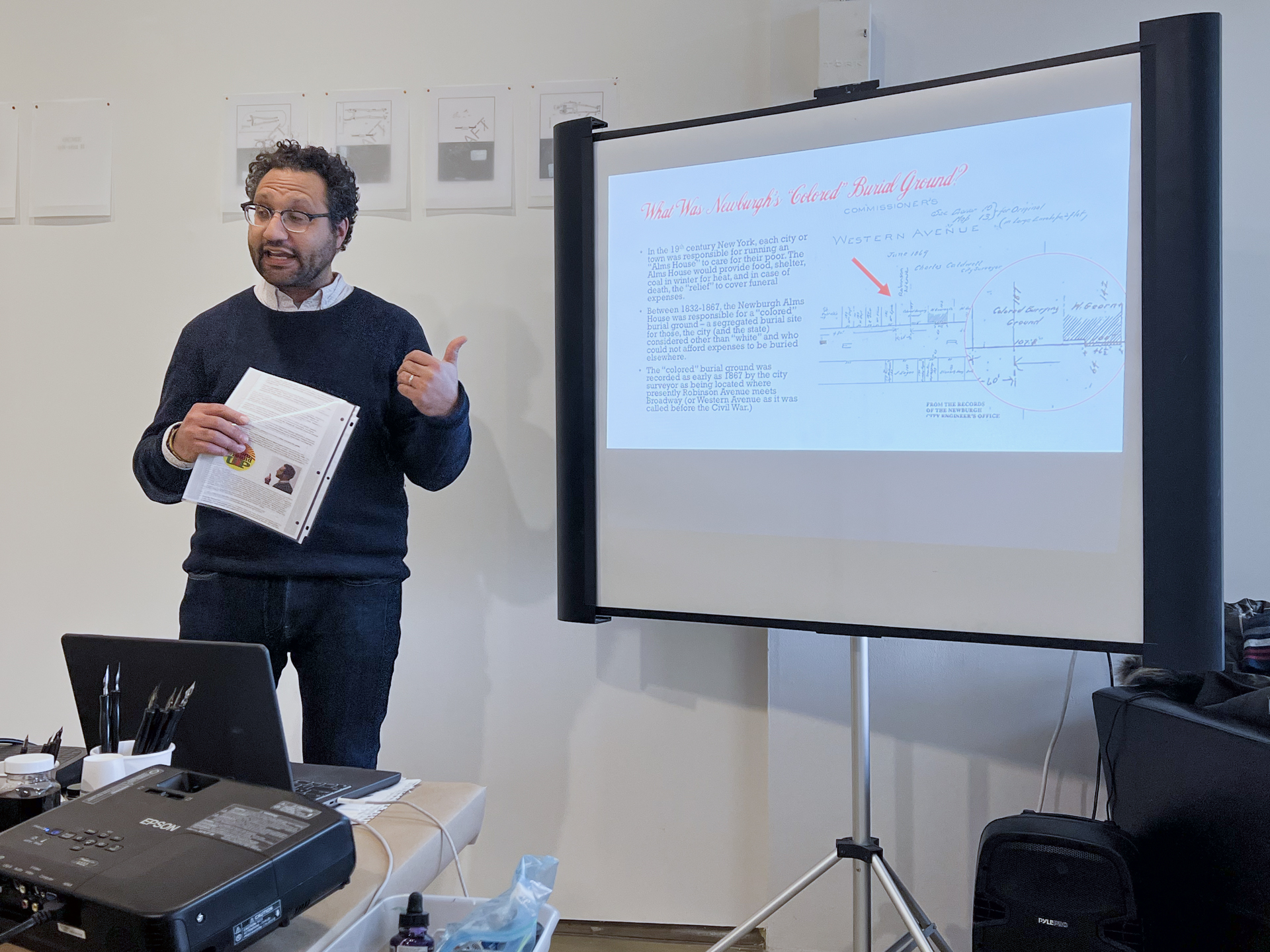
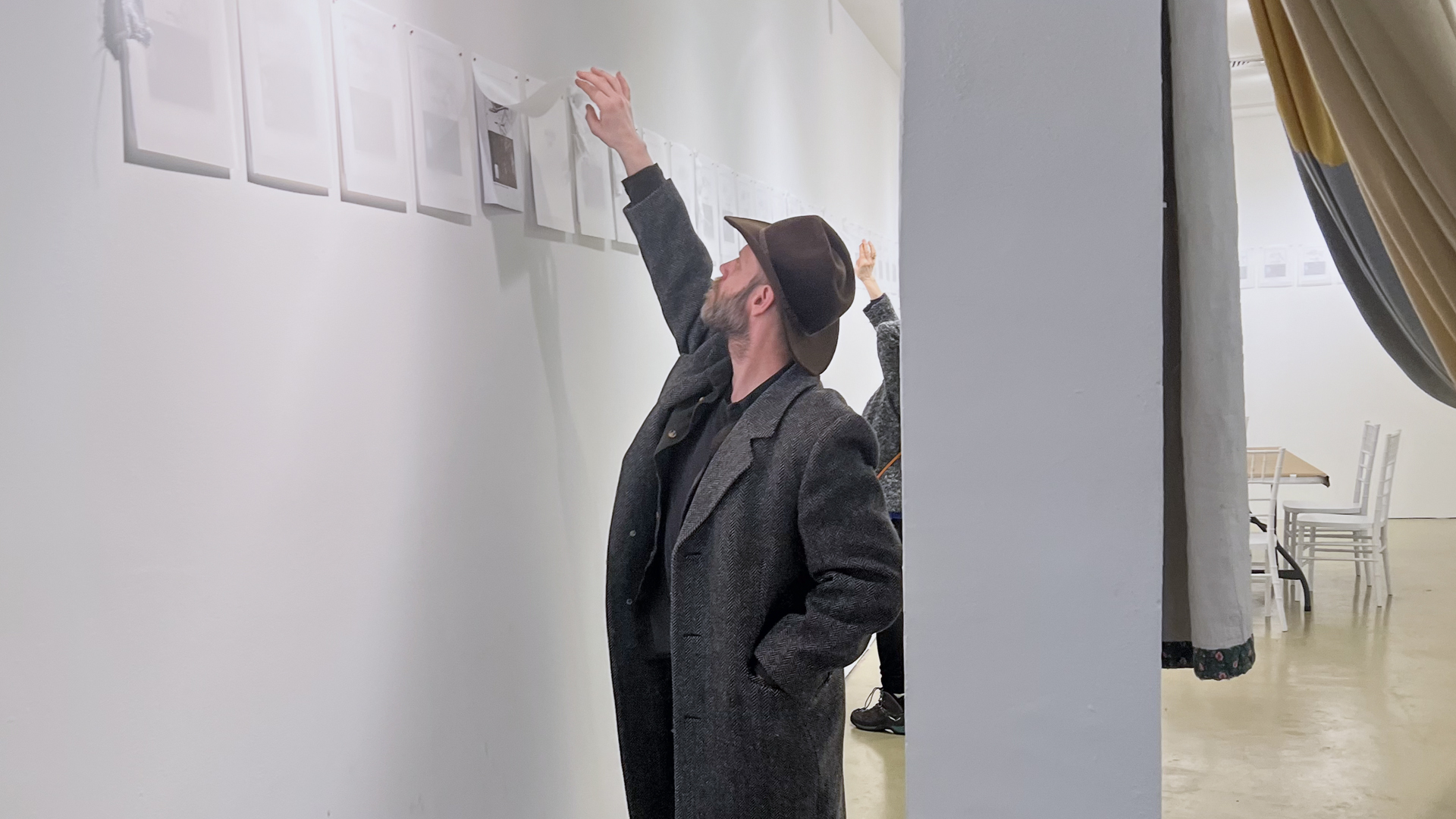
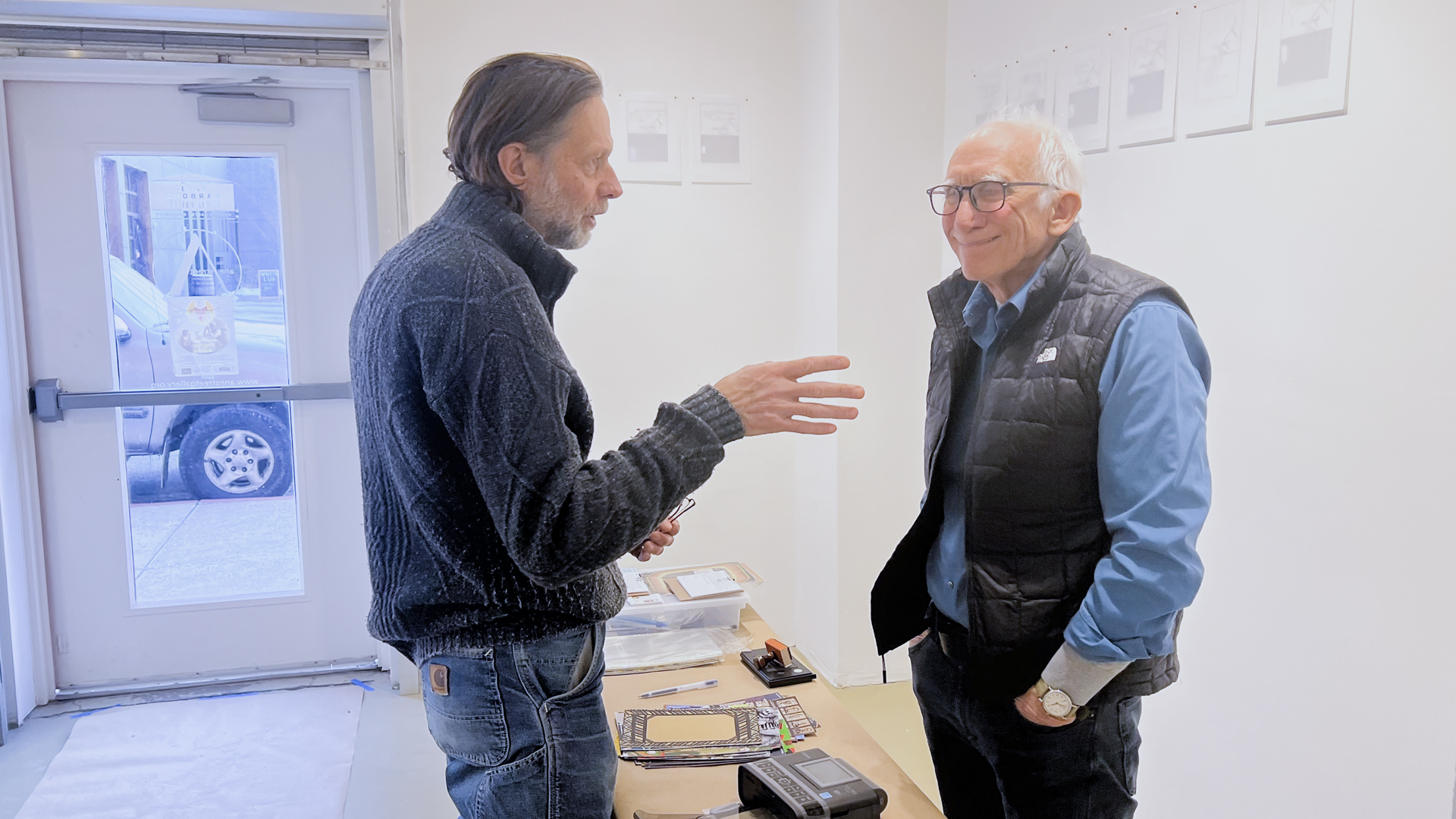
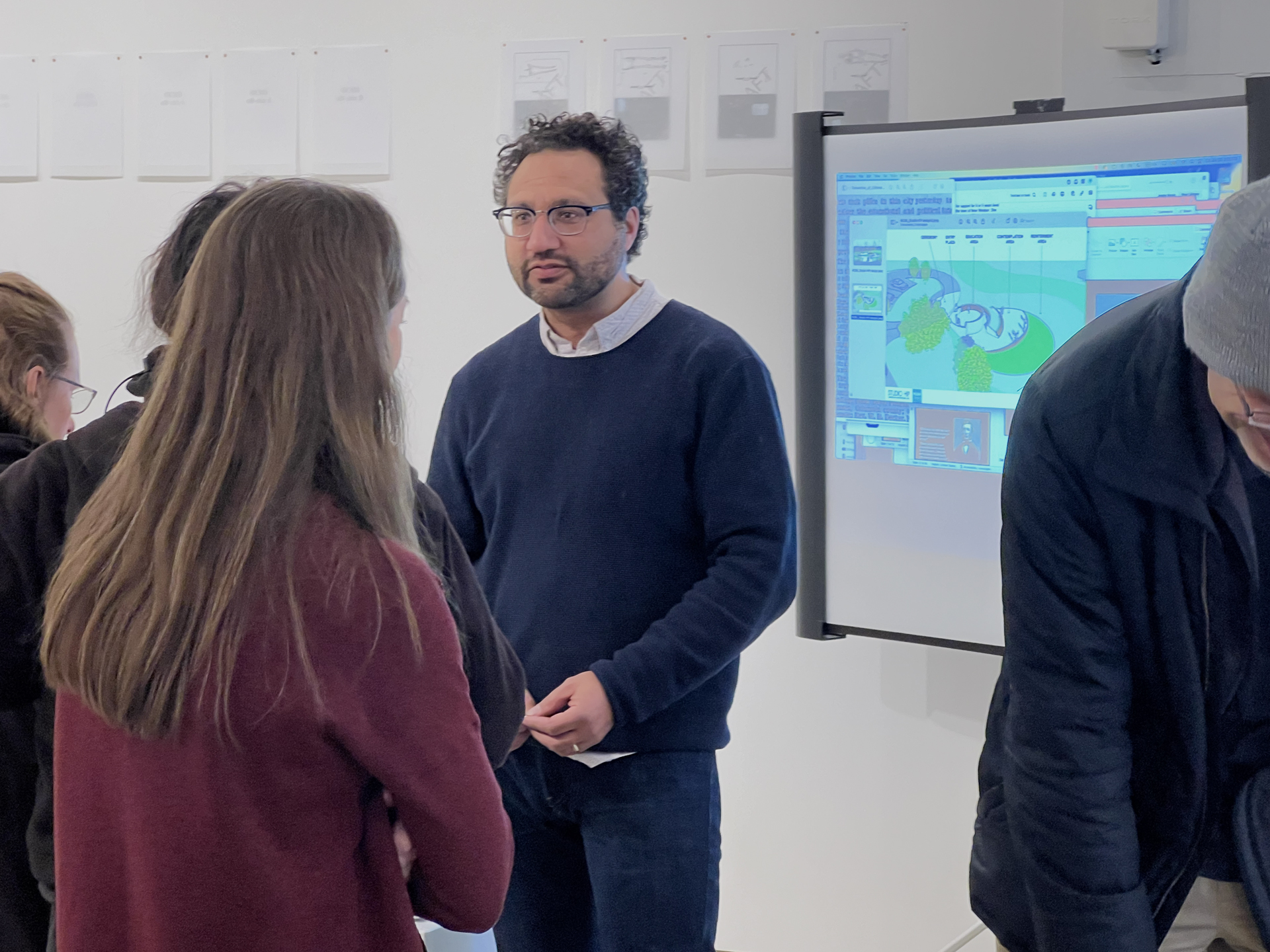
ASG Artist Researcher in Residence, Jean-Marc Superville Sovak, invites the public for a drop-in workshop this Saturday. Superville Sovak will give short presentations at 12:30, 1:30, and 2:30 to introduce his residency project, From the Ground UP, and explain his strategies for Conjuring the Ancestors, creating Collective Monuments, and honoring those buried in Newburgh’s “Colored” Burial Ground.
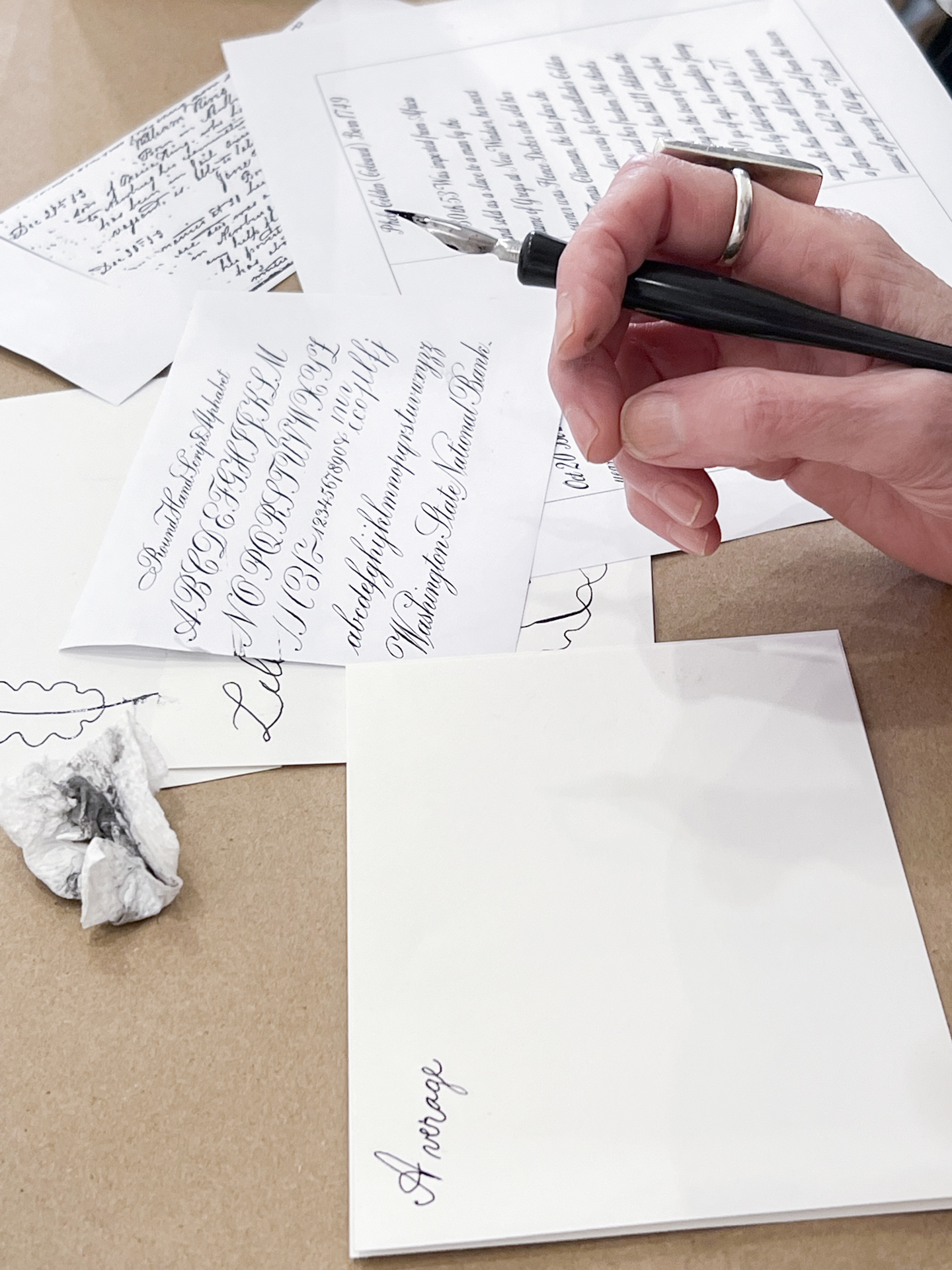
Through the drafting of letters, shared conversation, and visioning ceremonies, Superville Sovak, will guide visitors in ways of using his research on the Newburgh “Colored” Burial Ground to honor and remember their ancestors. Visitors are encouraged to come with questions or messages to write or to be transcribed by the artist.
Come by to learn about Newburgh history, engage in conversation with Superville Sovak on his latest research on the Burial Ground, Alms House Records, and Census Reports, and learn about the different ways you can contribute to the project! Visitors need not have prior knowledge of the project or the history to participate. All materials provided.
No Appointment needed: drop in, stay as long as you wish, all are welcome!

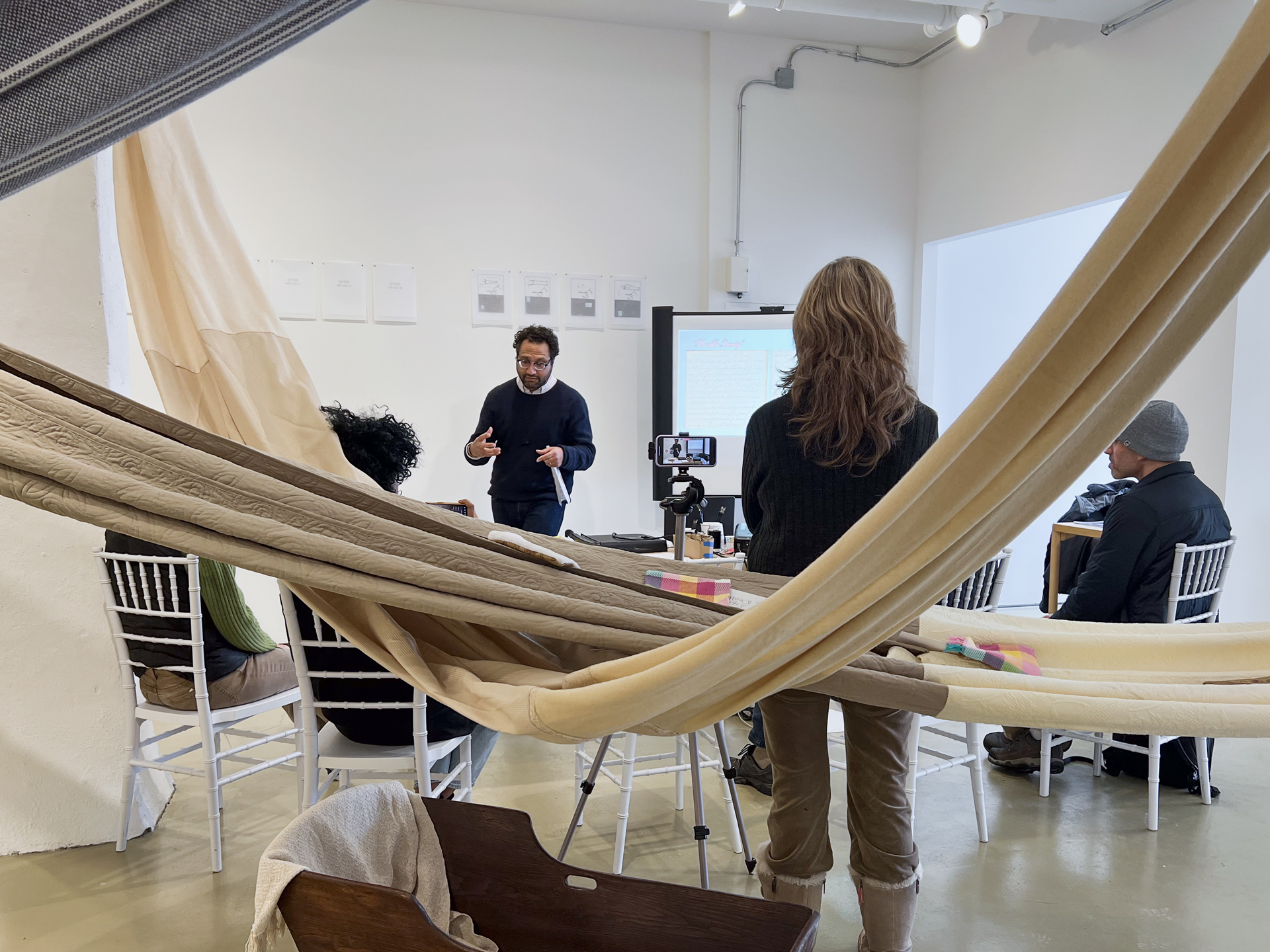

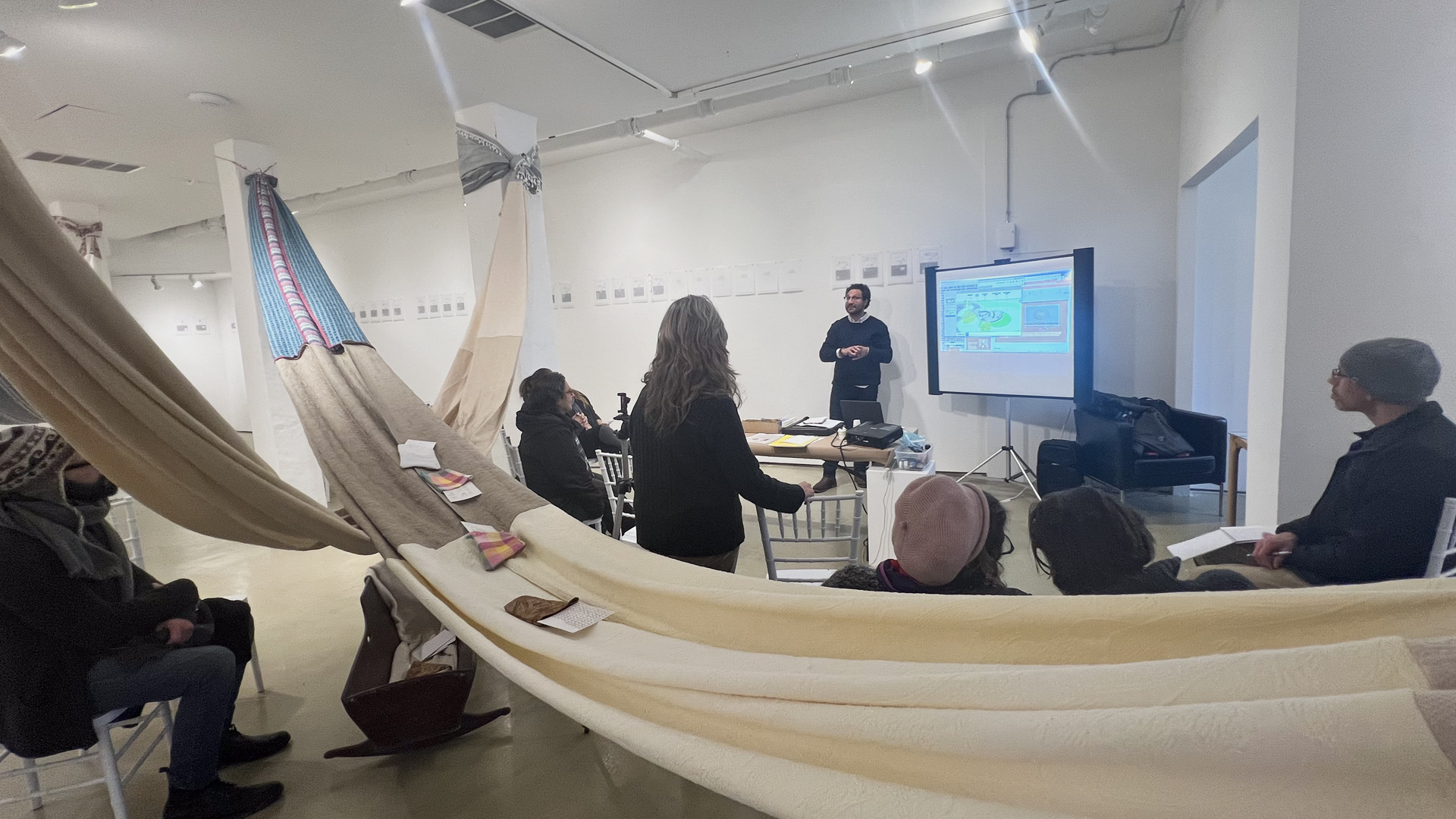

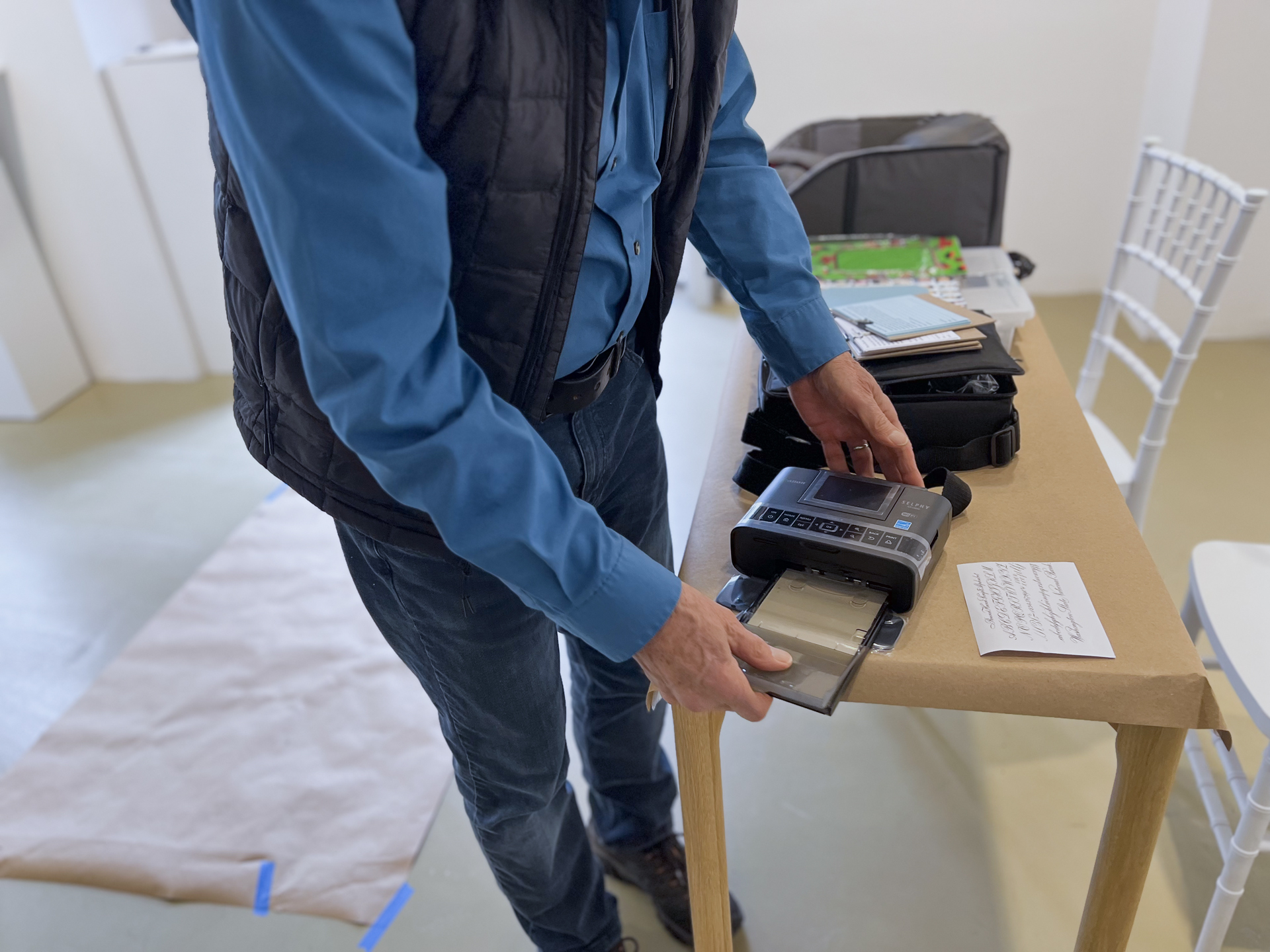


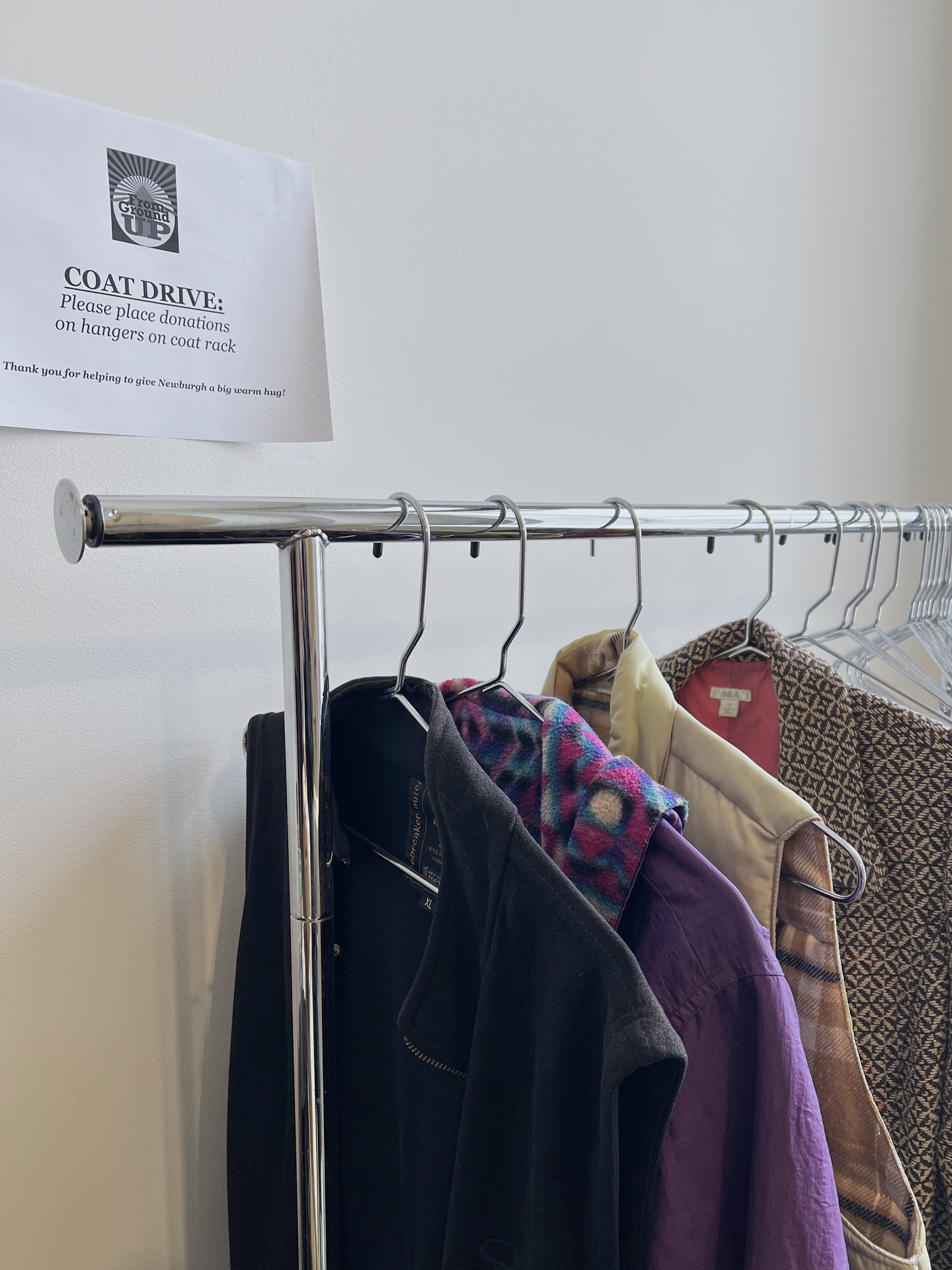
Letters to the Ancestors
Saturday
January 13, 2024
12-4pm
Ann Street Gallery
Free & open to the public.
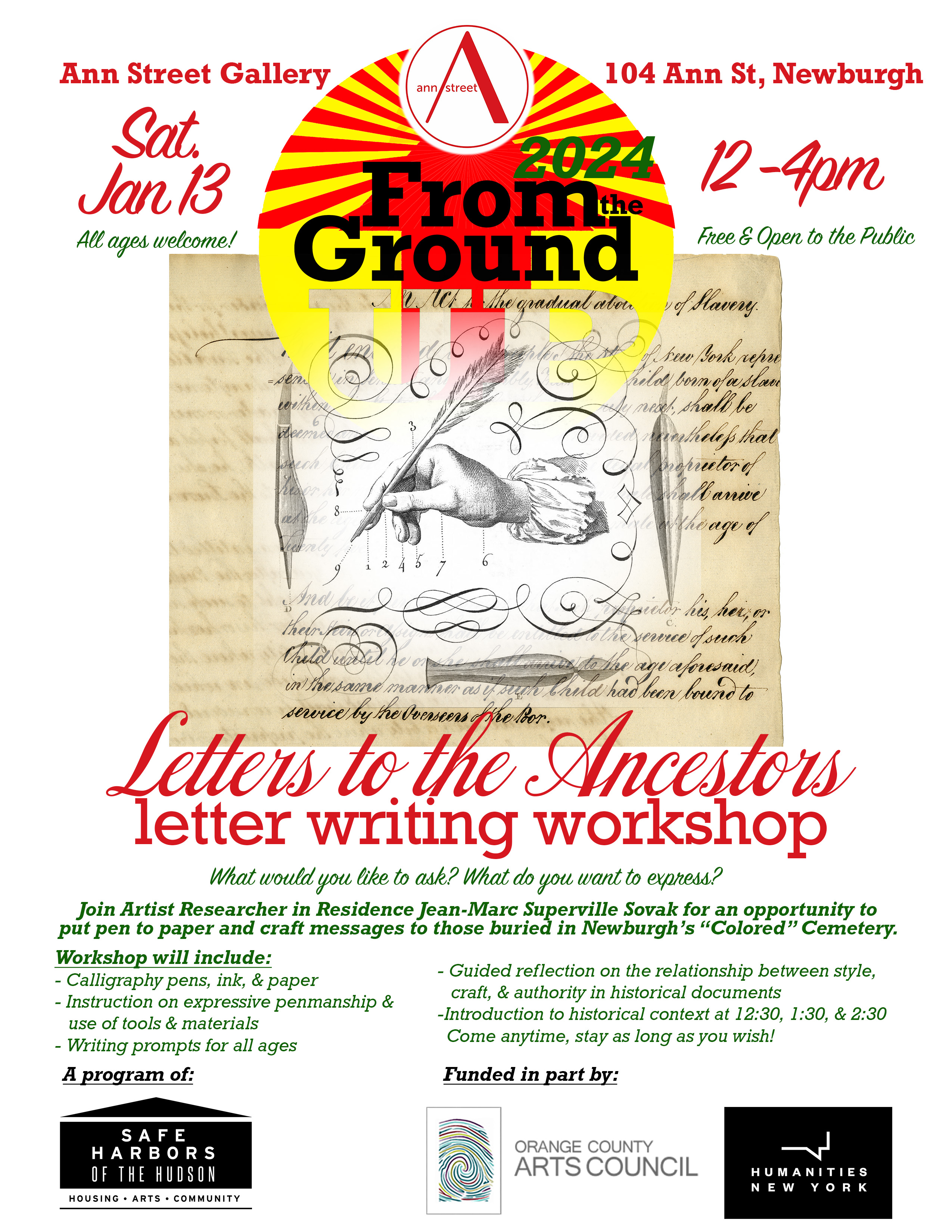
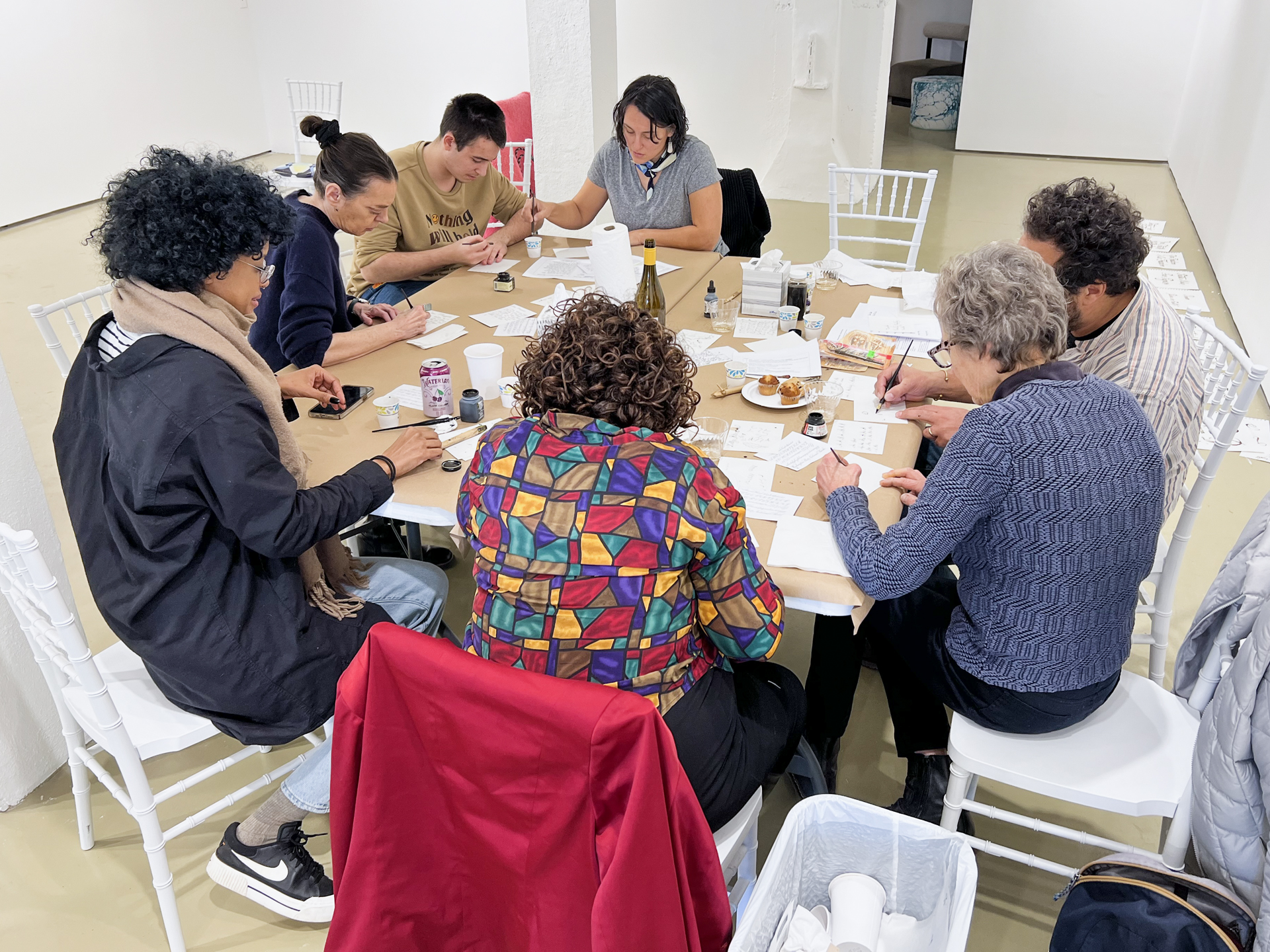
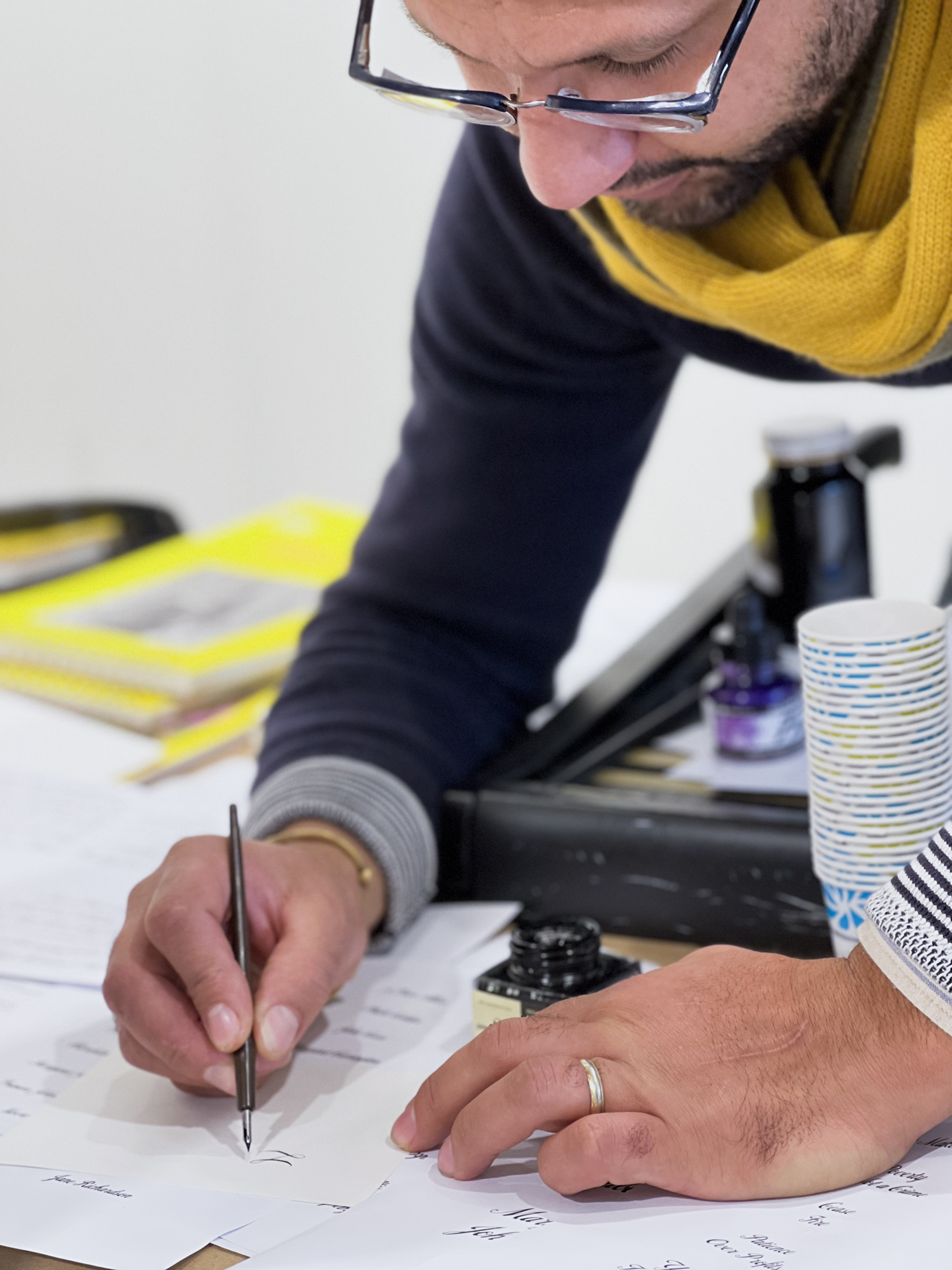
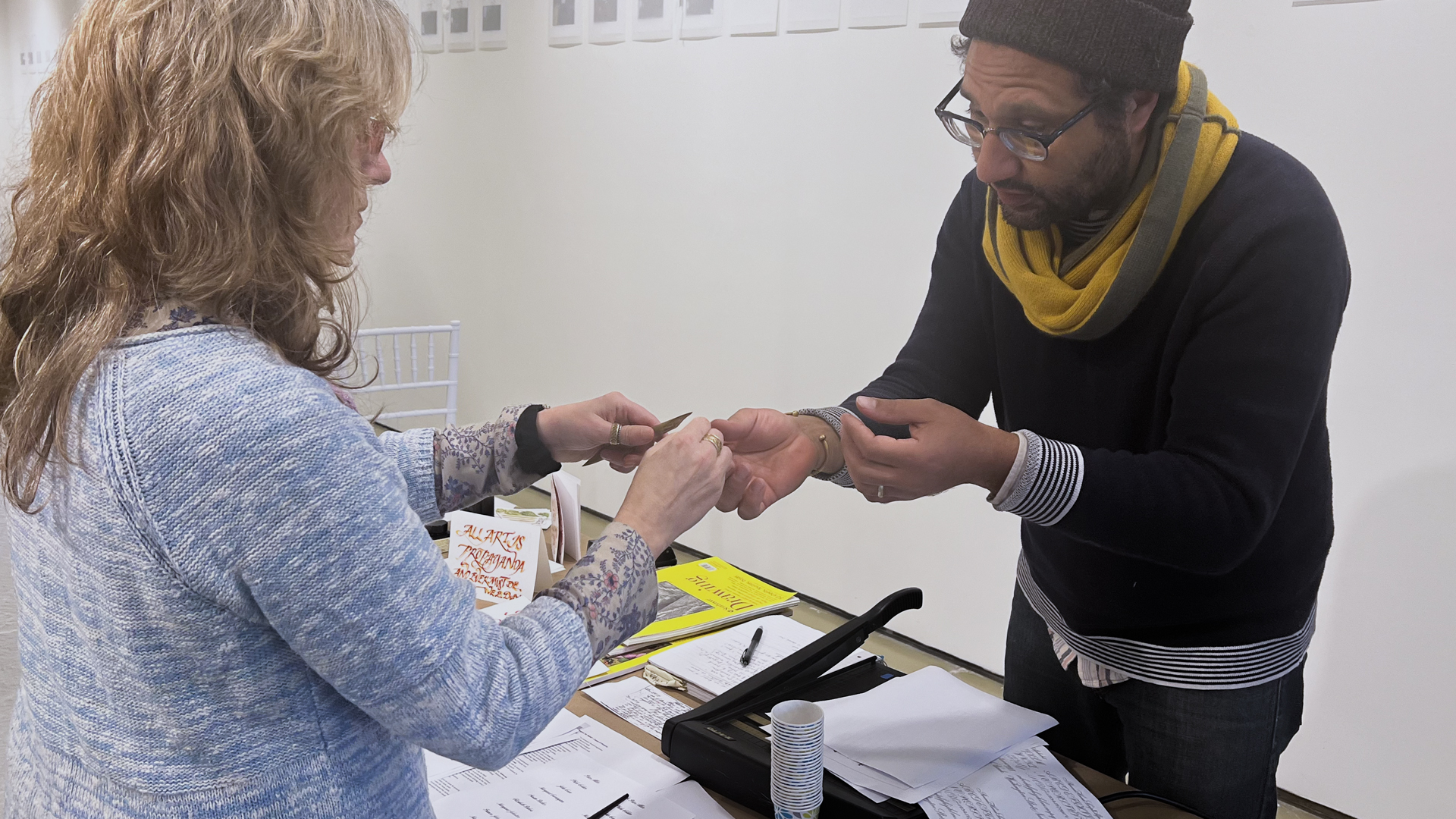
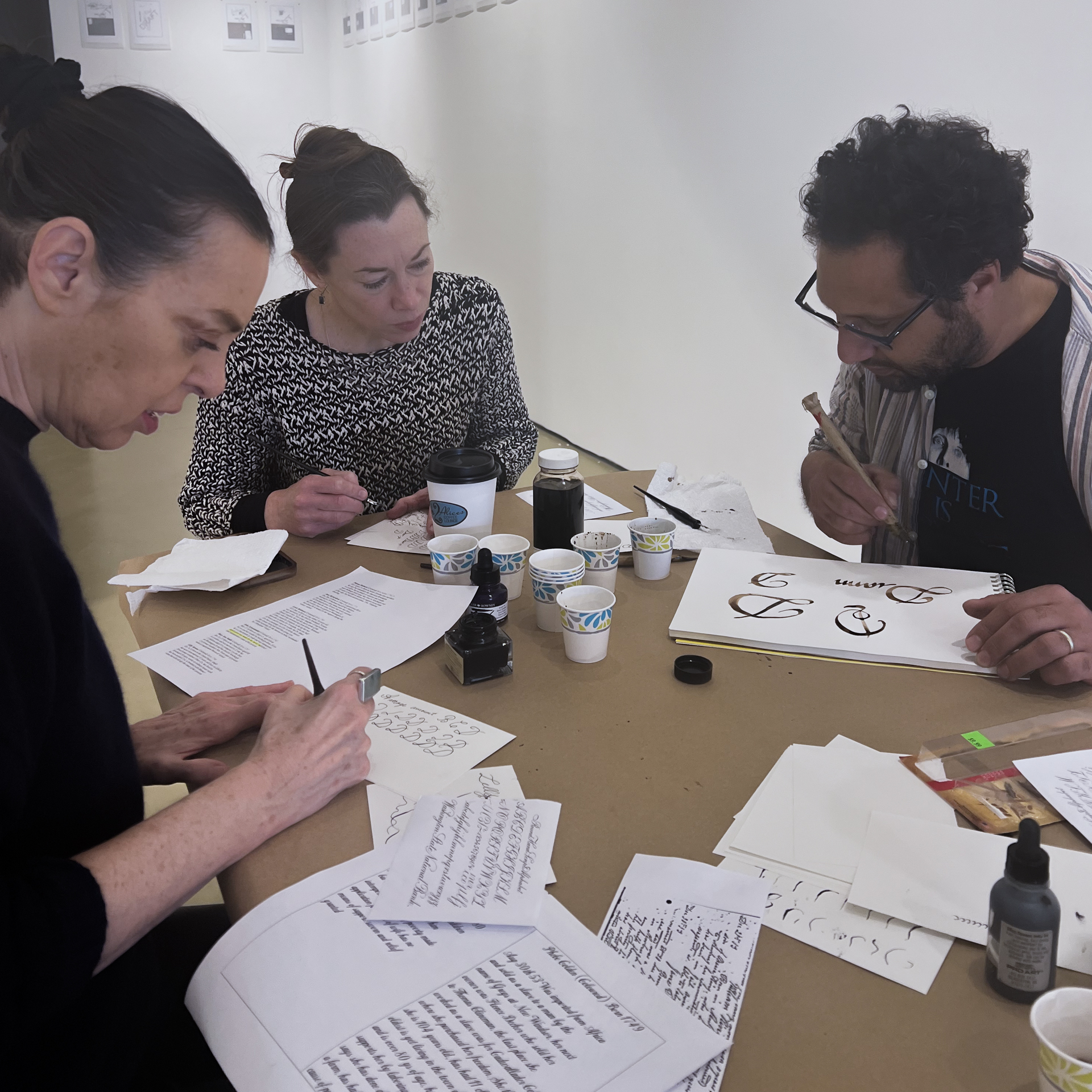
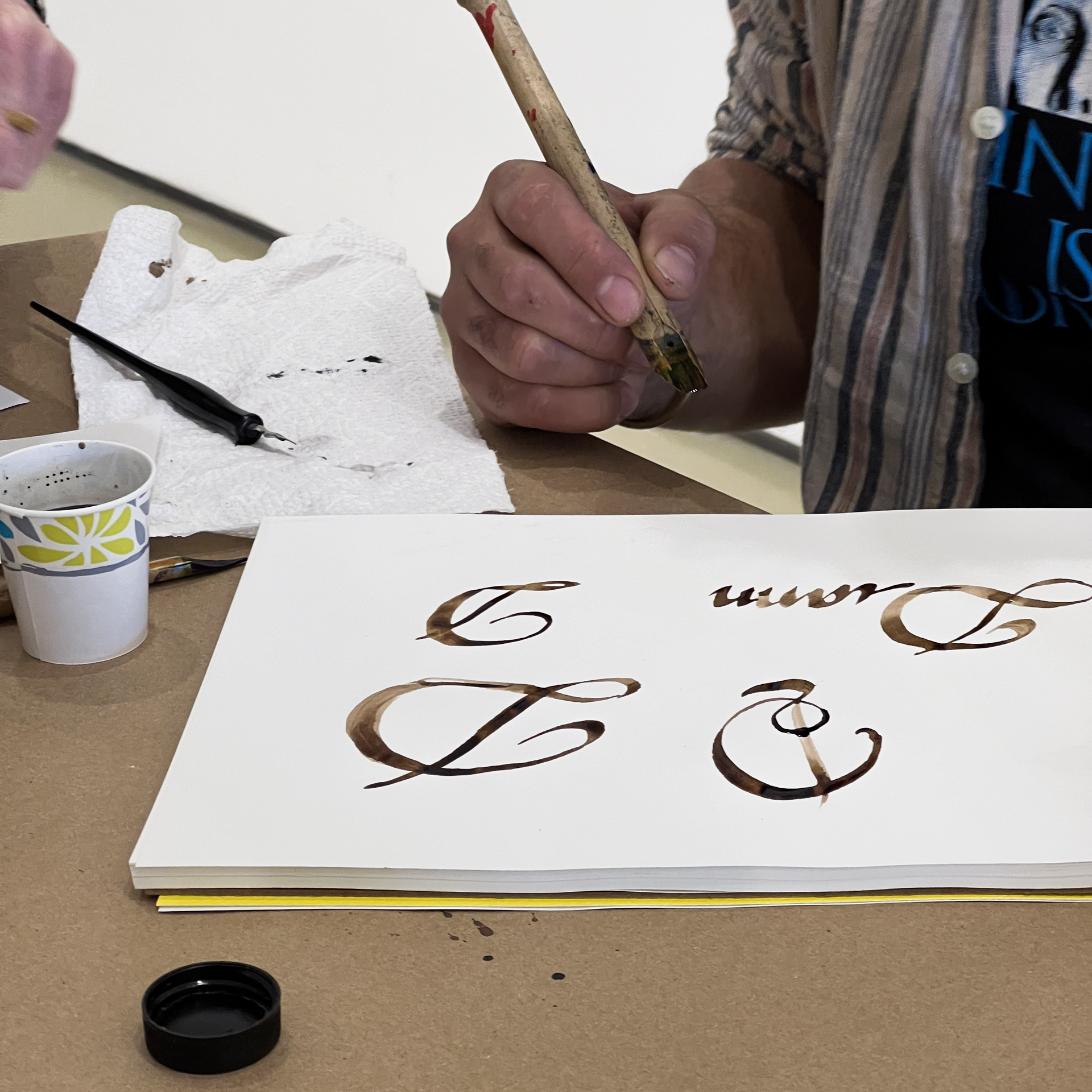
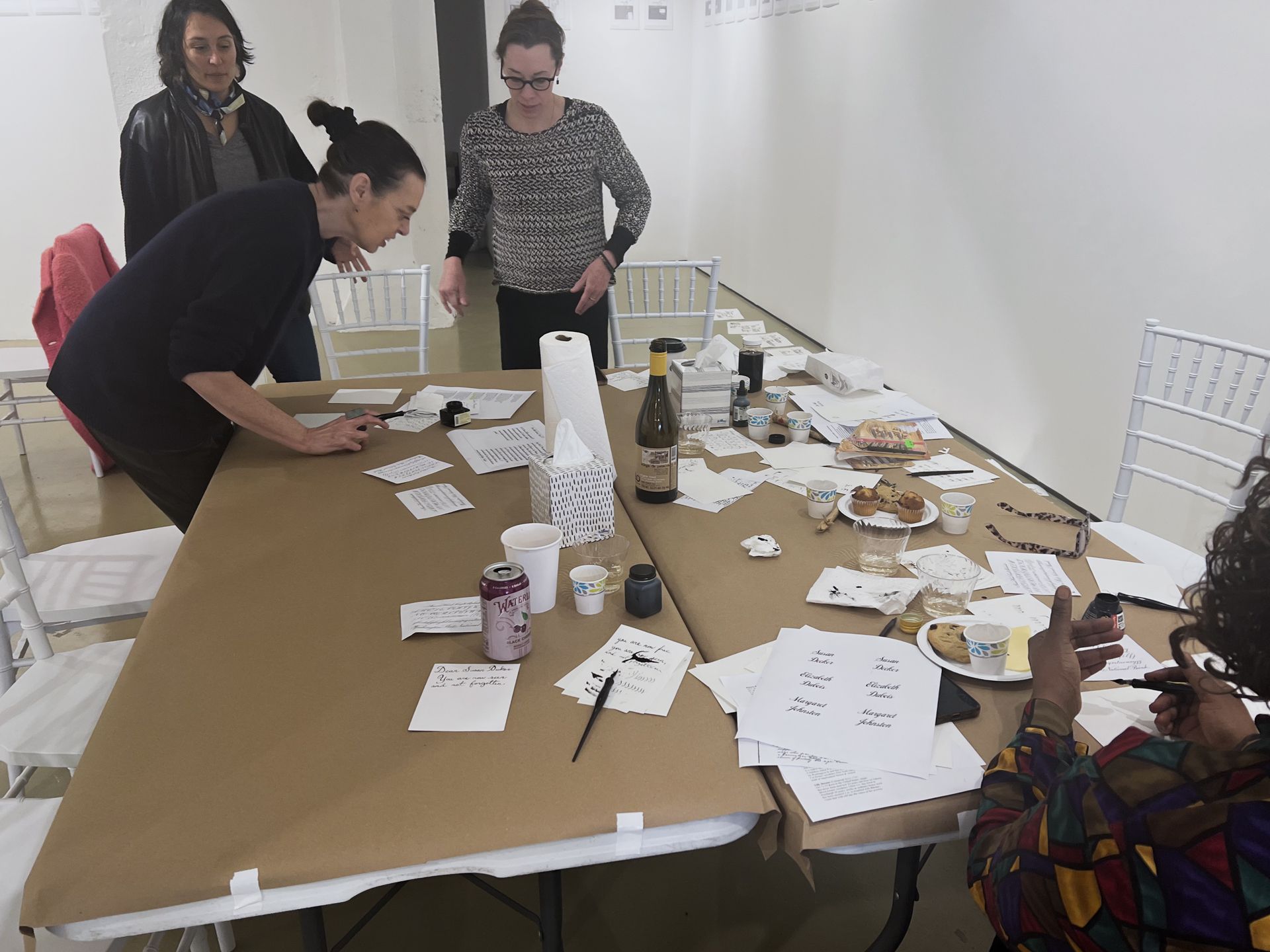
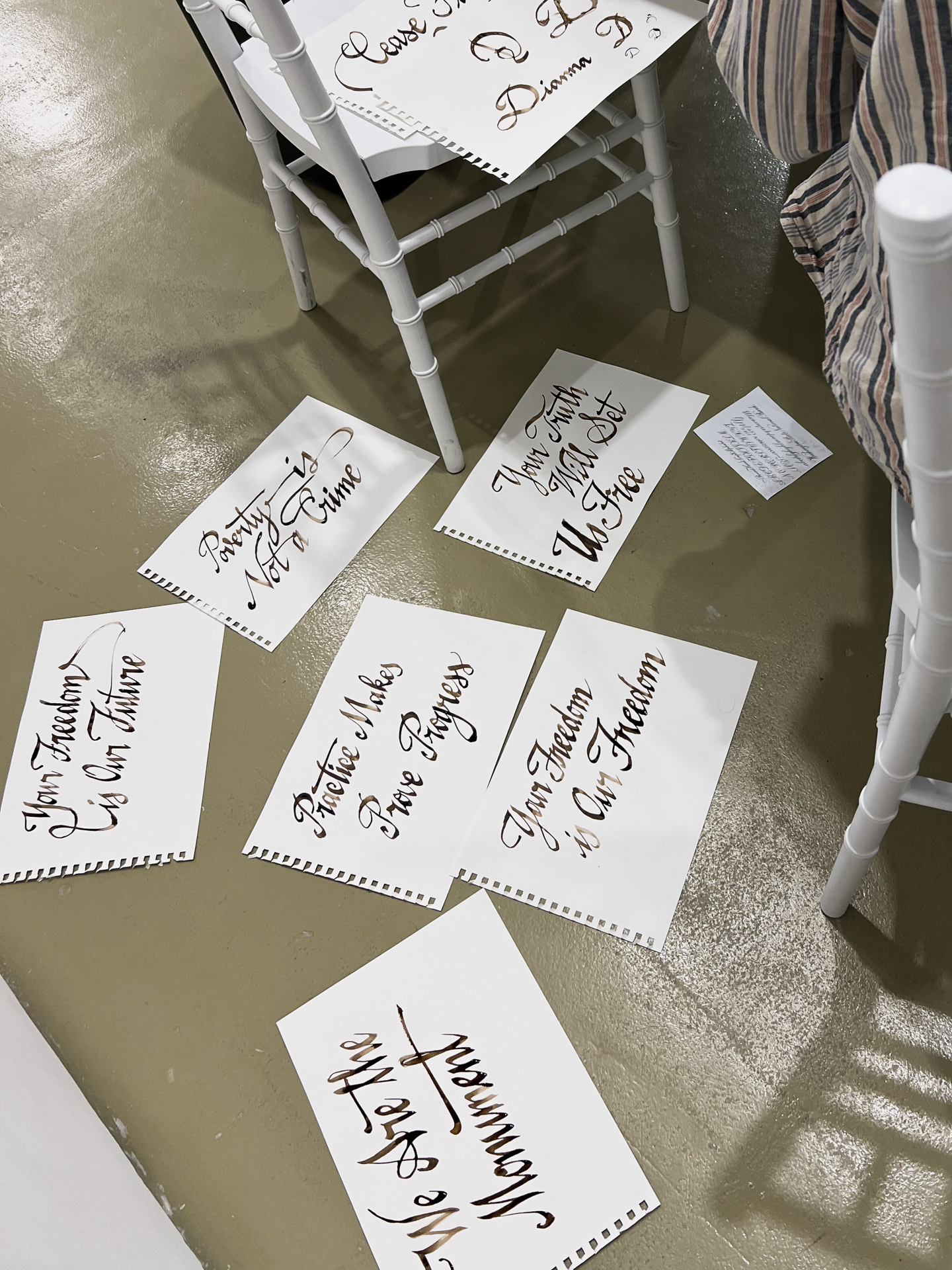
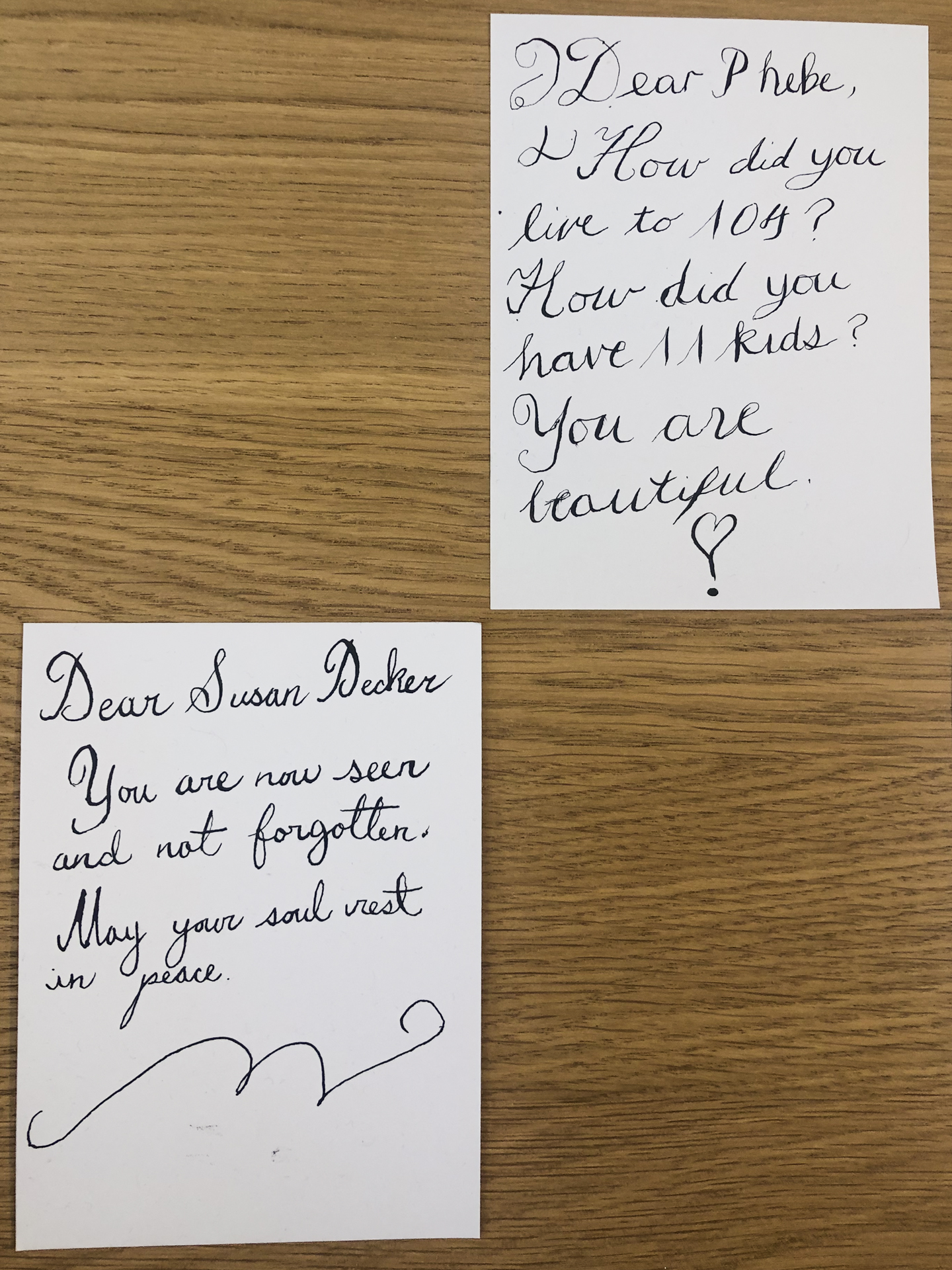
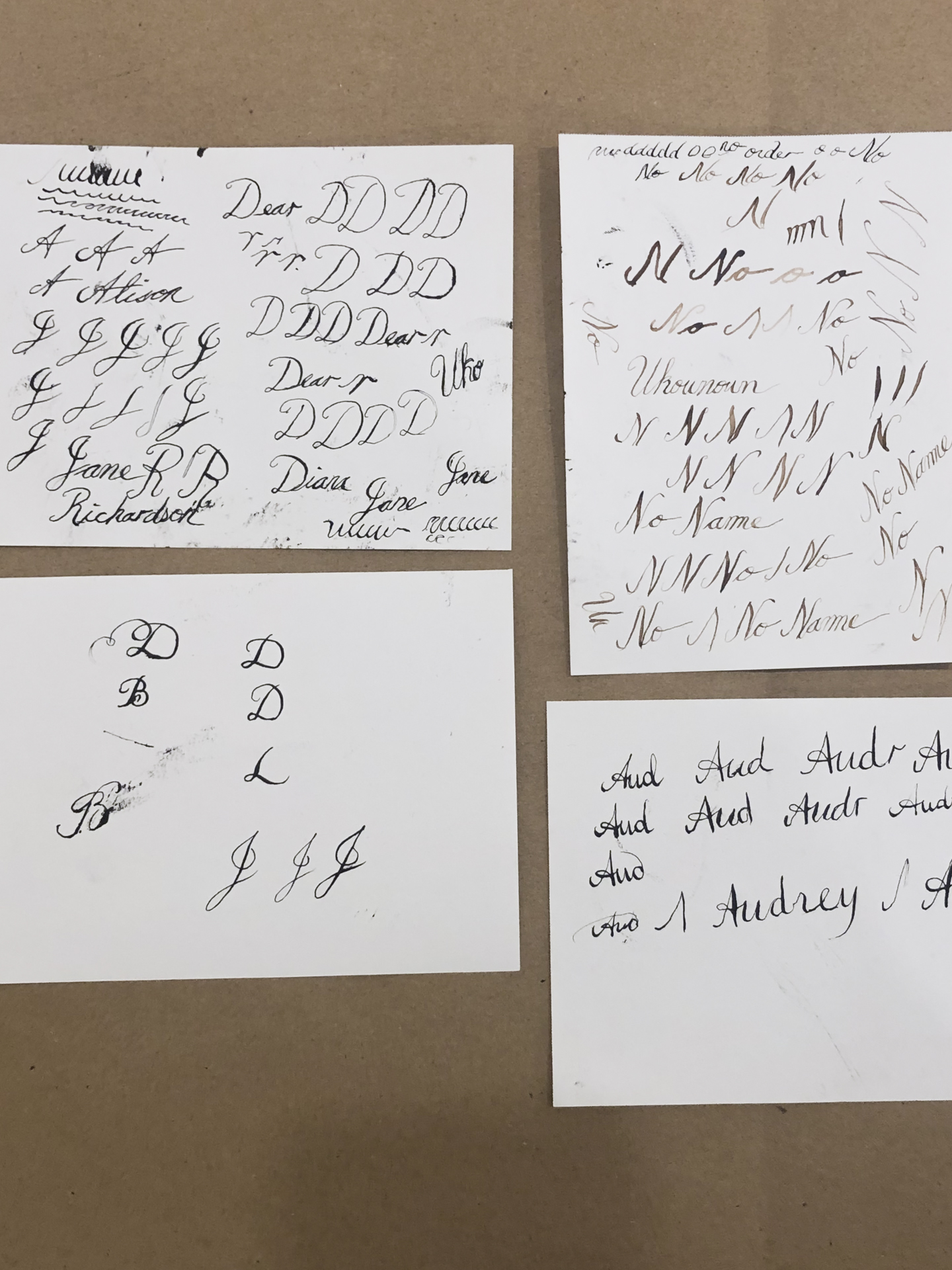
We are excited to invite the public to our next FTGU event this Saturday January 13, 12pm-4pm! Please join ASG’s Artist Researcher in Residence, Jean-Marc Superville Sovak for the workshop, “Letters to the Ancestors,” an opportunity to put pen to paper and craft messages to those buried in, and those disinterred from, Newburgh’s “Colored” Burial Ground.
Open to all ages, this workshop will include all materials, writing prompts, technical demonstrations and introductions to the historical context of New York’s (painfully) Gradual Abolition of Slavery.
Superville Sovak will introduce his residency project and the historical context of the workshop at 12:30, 1:30, & 2:30. Come anytime, stay as long as you wish!
From the Ground UP events will continue on Saturday afternoons throughout January and February 2024, including artist talks and hands-on workshops as well as commissioned performances and poetry readings.
The Gallery is open Saturdays and Sundays 12-4 (and by appointment) through February to:
- view Superville Sovak’s evolving installation in the Gallery, which will gradually transform to include commissioned artworks from other regional artists
- collect, document, discuss, and display offerings, messages, and conjuring bundles from the public
- discuss the project and your visions for memorialization with the artist
- collect coats for distribution in Newburgh
- reference our curated collection of reading materials
FTGU events are updated weekly on ASG website and IG accounts and @ftgu2024







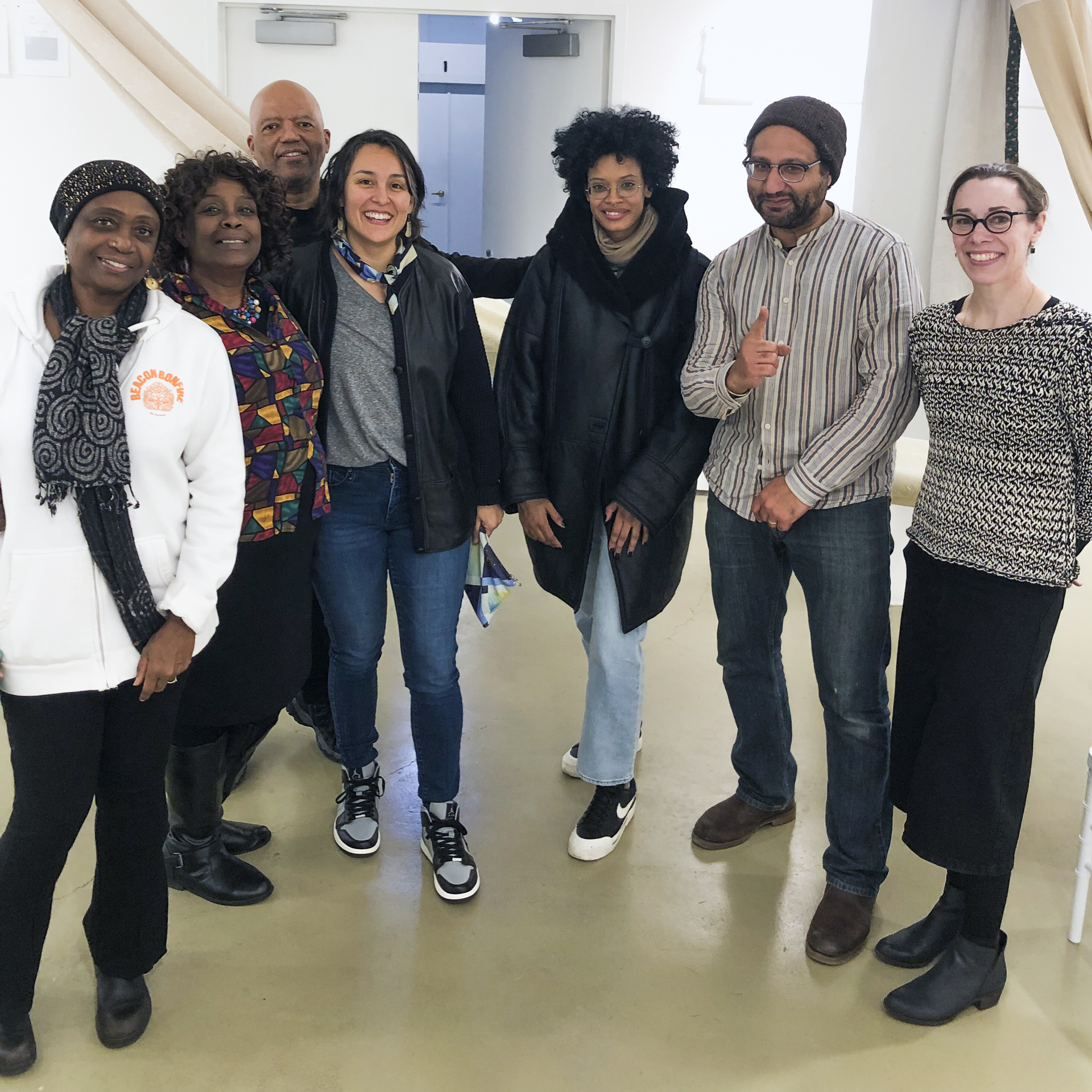
Artist Talk & Research Presentation: Jean-Mark Superville Sovak, ASG Artist Researcher in Residence
Saturday
January 6, 2024
2-4pm
Ann Street Gallery
Free & open to the public.
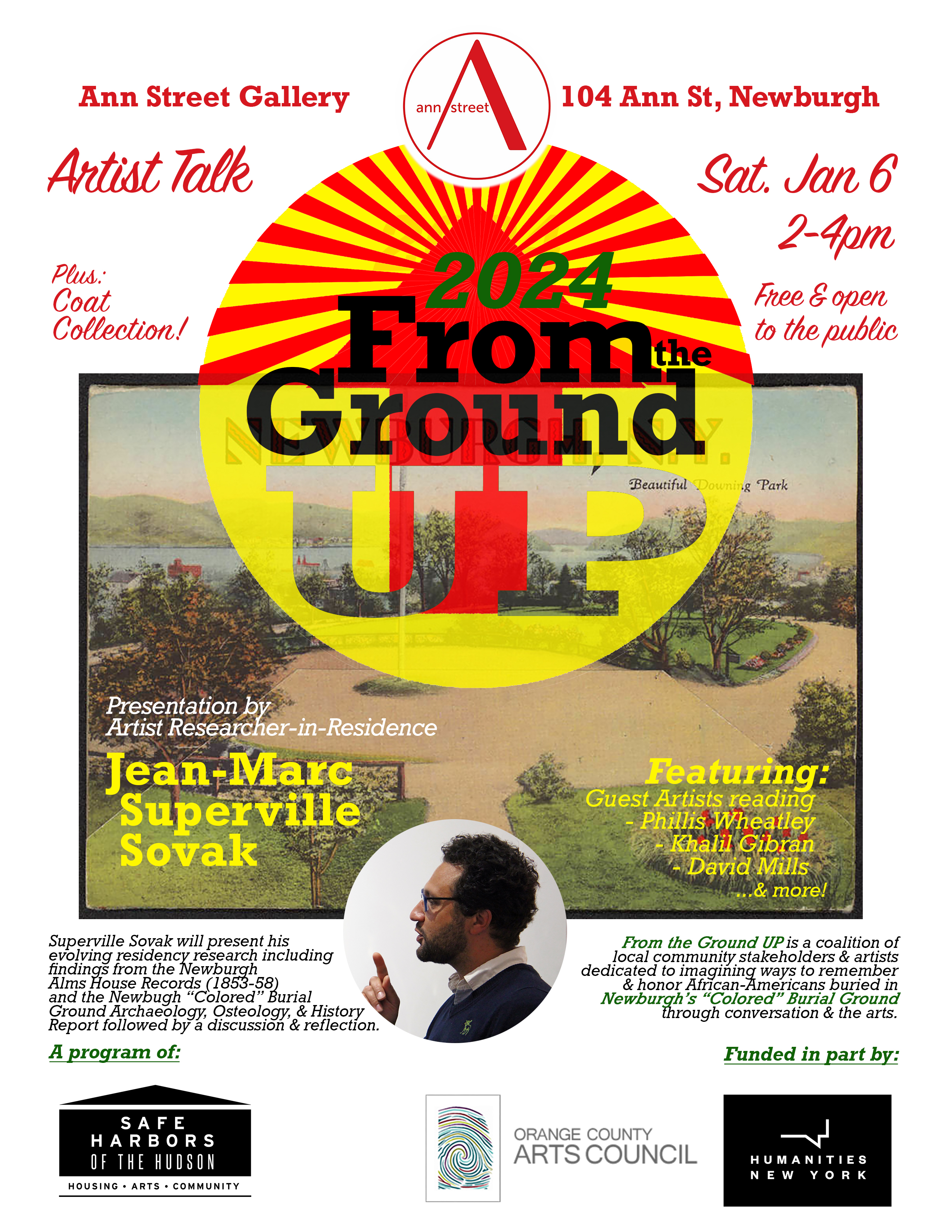
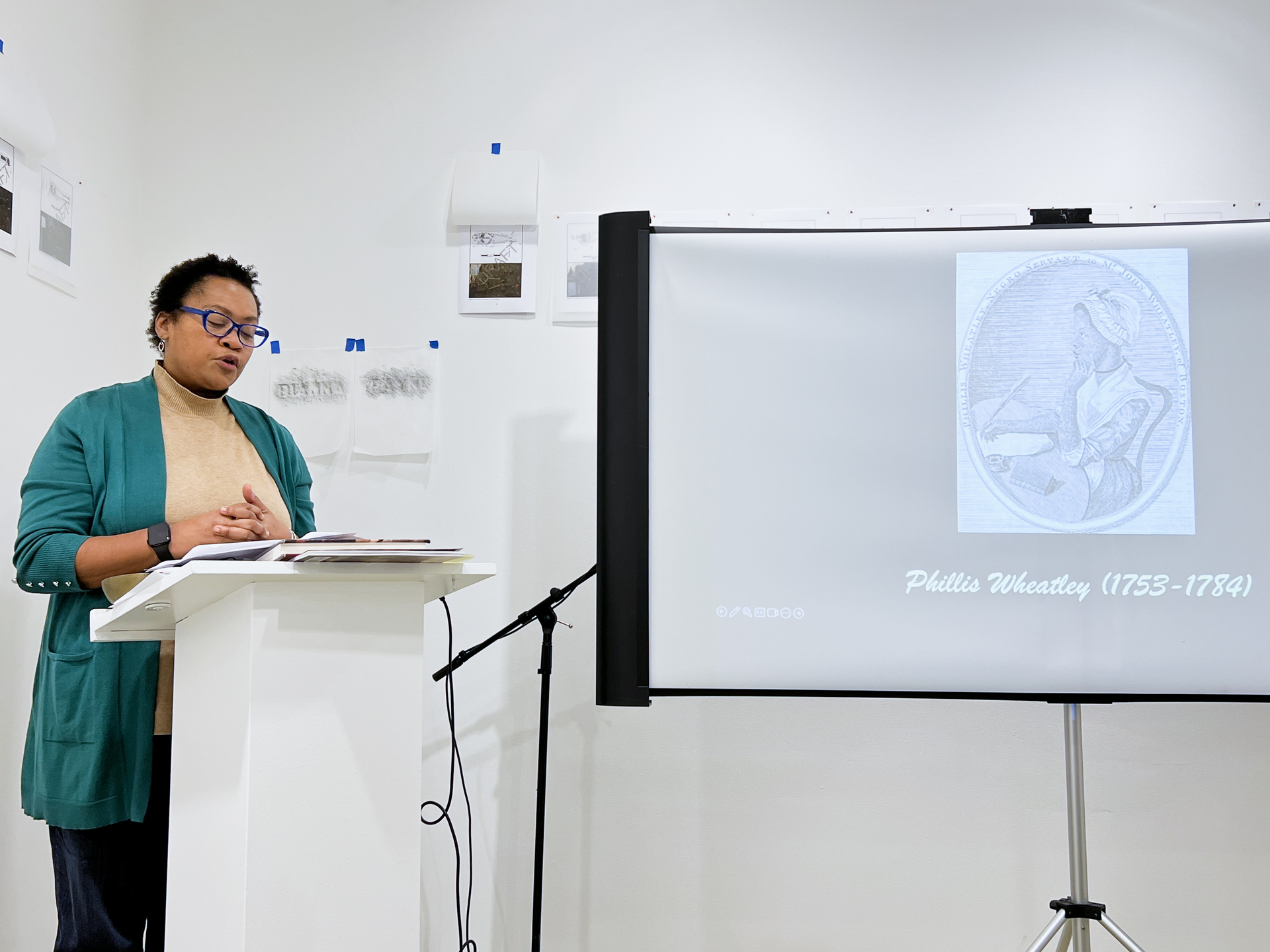
Please join us Saturday January 6, 2024 2-4pm in the Gallery as Artist Researcher in Residence, Jean Marc Superville Sovak, presents his evolving residency research for the Project, From the Ground UP. Superville Sovak’s presentation will review his findings from the Newburgh Alms House Records (1853-58) and the Newburgh "Colored" Burial Ground Archeology, Osteology, and History Report. The event will feature guest artists reading Phillis Wheatley, Khalil Gibran, David Mills, and more!
From the Ground UP is a coalition of local community stakeholders & artists dedicated to imagining ways to remember & honor African-Americans buried in Newburgh’s “Colored” Burial Ground through conversation & the arts. The project is led by Ann Street Gallery Artist Researcher in Residence (ARiR) Jean-Marc Superville Sovak.
Events will continue on Saturday afternoons throughout January and February 2024. The Gallery is open Saturdays and Sundays 12-4 through February to:
- view Superville Sovak’s evolving project
- collect coats for distribution in Newburgh
- document, discuss, and display offerings and conjuring bundles from the public
- discuss the project and visions for memorialization with the artist
To learn more visit supervillesovak.com and follow @supersovak and @FTGU2024.


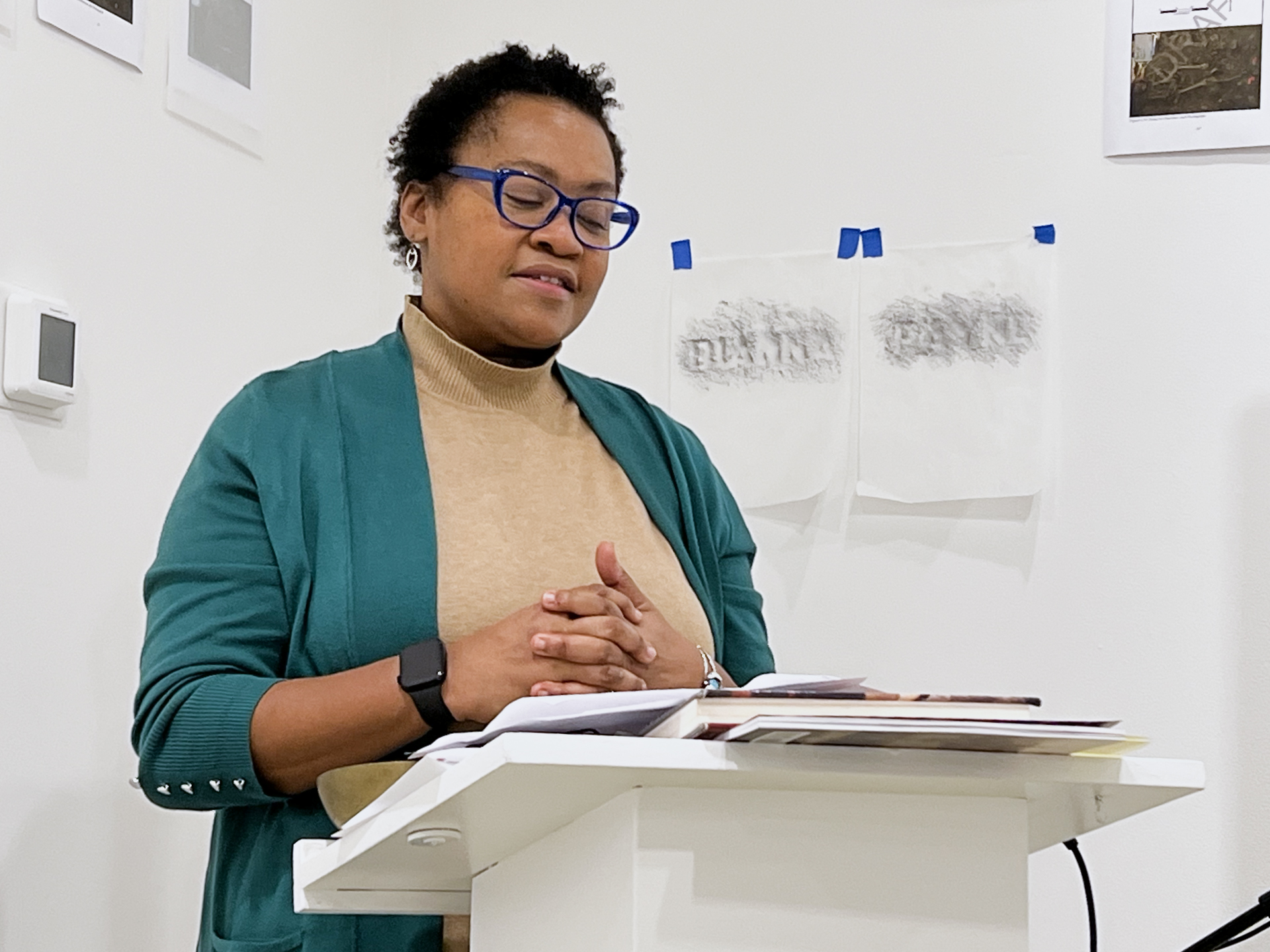
Artist Talk: Jean-Mark Superville Sovak, ASG Artist Researcher in Residence
Saturday
Dec. 16, 2023
2-4pm
Ann Street Gallery
Free & open to the public.
Please join us today at 2pm in the Gallery or on Zoom for an artist talk by ASG Artist Researcher in Residence, Jean-Marc Superville Sovak. Zoom link @ftgu2024
Join Zoom Meeting
Meeting ID: 882 6827 6731
Passcode: FTGU2023
Superville Sovak will present his art practice and research leading to his residency project, From the Ground UP. He will discuss his approach to the project and answer questions about his research followed by a discussion and reflection.
Superville Sovak and From the Ground UP are in residence at ASG through February. Over the course of the residency, the project transforms the Gallery into a lab, workshop, and exhibition space dedicated to the memorialization of African-American lives and deaths in Newburgh shortly after the Gradual Abolition of slavery in NY state.
Coat Collection:
As a participatory and durational form of memorialization, the gallery requests donations of gently used winter coats to distribute in the vicinity.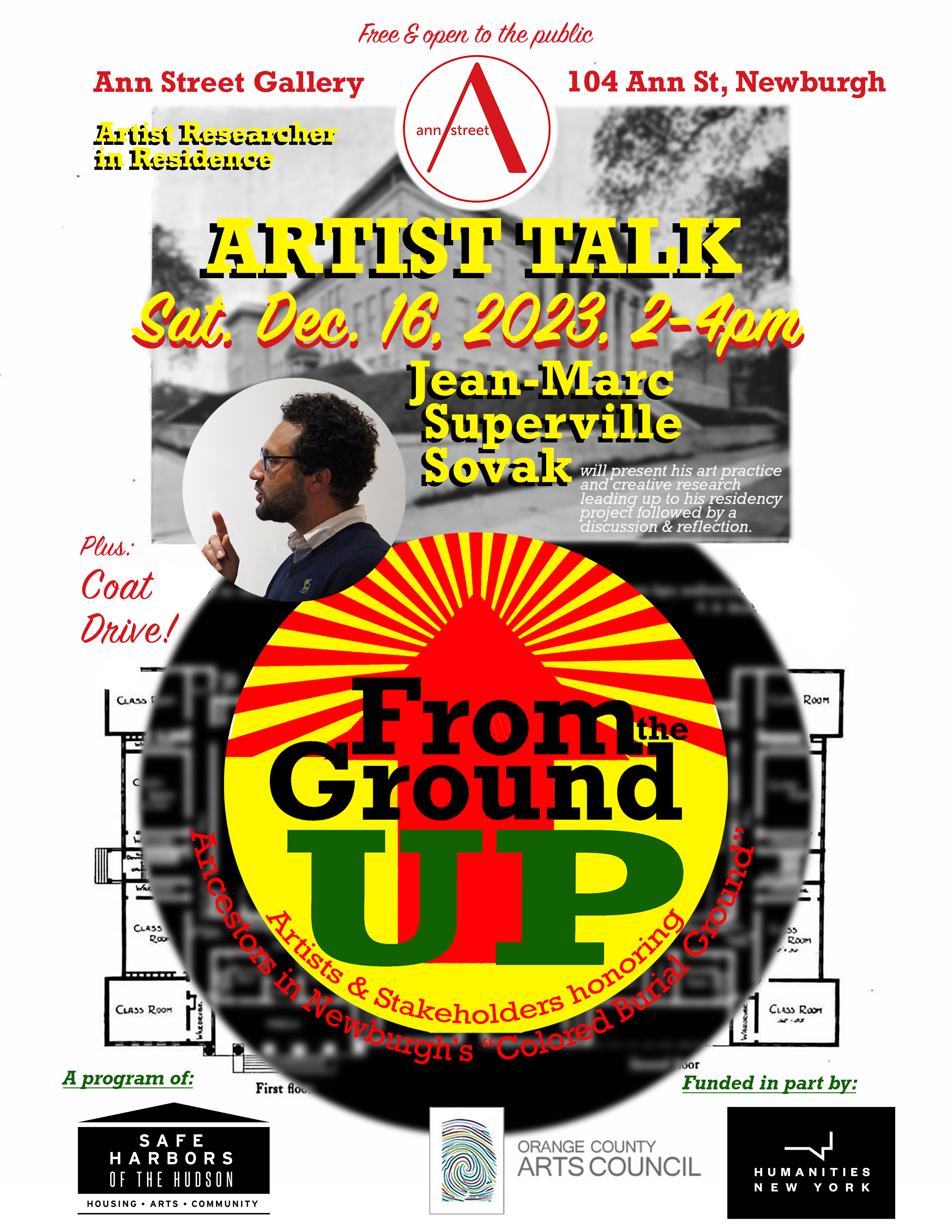
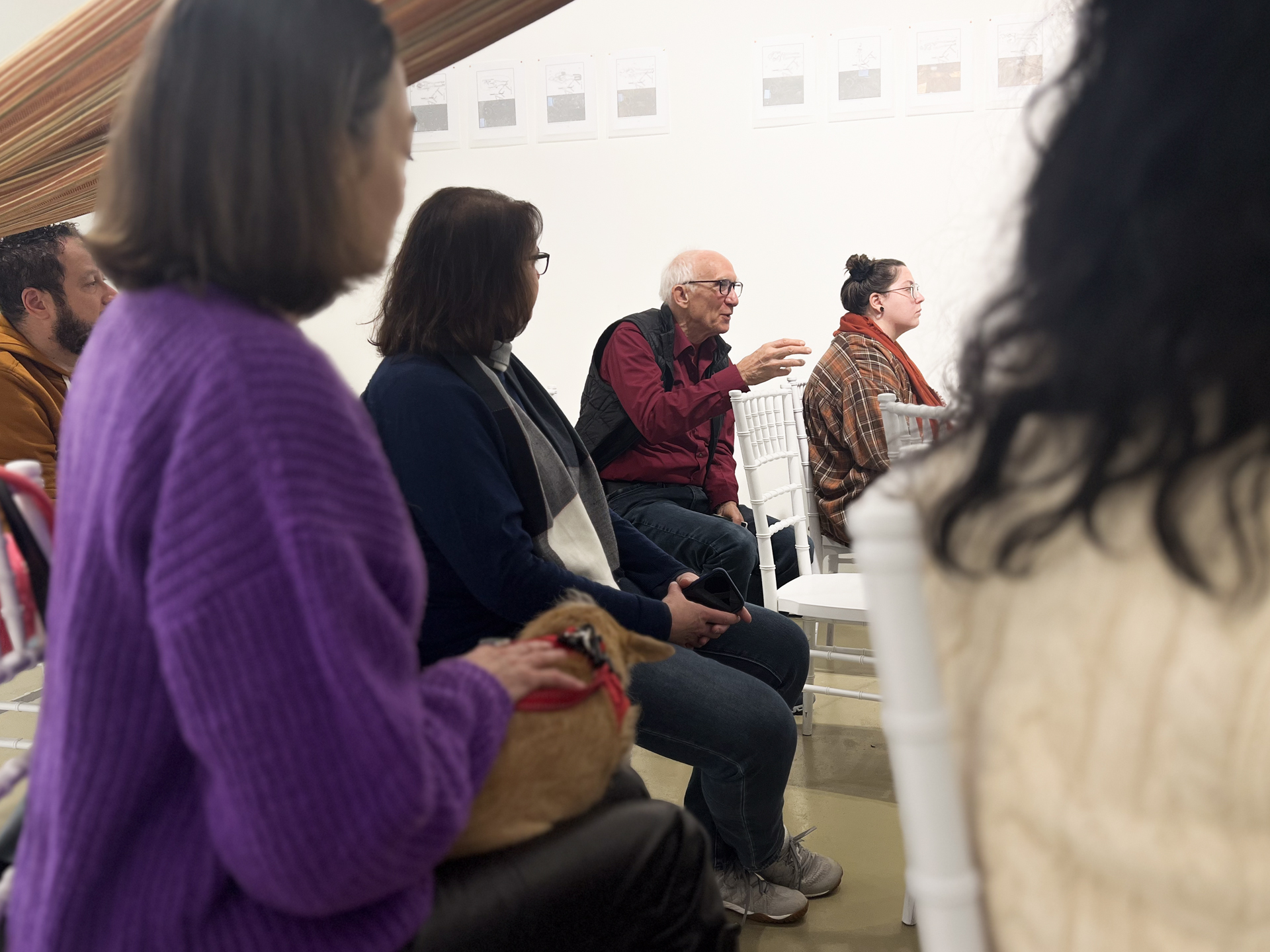
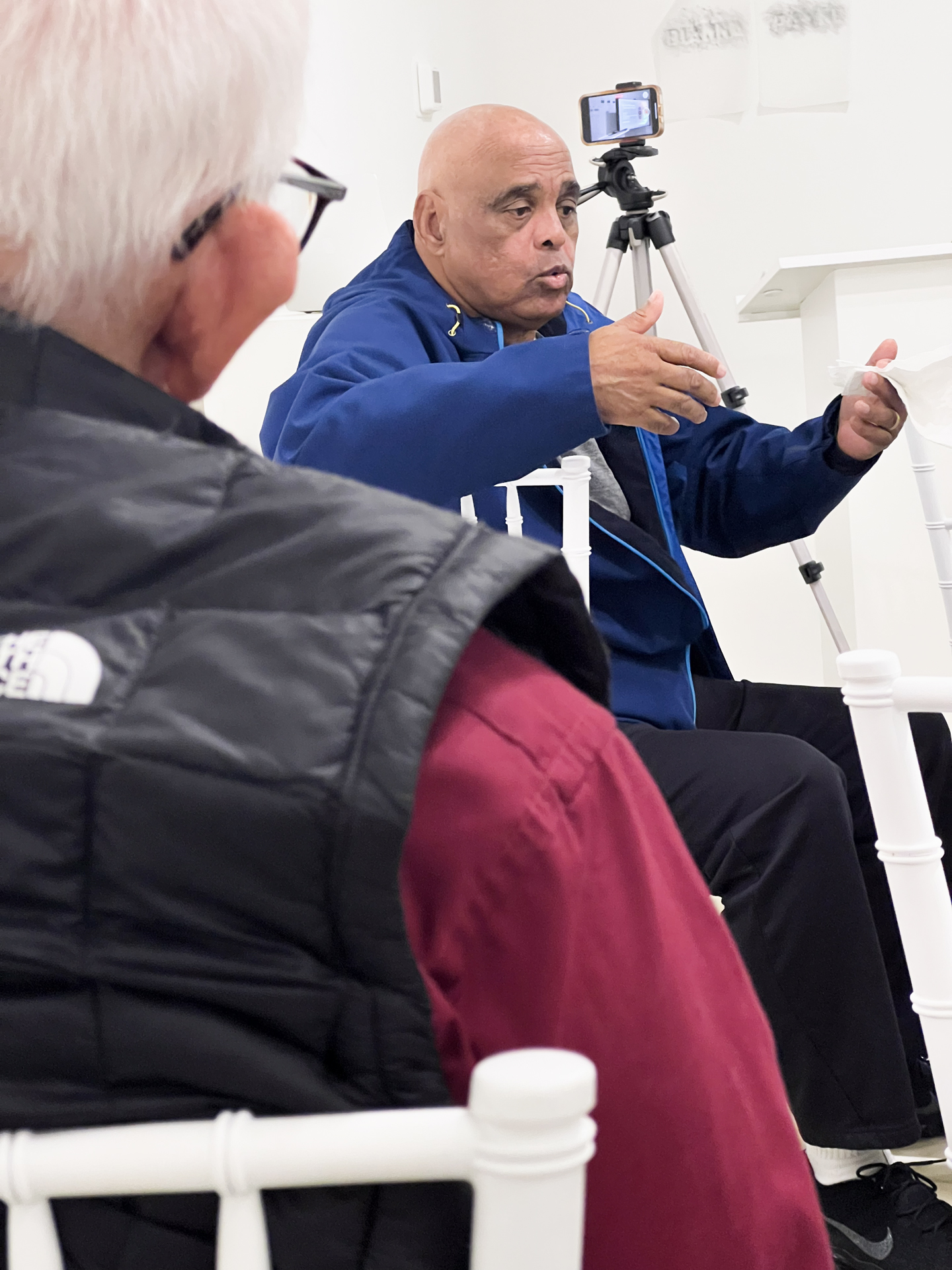
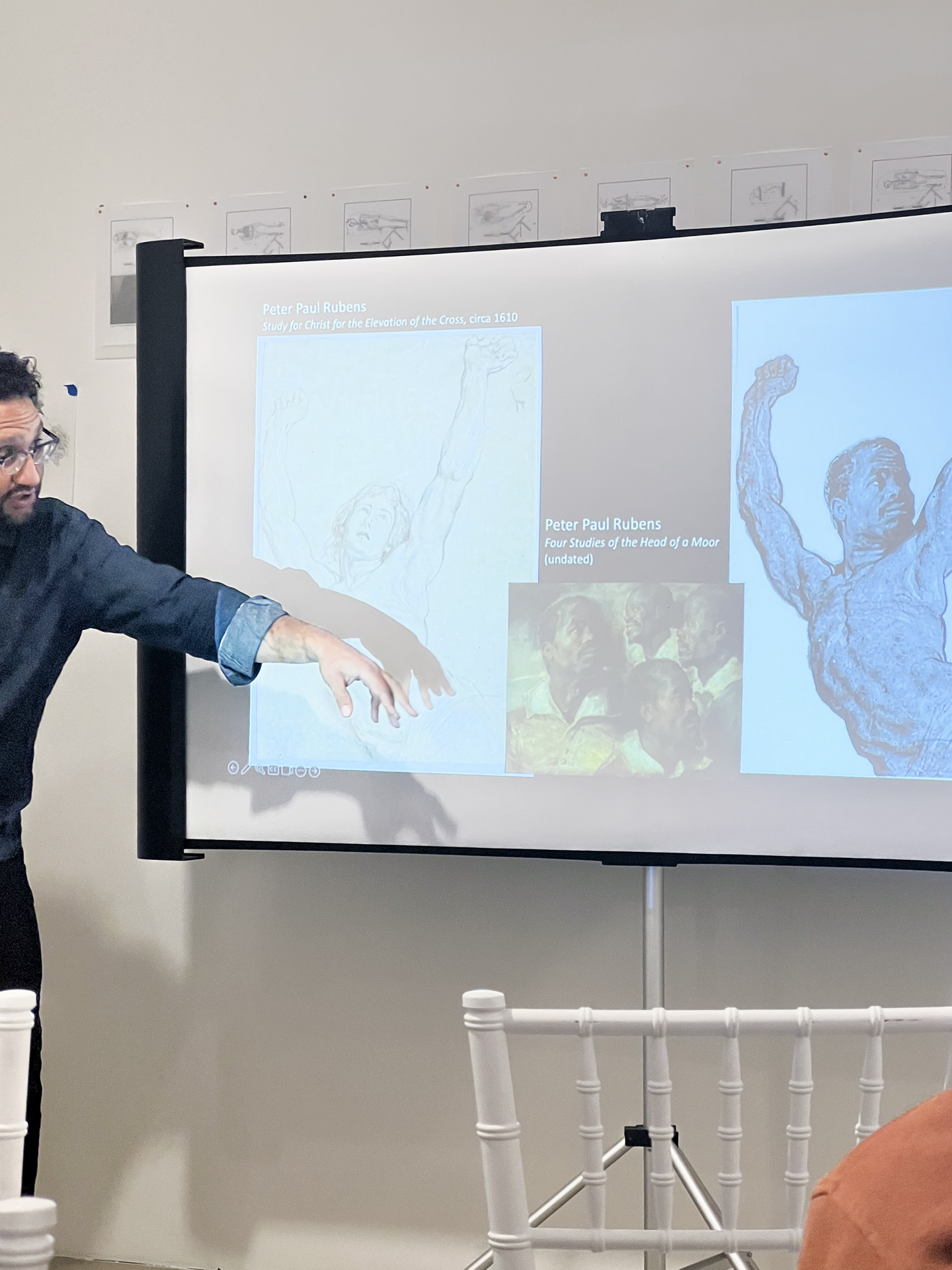

Community Gathering
Saturday
Dec. 9, 2023
2-4pm
Ann Street Gallery
Free & open to the public.
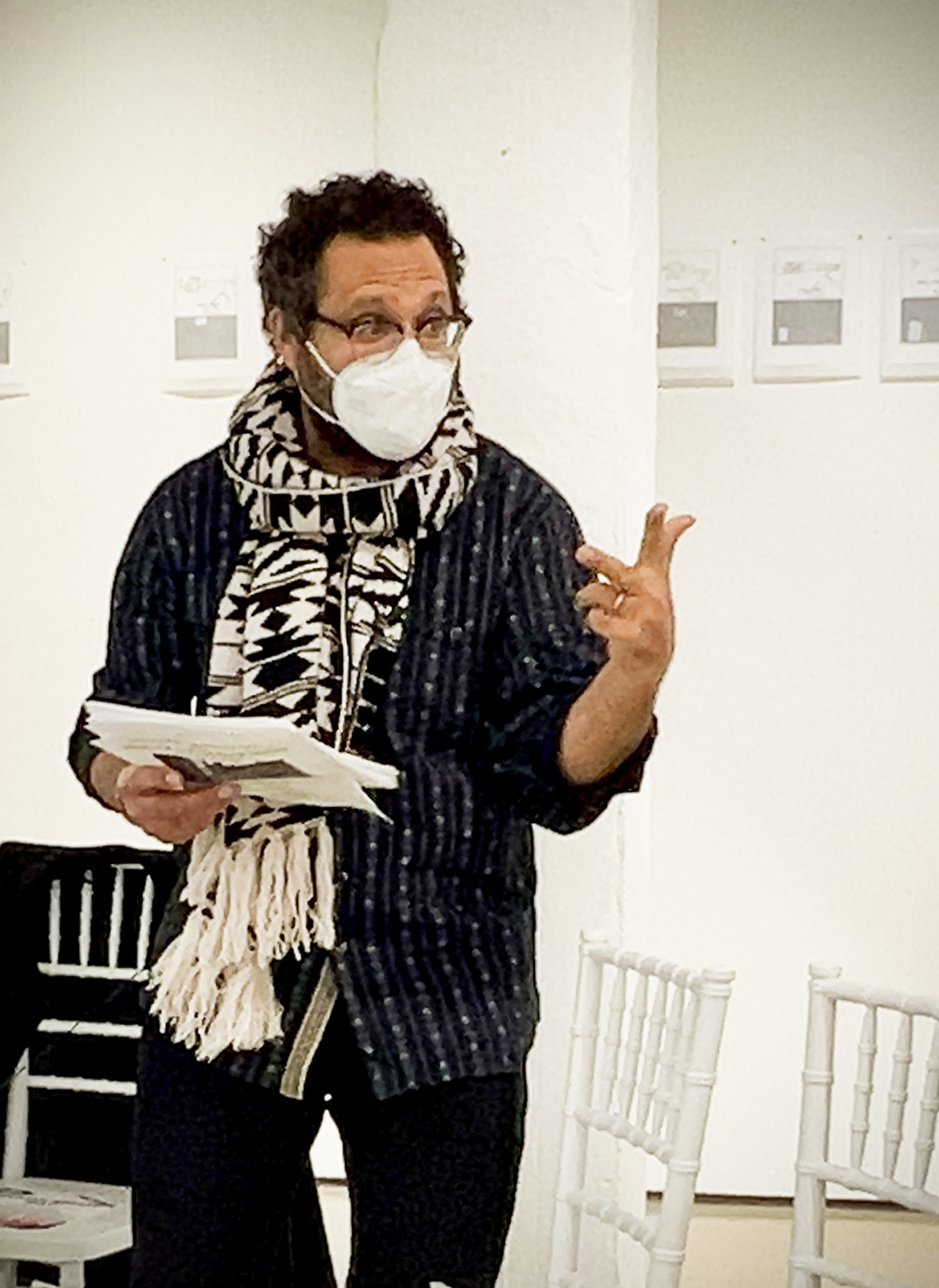
Historian Dr. Christina Ziegler-McPherson will Zoom in to this in-person gathering to introduce visitors to the historical context of the project From the Ground UP
during the post Emancipation (1827) and antebellum years (1861-65) that coincide with the Newburgh “colored” cemetery’s usage. THe presentation will be followed by a Q&A hosted by Ann Street Gallery’s Artist Researcher in Residence, Jean-Marc Superville-Sovak & community organizer Gabrielle Burton-Hill.
Coat Collection:
As a participatory and durational form of memorialization, the gallery requests donations of gently used winter coats to distribute in the vicinity.

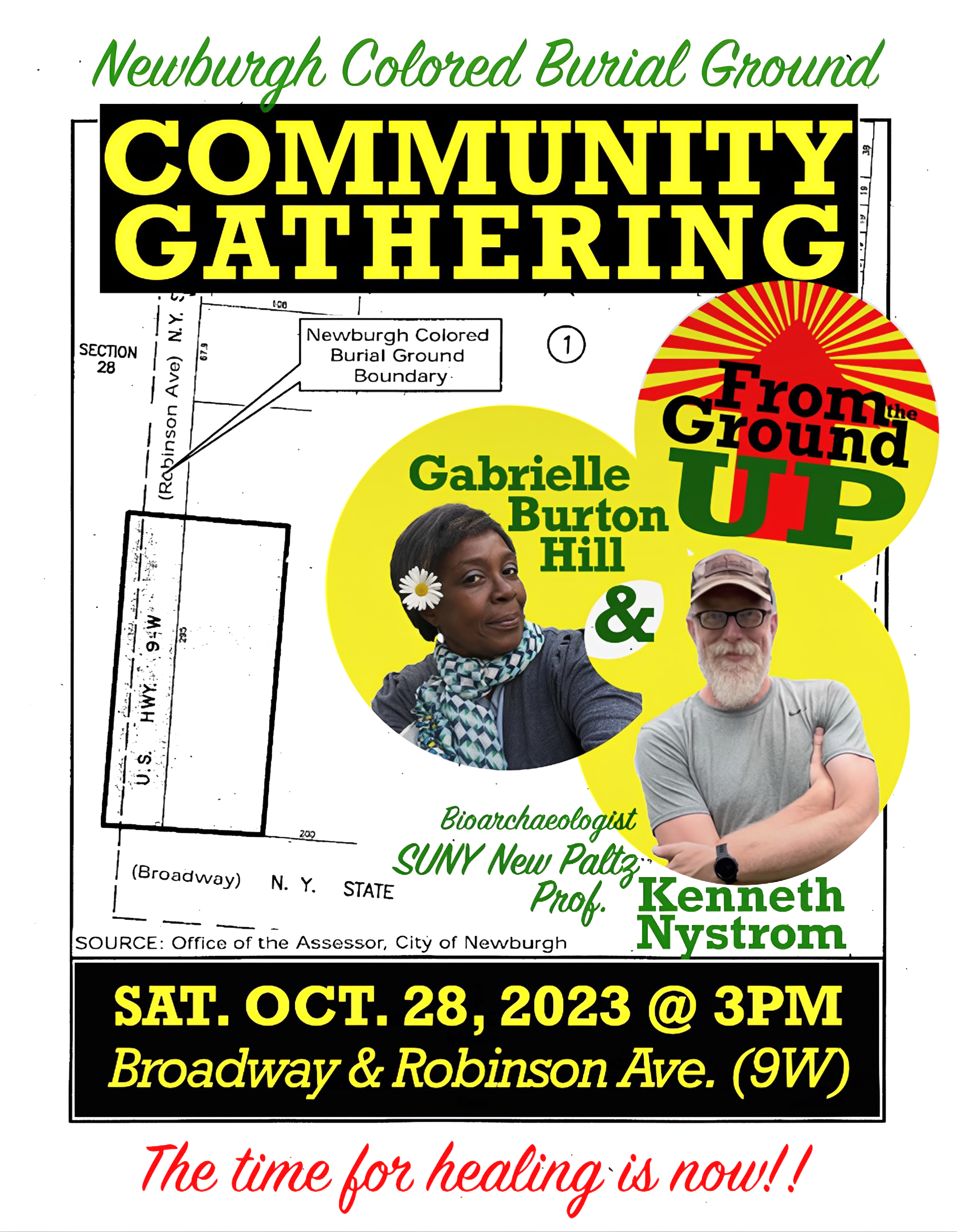
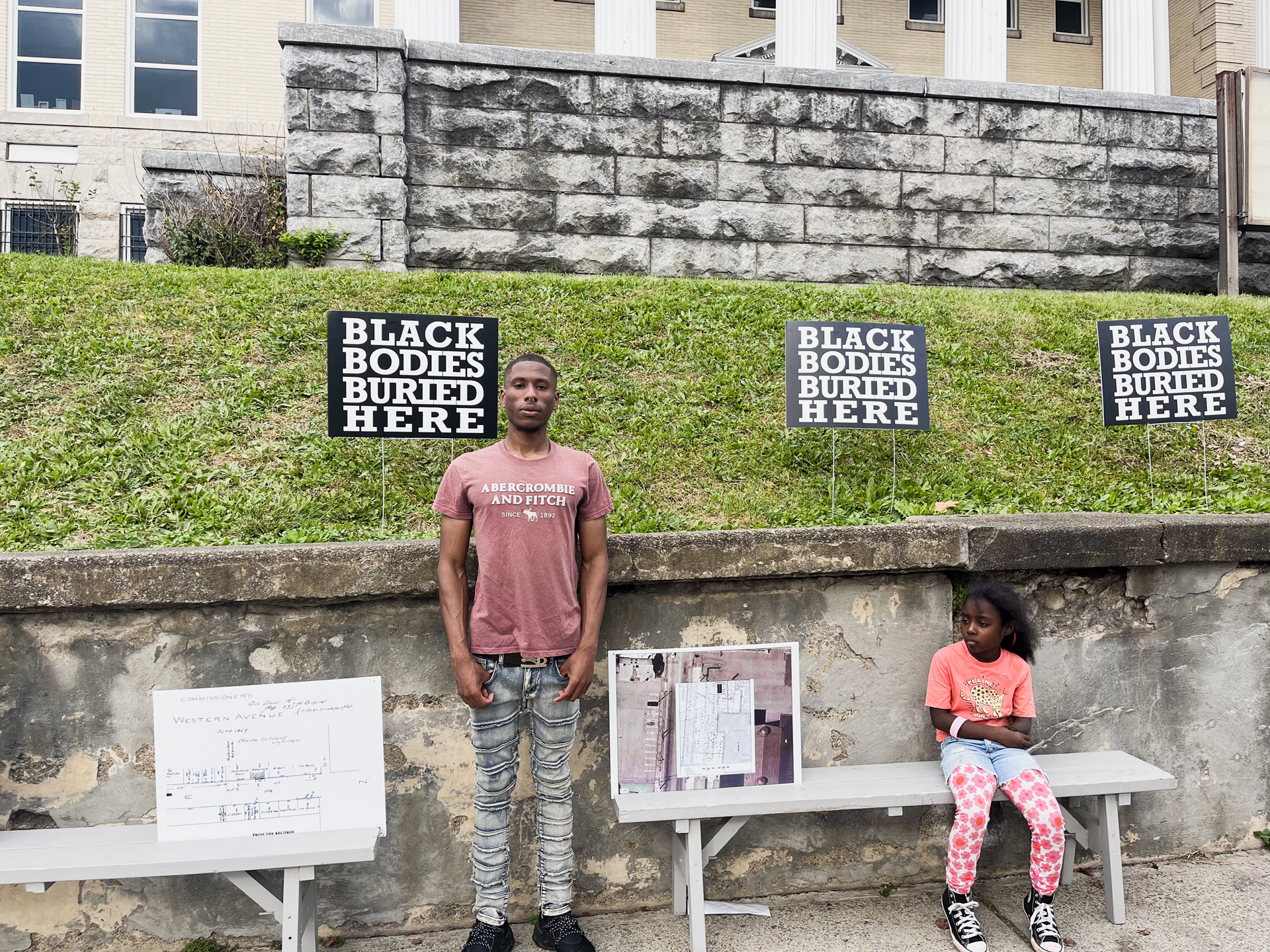
Community Gathering
Saturday
Oct 28, 2023
3-5pm
Broadway & Robinson Ave
Free & open to the public.
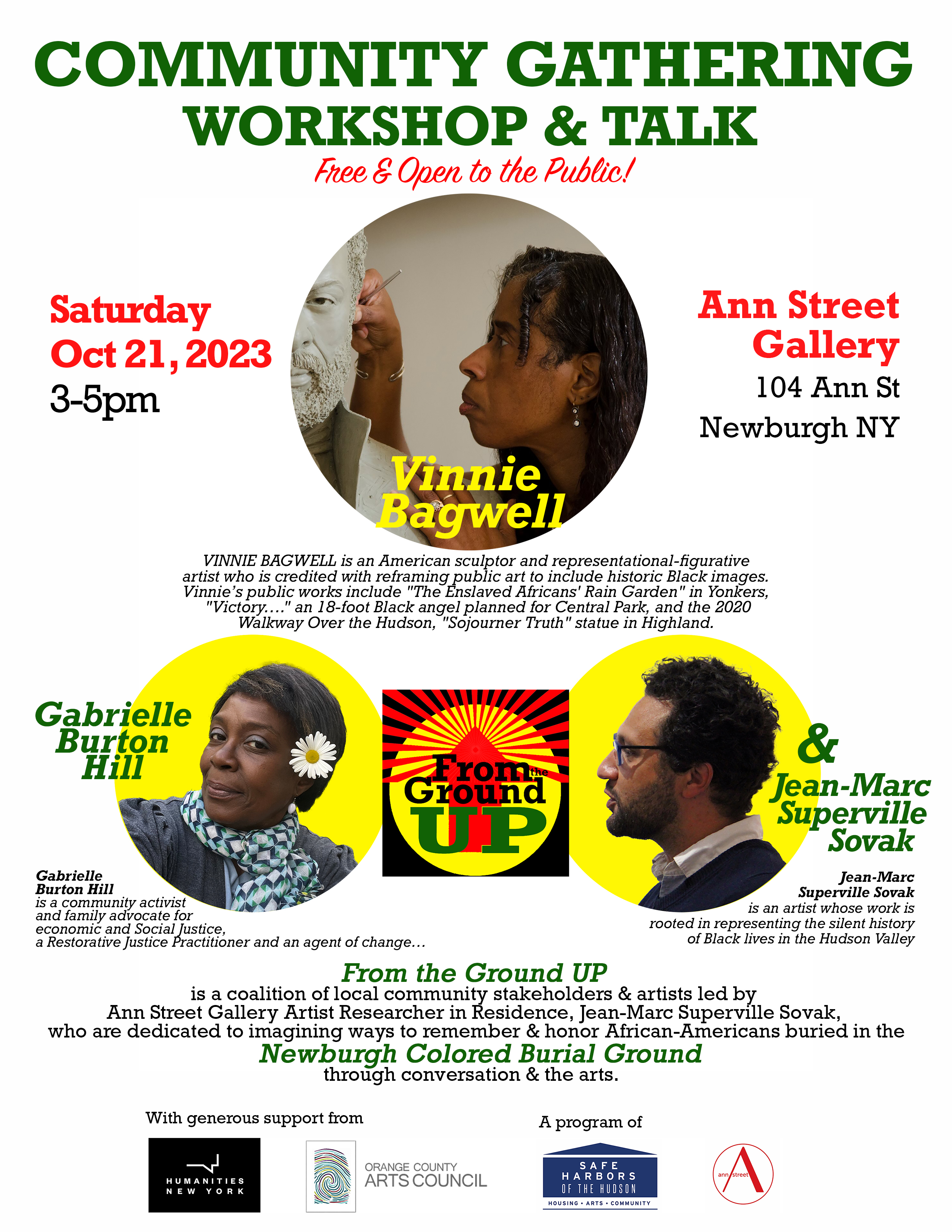
Community Gathering, Workshop & Artist Talk
Saturday
Oct 21, 2023
3-5pm
Ann Street Gallery
Free & open to the public.
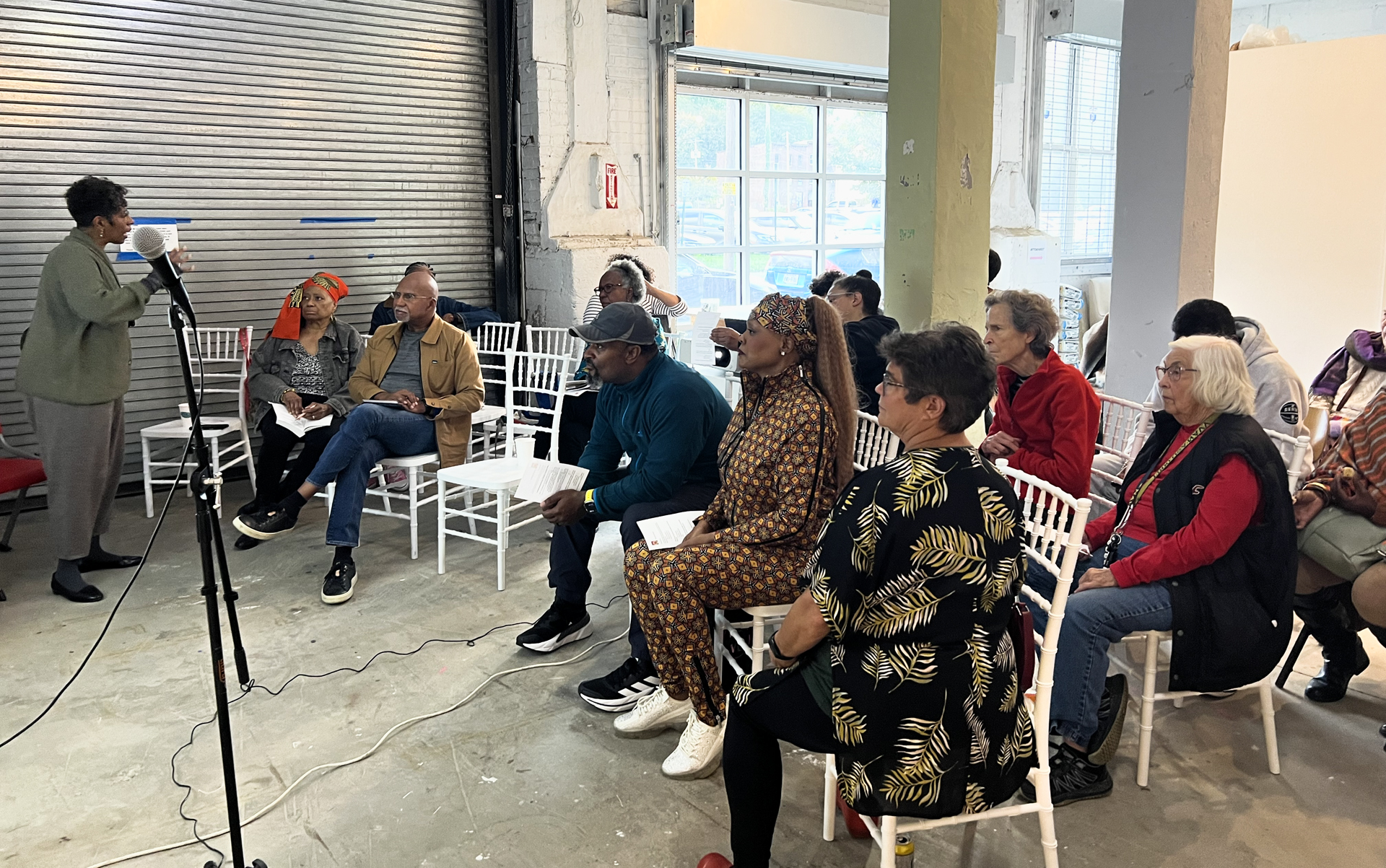
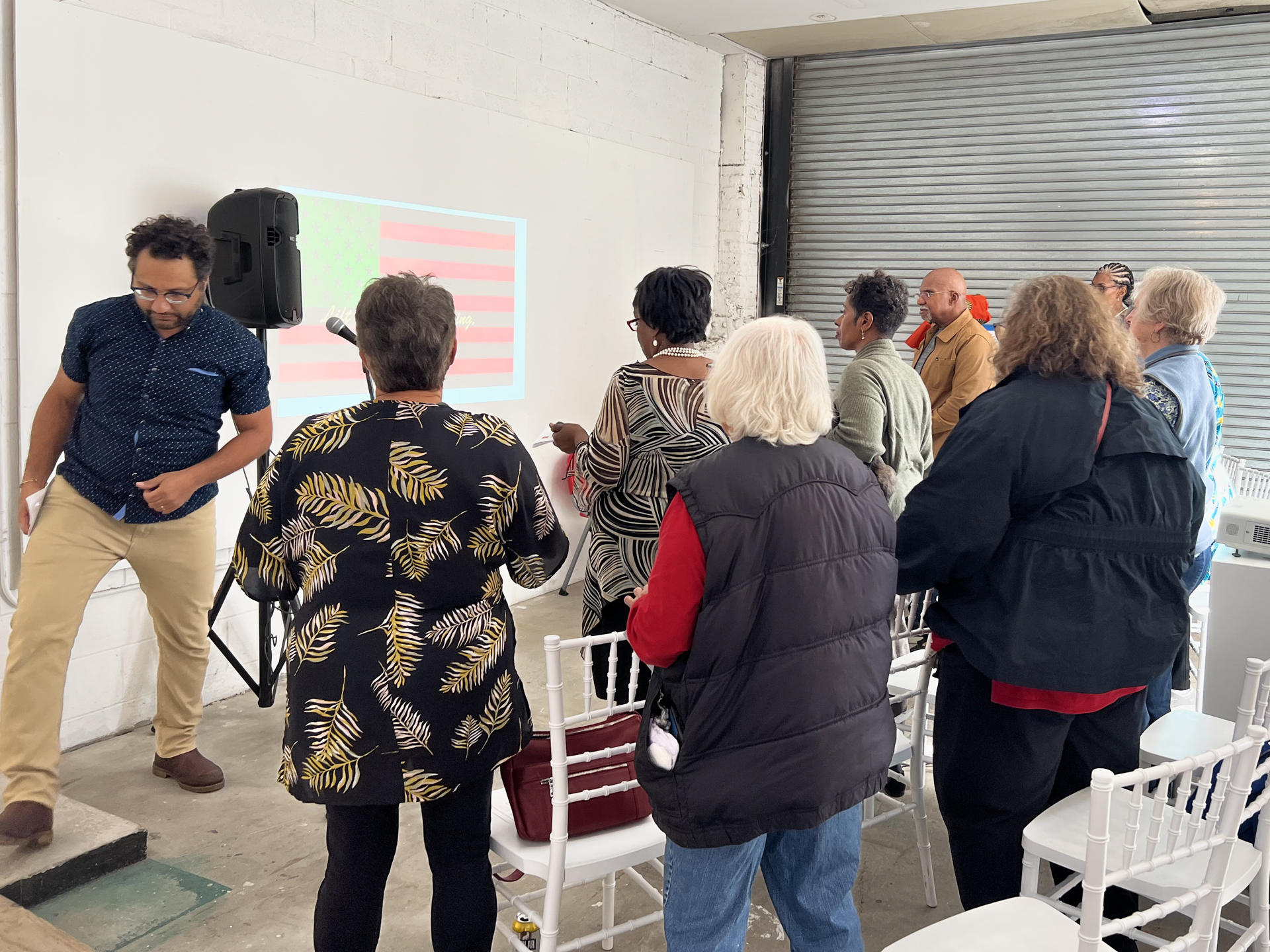
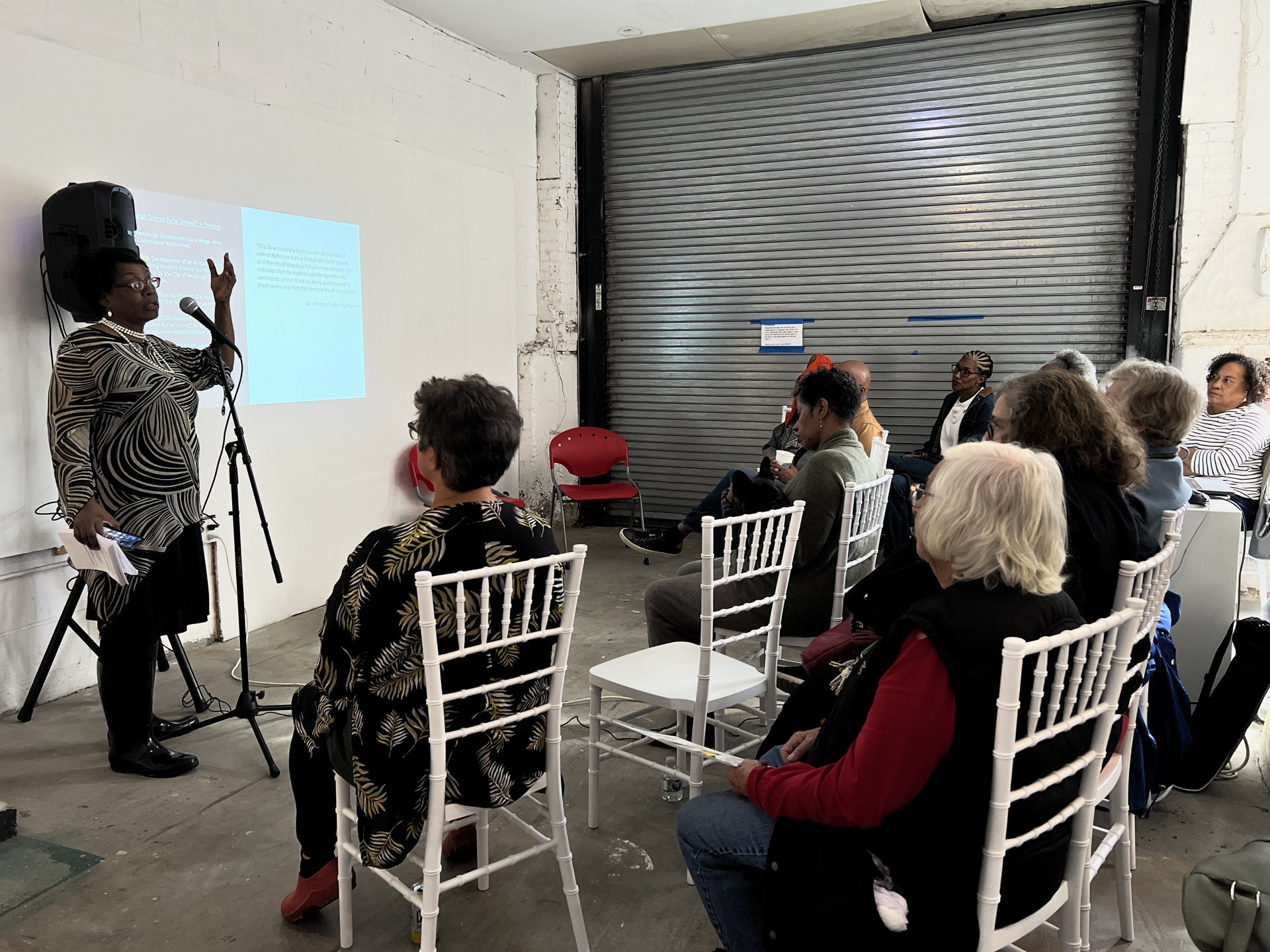
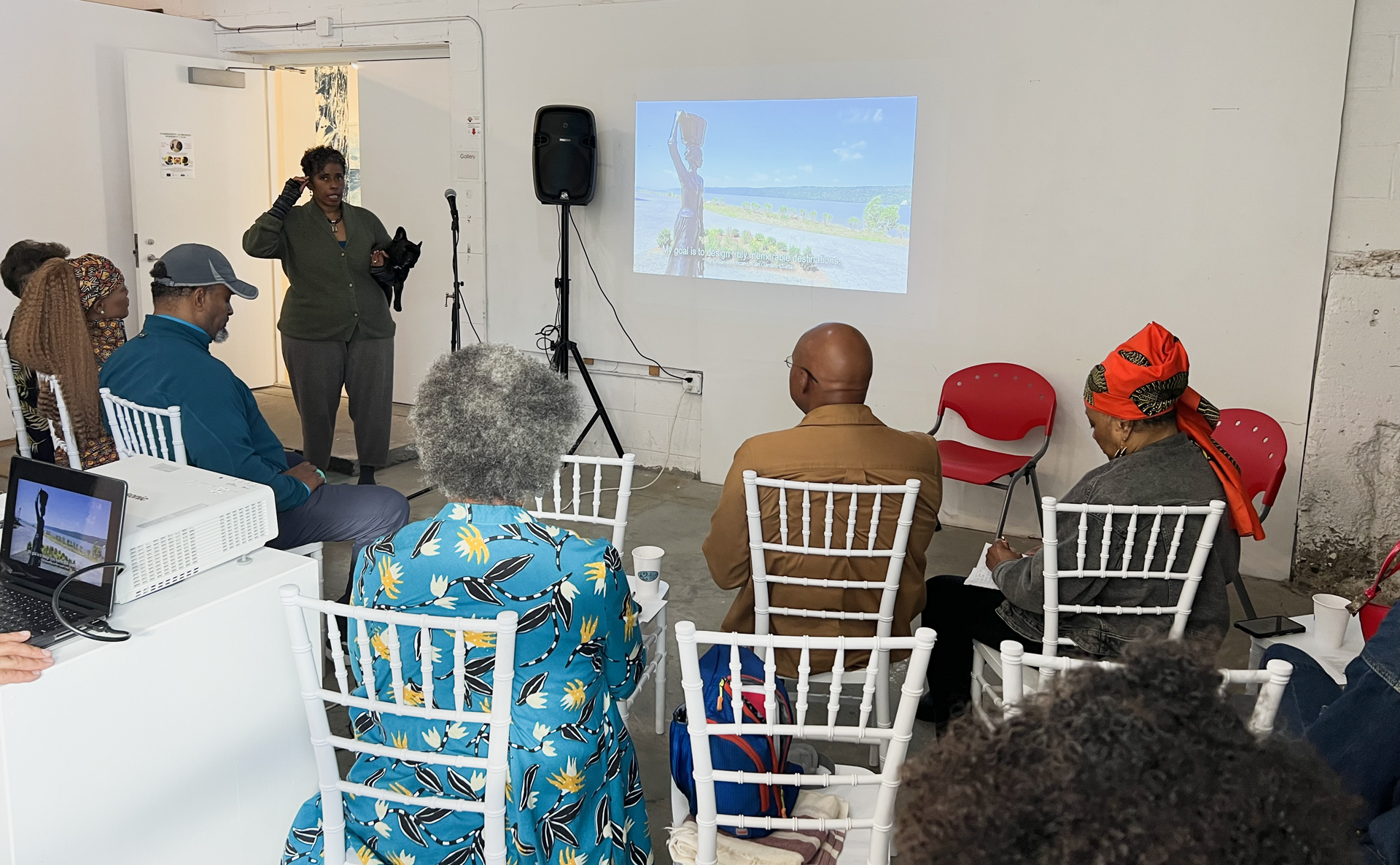
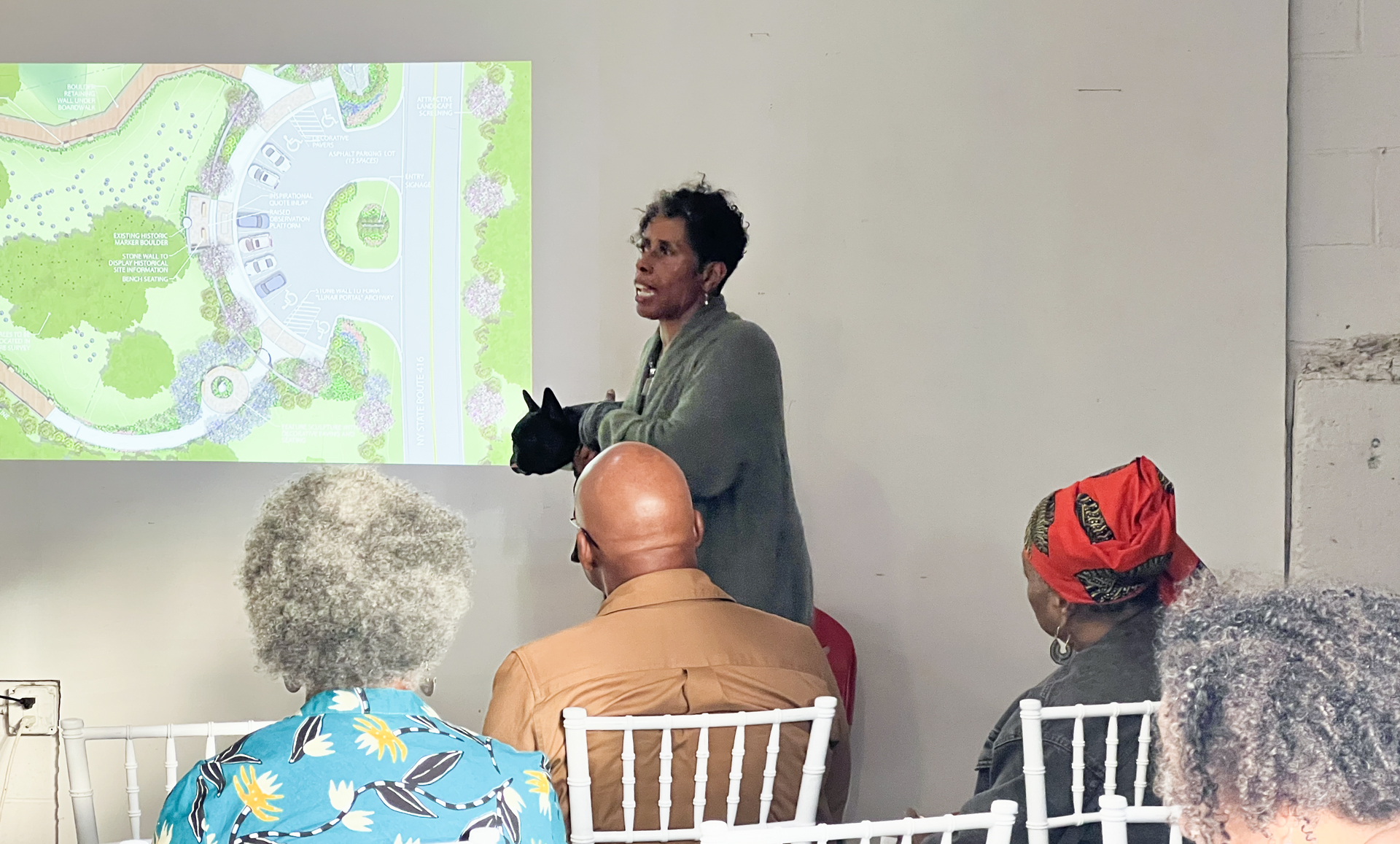
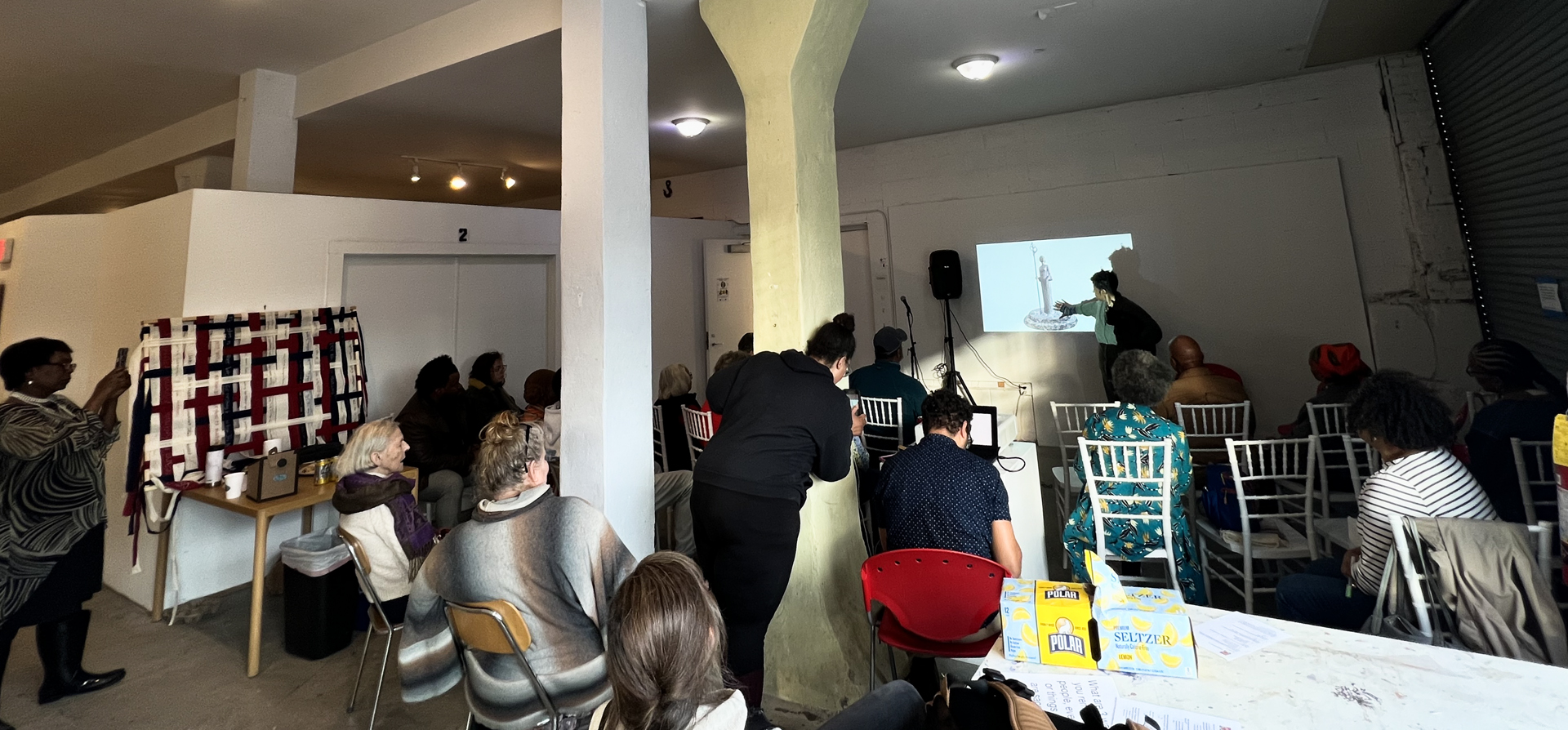
Please join sculptor Vinnie Bagwell, Community Activist Gabrielle Burton Hill, and artist Jean-Marc Superville Sovak for a community gathering, artist talk, and workshop this Saturday October 21 from 3-5pm in Ann Street Gallery.
This event launches From the Ground UP, a coalition of local community stakeholders & artists led by Ann Street Gallery Artist Researcher in Residence, Jean-Marc Superville Sovak, who are dedicated to imagining ways to remember & honor African-Americans buried in the “Newburgh Colored Burial Ground” through conversation & the arts.
From the Ground UP will consist of a series of gatherings at Ann Street Gallery and other local sites that are free and open to the public with the aim to solicit, discuss, and materialize answers from a wide variety of community stakeholders committed to collectively asking such questions as: How should memorials function? How should the dead, once desecrated, now be honored? What is the reparative capacity of a memorial and how can gestures, space, or objects serve that capacity to its fullest potential?
Saturday’s program will include:
- An introduction to the initiative From the Ground UP from artist and educator, Jean-Marc Superville Sovak
- An artist talk and presentation from sculptor Vinnie Bagwell about her visionary work in reframing public art and memorials to include historic black images
- A workshop with community activist Gabrielle Burton Hill, which will provide an overview of the history of the “Newburgh Colored Burial Ground” and the Newburgh Colored Burial Ground Association’s 15 year-long effort to raise awareness about this overlooked aspect of Newburgh’s history. The workshop also aims to identify the priorities of local community stakeholders in the project From the Ground UP


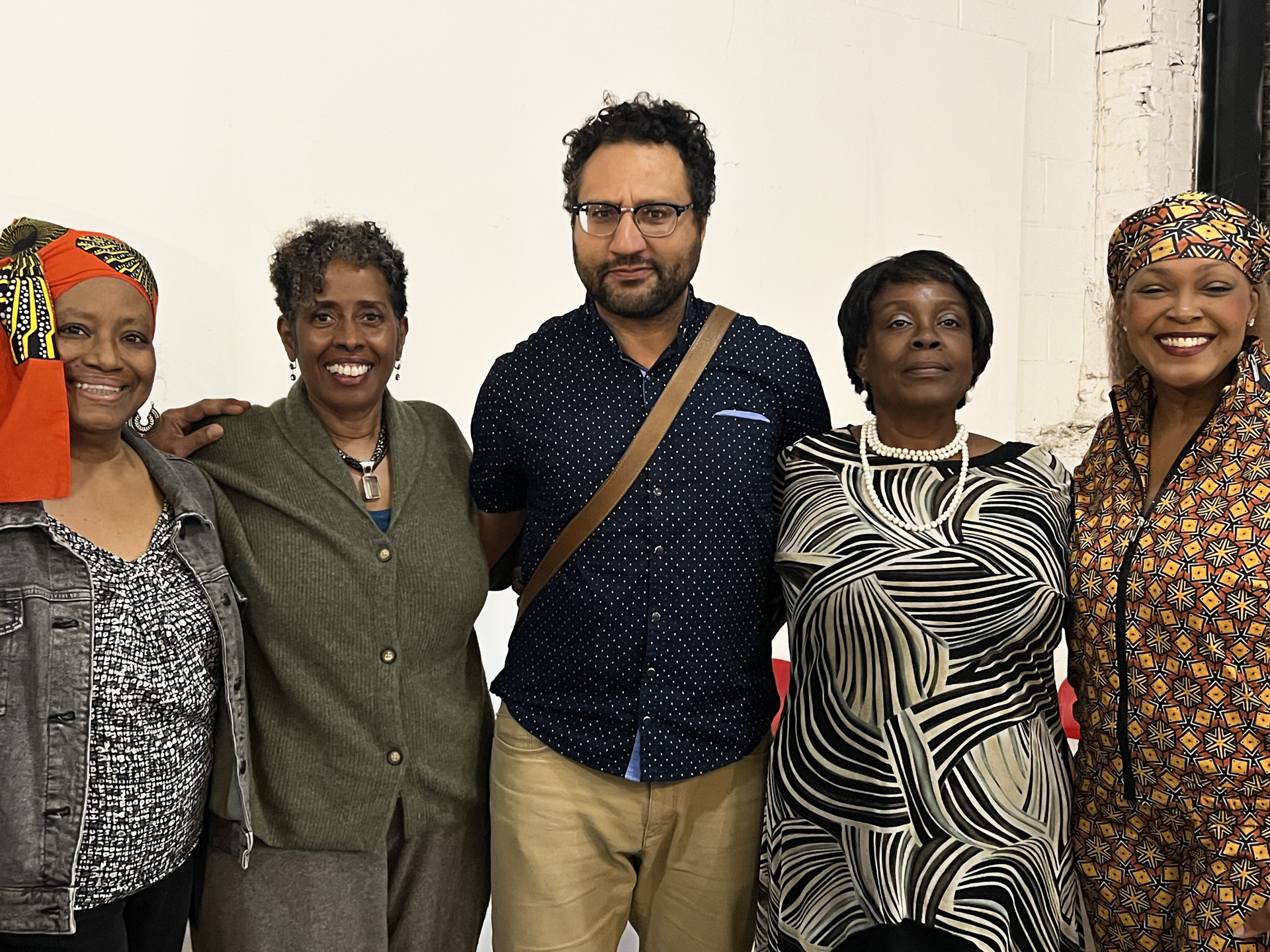
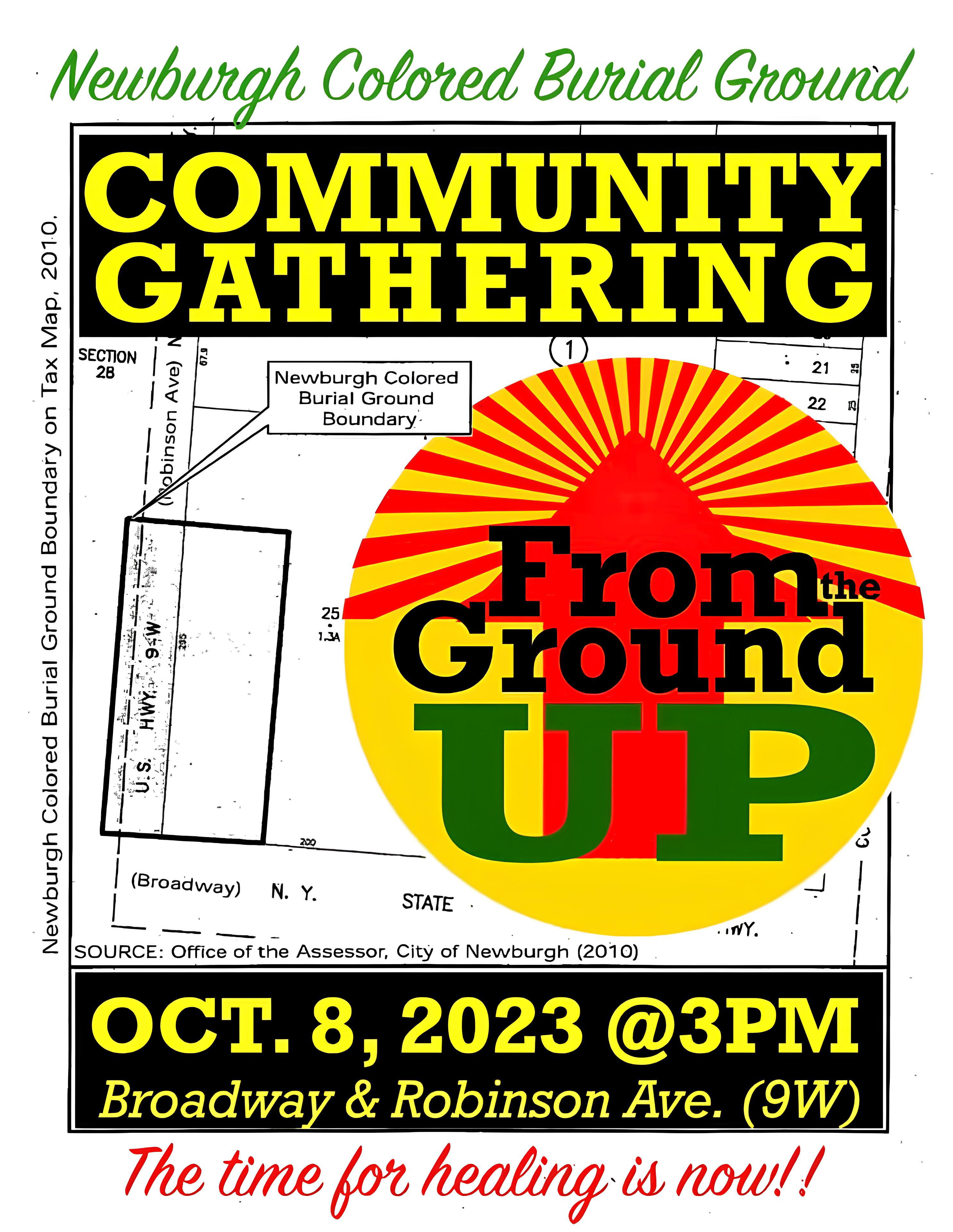
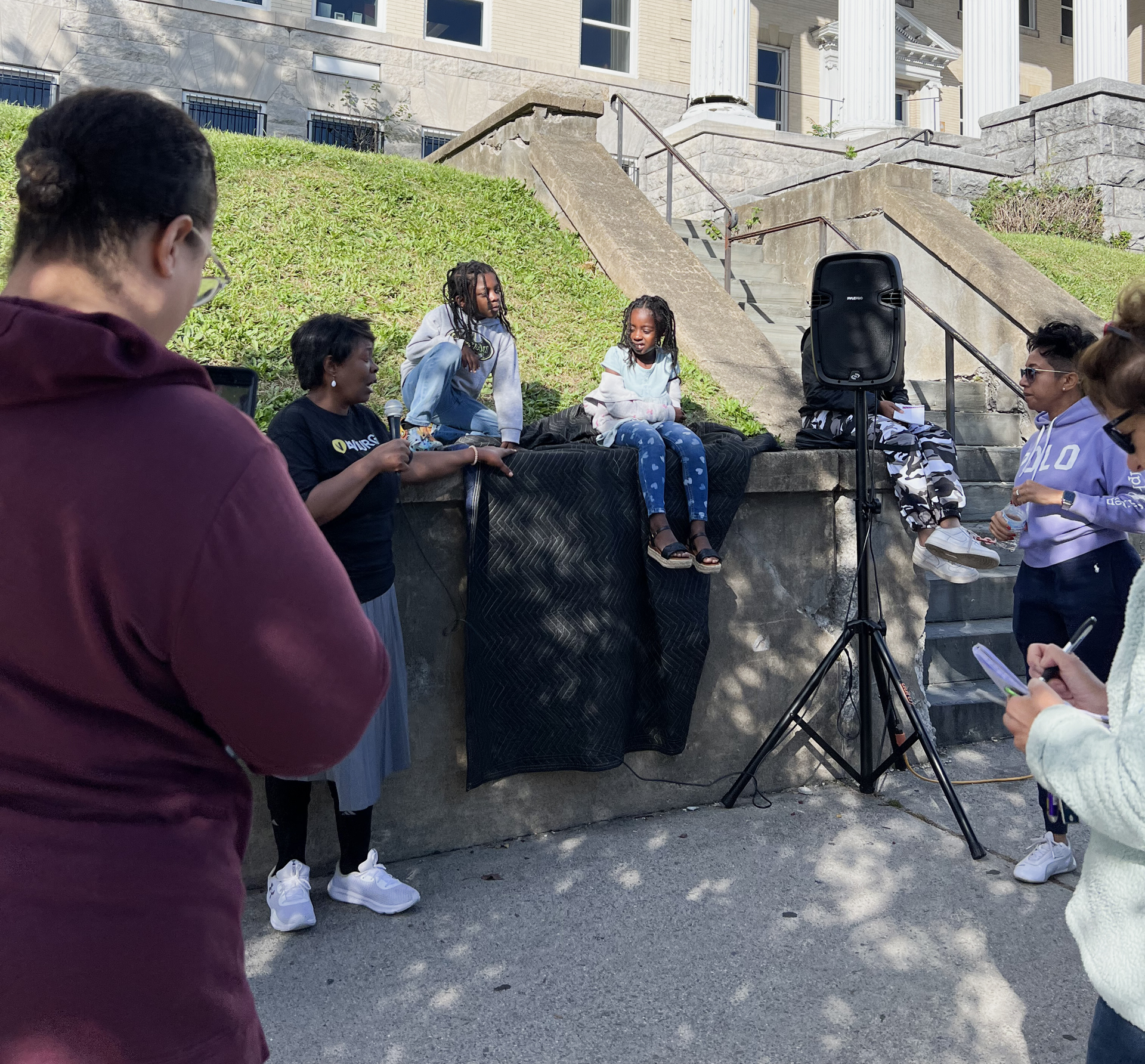
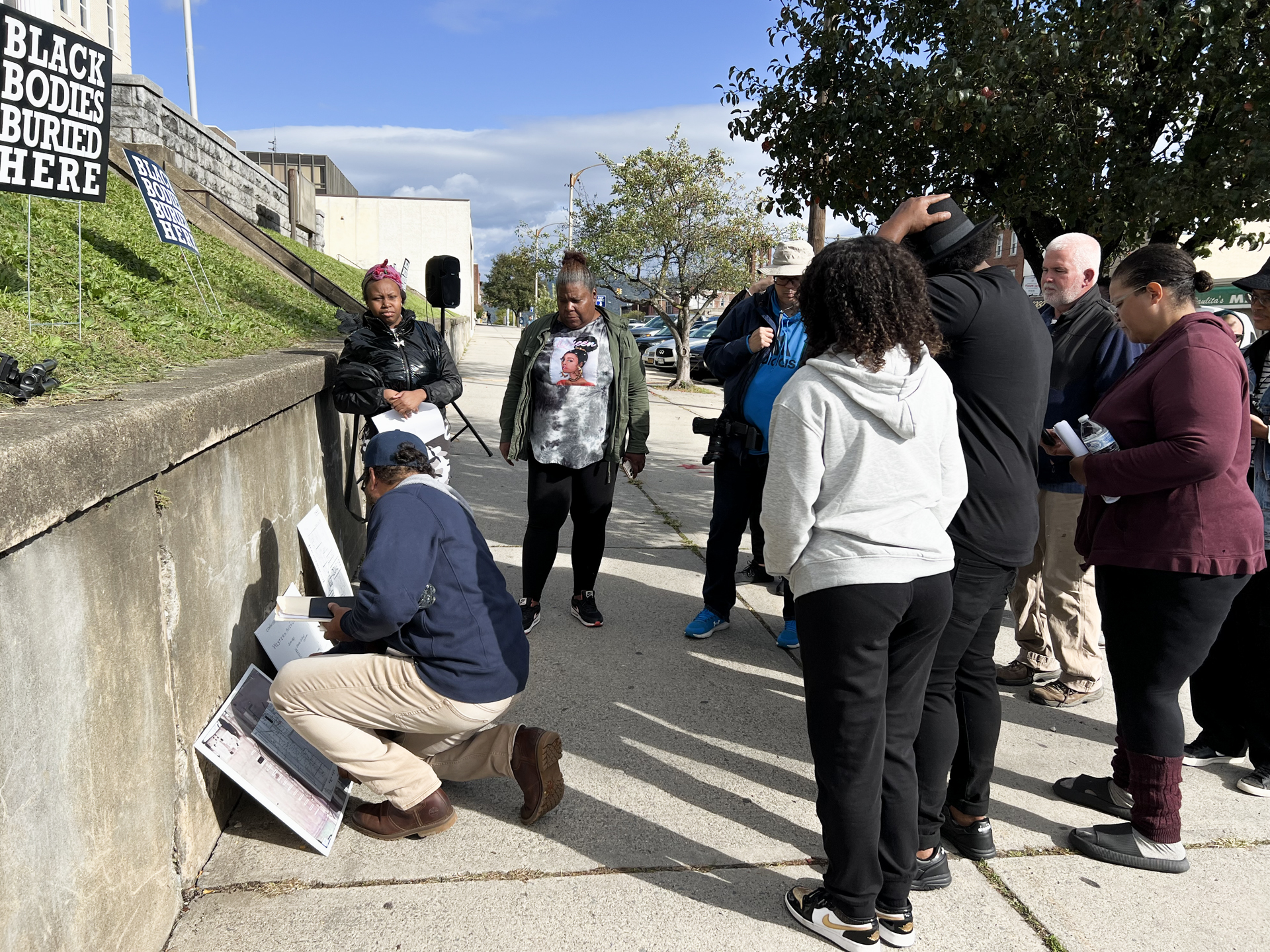
Community Gathering
Saturday
Oct 8, 2023
3-5pm
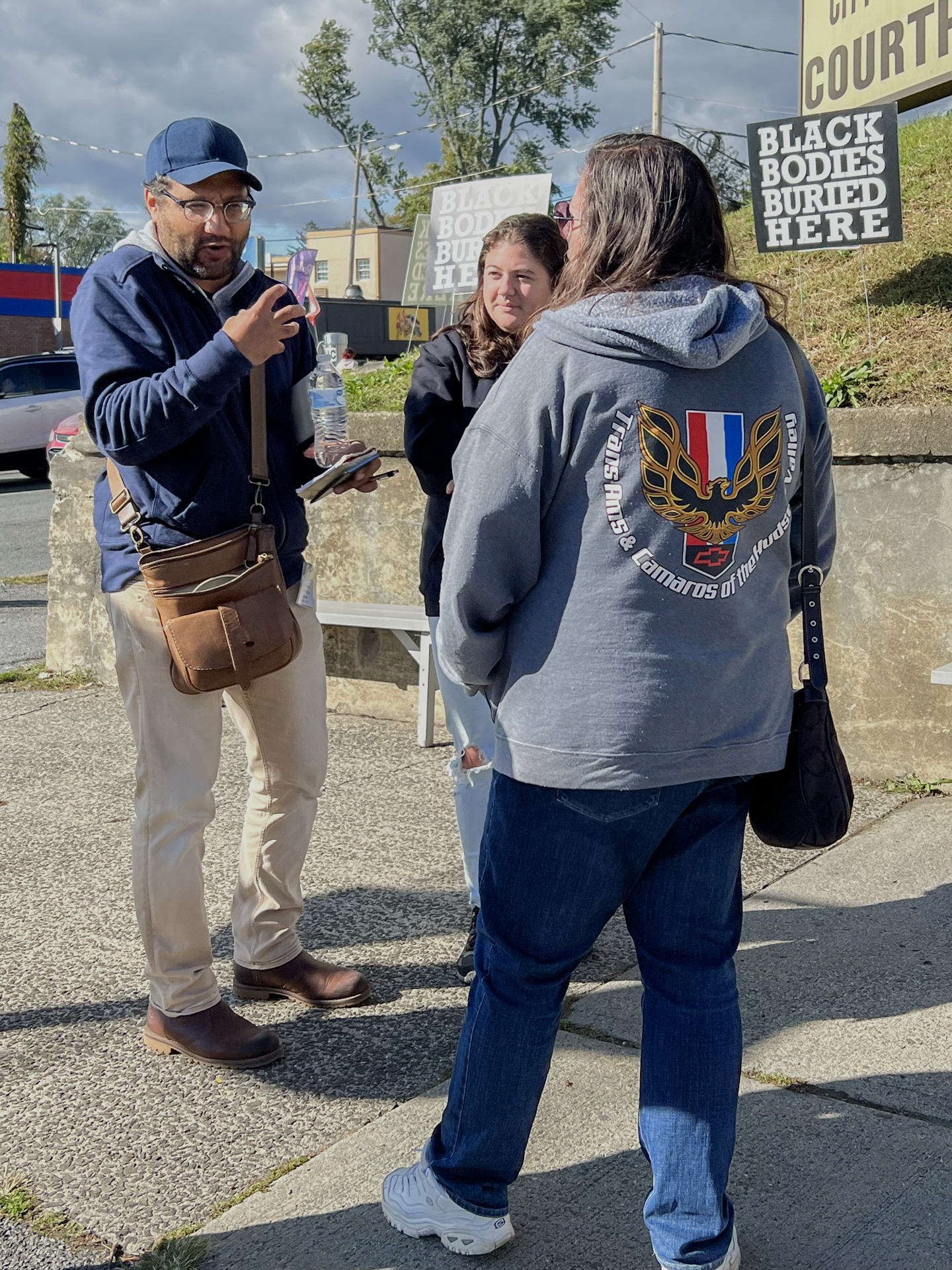
Broadway & Robinson Ave
Free & open to the public.




From the Ground UP is made possible with support from:
![]()
![]()
RESOURCES
The Archaeology, Osteology, and History of the Newburgh Colored Burial Ground By
Derrick J. Marcucci, RPA
Kenneth Nystrom, Ph.D.
Christina A. Ziegler-McPherson, Ph.D.
Jessica Schreyer
Susan Gade, RPA
Excerpts:
- Historic Context (Dr. Christina Ziegler McPherson)
-
Burial Descriptions (Landmark Archeology, Inc)
-
Burial Photos
-
Archaeological Research Issues Discussion (Landmark Archeology, Inc)
Newburgh Almshouse Commissioner’s Examination Log Book, 1853-1858 New York Heritage Digital Collection
- Examiner’s Logbook transcriptions
- Orignal Writing from Examiner’s Logbook
- Elders-Transcribed from logbook for FTGU gatherings
- Data and Diagrams (additions in progress)
Genealogy of Black Families of Orange County, New York by Robert W. BrennanOrange County Geneological Society
- Volume 1, Ch 1 (in progress)
- Descendants of William Dolson

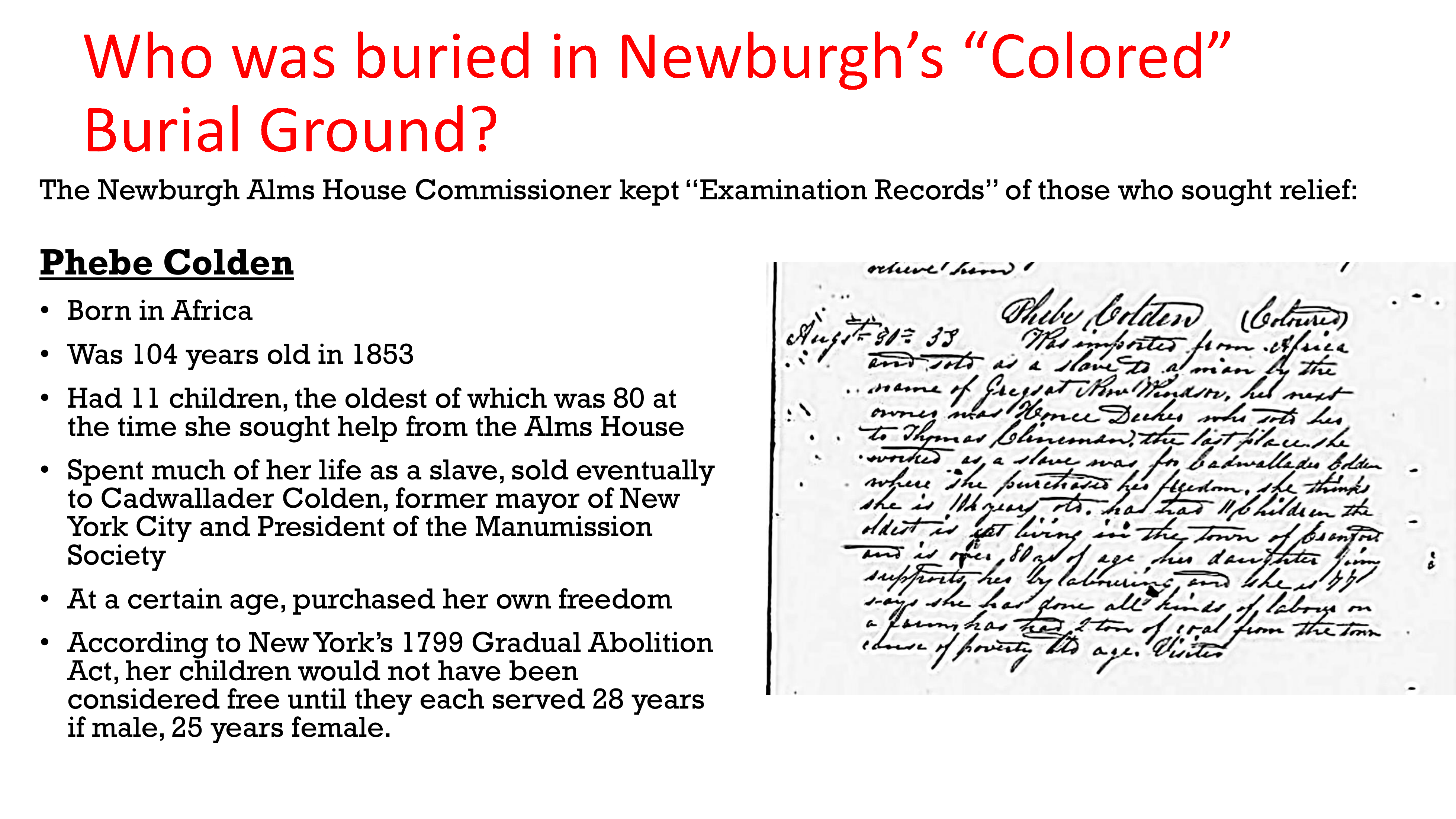

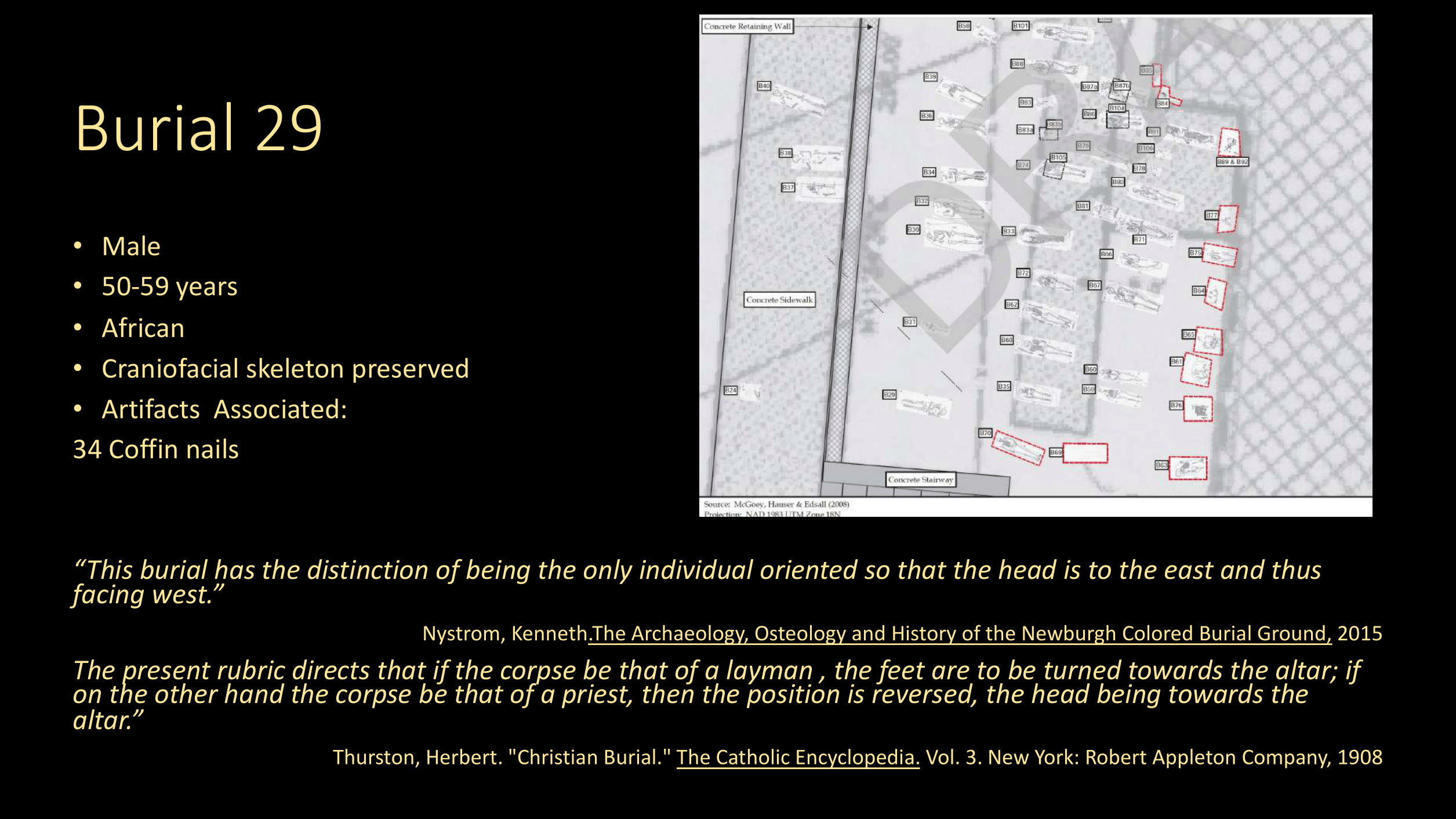

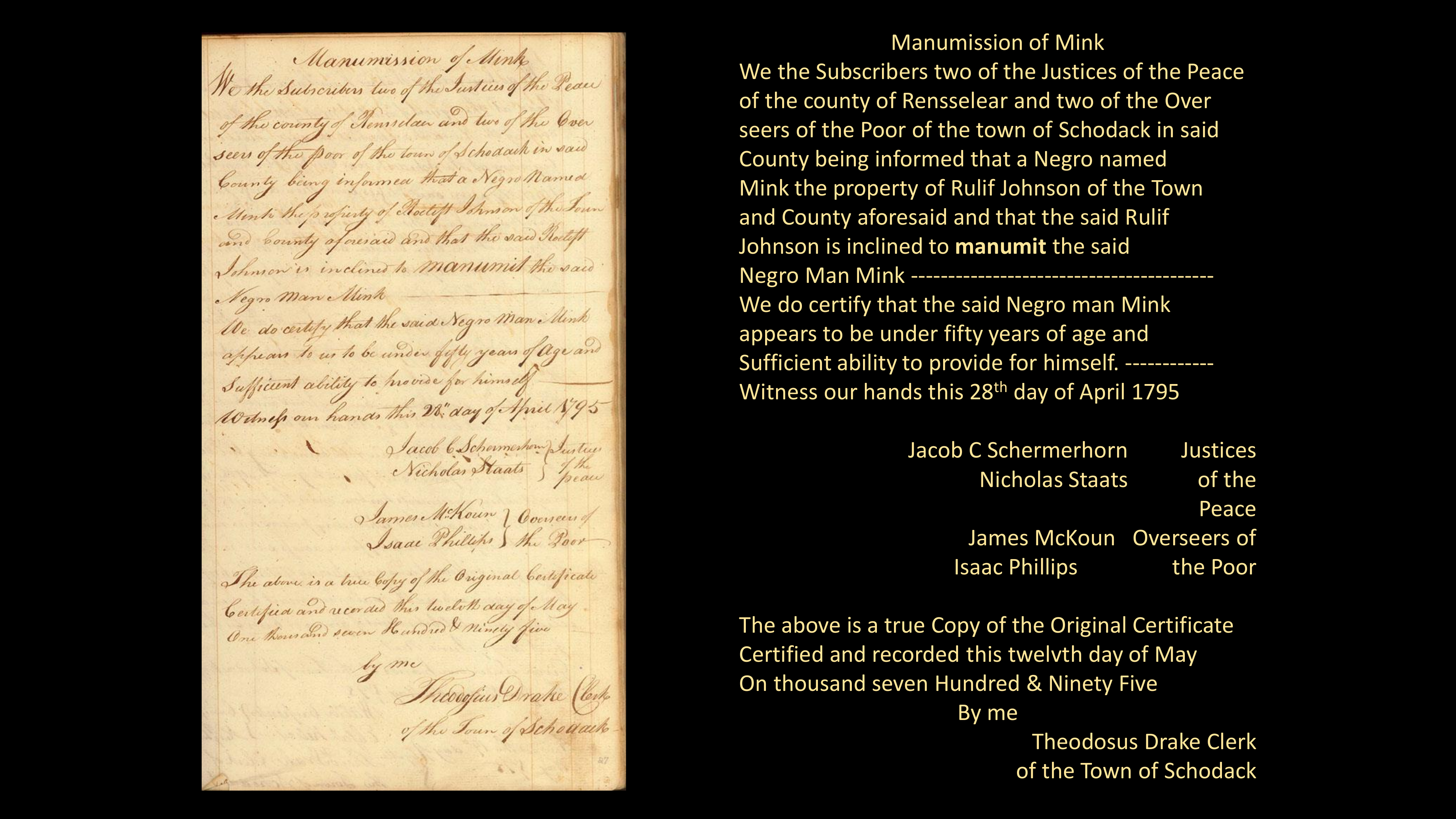
Slide excerpts from Superville Sovak’s research presentations
![]()
![]()
![]()
![]()
![]()
![]()
![]()
![]()
![]()
![]()
![]()
![]()
![]()
![]()
![]()
![]()
![]()
![]()
![]()
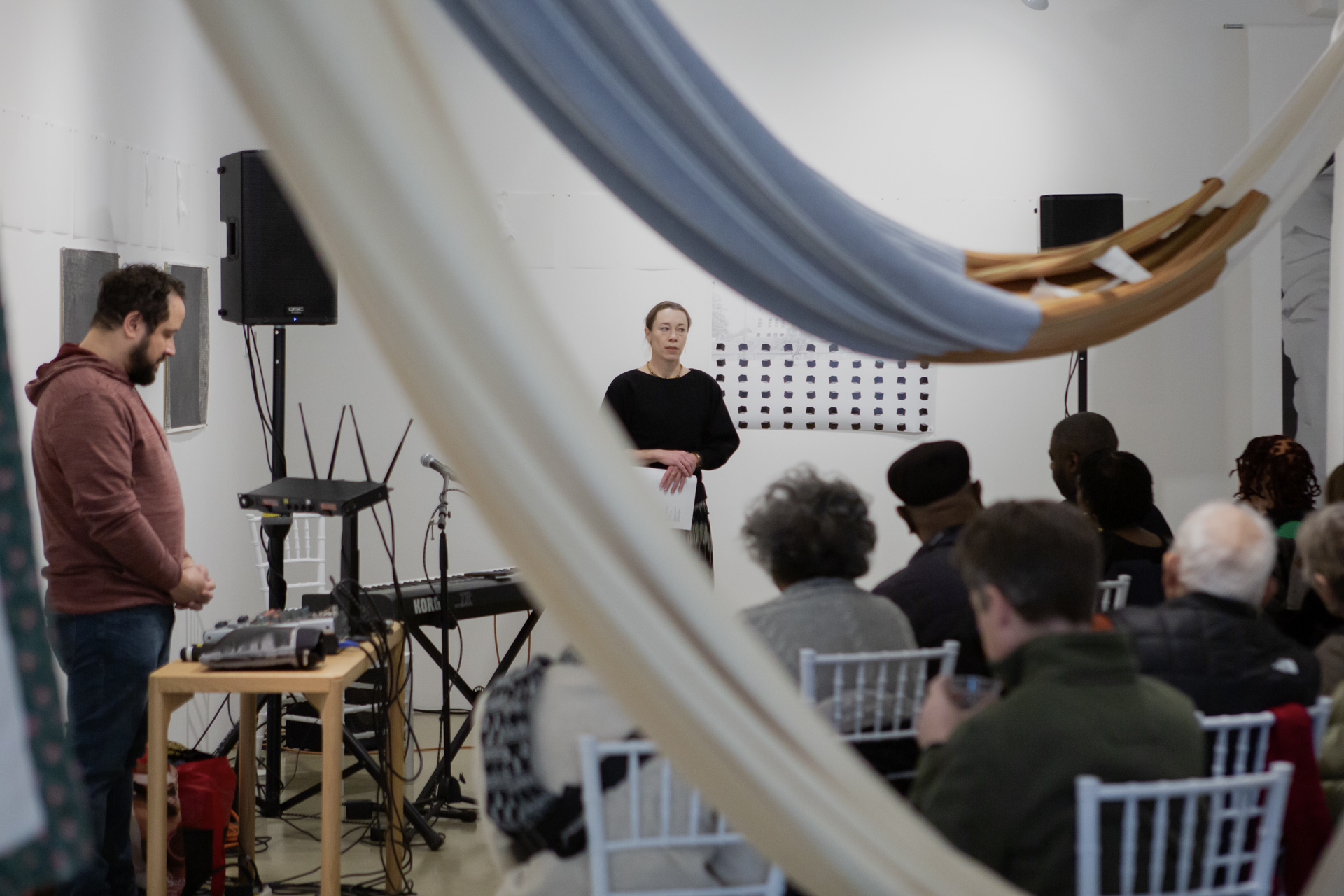
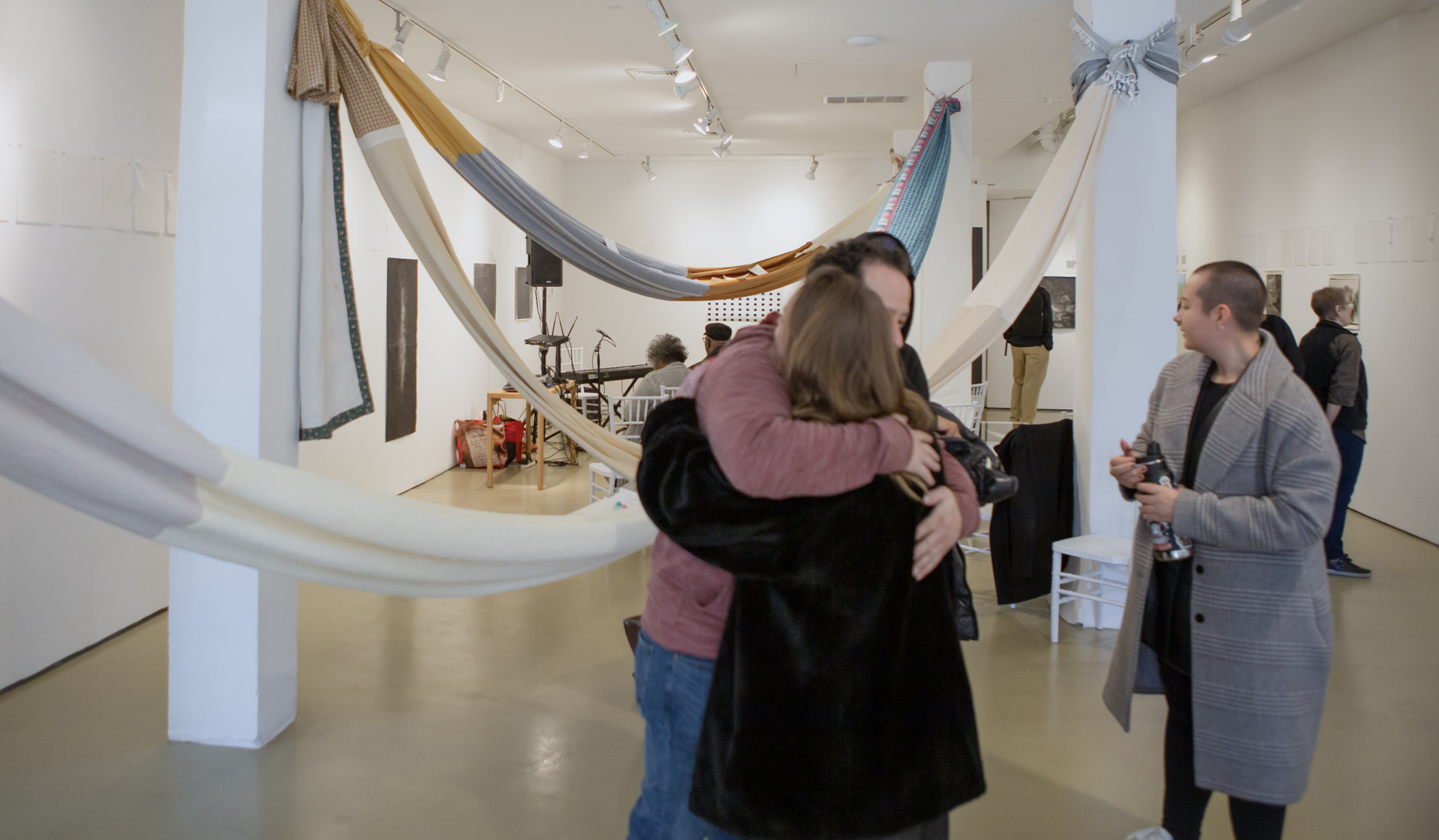
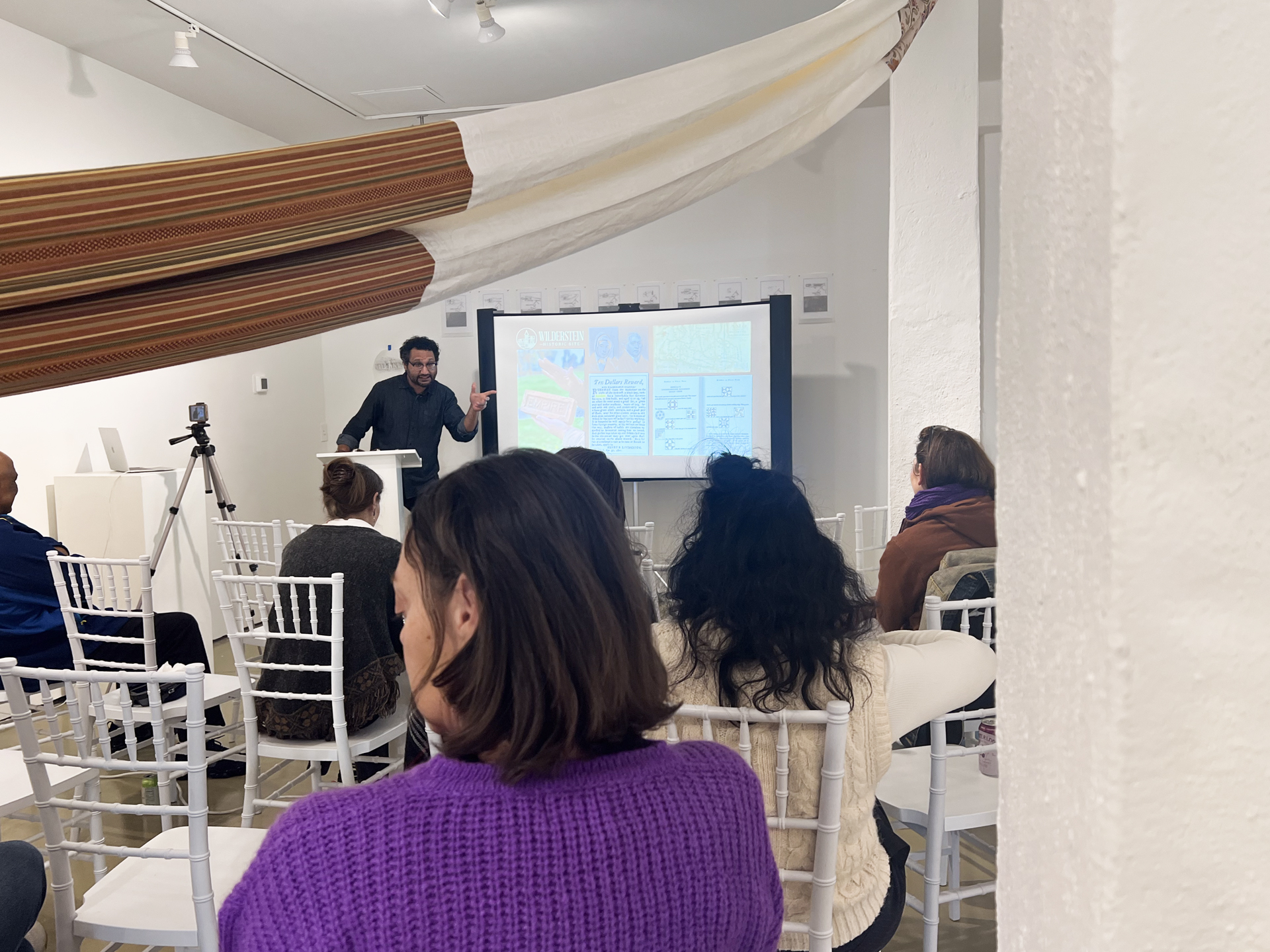
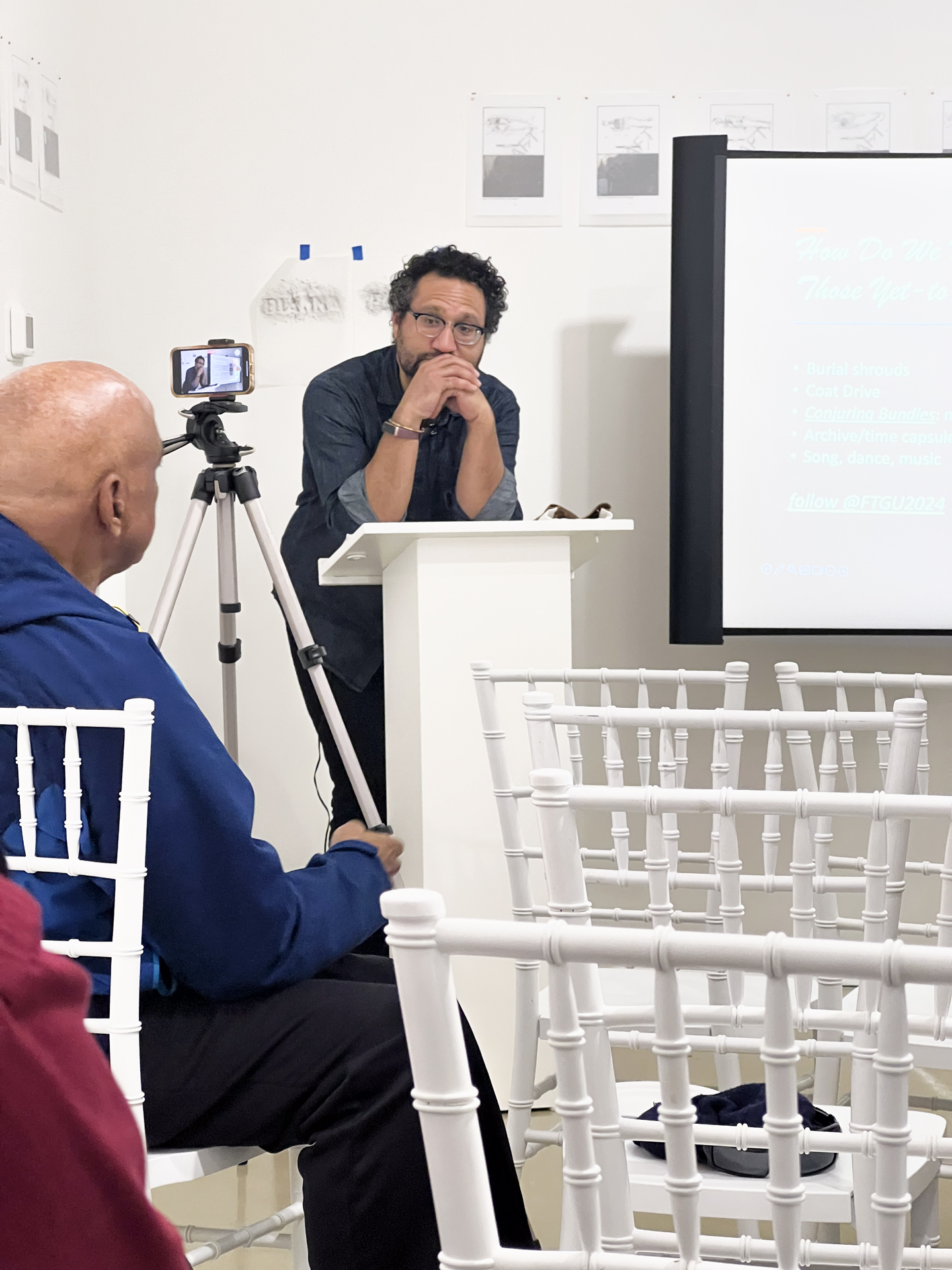
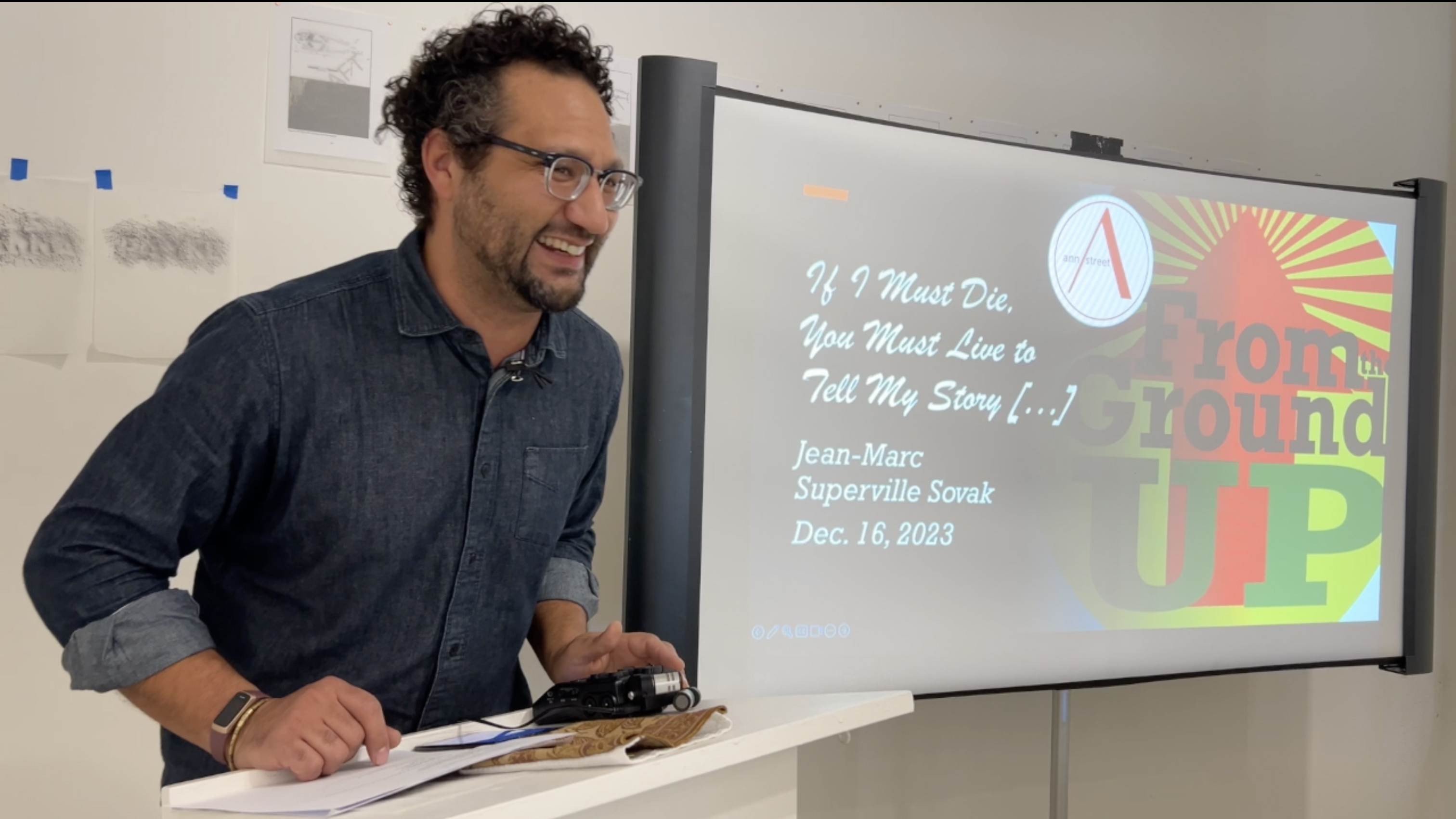
Photographs from From the Ground UP lectures and events free and open to the public
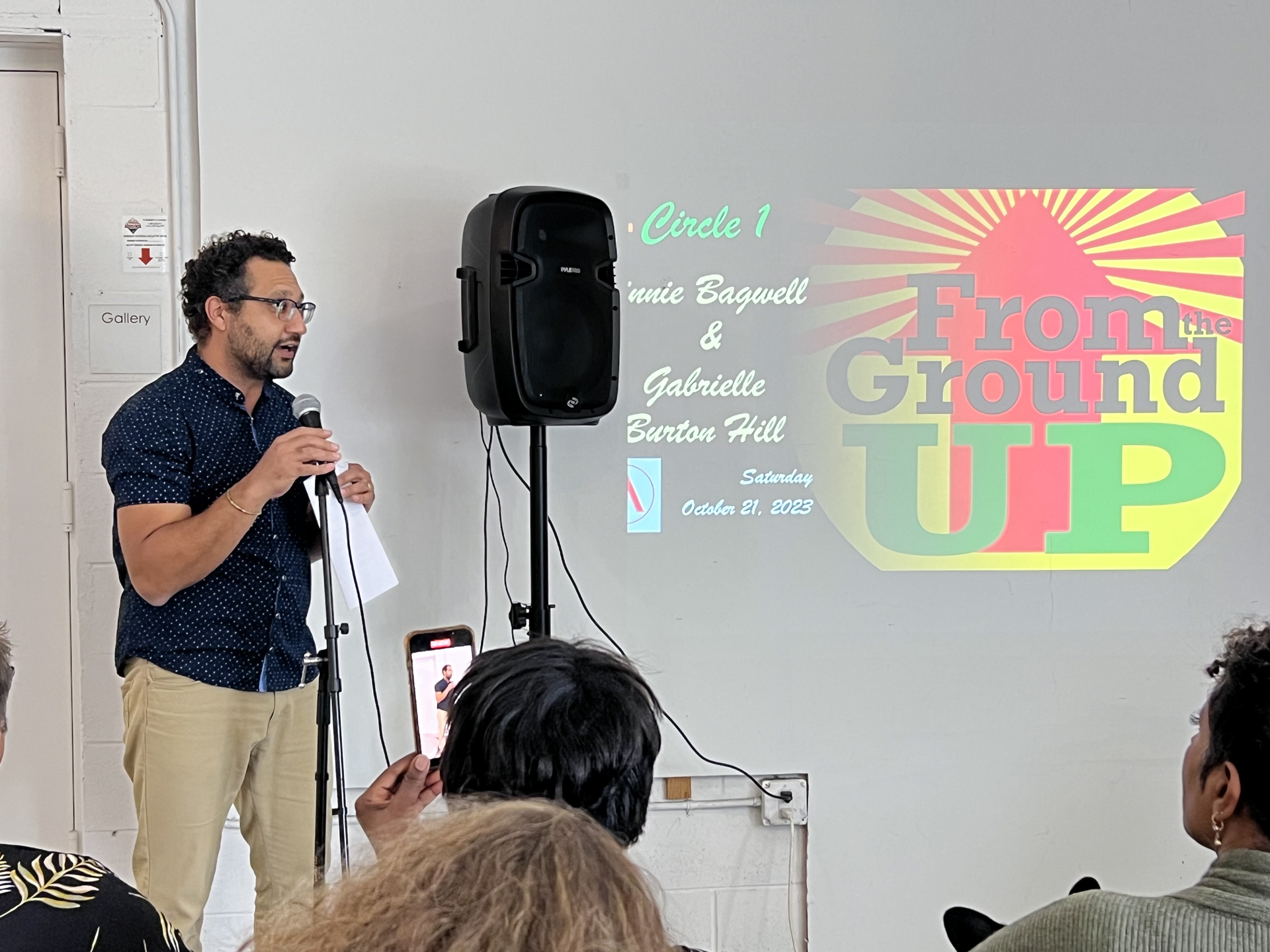


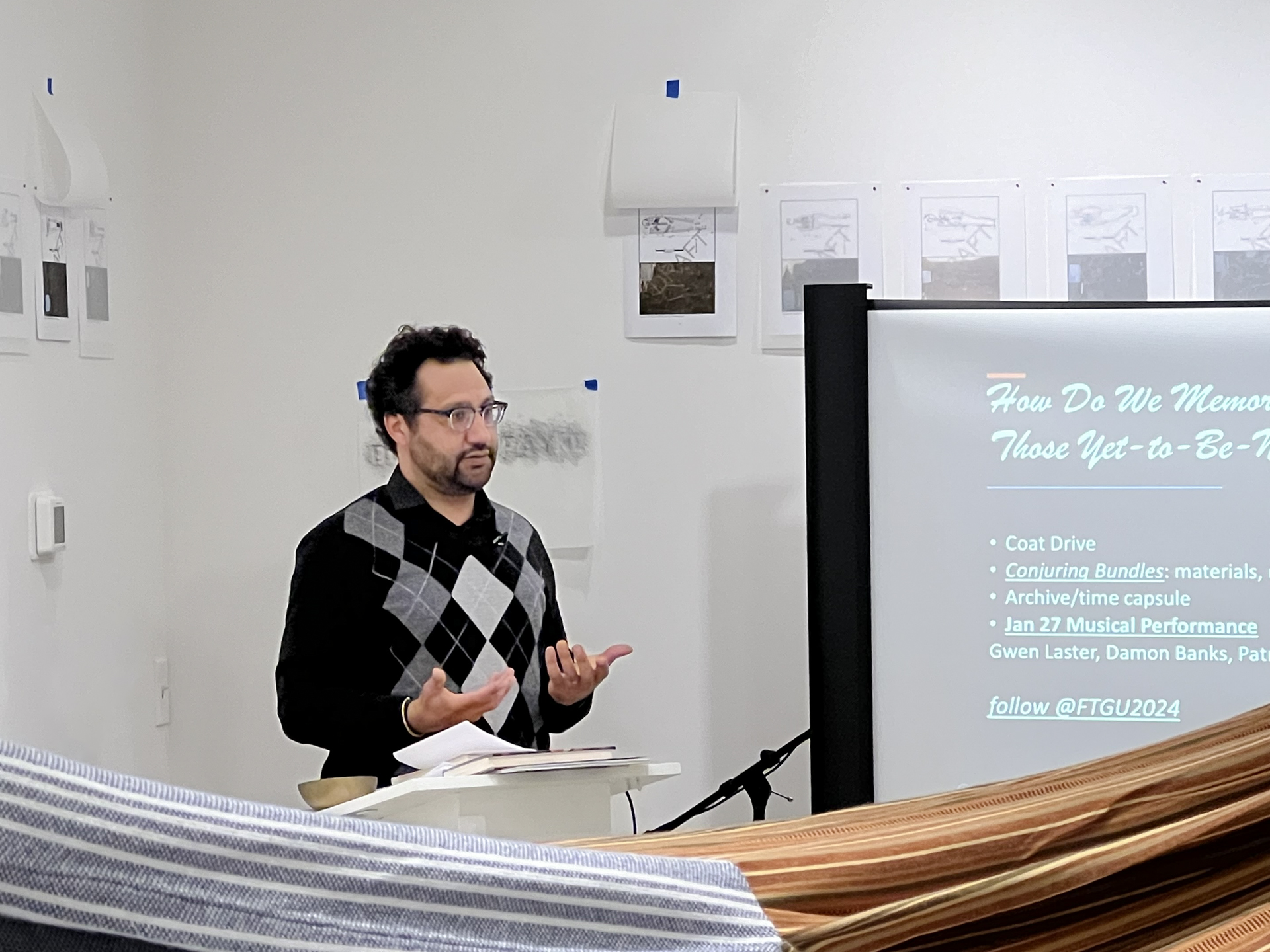
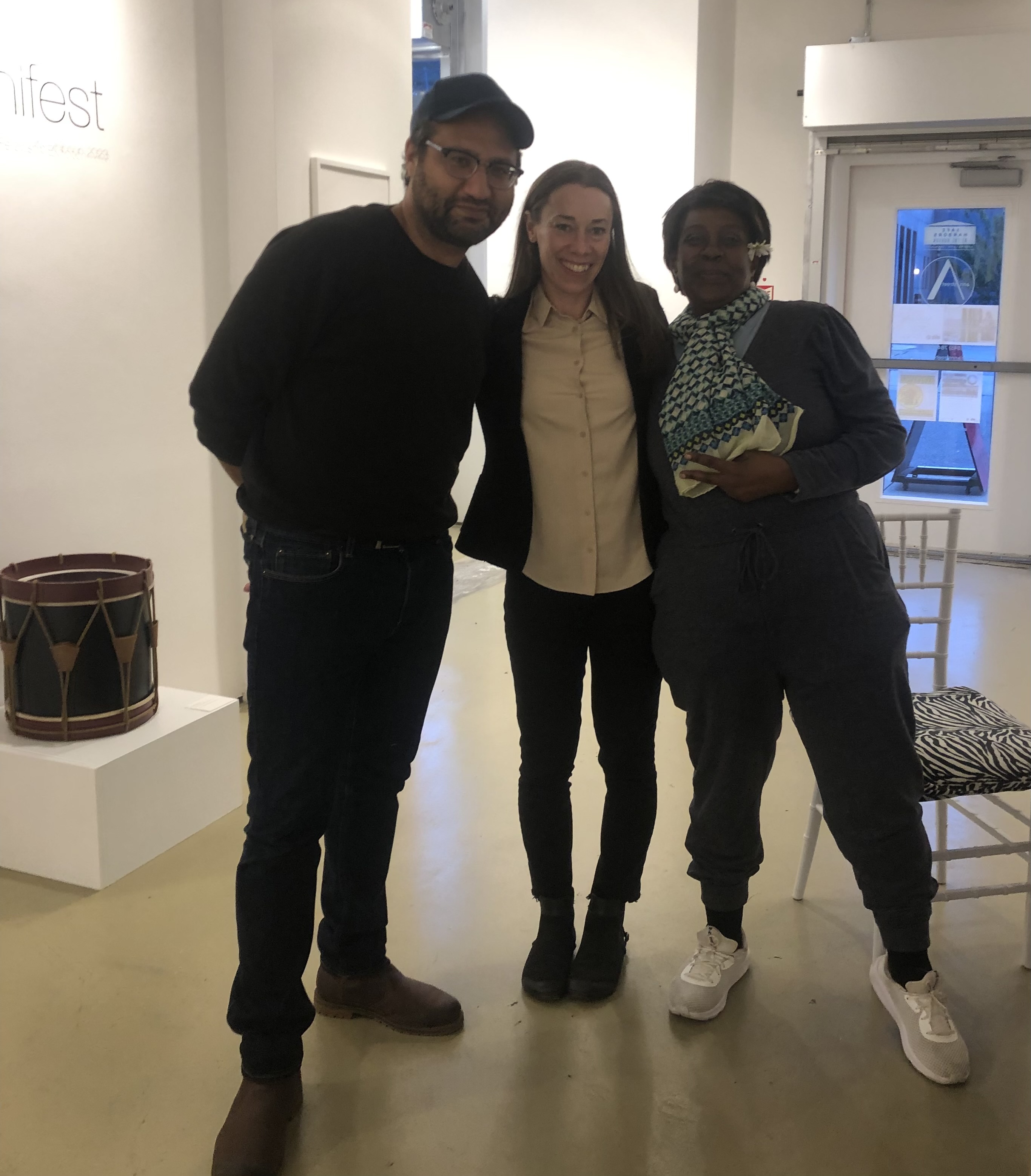
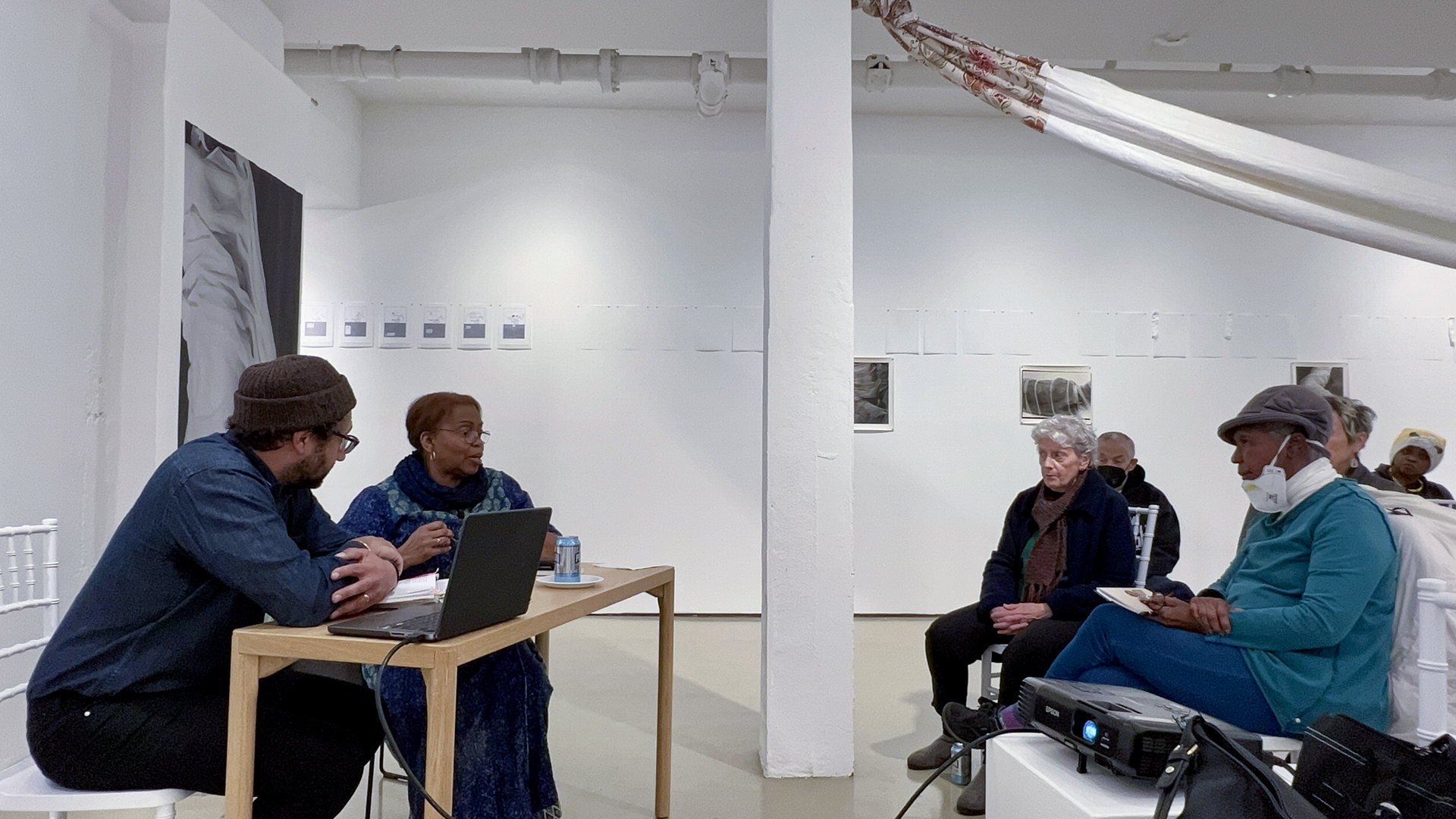
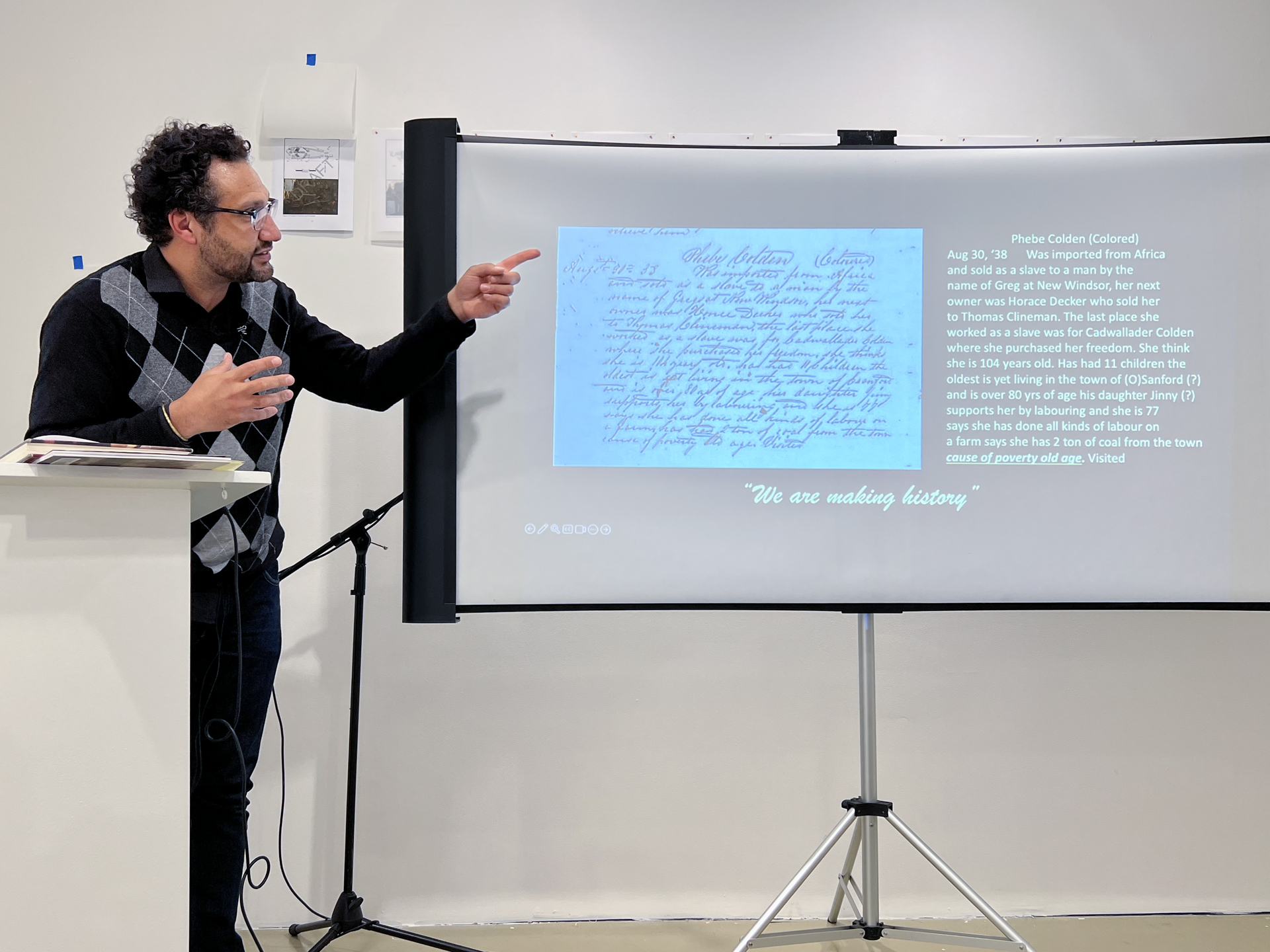
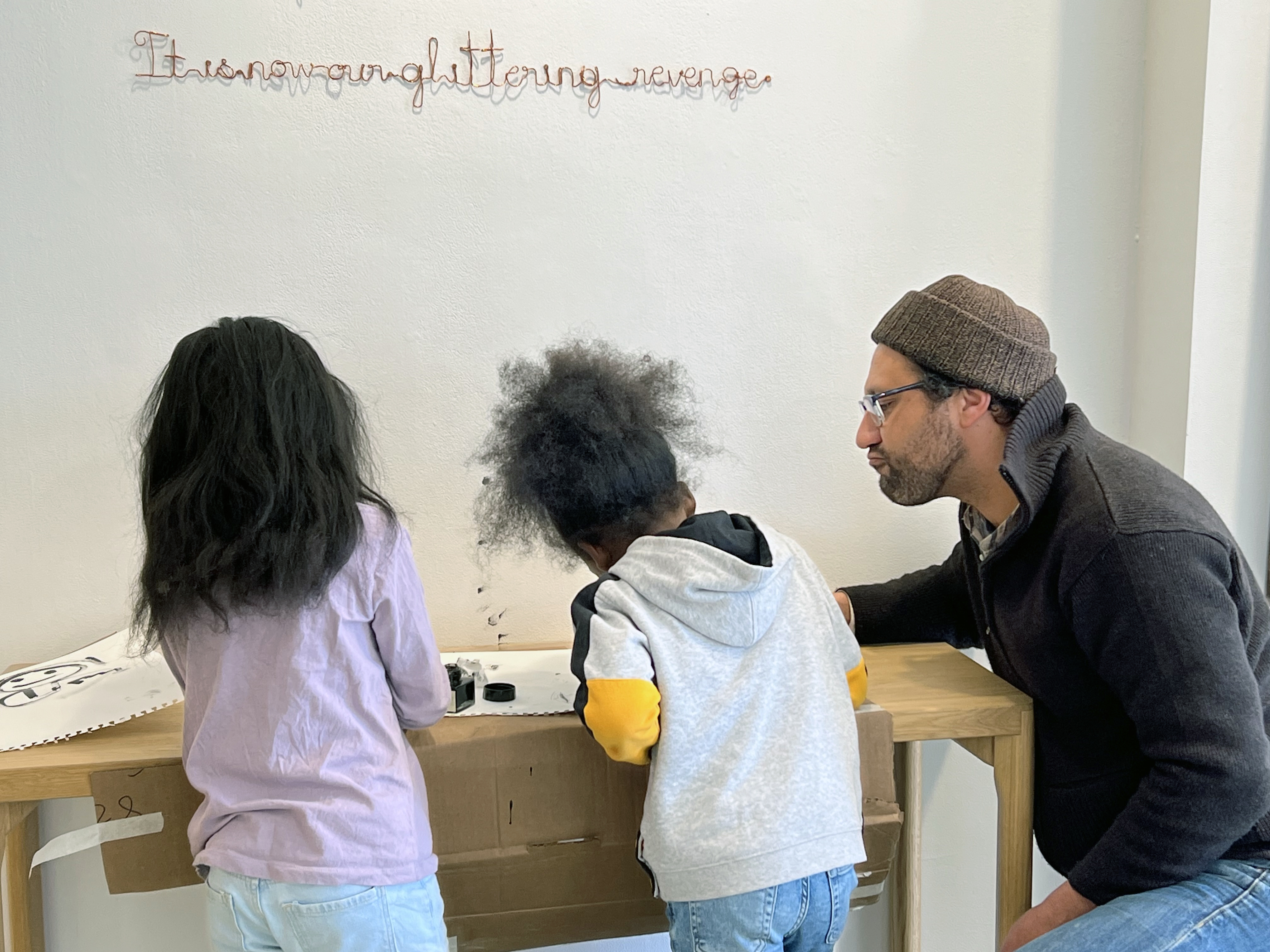
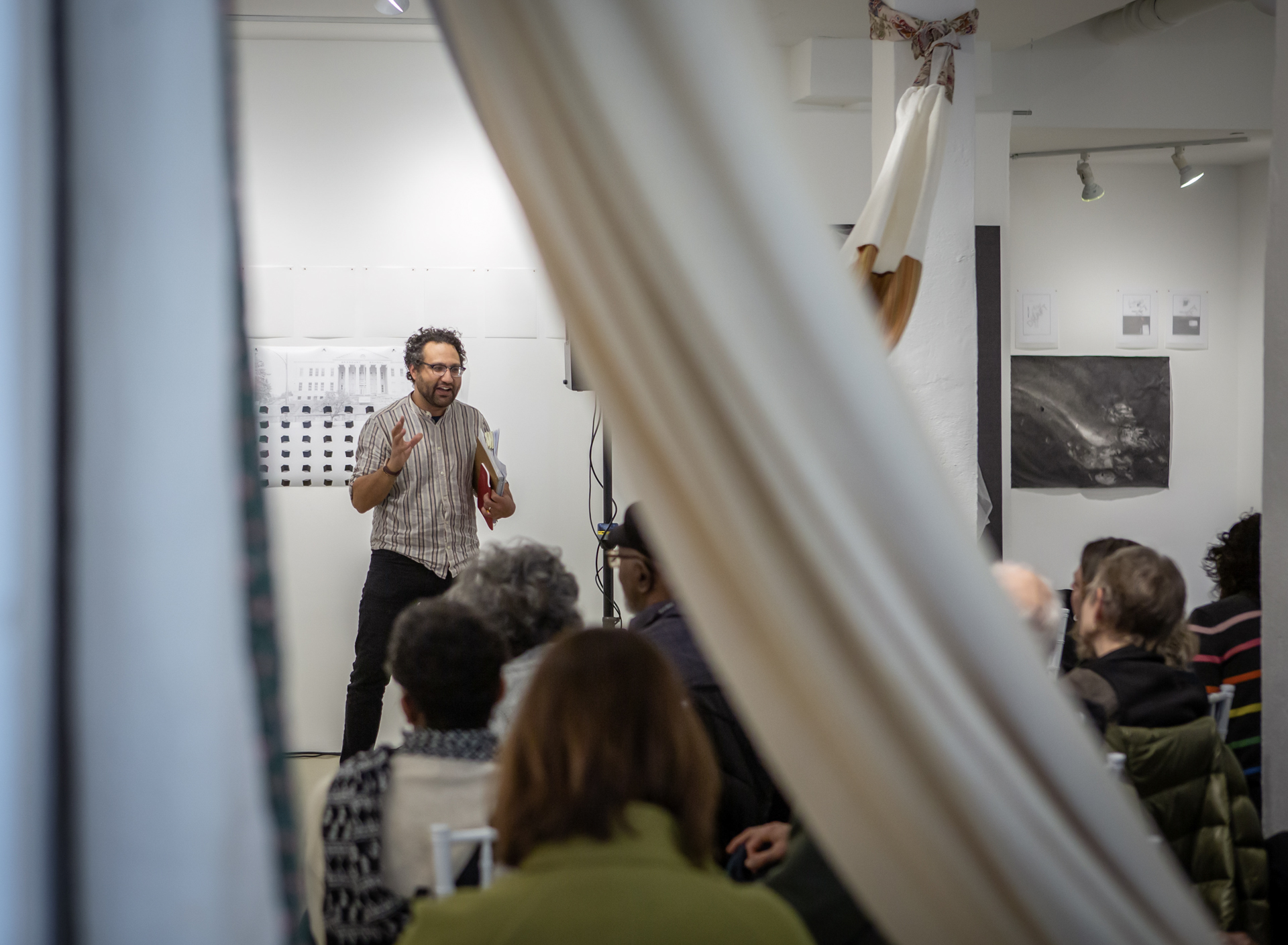
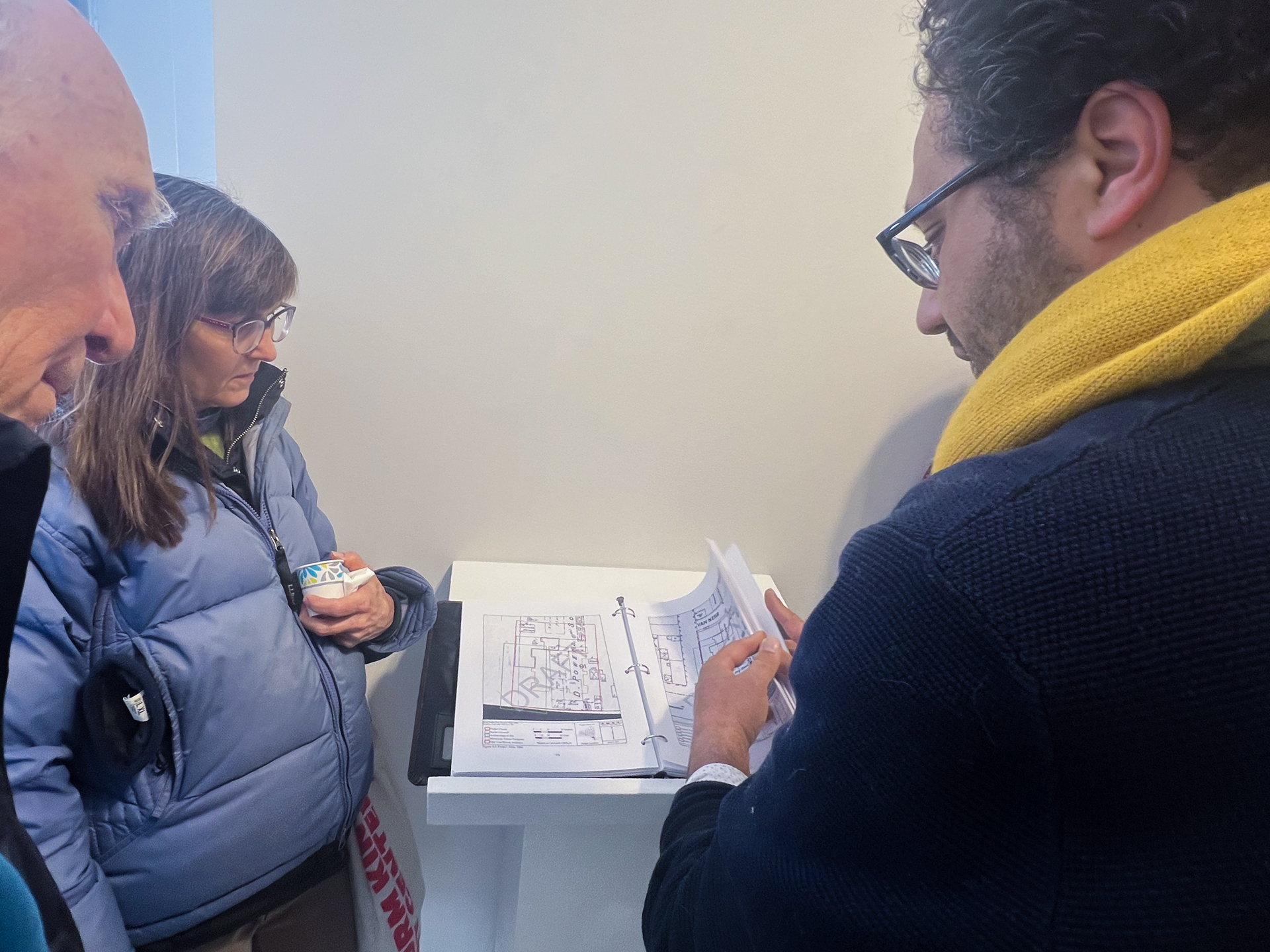
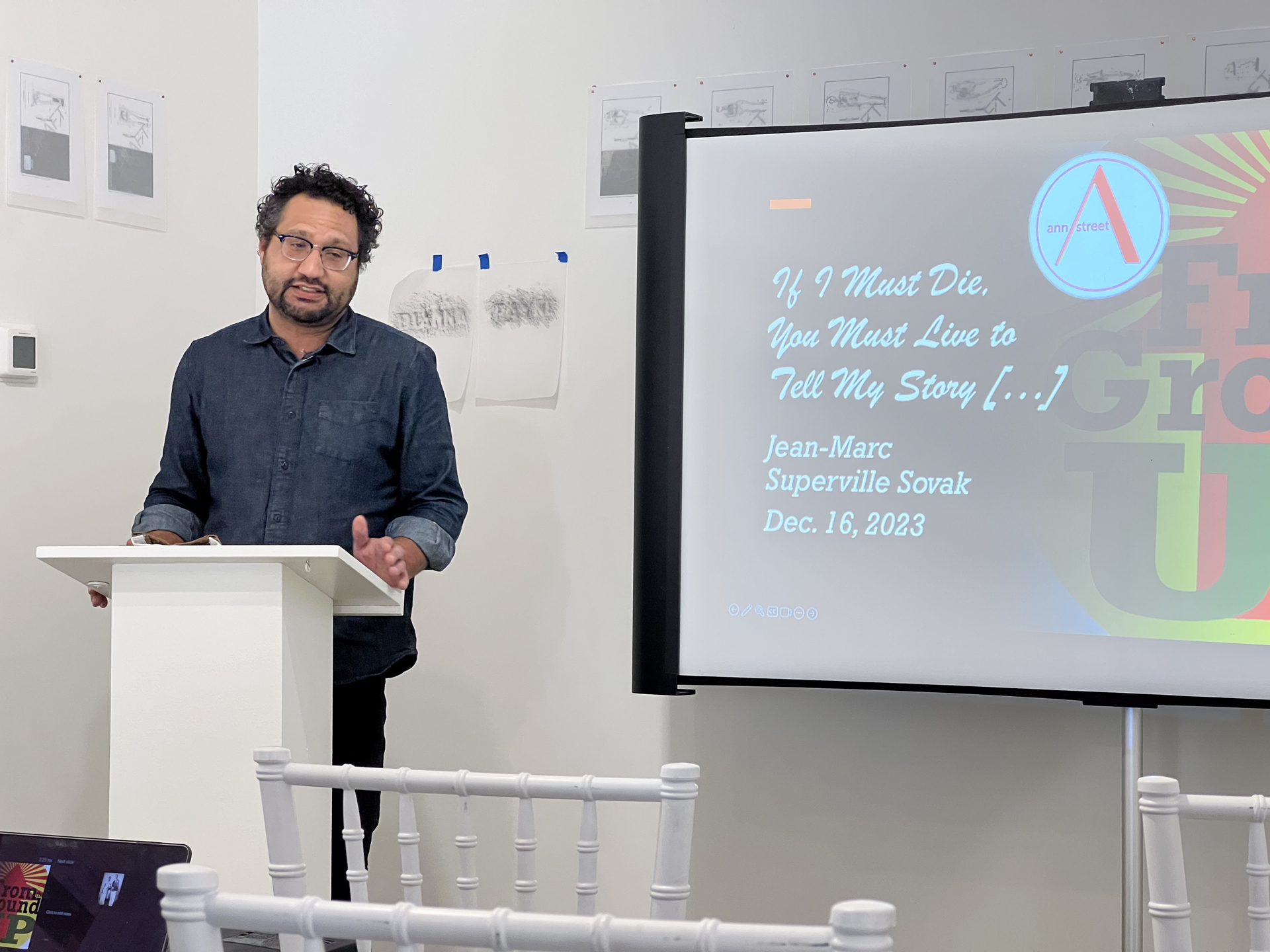
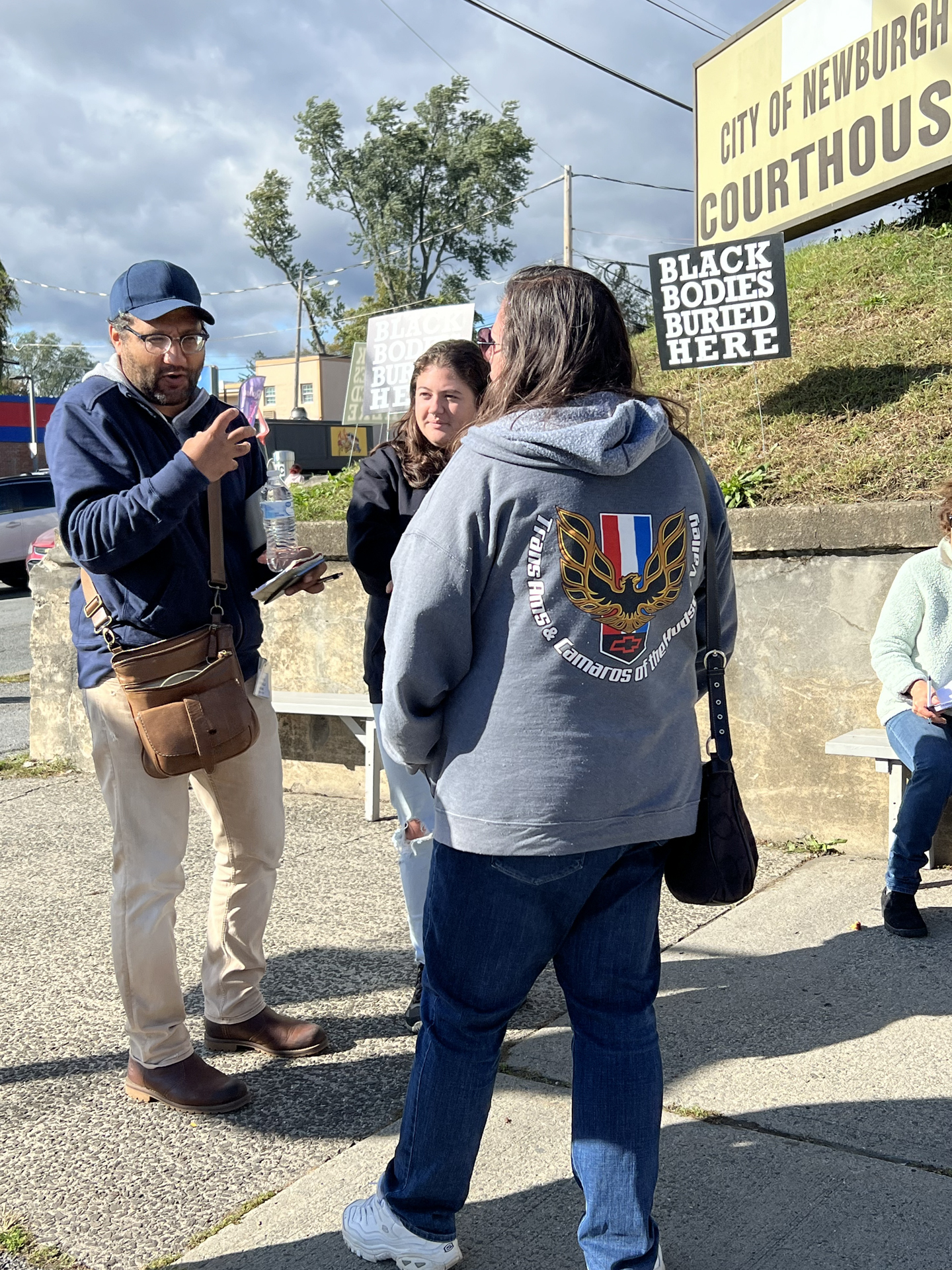
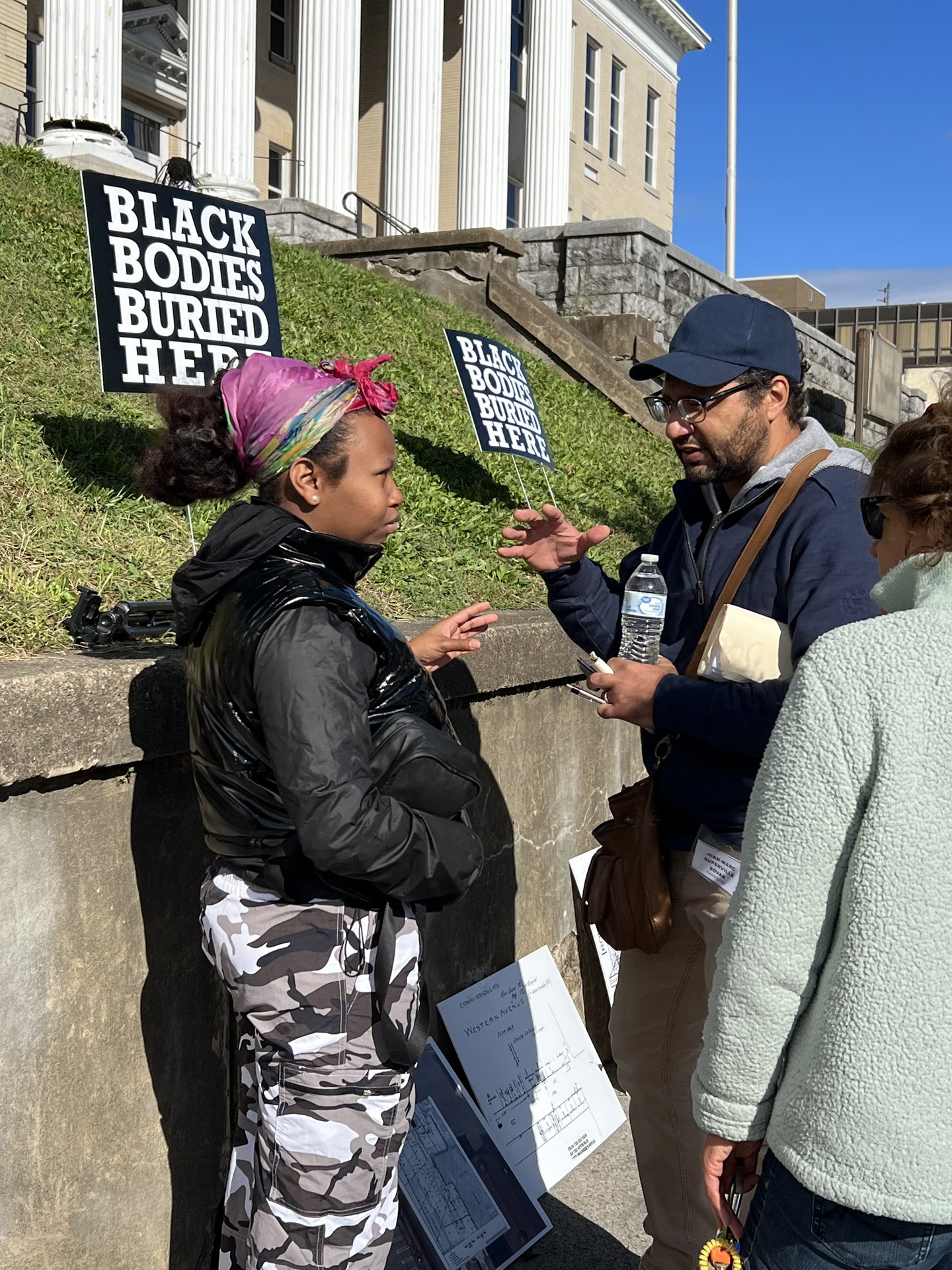
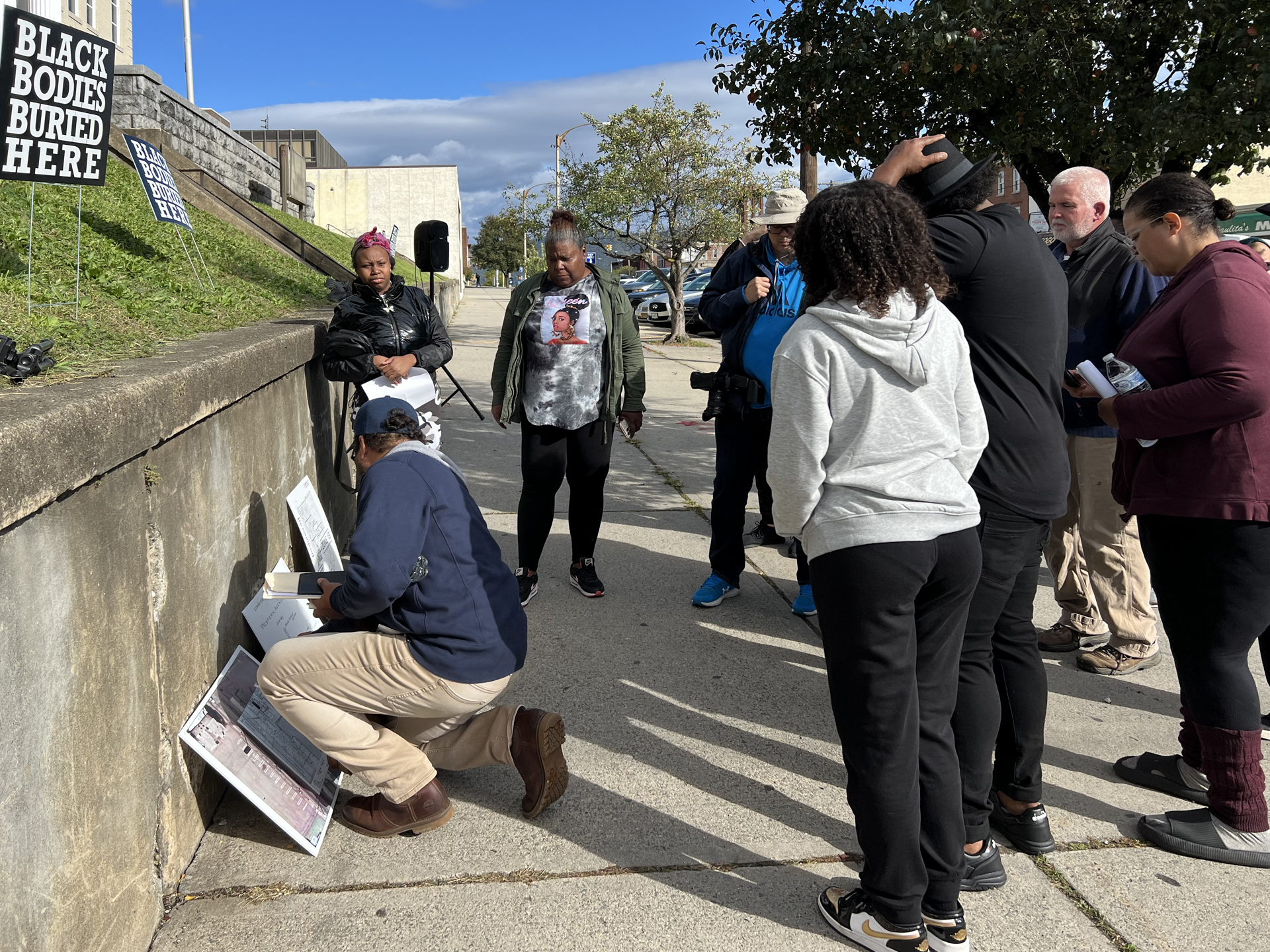
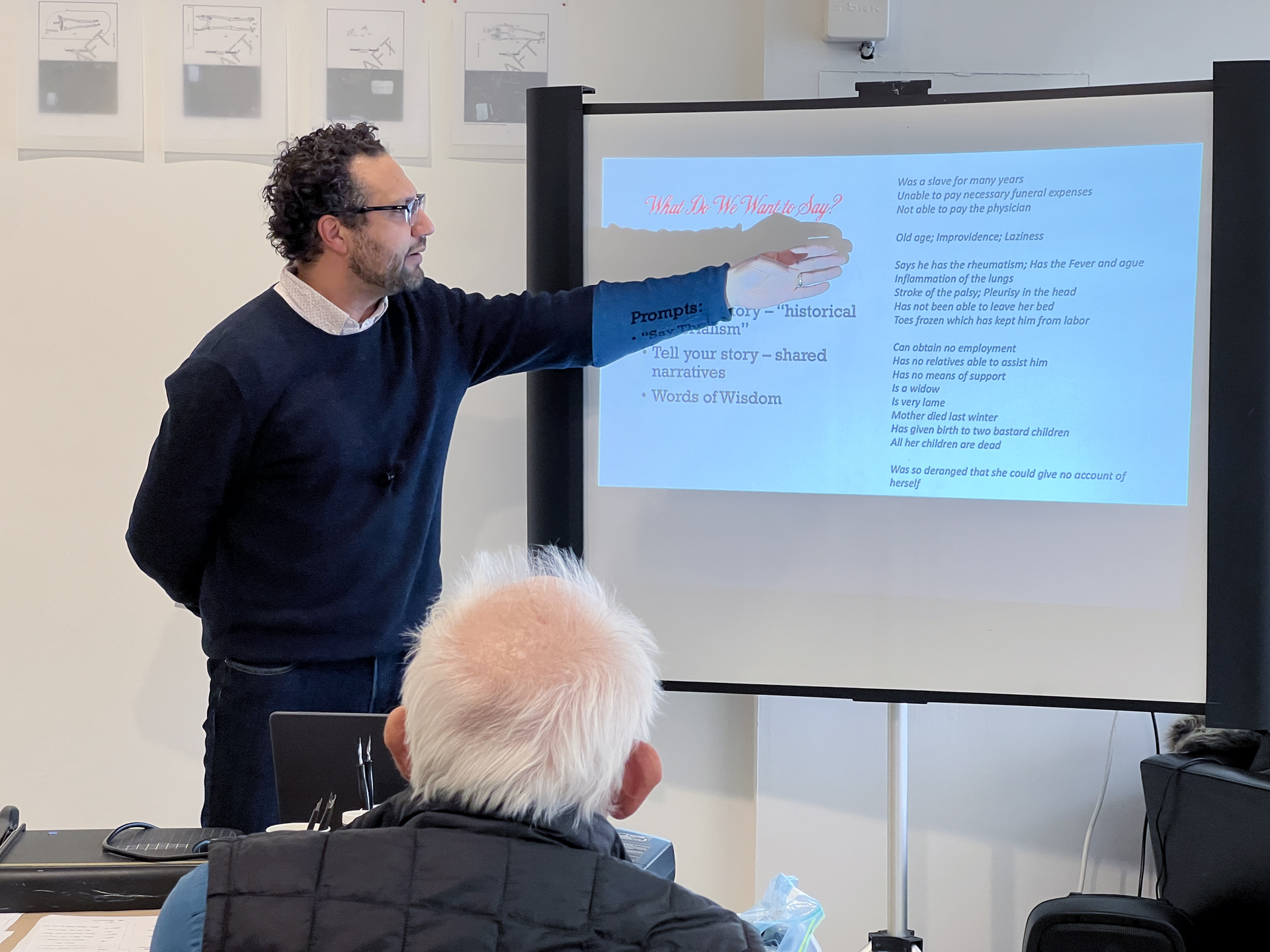

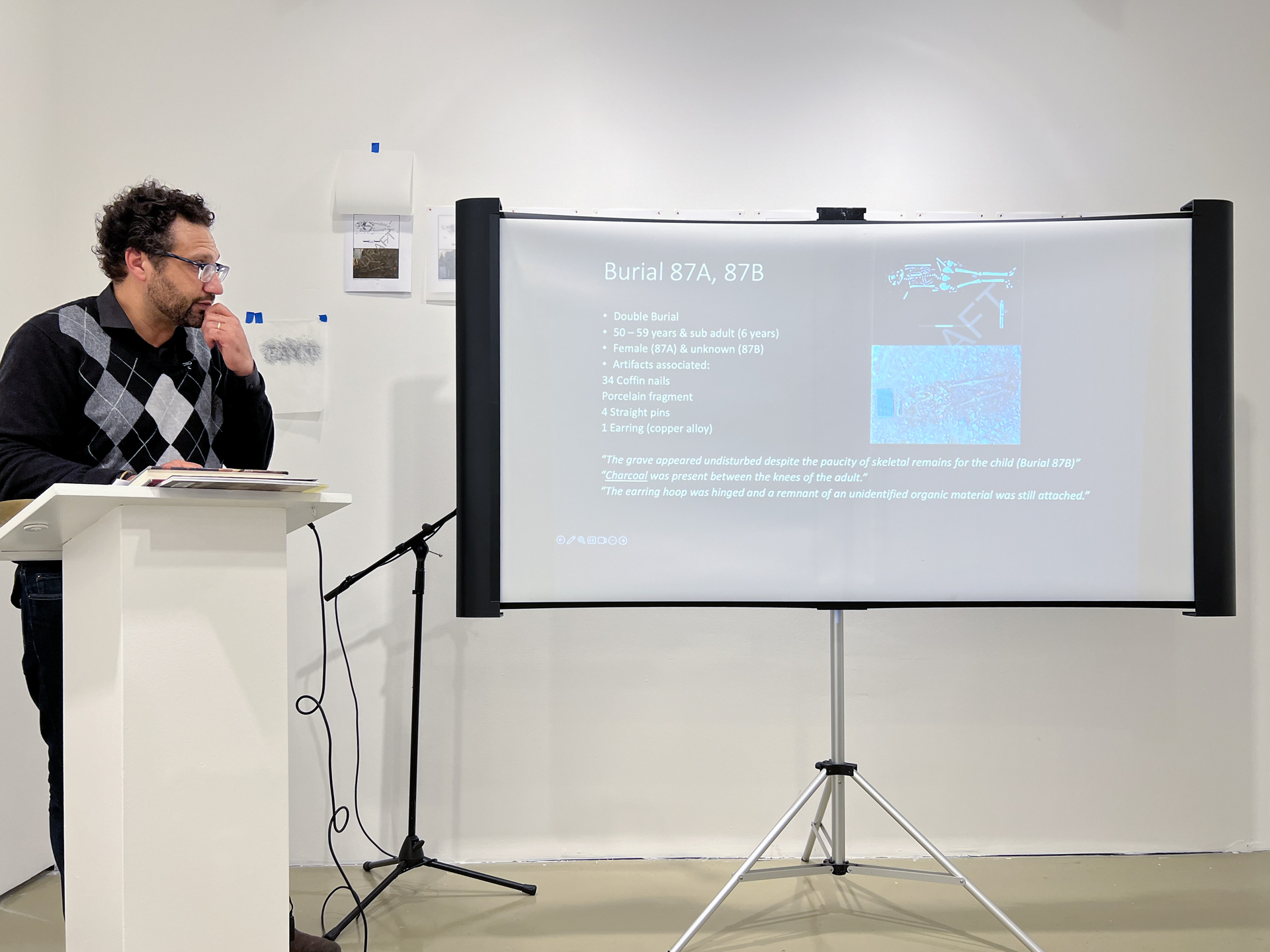
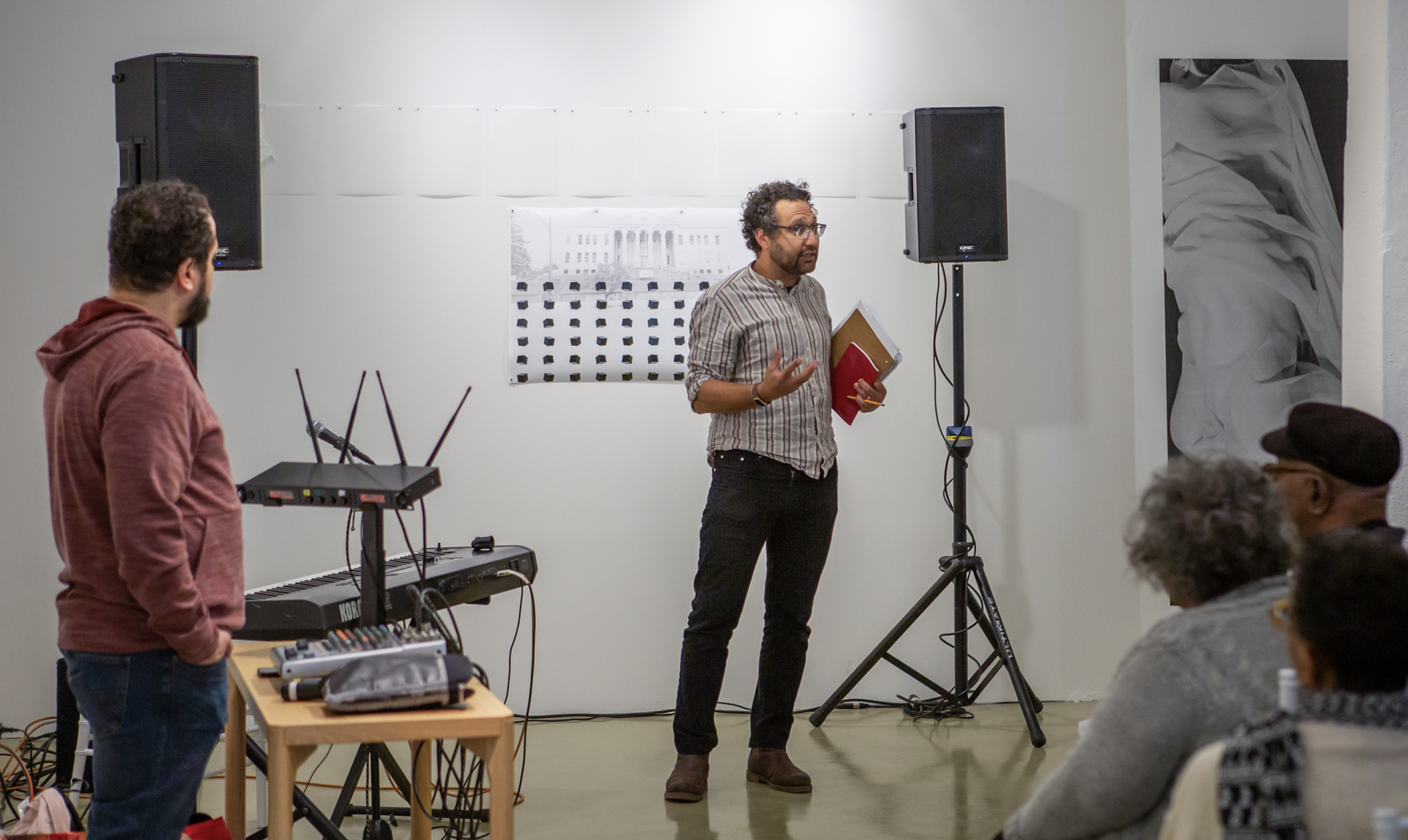
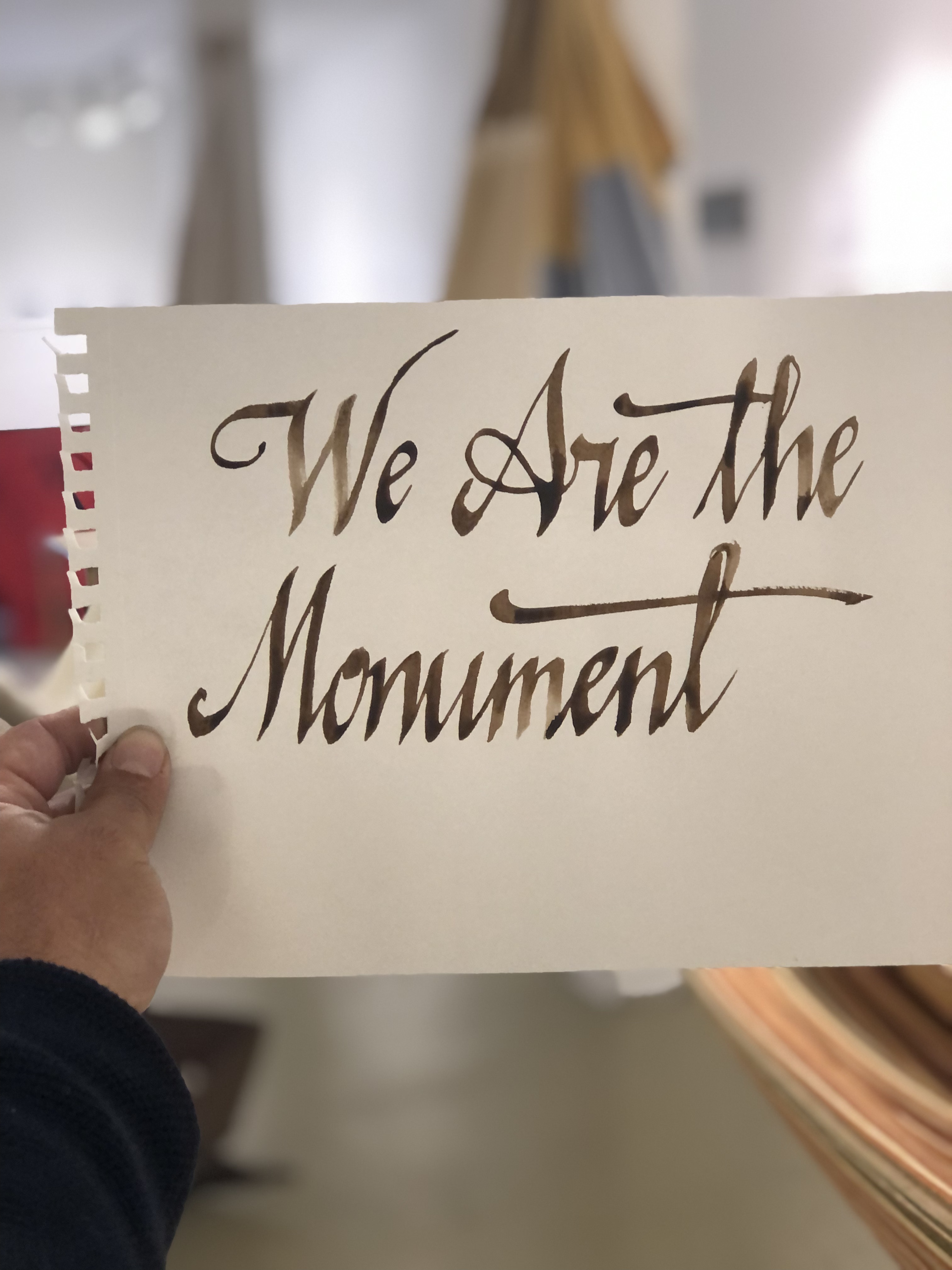
Photographs from From the Ground UP lectures and events free and open to the public
RESEARCH DESCRIPTION
There are three main primary research sources, which have allowed this project to speculate greatly on the lives of those Newburgh residents of African descent who specifically sought relief for the burial of their loved ones who were laid to rest in Newburgh’s “Colored Burial Ground”. To my knowledge, the names of these individuals - a direct result of this collective research - will now be available digitally to the public for the first time.
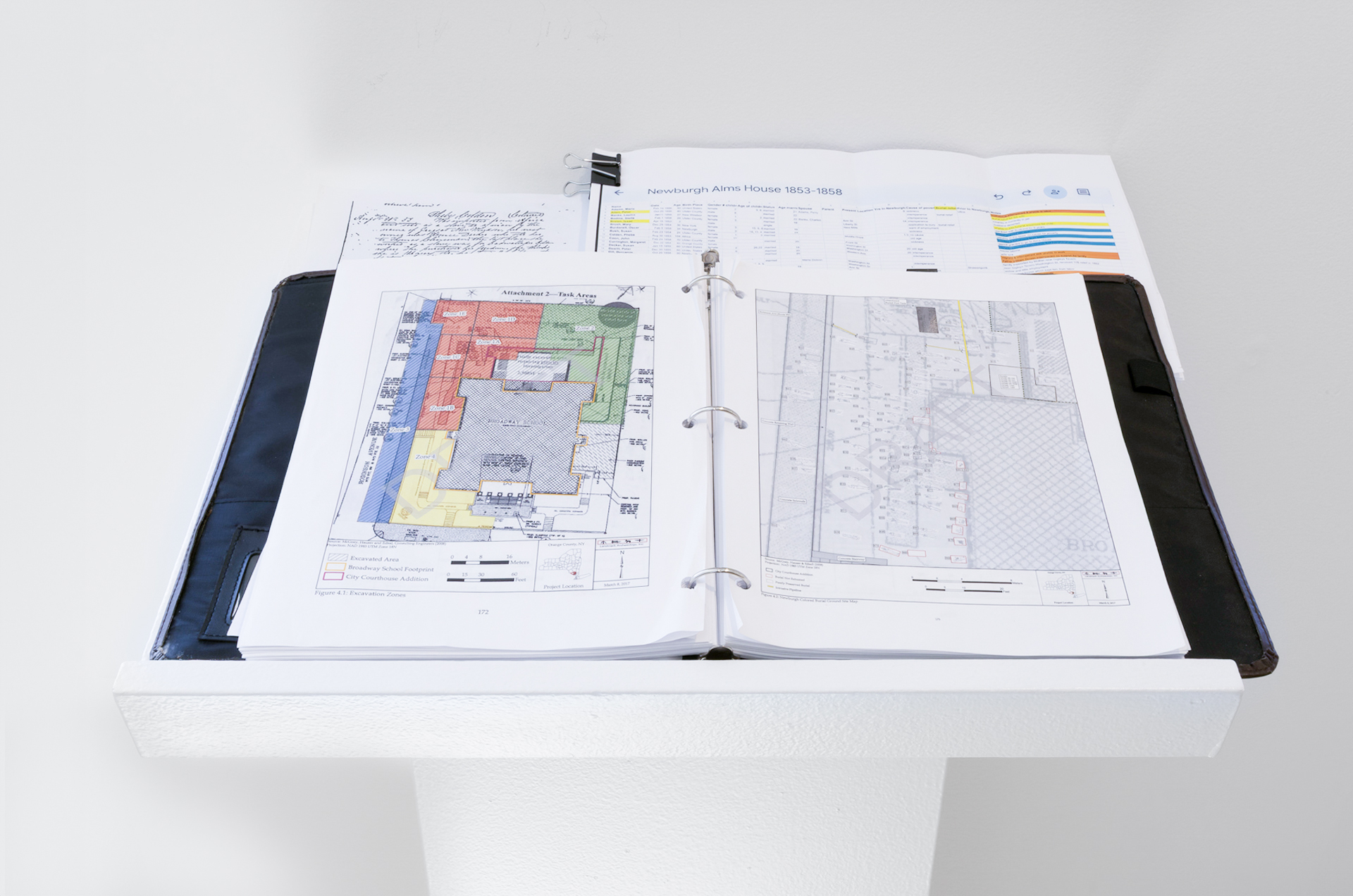
The first is The Archaeology, Osteology, and History of the Newburgh Colored Burial Ground, prepared for the City of Newburgh by Landmark Archaeology, Inc., and submitted in 2017, a draft version of which is available HERE for download. Photographic portions of this volume were exhibited as evidentiary material for the duration of the project at Ann Street Gallery.
The second major source, the Newburgh Almshouse Commissioner’s Examination Log Book, 1853-1858, is available at New York State Heritage Digital Collection*. While intended to serve as a form of accounting of those deemed worthy of charity by the Almshouse that operated Newburgh’s Colored Burial Ground, these examination records also serve retrospectively as micro-biographies of the lives of those who may have been laid to rest at the corner of Robinson Avenue and Broadway in Newburgh.
The third source is Genealogy of Black Families of Orange County, New York, by Robert W. Brennan, published by the Orange County Genealogical Society**, who generously allowed selected portions to be reproduced here. This volume has been indispensable to cross-referencing the names of those mentioned in the Almshouse records with generations of families of African descent who have called Newburgh and its surroundings home.
These resources have been greatly expanded thanks to all those who lent their expertise to this project. To them, a special thanks is due, including: Gabrielle Burton-Hill, Newburgh CBG (Colored Burial Ground) Committee member, Mike Van Dervoort, citizen genealogist and SPOMA (Sacred Place of My Ancestors) Committee member, and City of Newburgh Historian, Mary MacTamaney.
- Jean-Marc Superville Sovak
2023 ASG Artist Researcher in Residence
*Municipal Newburgh Records, Digital Collection, City of Newburgh, “Newburgh Almshouse Commissioner’s Examination Log Book, 1853-1858”, New York Heritage Digital Collection, 1853-1858, https://nyheritage.contentdm.oclc.org/digital/collection/nhc/id/513/rec/3
**Orange County Genealogical Society, 101 Main St. Goshen, New York

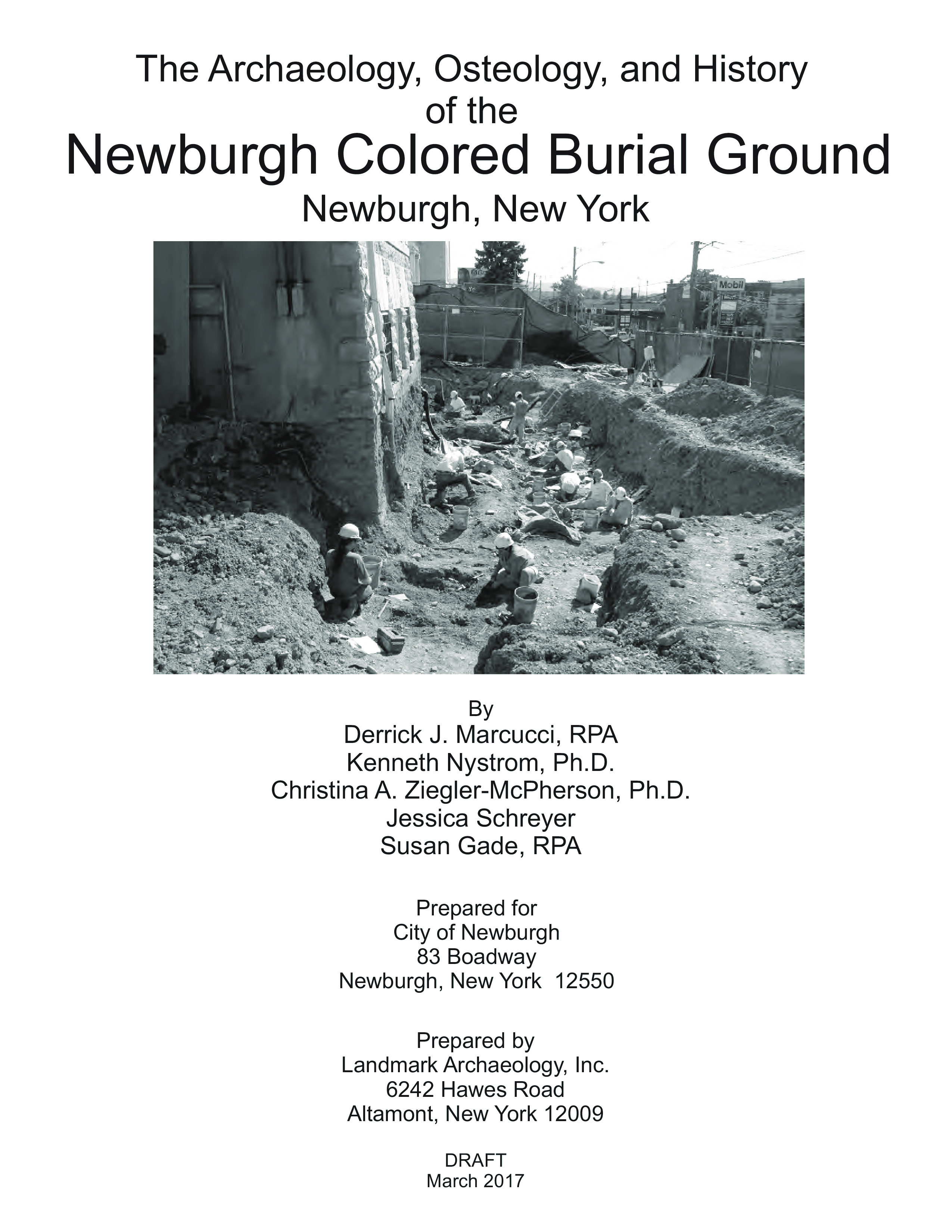


Excerpts from the document (link to full report)
The Archaeology, Osteology, and History of
the Newburgh Colored Burial Ground
The Archaeology, Osteology, and History of the Newburgh Colored Burial Ground, prepared for the City of Newburgh by Landmark Archaeology, Inc. in 2017 is perhaps the greatest volume of information to be printed out about a segregated burial ground designated for the city’s poorest in the Hudson Valley area. Though there are several historically recognized segregated burial grounds in the vicinity, such as the African Burial Ground in the town of Montgomery (stewarded by SPOMA, Sacred Place of My Ancestors) and the Pine Street Burial Ground (stewarded by Harambe), the Newburgh Colored Burial Ground is one of the rare few to have such an extensive survey prepared.
The study is divided into eleven chapters, of which the most relevant to this project were: Historic Context, Burial Descriptions, and Archaeological Research Issues Discussion.
Historic Context (pages 14-31)
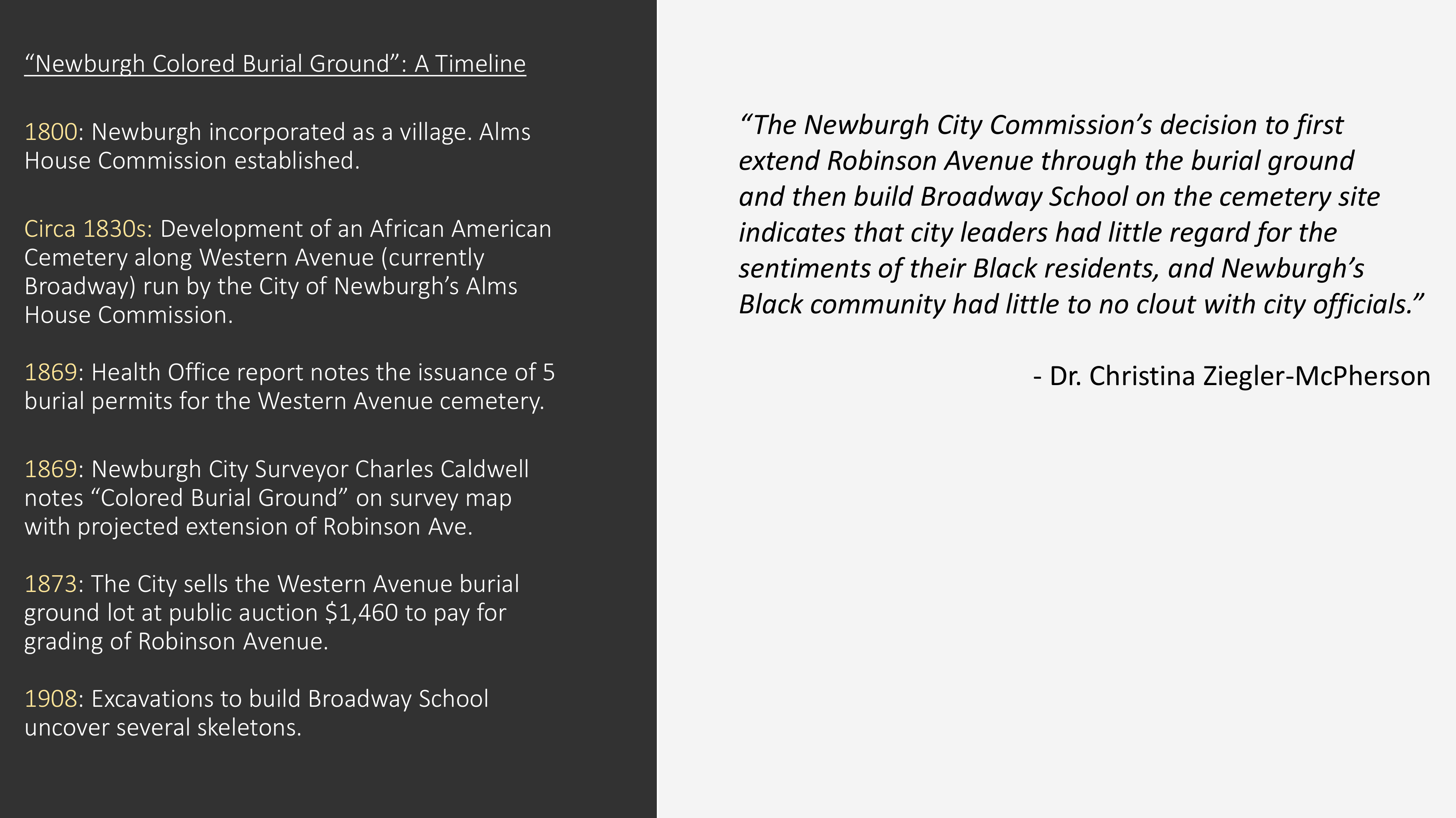
This chapter was authored by Dr. Christina Ziegler-McPherson, who was invited to speak at one of this project's earliest community gatherings. While Ziegler-McPherson’s study on African American Life in Newburgh in the Mid-nineteenth Century (pages 19 -28) paints a rich portrait of Black life emerging from New York’s gradual abolition of slavery, her research into the identity of those buried at the Newburgh Colored Burial Ground presents a case for the unknowability of those individuals, concluding that, since “the kinds of historical evidence which normally helps to tell the history of a cemetery and those interred there – maps, city records, cemetery records, undertaker records, church records – largely do not exist […] we must be careful and cautious, and clearly note what is known from historical records and what cannot be known”.

Dianna Payne’s current burial location in
Woodlawn Cemetery, New Windsor

City of Newburgh map designating Newburgh Colored Burial Ground from 1869
from The Archaeology, Osteology, and History of the Newburgh Colored Burial Ground
According to Ziegler-McPherson’s History of the Broadway School Site, “City health records note the burial of only six individuals at the ‘colored cemetery’ […] N. Carter, age 18 months, on March 16,
1867, and Jane Hart, age 1 year, on
April 25, 1867, Mary Jane Johnson, age 26 […] buried on October 19, 1866, Dianna
Payne, age 80, […] buried on October 20, 1866;
Jane Richardson, age 84, […] buried on October 22, probably 1866; and John Beuke or Burke, age 41, buried on July 31, 1867 (City of Newburgh Health Office n.d.). These are the only individuals known to have been buried on Broadway/Western Avenue, but this is more because the city did not require death certificates or burial permits until 1865.” (page 17, emphasis added)
Upon further investigation, I was able to locate one of these individuals, Dianna Payne, who is actually buried at Woodlawn Cemetery in neighboring New Windsor. It is possible her remains were removed and reinterred from Newburgh’s “colored burying ground’ [which] in city records appears in a June 1869 city surveyor’s map depicting the extension of Robinson Avenue through part of the cemetery (Caldwell 1869b).” (page 16)
Thanks to the Newburgh Almshouse Commissioner’s Examination Log Book, 1853-1858 (see below) we also know that Jane Richardson was examined and visited by the Almshouse some thirteen years before her death. Of the other 60 names of “colored” individuals who were recorded as having been in the care of Newburgh’s Almshouse between 1853 to 1858, several of whom specifically presented themselves for relief for burial, it seems reasonable to assume that a number of them would have been buried in Newburgh Colored Burial Ground (see next chapter for a full list of those names.)
Dr. Ziegler-McPherson’s caution about “clearly not[ing] what is known from historical records and what cannot be known” demonstrates how the historical narrative of the Newburgh Colored Burial Ground can and will continue to evolve as these details serve as addenda.
Jane Richardson, age 84, […] buried on October 22, probably 1866; and John Beuke or Burke, age 41, buried on July 31, 1867 (City of Newburgh Health Office n.d.). These are the only individuals known to have been buried on Broadway/Western Avenue, but this is more because the city did not require death certificates or burial permits until 1865.” (page 17, emphasis added)
Upon further investigation, I was able to locate one of these individuals, Dianna Payne, who is actually buried at Woodlawn Cemetery in neighboring New Windsor. It is possible her remains were removed and reinterred from Newburgh’s “colored burying ground’ [which] in city records appears in a June 1869 city surveyor’s map depicting the extension of Robinson Avenue through part of the cemetery (Caldwell 1869b).” (page 16)
Thanks to the Newburgh Almshouse Commissioner’s Examination Log Book, 1853-1858 (see below) we also know that Jane Richardson was examined and visited by the Almshouse some thirteen years before her death. Of the other 60 names of “colored” individuals who were recorded as having been in the care of Newburgh’s Almshouse between 1853 to 1858, several of whom specifically presented themselves for relief for burial, it seems reasonable to assume that a number of them would have been buried in Newburgh Colored Burial Ground (see next chapter for a full list of those names.)
Dr. Ziegler-McPherson’s caution about “clearly not[ing] what is known from historical records and what cannot be known” demonstrates how the historical narrative of the Newburgh Colored Burial Ground can and will continue to evolve as these details serve as addenda.

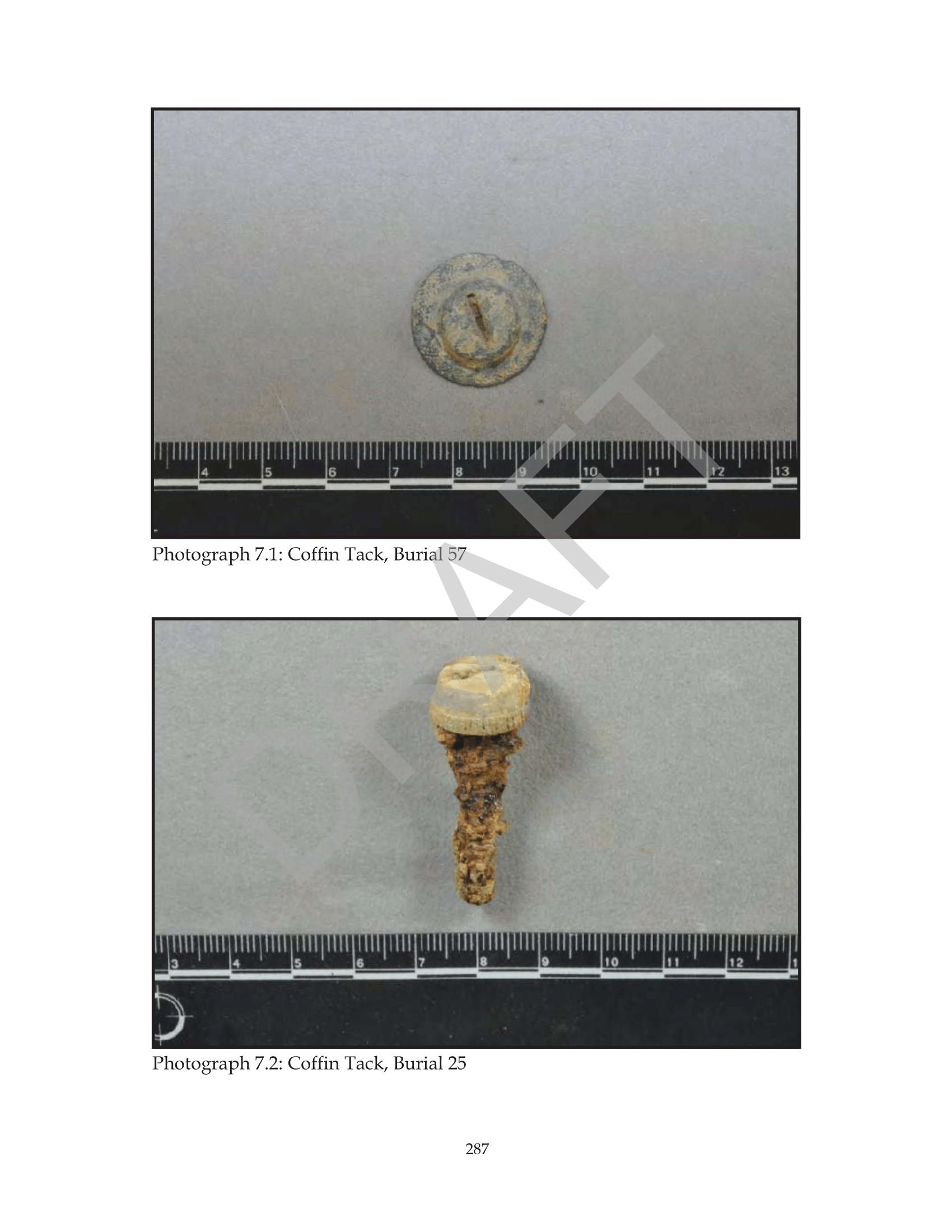


Coffin tacks in Burial Ground Report (left) and in the Ann Street Gallery exhbiition installation (right)

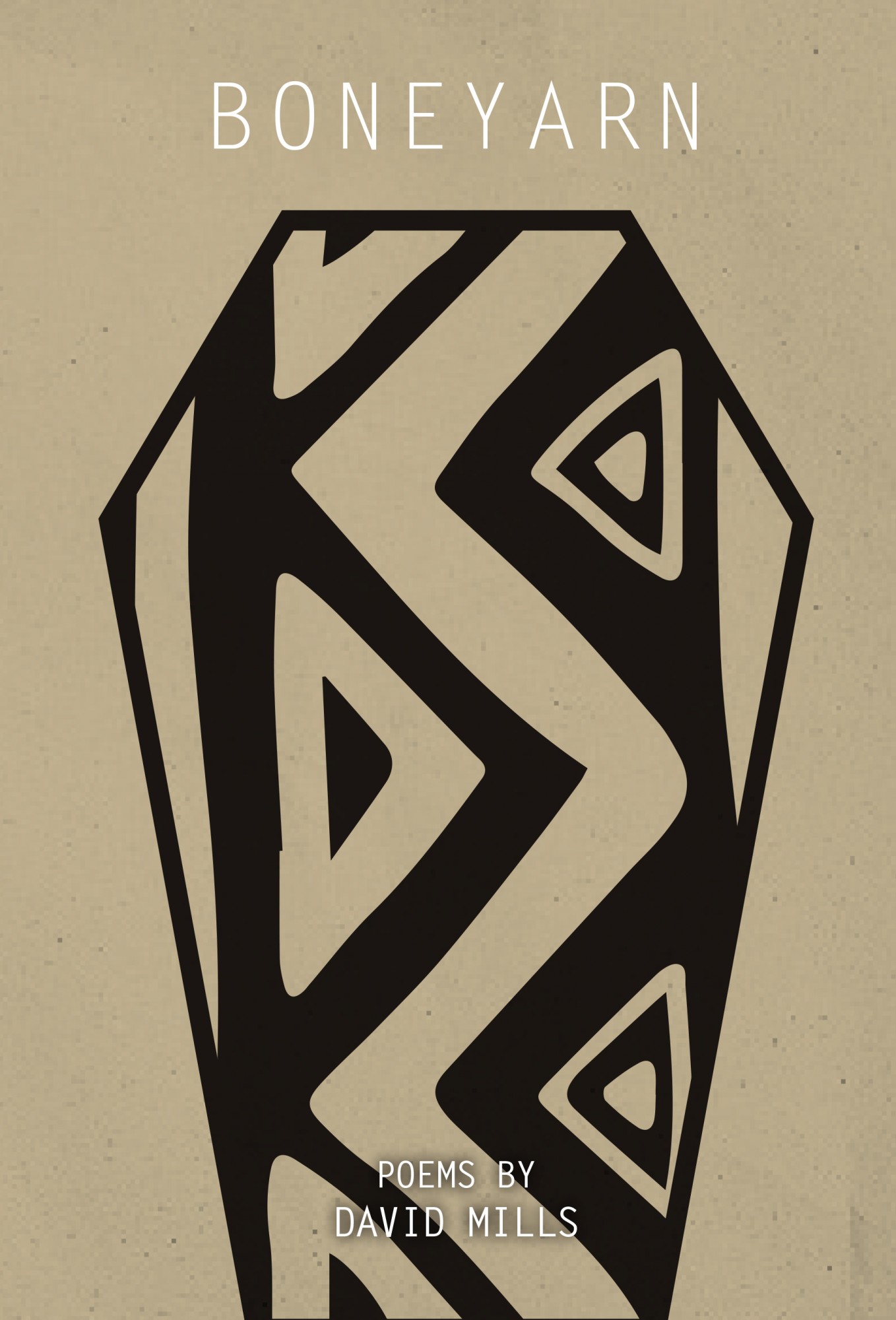


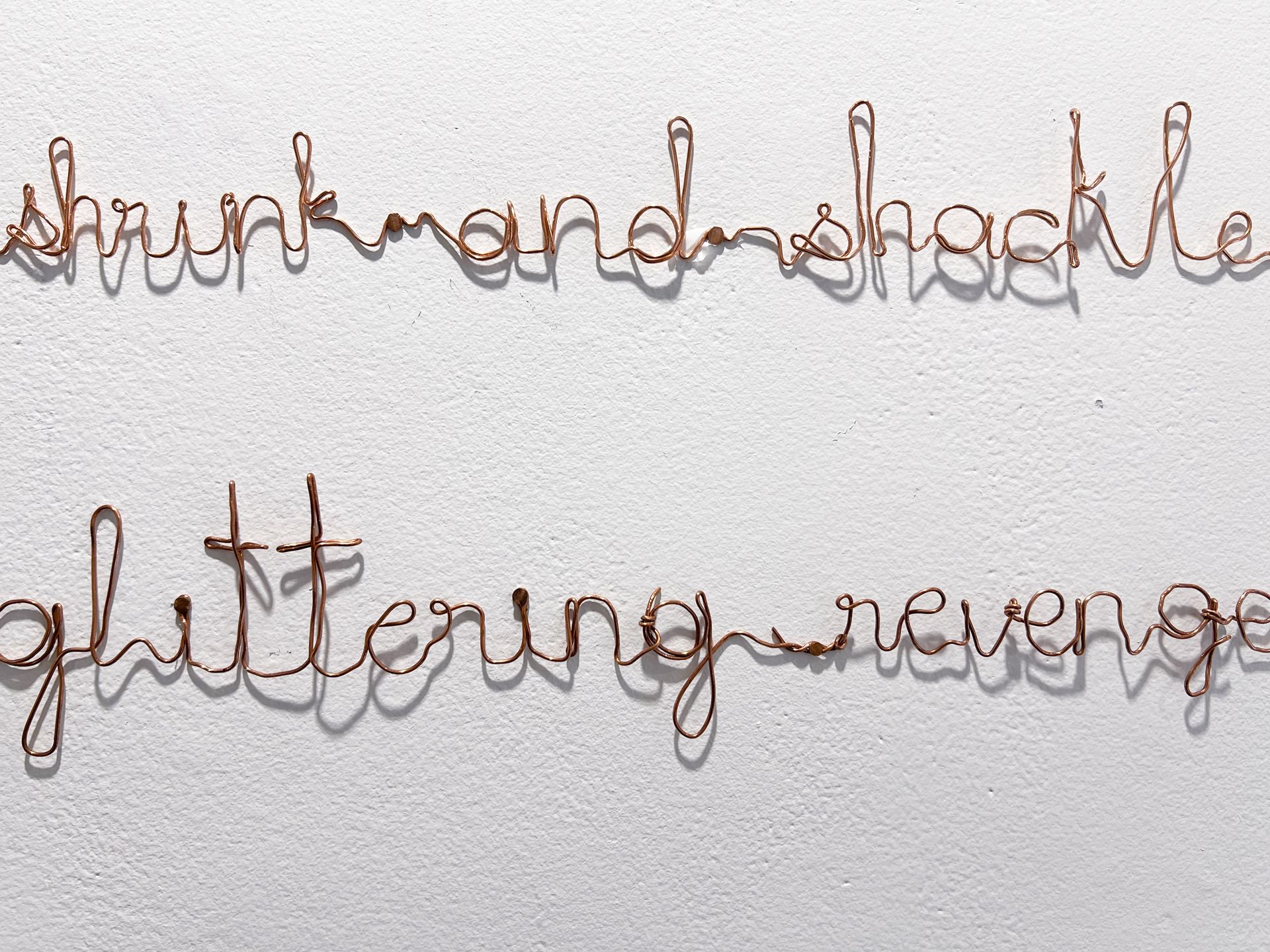
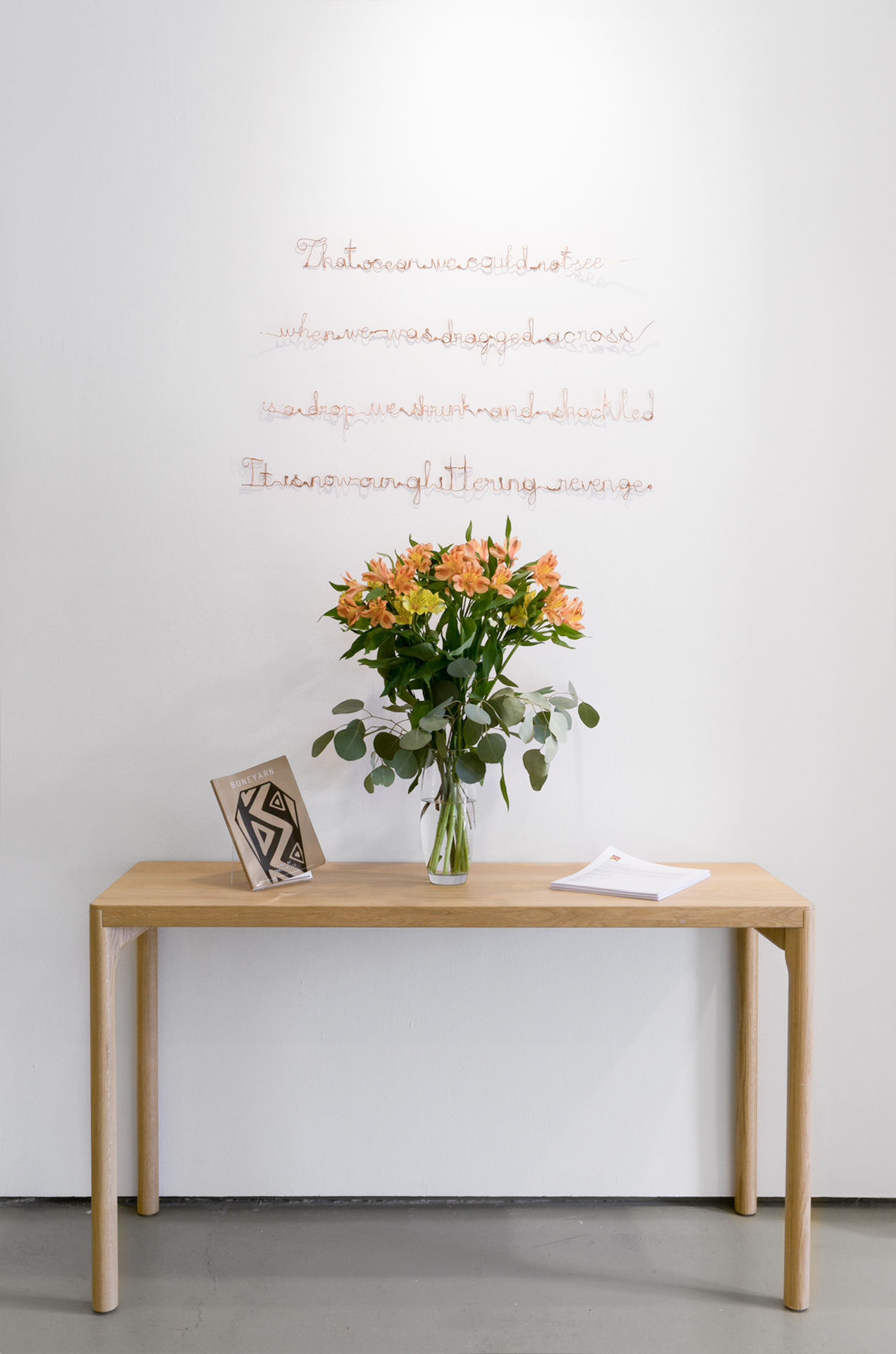
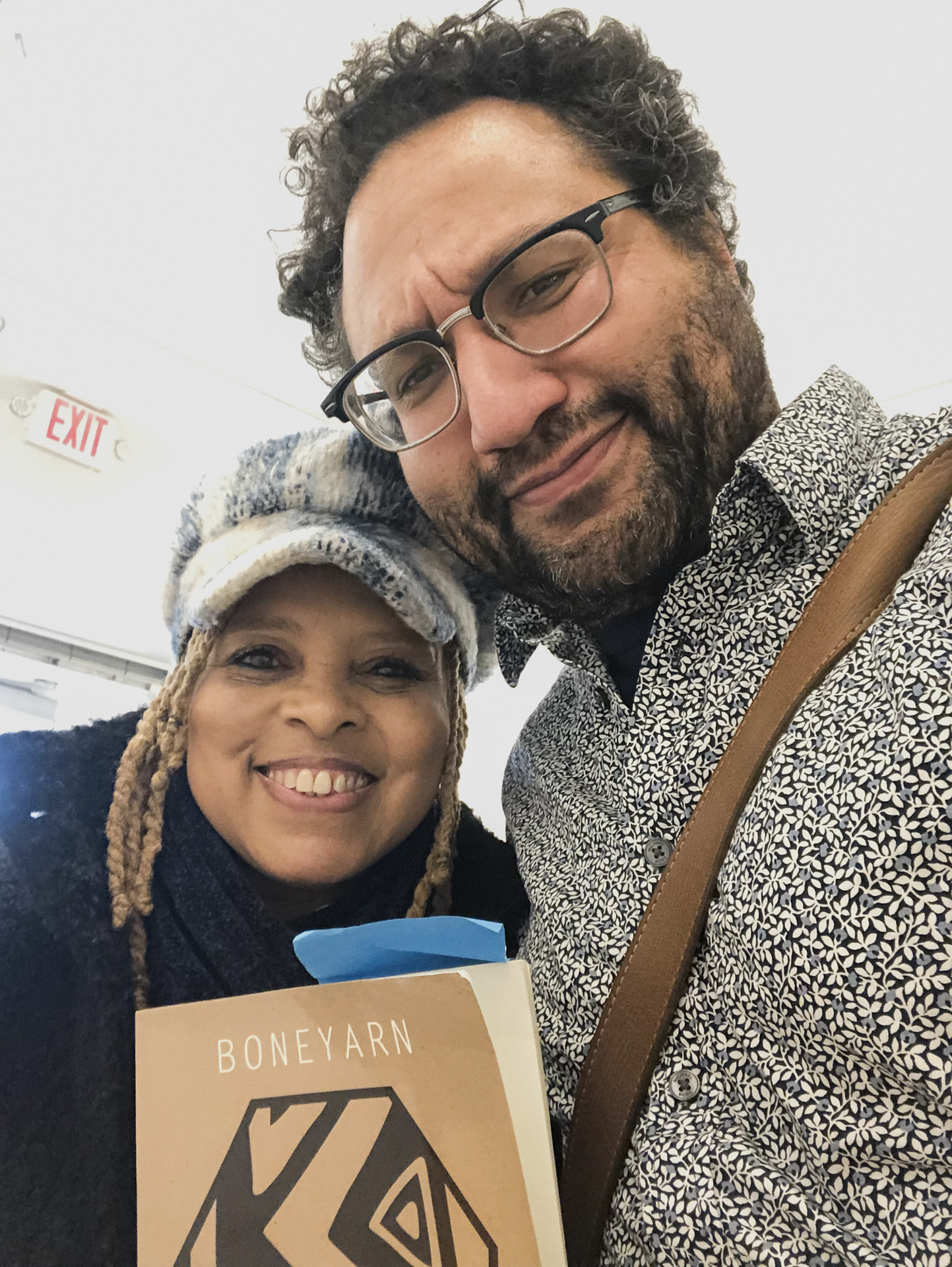
Boneyarn, by David Mills from The Ashland Poetry Press
excerpt from the poem,
To The Bones: About The Beads: Talking,
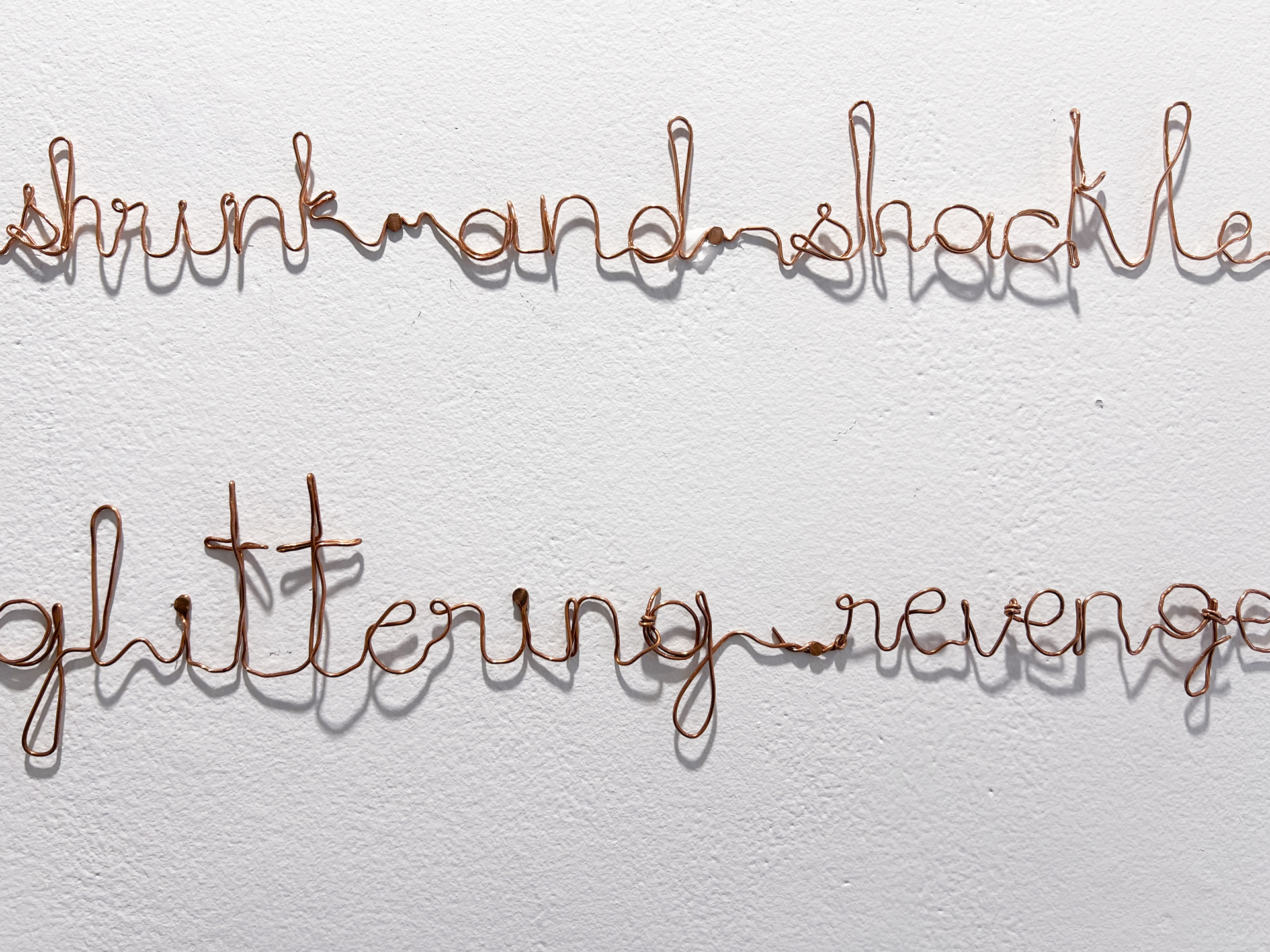
sculpted in repurposed copper wire by Superville Sovak
Burial Descriptions
The individual analyses of each of the burials yield a wealth of evidence about the consistent care and dignity with which the individuals in Newburgh Colored Burial Ground were laid to rest.
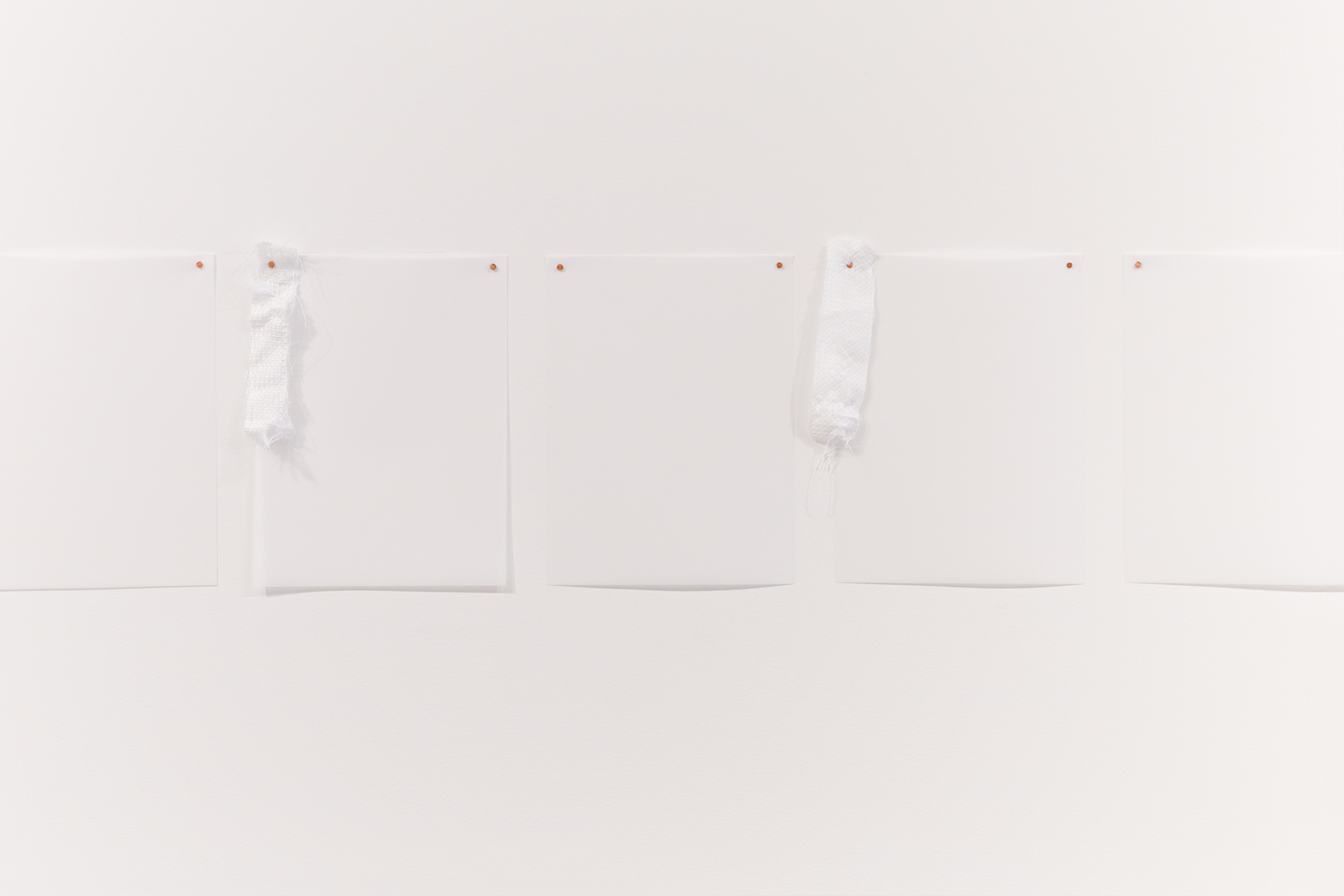
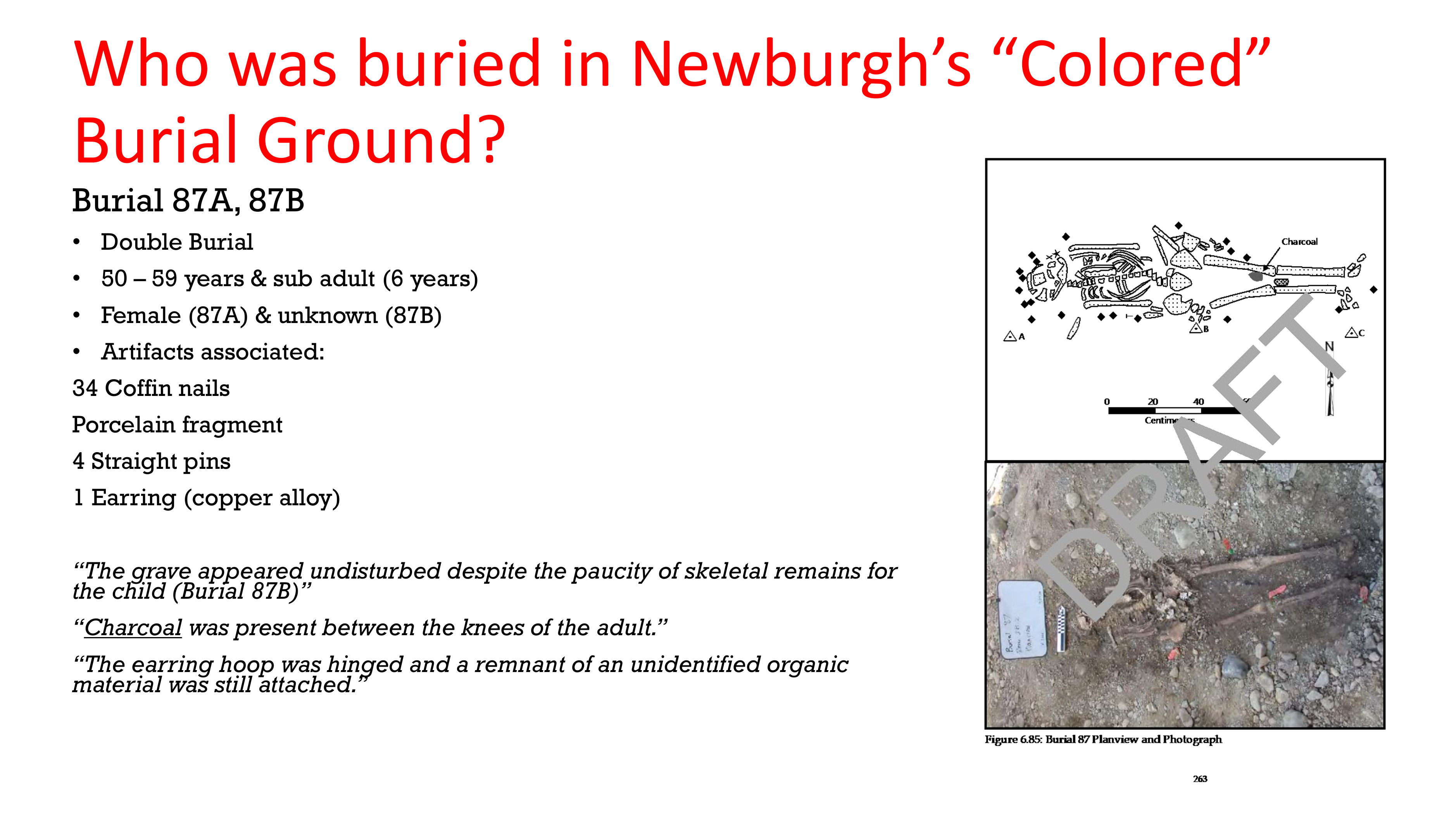
According to Landmark Archaeology, the most “abundant and ubiquitous in the cemetery is coffin hardware [and] the artifacts found in the burials indicate that the deceased were dressed either in clothing or wrapped in a shroud or winding sheet.” (page 155-157) These details directly inspired the installation at the gallery consisting of continuous shroud like fabric that wrapped the columned space and the use of copper nails to affix the photographic documentation of each burial in the gallery space in an effort to pose the question: “if you had nothing, what would you bury your loved one with?”
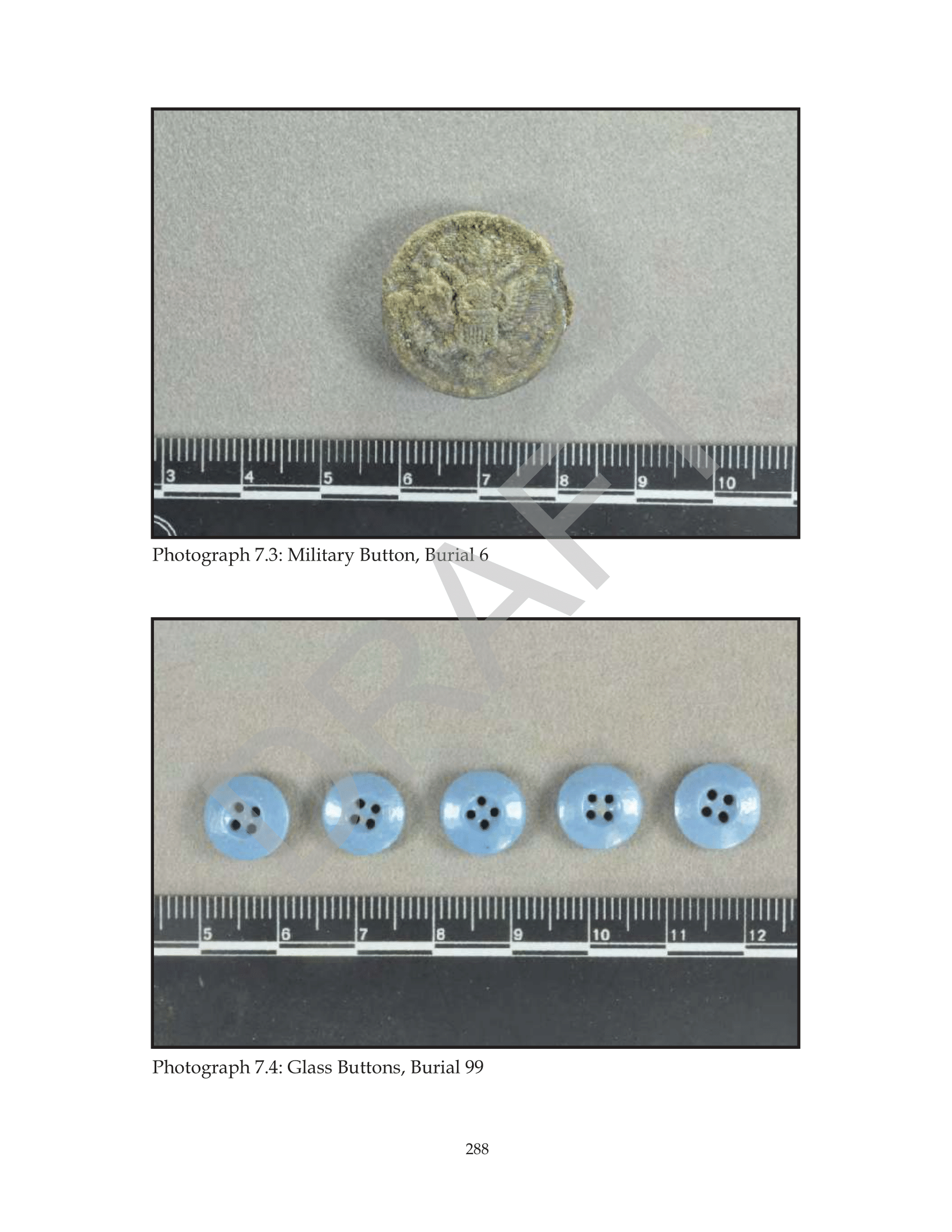
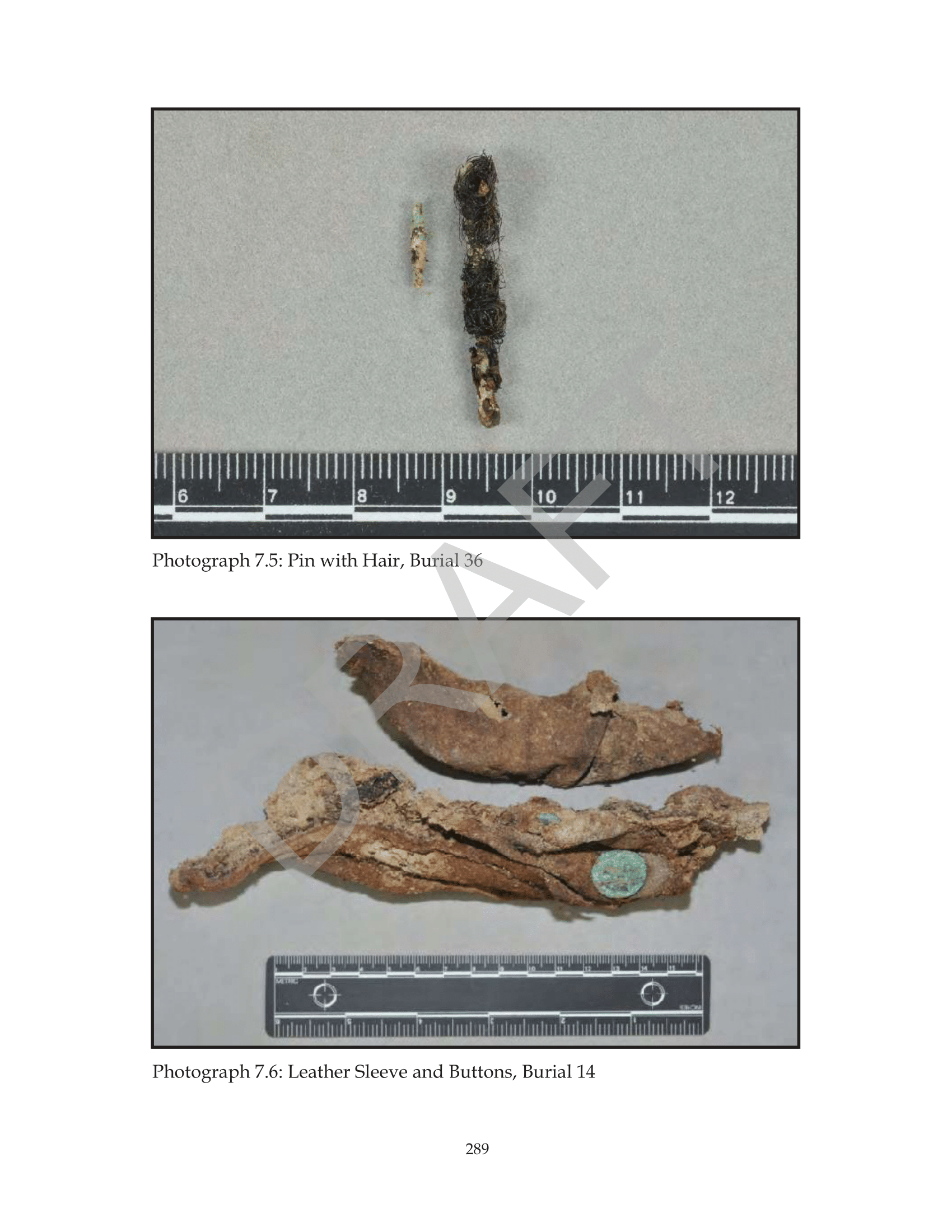
Other items such as pins, hair, buttons, jewelry, beads and coins – possessions of those considered the most dispossessed – leave a narrative spoken in a voice best articulated by the poet David Mills in his poetry collection Boneyarn.
That clear glass bead with a clear green heart in your grave?
That ocean we could not see
when we was dragged across
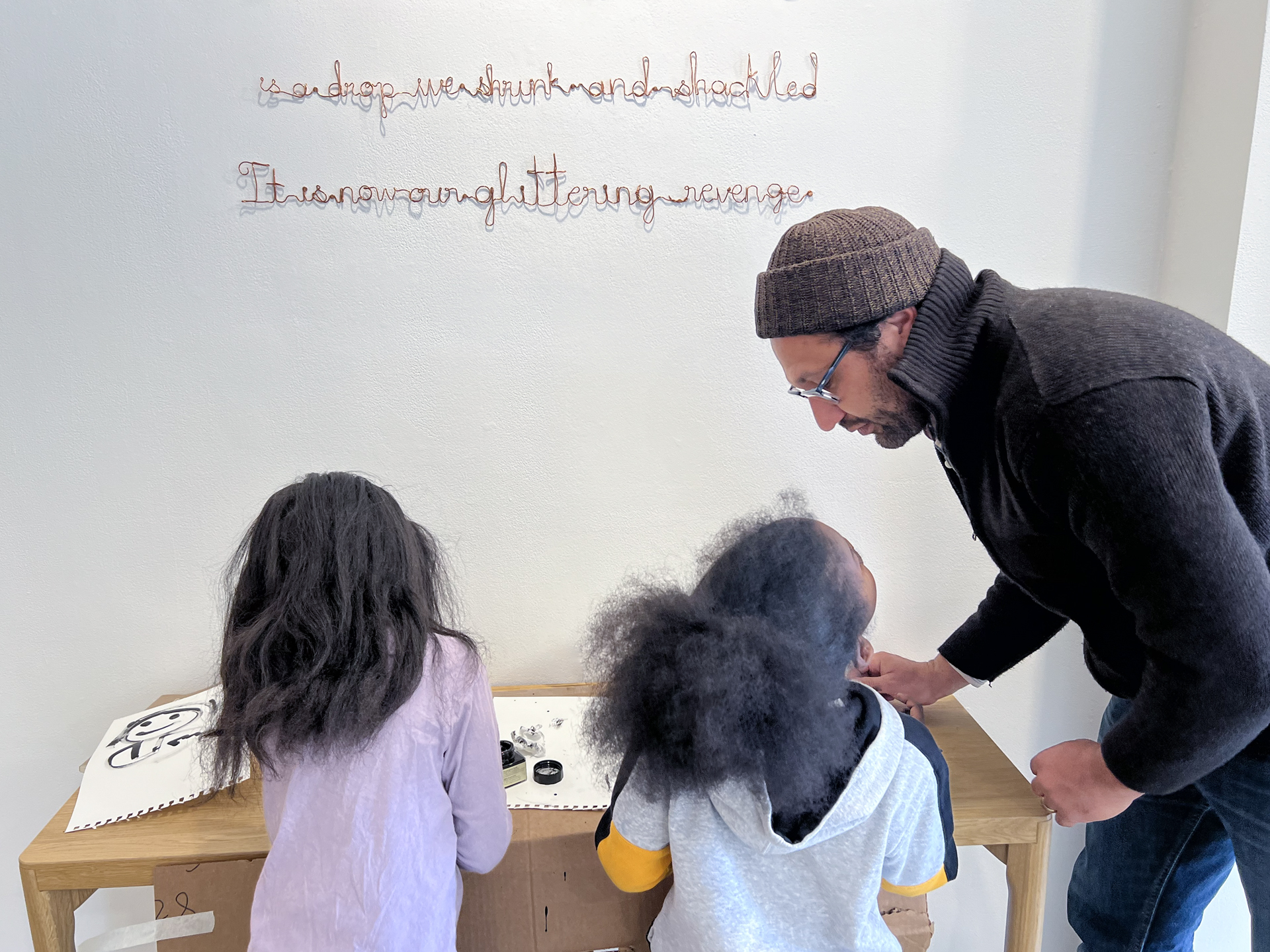
is a drop we shrunk and shackled
It’s now our glittering revenge
(excerpt from David Mills poem,
The individual analyses of each of the burials yield a wealth of evidence about the consistent care and dignity with which the individuals in Newburgh Colored Burial Ground were laid to rest.
According to Landmark Archaeology, the most “abundant and ubiquitous in the cemetery is coffin hardware [and] the artifacts found in the burials indicate that the deceased were dressed either in clothing or wrapped in a shroud or winding sheet.” (page 155-157) These details directly inspired the installation at the gallery consisting of continuous shroud like fabric that wrapped the columned space and the use of copper nails to affix the photographic documentation of each burial in the gallery space in an effort to pose the question: “if you had nothing, what would you bury your loved one with?”
Other items such as pins, hair, buttons, jewelry, beads and coins – possessions of those considered the most dispossessed – leave a narrative spoken in a voice best articulated by the poet David Mills in his poetry collection Boneyarn.
That clear glass bead with a clear green heart in your grave?
That ocean we could not see
when we was dragged across
is a drop we shrunk and shackled
It’s now our glittering revenge
(excerpt from David Mills poem,
To The Bones: About The Beads: Talking)


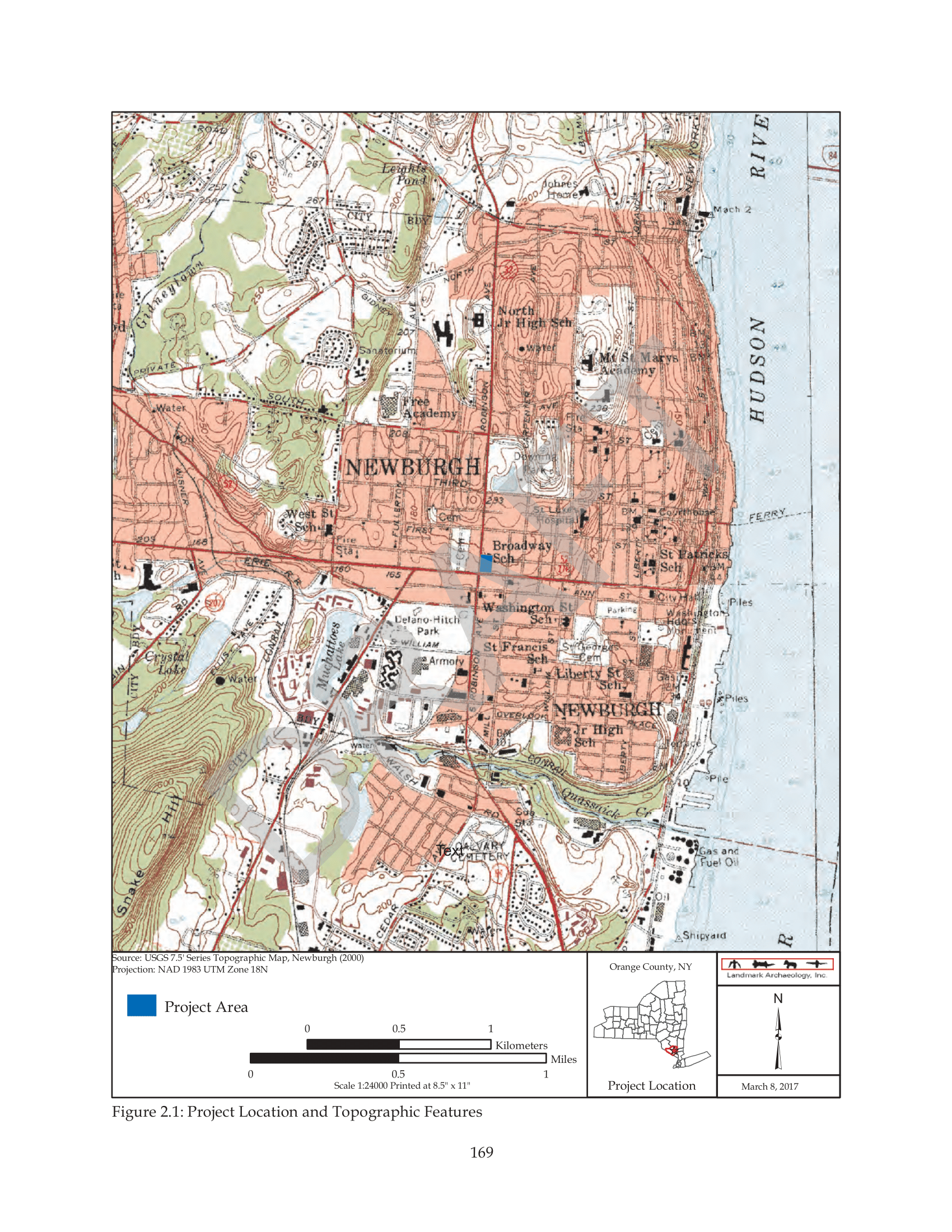

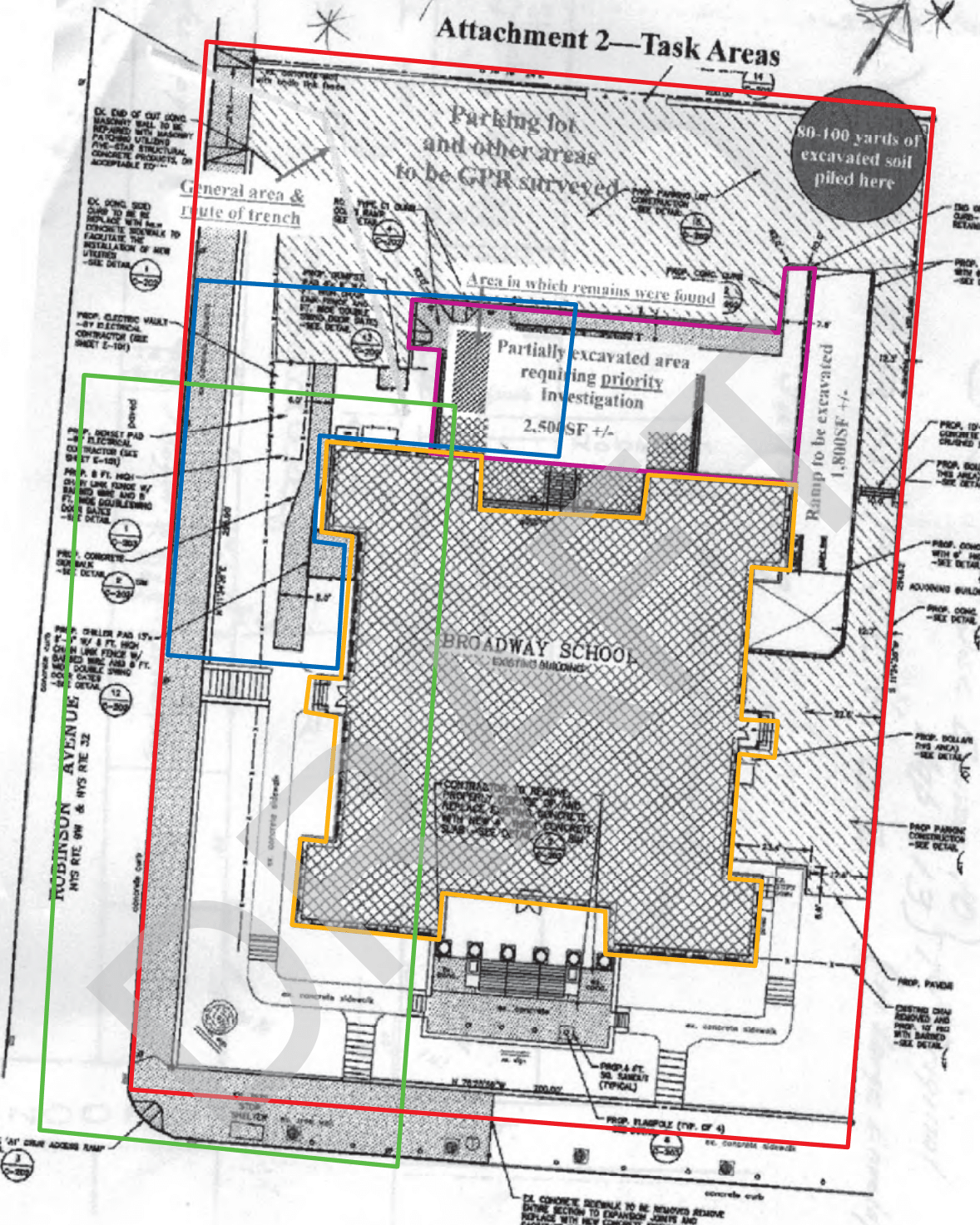
Diagrams and maps of project parcel, excavation locations, and burial sites, highlighting Burial Site 29


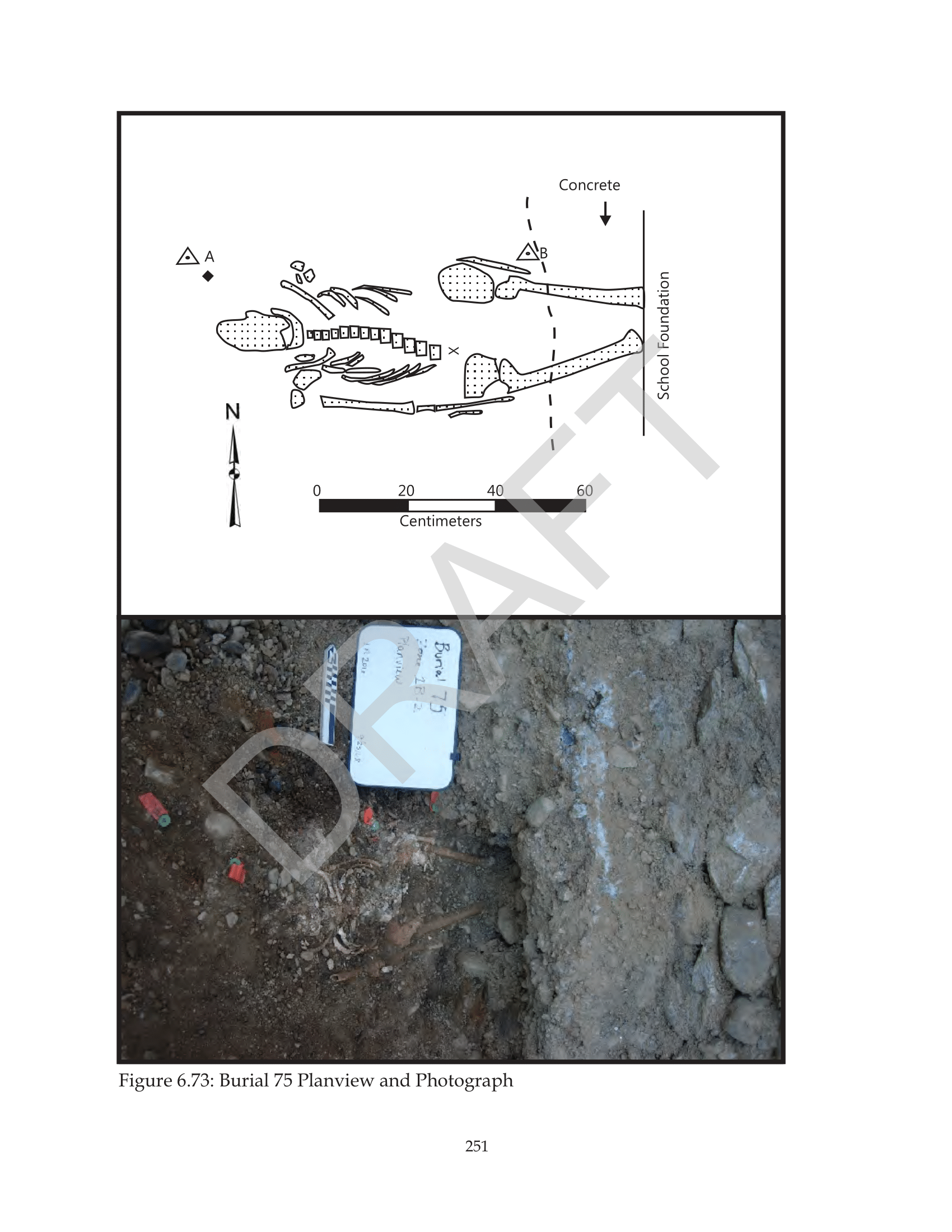


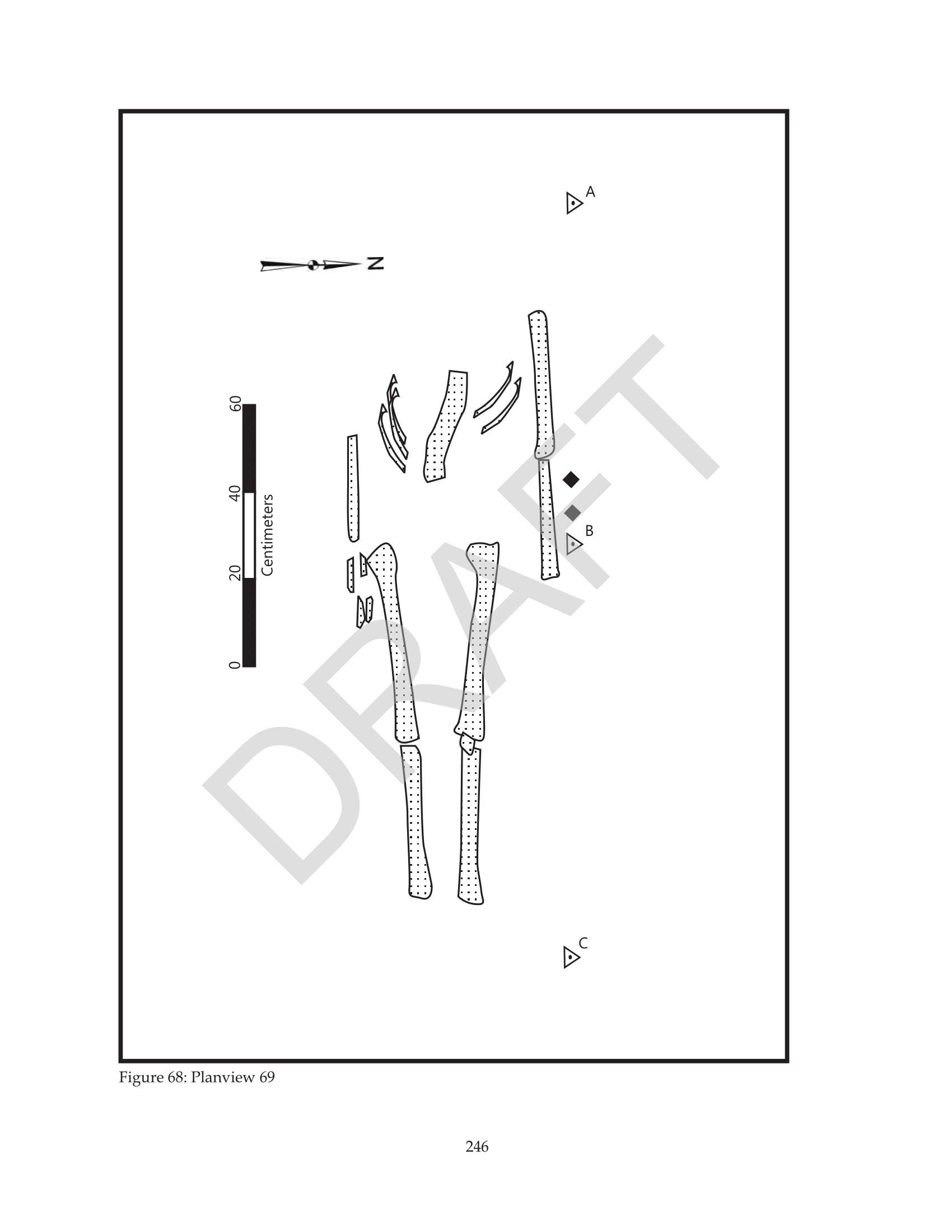

Burial site 29 and 15 burial sites not excavated due to existing within or below building foundations
Archaeological
Research Issues Discussion (pages 136-140)
This chapter presents a good case for which, as it is quoted, “it is through death that the social relationships of the living are defined and expressed.” Several details described in this chapter provided a deeper understanding of the relationship among those were laid to rest and those who had laid them to rest.
In this chapter, we learn that “all but one of the deceased were buried in coffins with the head to the west, and facing east. The exception is Burial 29, in which the deceased is facing west.” Who was laid in Burial 29? According to the Catholic Encyclopedia: “[I]f the corpse be that of a layman, the feet are to be turned towards the altar; if on the other hand the corpse be that of a priest, then the position is reversed, the head being towards the altar.”* We can speculate that among those Black residents of Newburgh who placed feet of their loved ones toward the rising sun of resurrection in observing Christian religious practices as they understood them, there was the one individual in Burial 29 who lived a life worthy of being recognized in that tradition as that of a spiritual leader.
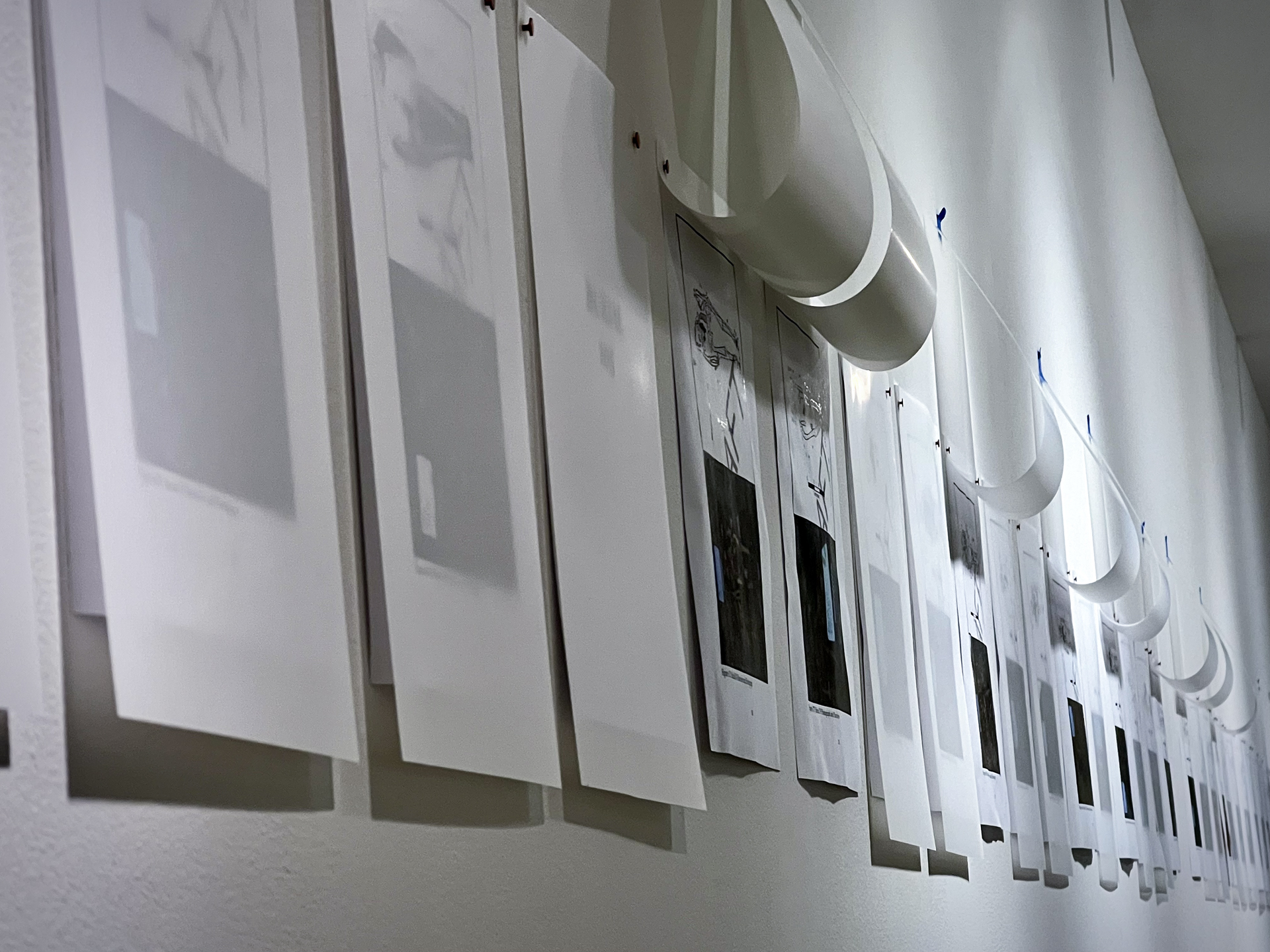
The Newburgh Colored Burial Ground Site Map (page 173) laid the framework for the initial gallery exhibition design for the project in Ann Street Gallery. The spatial organization of the 108 pages representing the 115 individuals (some in double burials) displayed contiguously so that each burial was represented next to the burial it once laid next to, was an effort to represent these individuals as close as possible to the original site as it was organized when it was once intact. This includes those burials existing within or below concrete building foundations. Spouses, parents and children, families who may have been laid to rest side by side, were together again in the Gallery installation as they await reburial.
*Thurston, Herbert. "Christian Burial." The Catholic Encyclopedia. Vol. 3. New York: Robert Appleton Company, 1908
This chapter presents a good case for which, as it is quoted, “it is through death that the social relationships of the living are defined and expressed.” Several details described in this chapter provided a deeper understanding of the relationship among those were laid to rest and those who had laid them to rest.
In this chapter, we learn that “all but one of the deceased were buried in coffins with the head to the west, and facing east. The exception is Burial 29, in which the deceased is facing west.” Who was laid in Burial 29? According to the Catholic Encyclopedia: “[I]f the corpse be that of a layman, the feet are to be turned towards the altar; if on the other hand the corpse be that of a priest, then the position is reversed, the head being towards the altar.”* We can speculate that among those Black residents of Newburgh who placed feet of their loved ones toward the rising sun of resurrection in observing Christian religious practices as they understood them, there was the one individual in Burial 29 who lived a life worthy of being recognized in that tradition as that of a spiritual leader.
The Newburgh Colored Burial Ground Site Map (page 173) laid the framework for the initial gallery exhibition design for the project in Ann Street Gallery. The spatial organization of the 108 pages representing the 115 individuals (some in double burials) displayed contiguously so that each burial was represented next to the burial it once laid next to, was an effort to represent these individuals as close as possible to the original site as it was organized when it was once intact. This includes those burials existing within or below concrete building foundations. Spouses, parents and children, families who may have been laid to rest side by side, were together again in the Gallery installation as they await reburial.
*Thurston, Herbert. "Christian Burial." The Catholic Encyclopedia. Vol. 3. New York: Robert Appleton Company, 1908
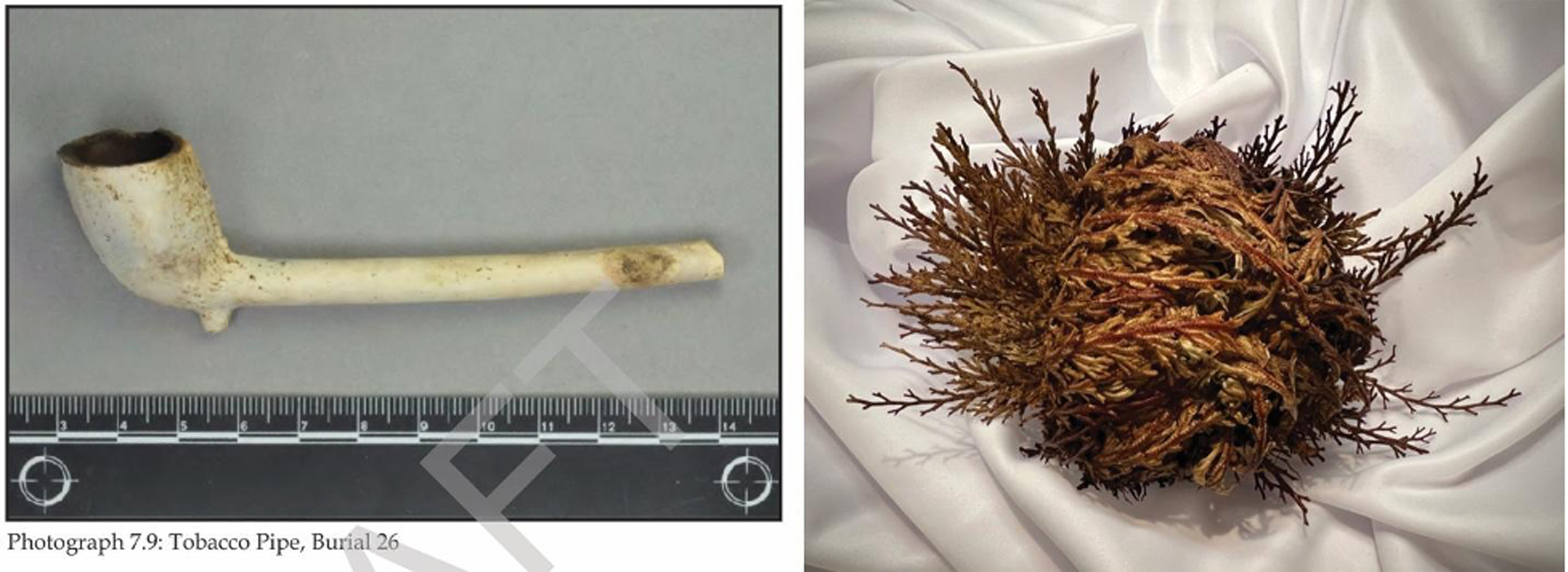
Items found in NCBG burial (page 291); Offering brought by FTGU participant (see more community offerings at the bottom of this page)
The questions in this chapter were also instrumental for
this project in designing the kind of interaction with the public that served
to conjure the stories of those buried in Newburgh Colored Burial Ground. The
reference to “conjuring bundles”, items found in burials thought to be of
significance to those individuals who were laid to rest, became a theme for
this project with which the public was invited to participate by offering items
that symbolically reflected this burial practice accompanied by “letters to the
Ancestors” penned by participants.


Examination Log Book cover, first page of index
Download full list PDF of scanned entries and transcriptions below
Download full list PDF of scanned entries and transcriptions below


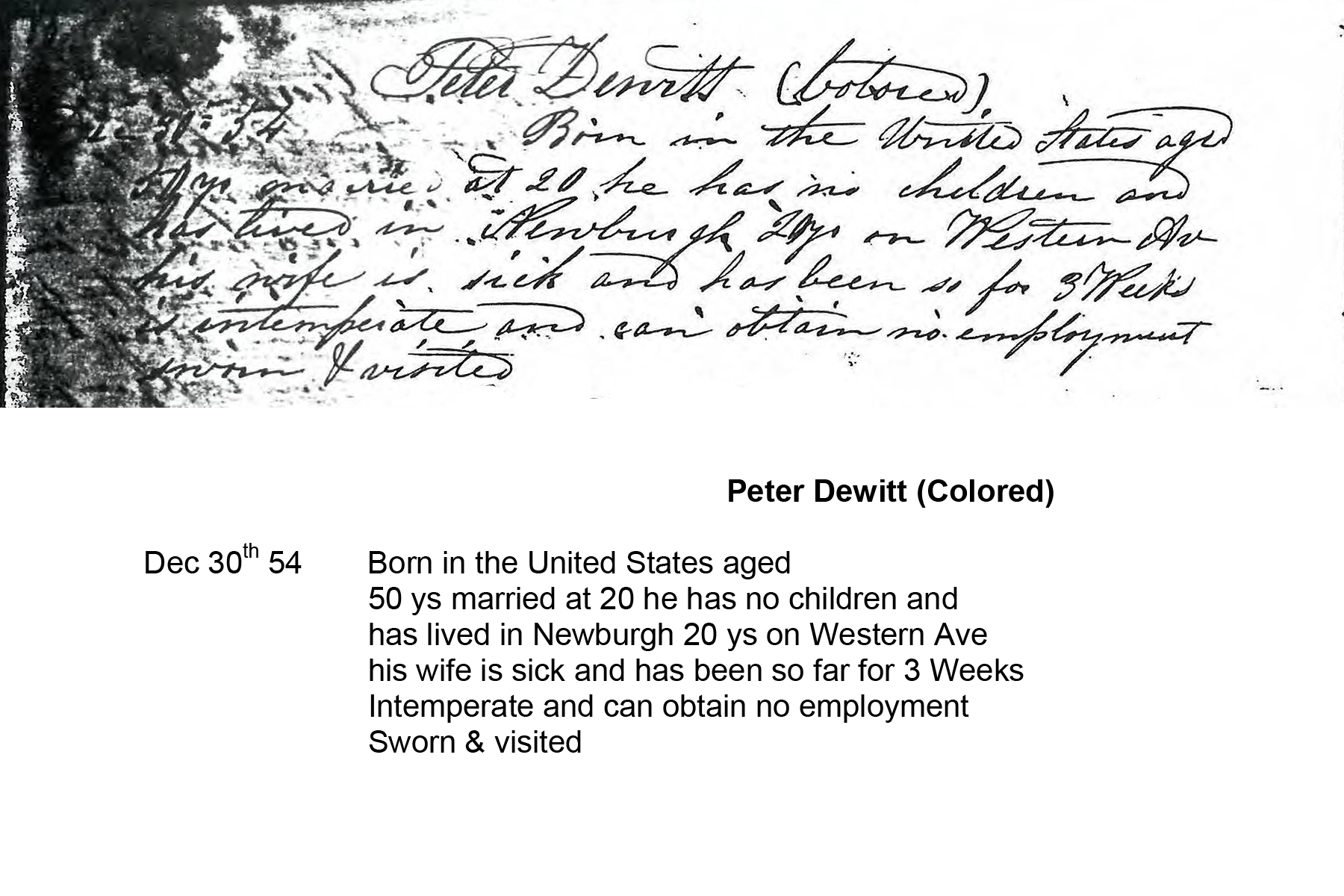


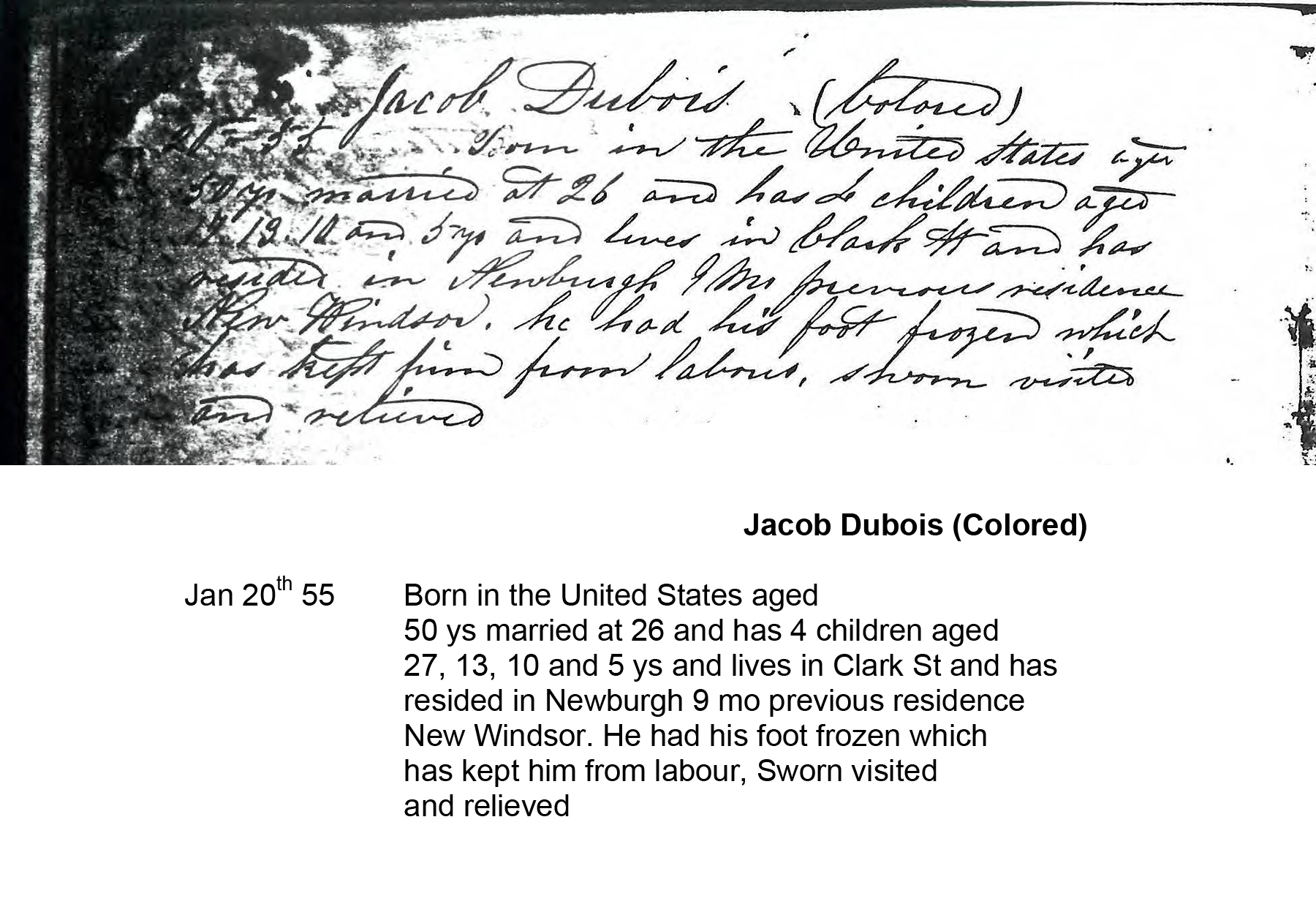


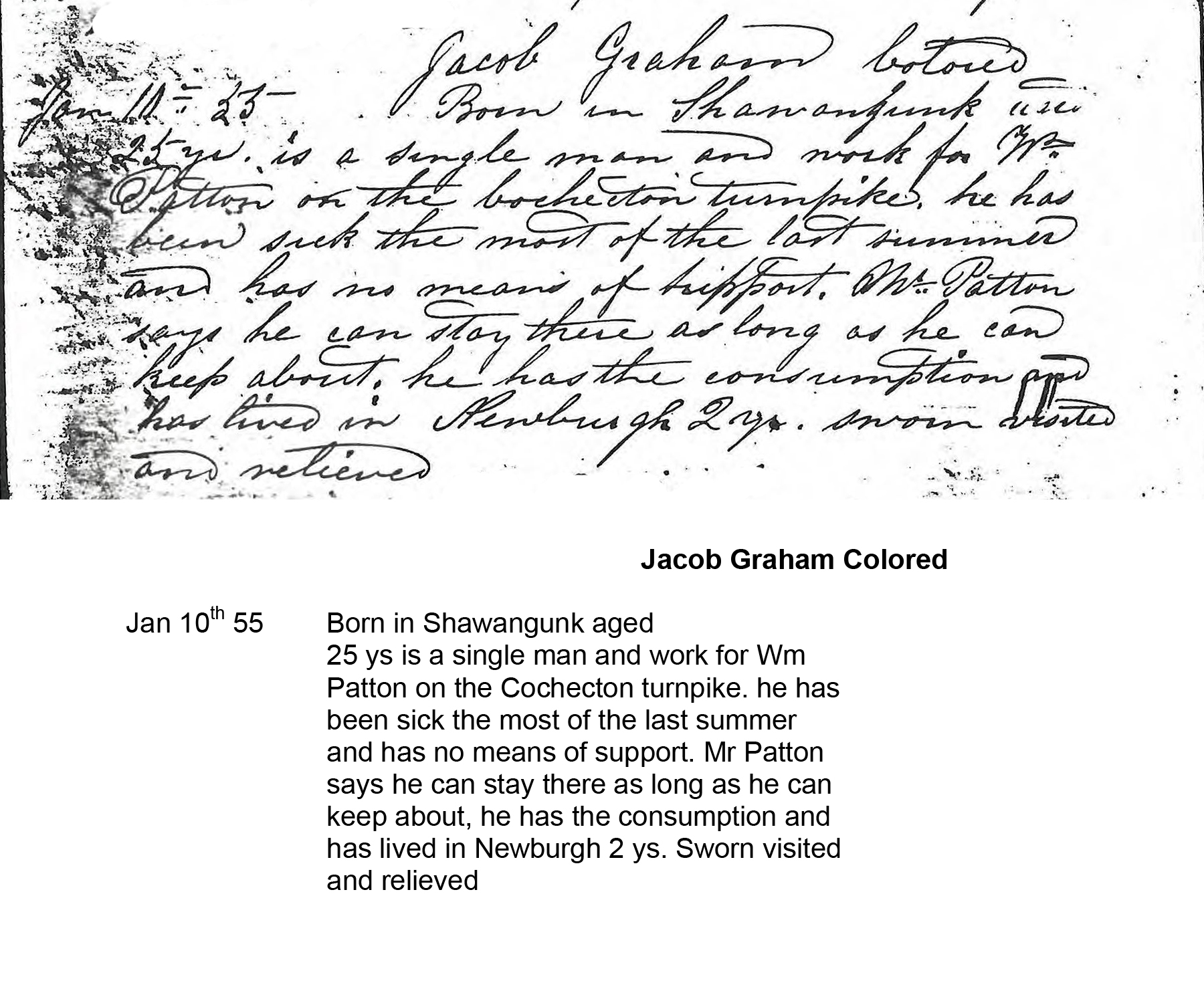


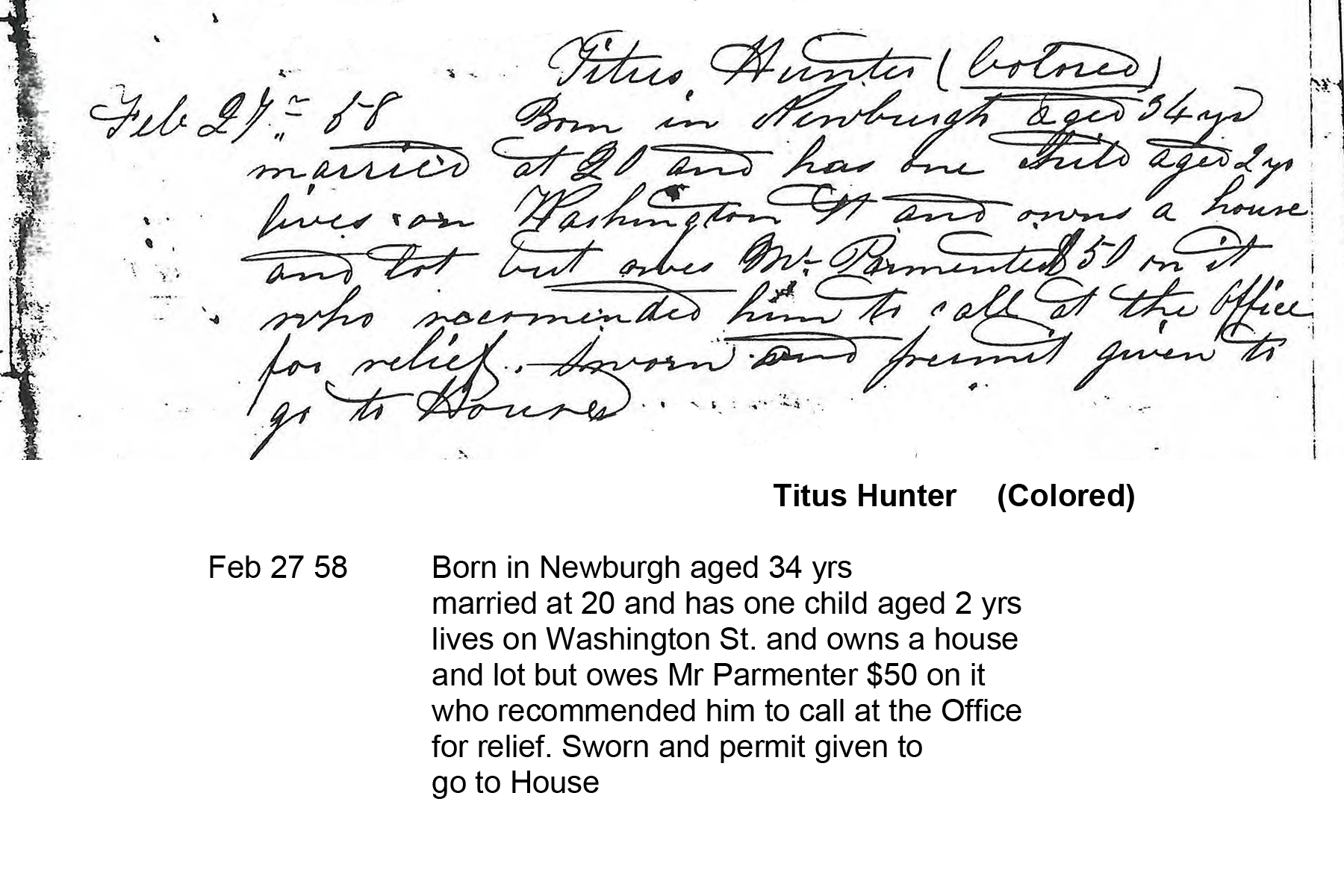


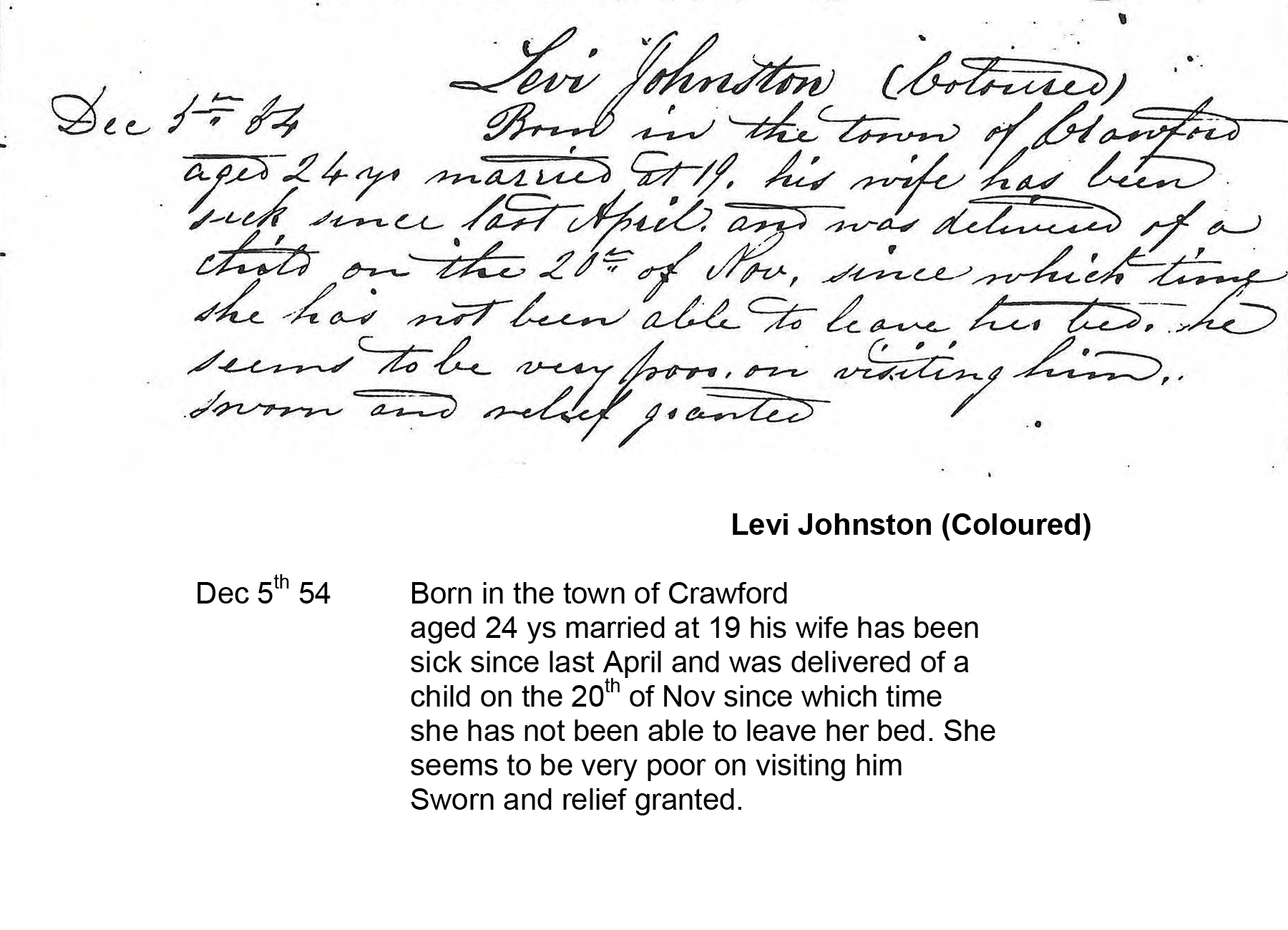


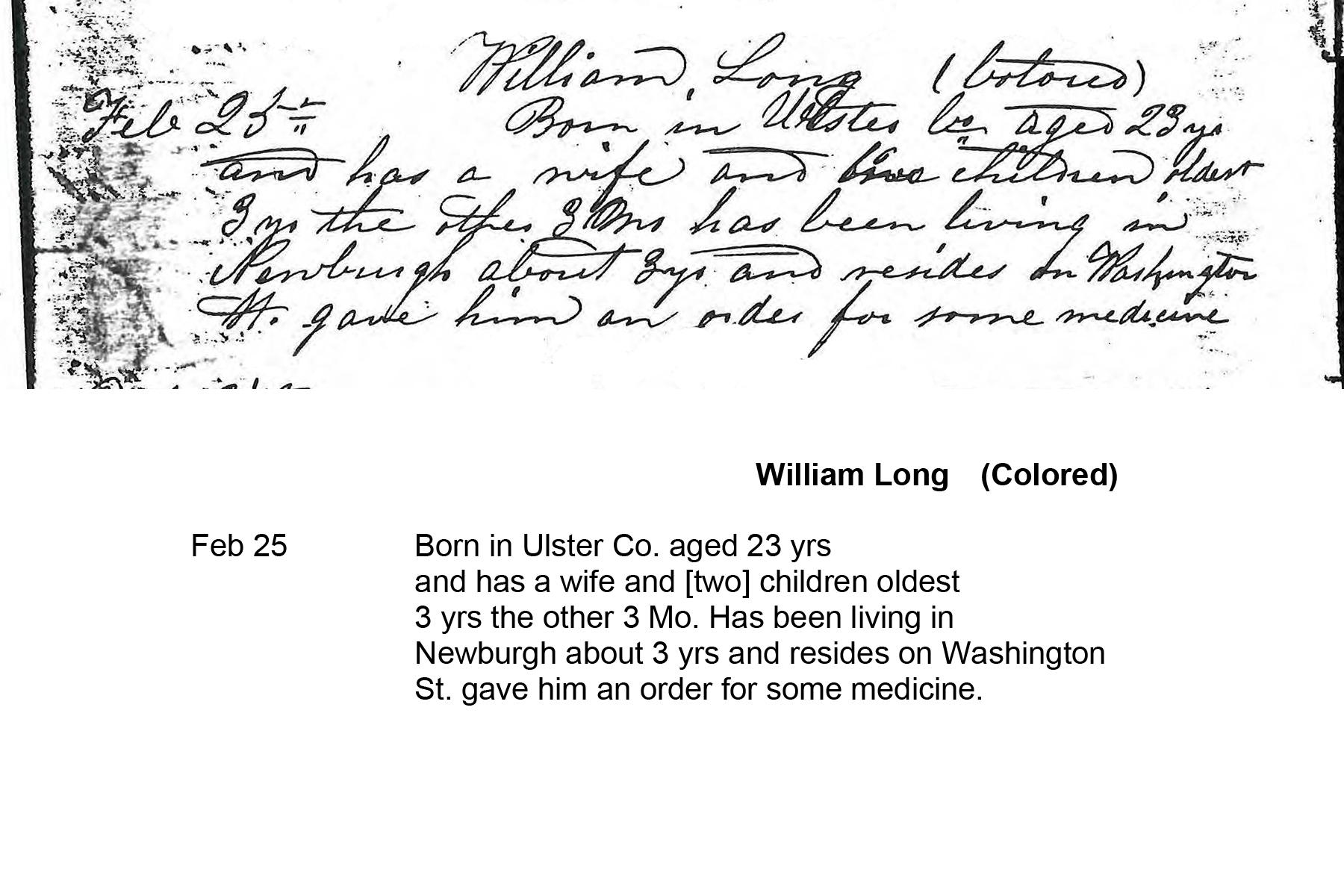
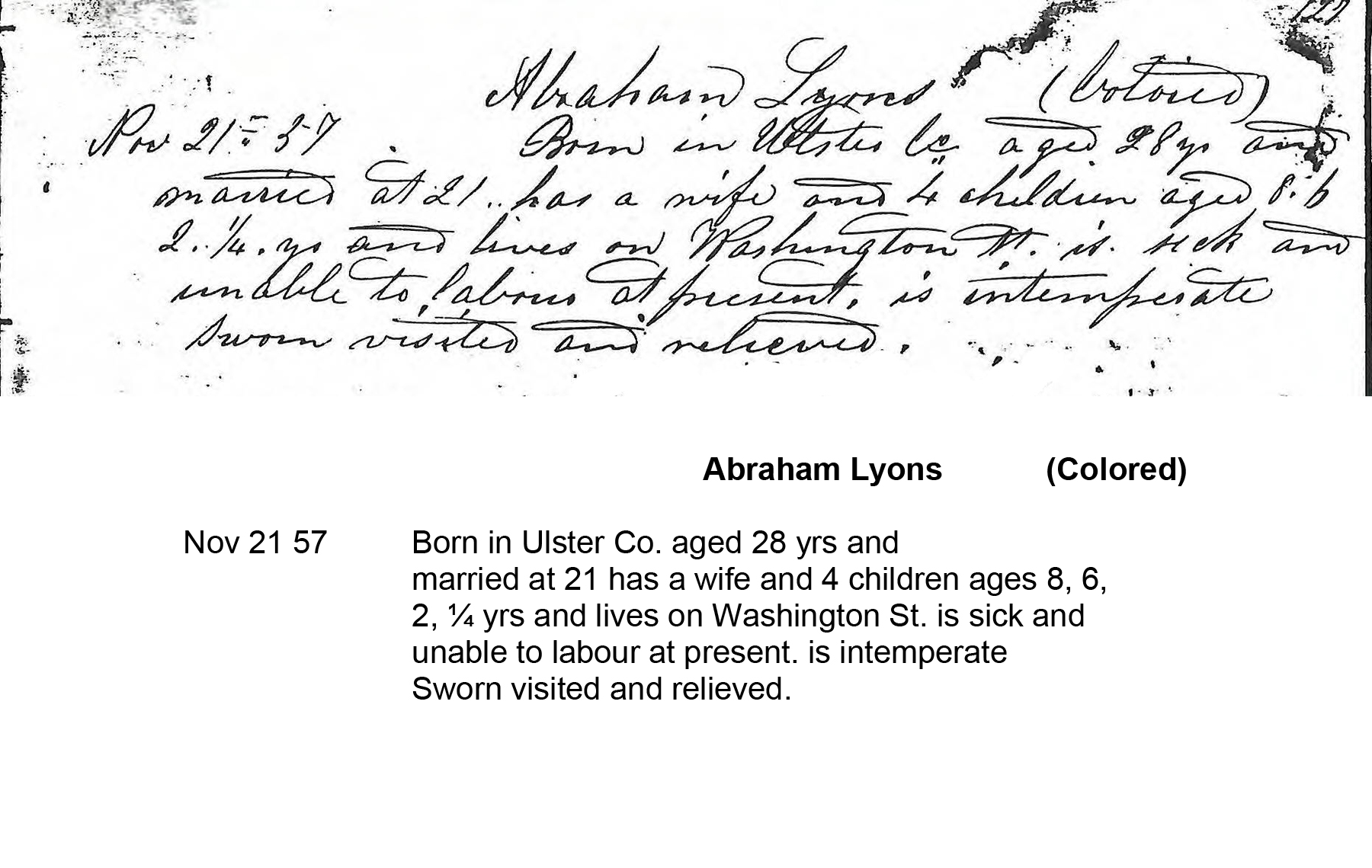


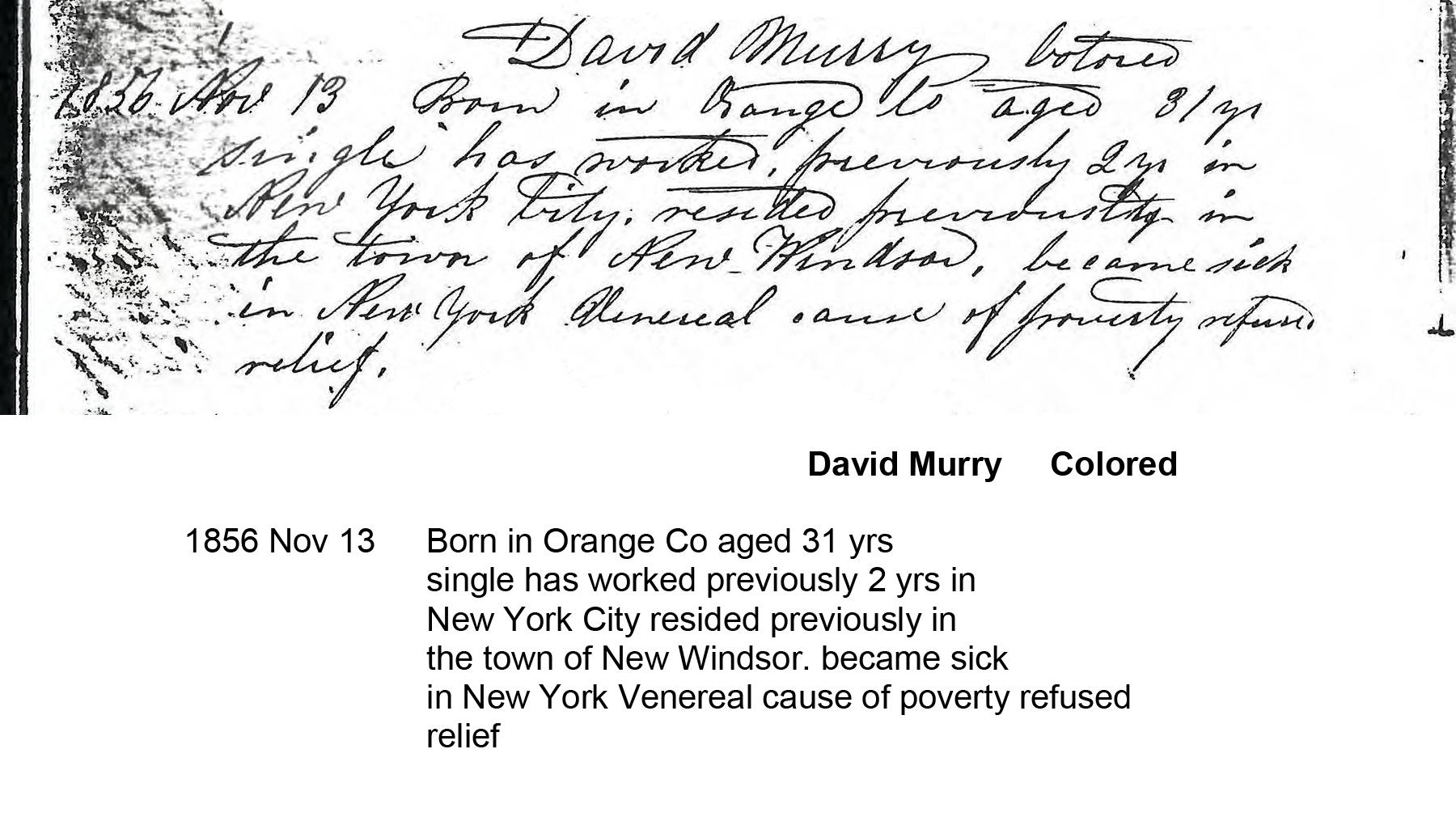
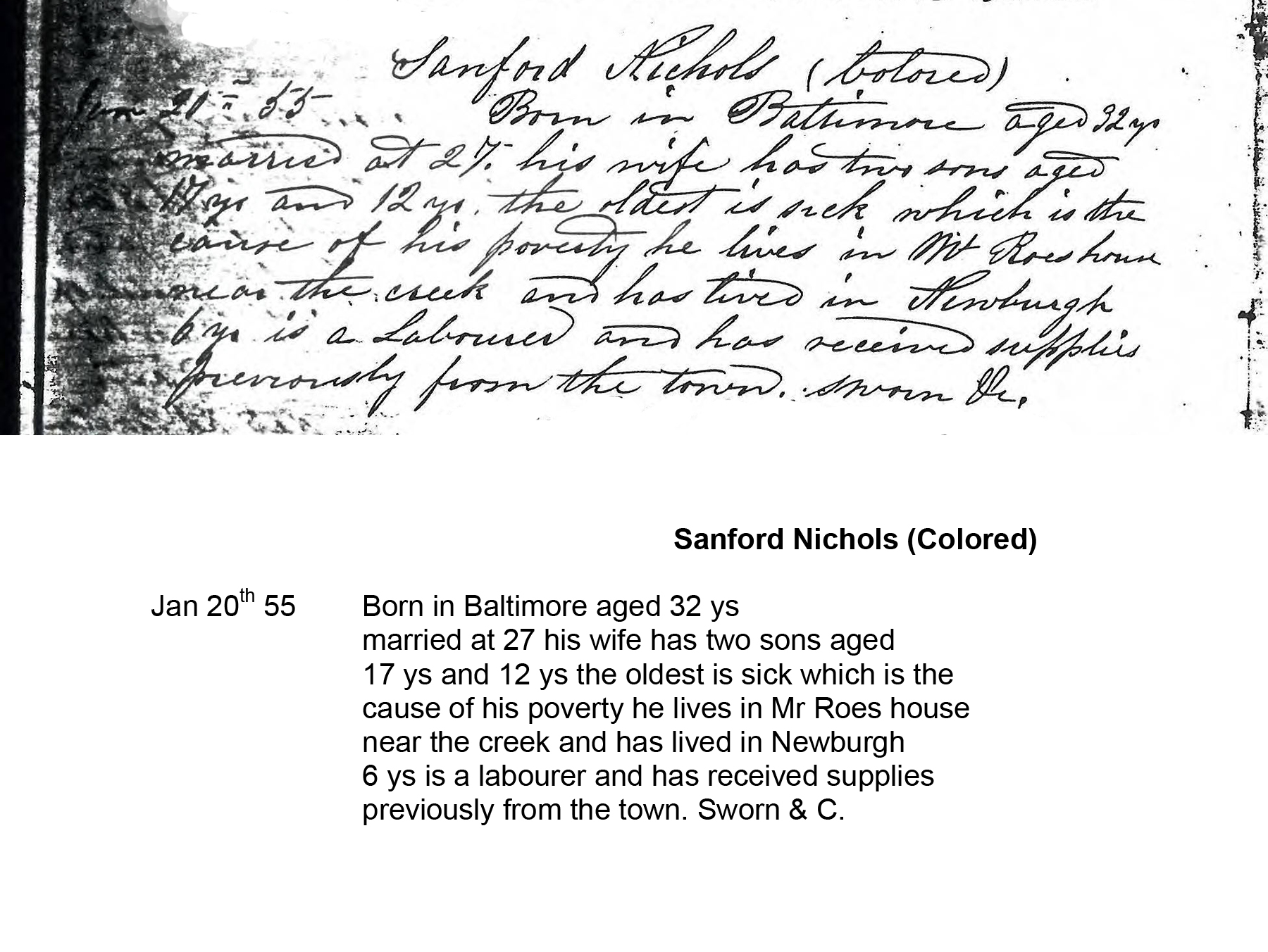
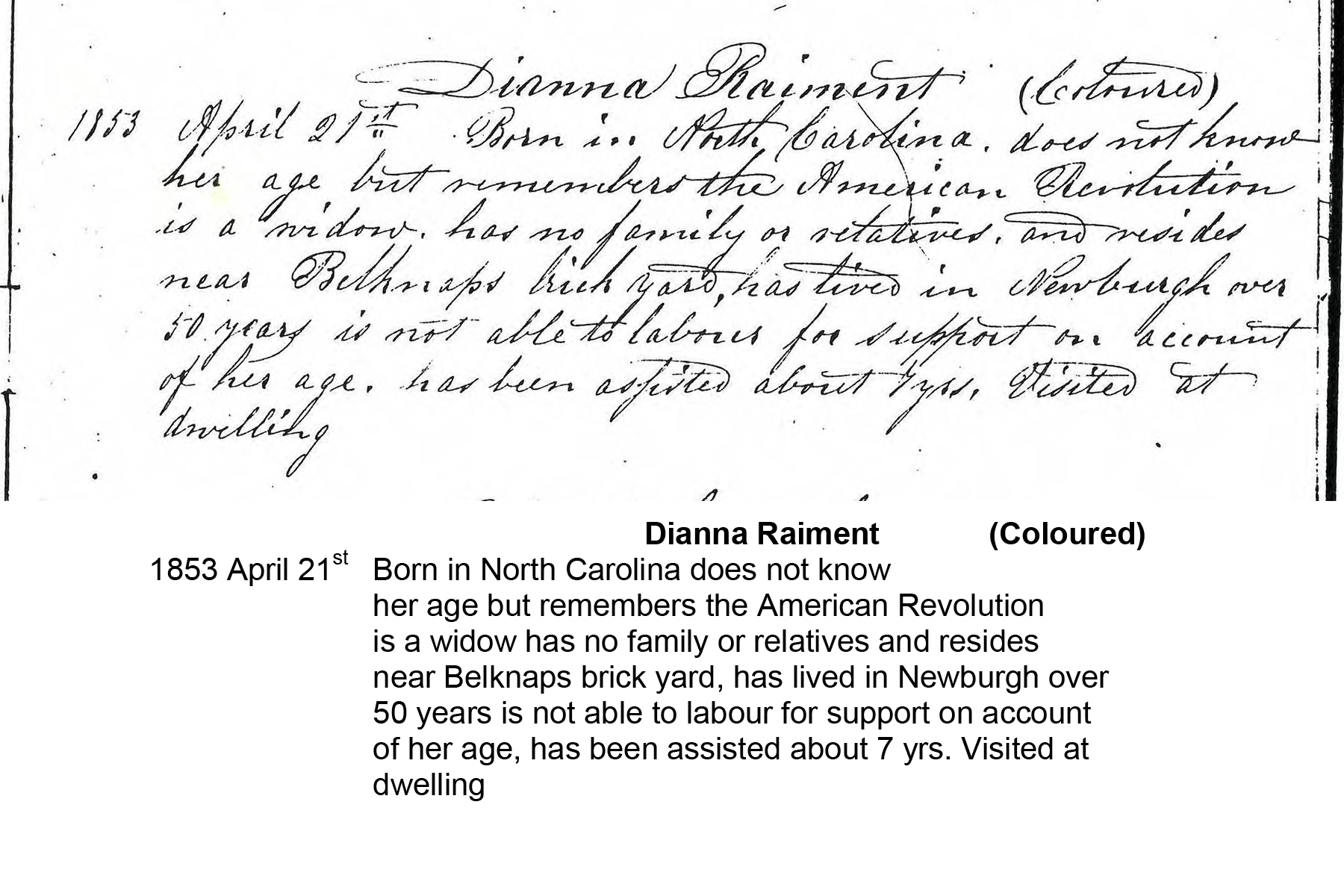


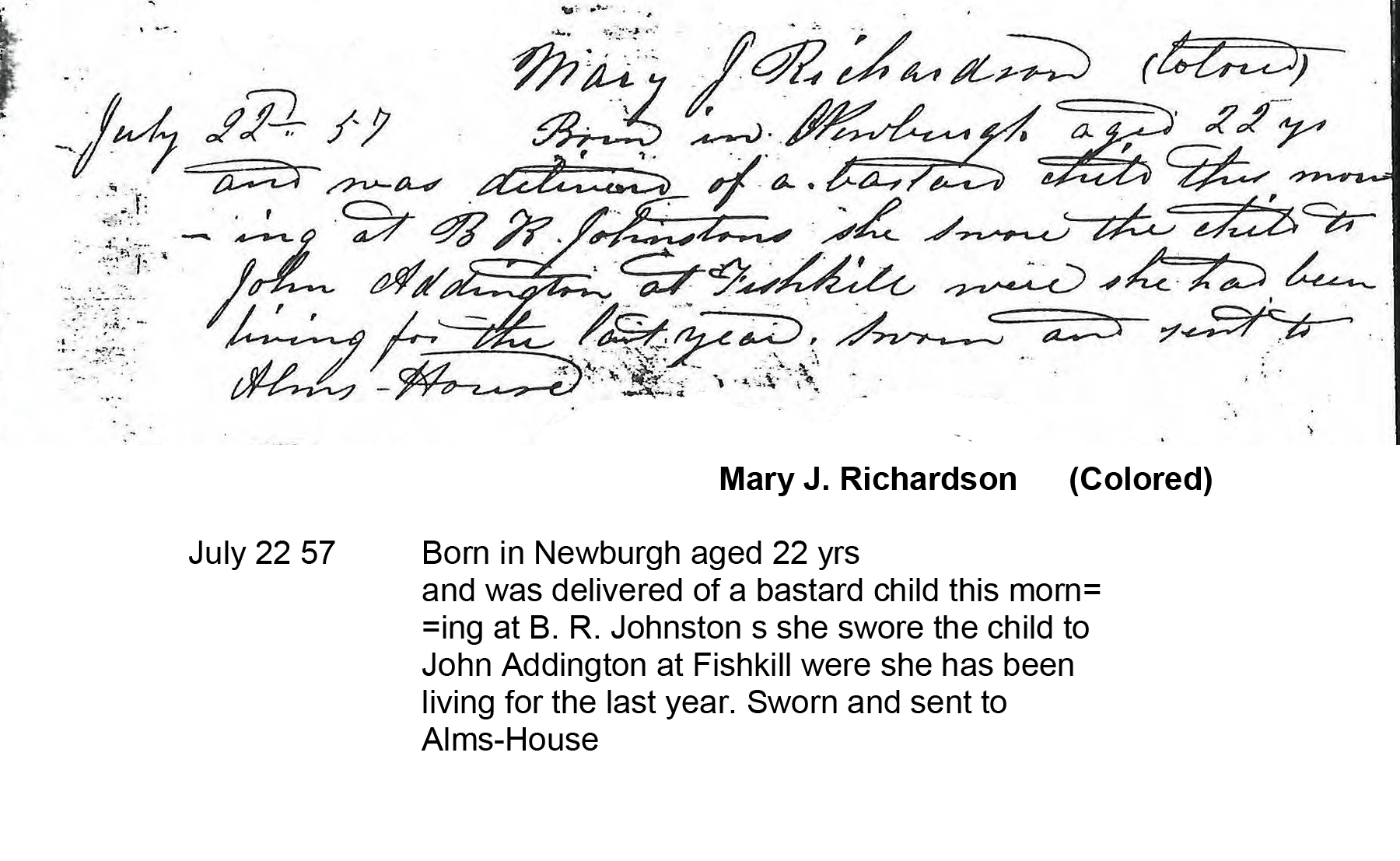


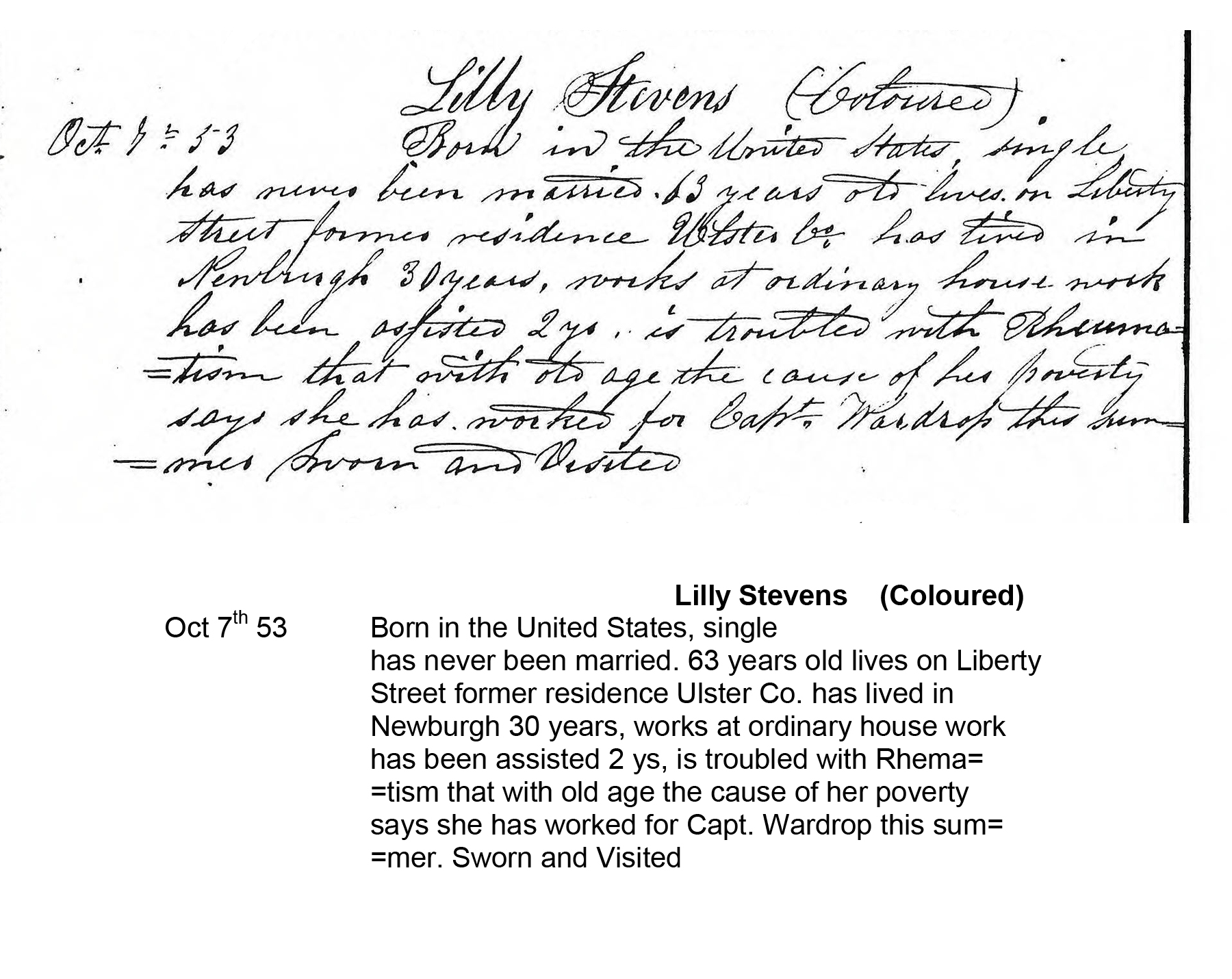
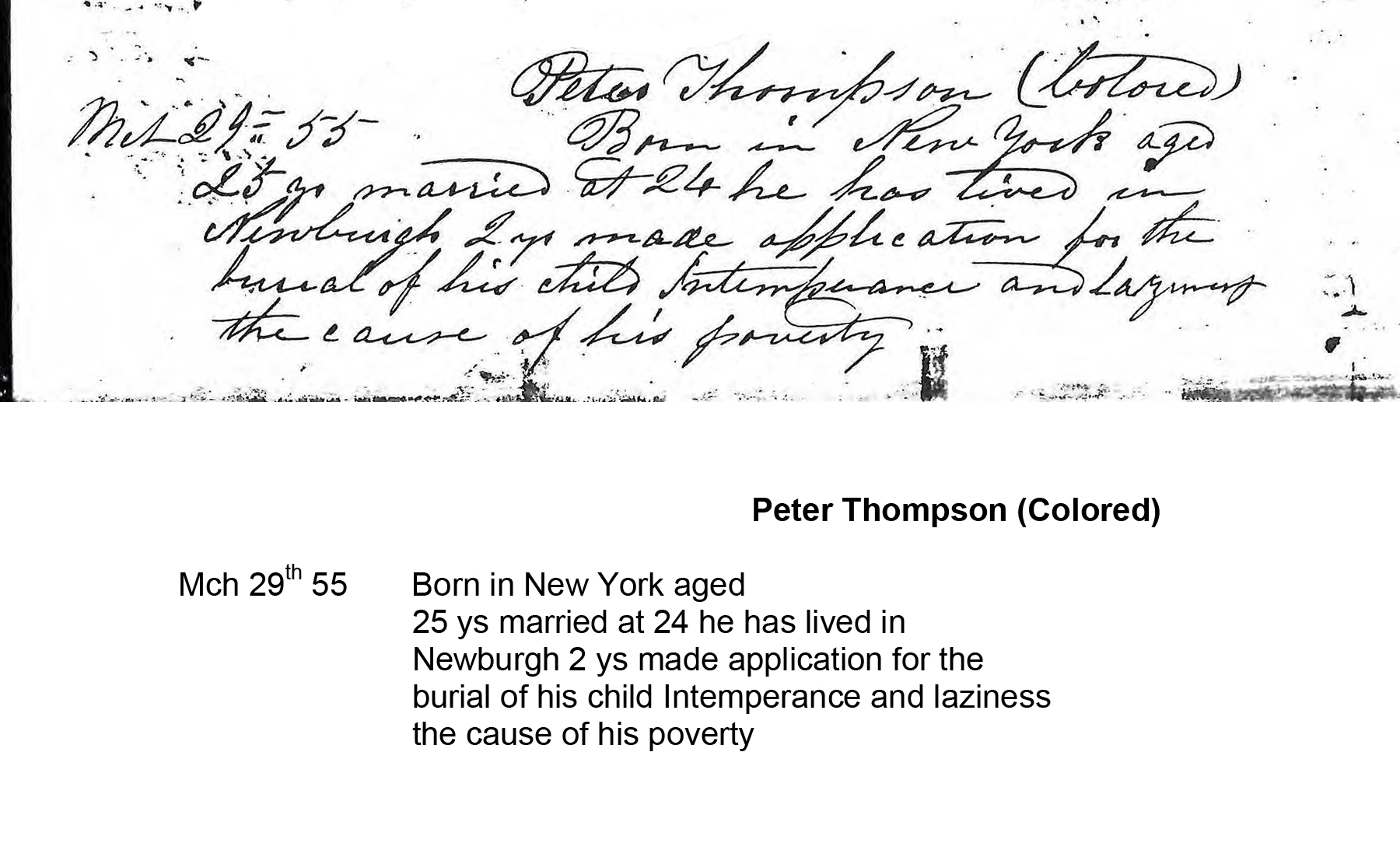
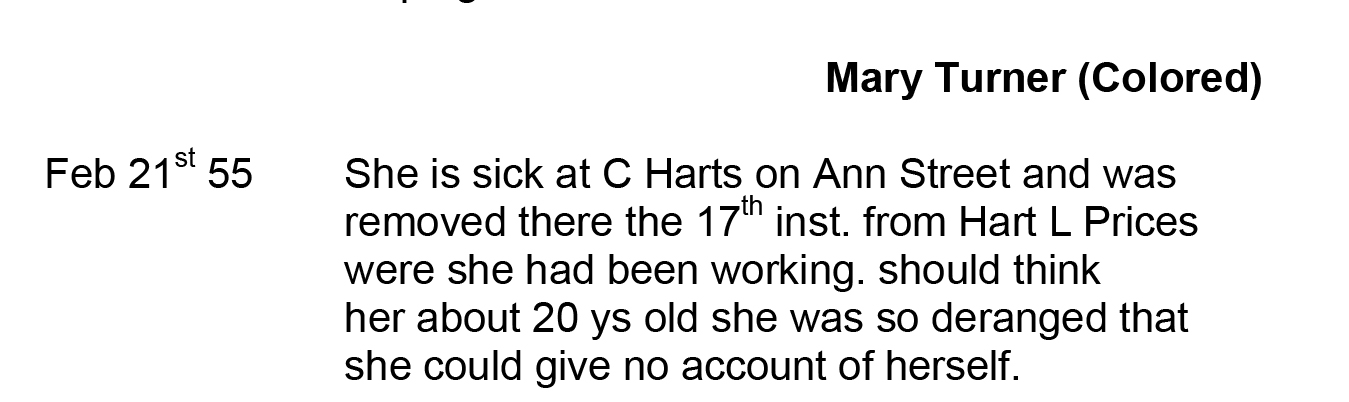




Note: Original entry for Mary Turner is missing


People associated with the Almshouse, specifically making an application for burial, and therefore can most closely be associated with the "Colored Burial Ground.
Newburgh Almshouse Commissioner’s
Examination Log Book,
1853-1858
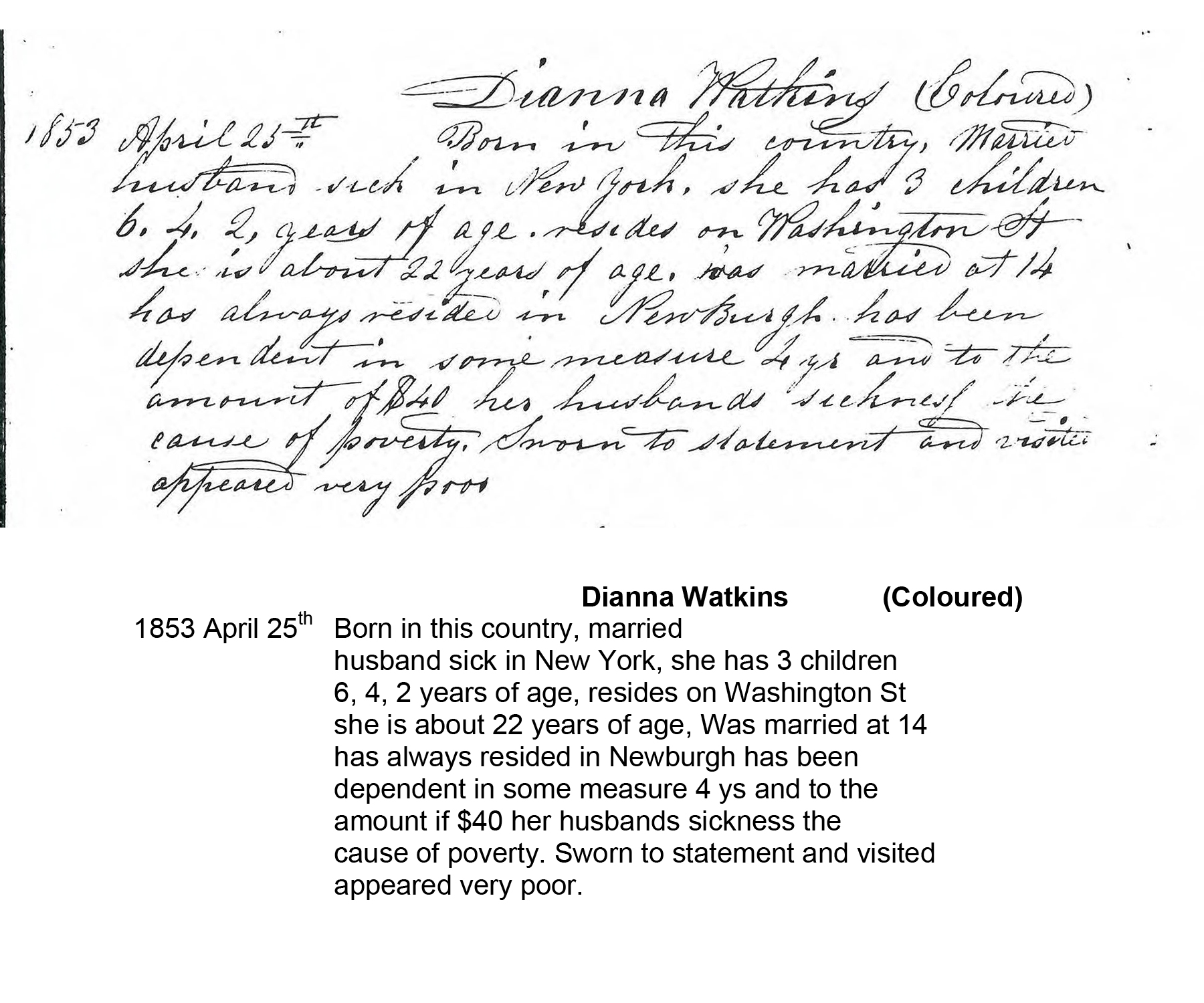
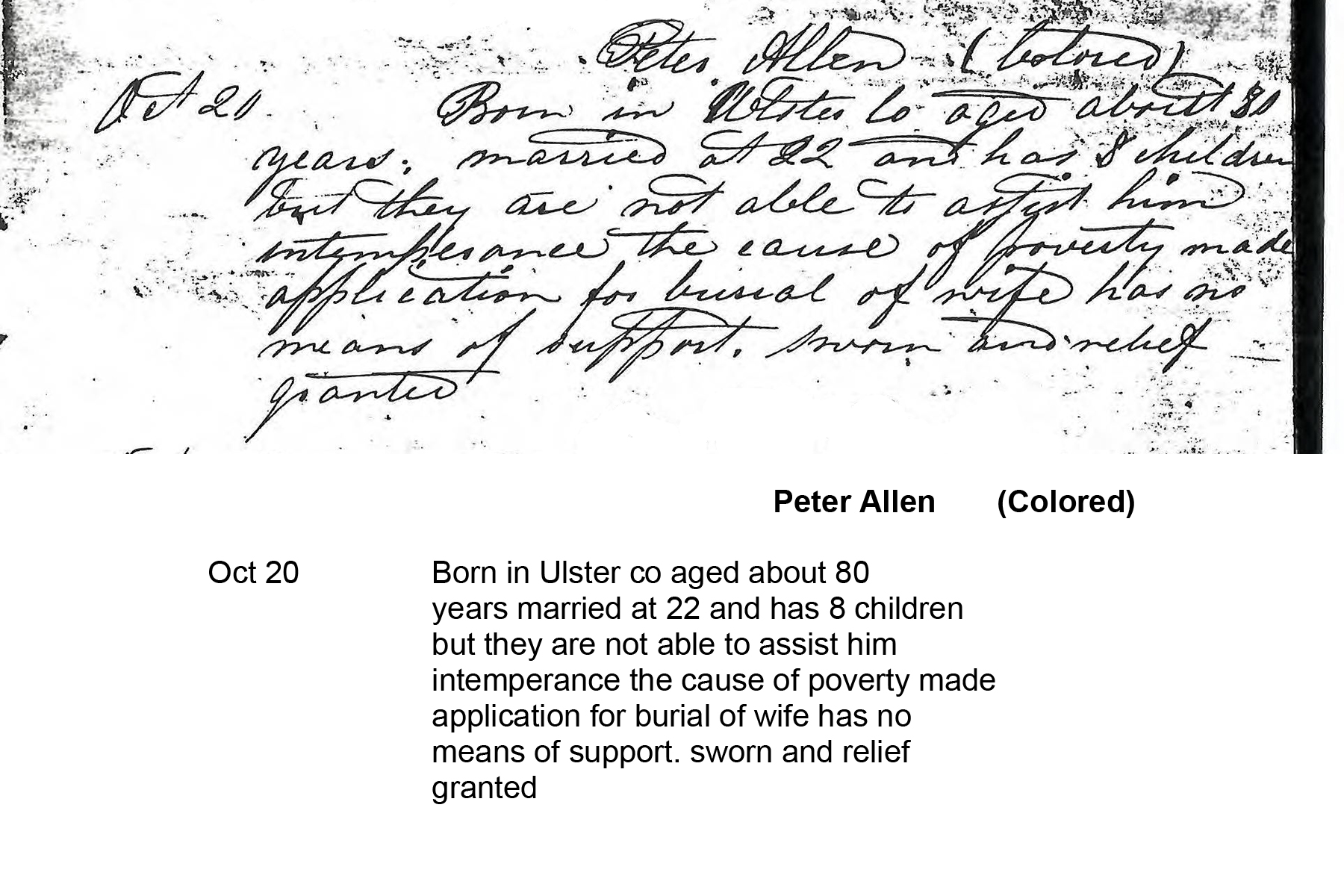
The Newburgh Almshouse Commissioner’s Examination Log Book is the closest thing there may be to a cemetery record for the Newburgh Colored Burial Ground. In it, we find the names of those women, children and men designated as “Colored” who presented themselves to the Almshouse (or Poorhouse) in Newburgh. According to Dr. Christina Ziegler-McPherson, historian and co-author of The Archaeology, Osteology, and History of the Newburgh Colored Burial Ground, “[i]t is probable that African Americans [in Newburgh] buried their dead first at the alms house cemetery, and then after 1831 on Western Avenue.” It is also probable that those names recorded in the Newburgh Almshouse Commissioner’s Examination Log Book could be associated with those (repeatedly) forgotten burials at Newburgh’s Colored Burial Ground.
The entries in Newburgh Almshouse Commissioner’s Examination Log Book read like miniature biographies of lives that closely intersected with the antebellum years bookended by New York’s Gradual Abolition of Slavery and the Civil War. Of particular note were the names of those this project referred to as “Elders” – those born before, and excluded from, New York’s Gradual Emancipation Act passed in 1799 who were expected to remain enslaved for the rest of their lives. Many of the names include those asking alms (relief) for the burial of their loved ones, or perhaps even themselves.


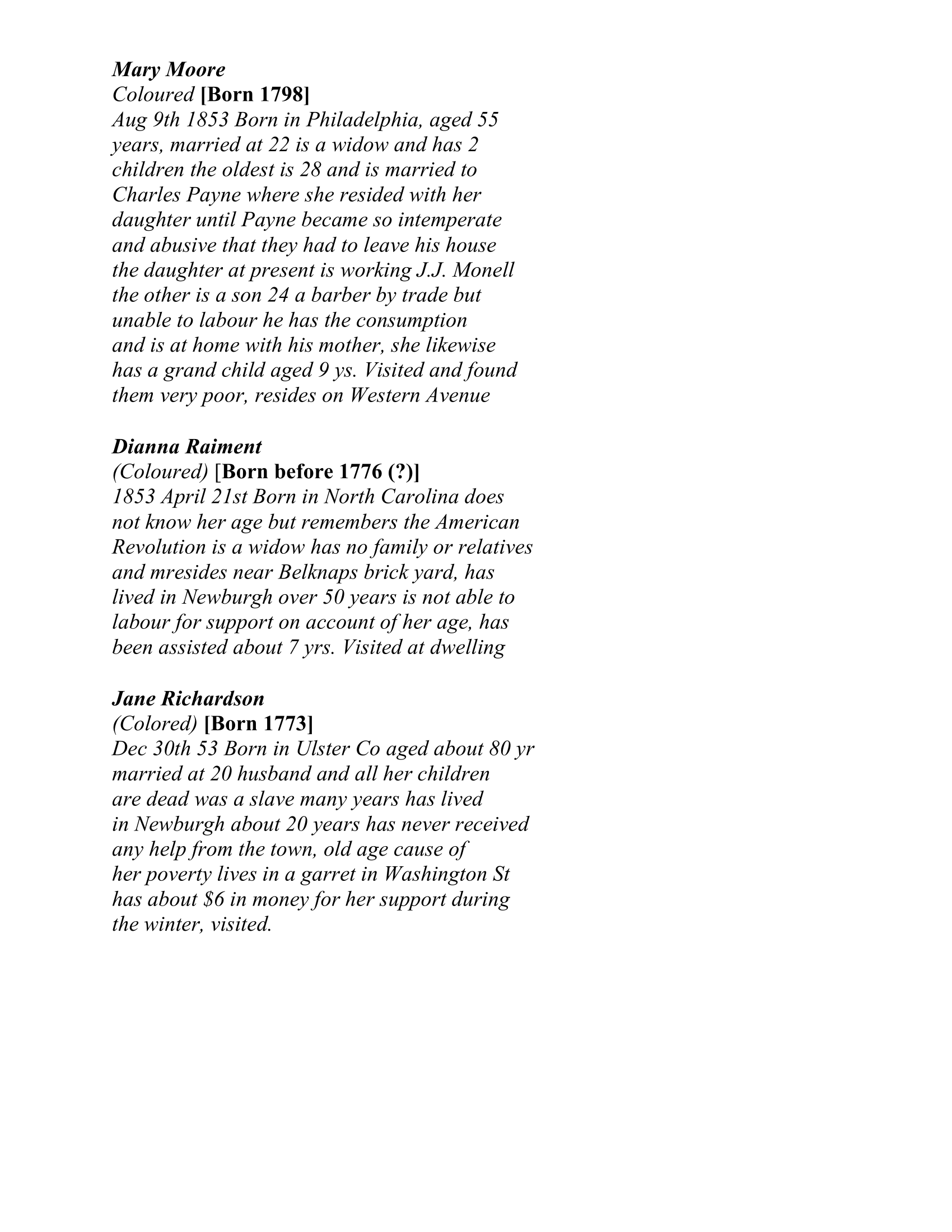
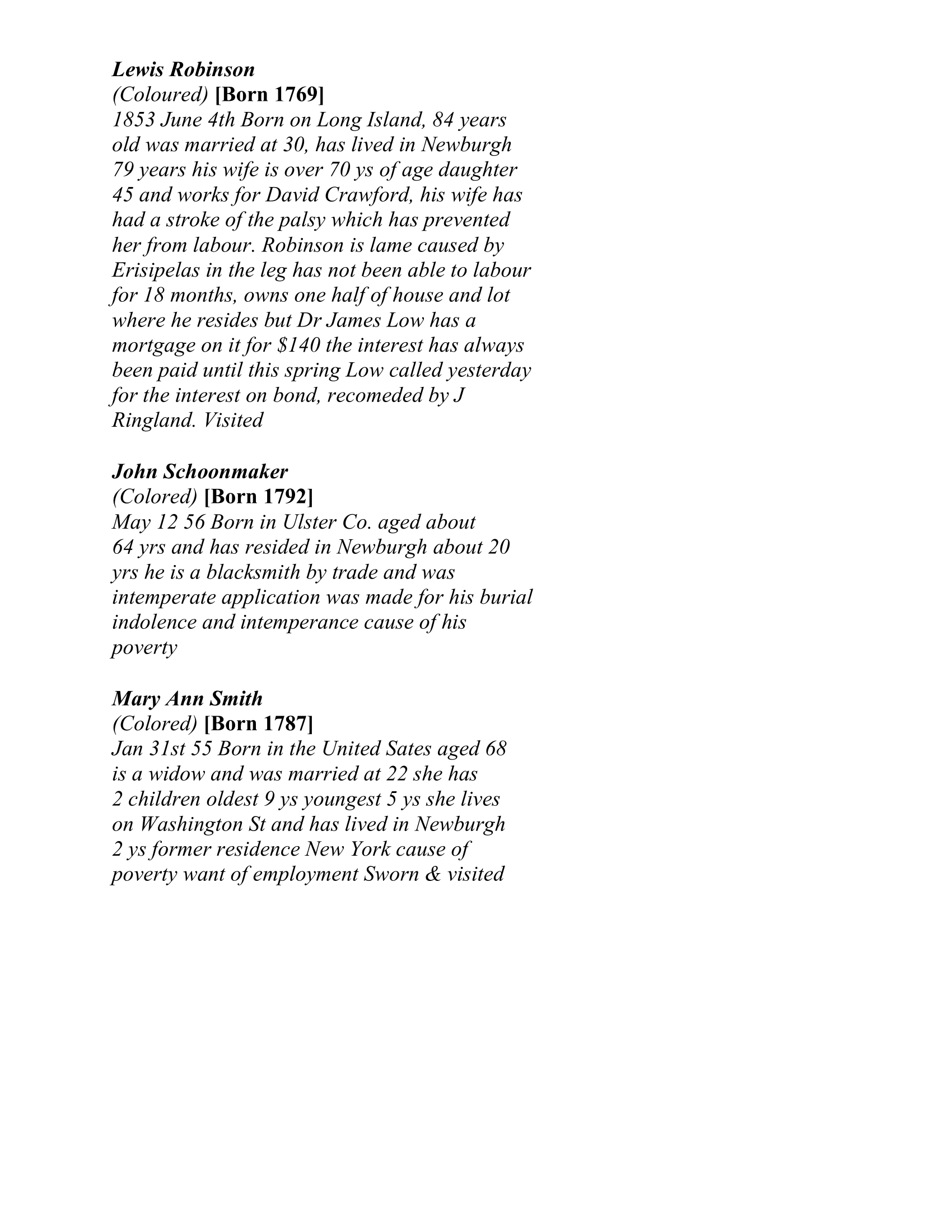

In memory of Newburgh Colored Burial Ground’s once-named, we
say their names:
Peter Allen, Born 1776
Phebe Colden, Born 1749
John Coon, Born 1788
Margaret Currington, Born 1794
Susan Decker, Born 1795
Elizabeth Dubois, Born 1798
Margaret Johnston, Born 1786
Frances Johnston, Born 1786
Mary Moore, Born 1798
Dianna Raiment, Born ca. 1776
Jane Richardson, Born 1773
Lewis Robinson, Born 1769
John Schoonmaker, Born 1792
Mary Ann Smith, Born 1787
Lilly Stevens, Born 1790
Margaret Tuthill, Born 1789
Hannah Van Vacken, Born 1790
Philis Watson, Born 1796
Phebe Colden, Born 1749
John Coon, Born 1788
Margaret Currington, Born 1794
Susan Decker, Born 1795
Elizabeth Dubois, Born 1798
Margaret Johnston, Born 1786
Frances Johnston, Born 1786
Mary Moore, Born 1798
Dianna Raiment, Born ca. 1776
Jane Richardson, Born 1773
Lewis Robinson, Born 1769
John Schoonmaker, Born 1792
Mary Ann Smith, Born 1787
Lilly Stevens, Born 1790
Margaret Tuthill, Born 1789
Hannah Van Vacken, Born 1790
Philis Watson, Born 1796


The names of Black Newburgh residents recorded in The
Newburgh Almshouse Commissioner’s Examination Log Book also serve as an
indictment of the violence in the form of charity that was exemplified by Newburgh’s
“Overseers of the Poor” who oversaw Newburgh’s Almshouse and presumably, the
Newburgh Colored Burial Ground. The Overseers of the Poor, in cooperation with the city’s law
enforcement, created the environment in which the lives of those recently
emancipated from, and immiserated by slavery could be criminalized for a
variety of “causes of poverty”, a selection of which are listed below:
Not over anxious to work
Has been in jail during the summer as a vagrant
Sent to the Alms House by the Police Justice as a vagrant
Laziness
Intemperance
Improvidence
Was a slave for many years
Can obtain no employment
Could give no cause for poverty
Has the reputation of being a very bad negro
Has been in jail for theft
Has no means of buying coal
Has no relatives able to assist him
Has no means of support
Has no relatives able to support her
Is a widow
Is very lame
Has given birth to two bastard children
All her children are dead
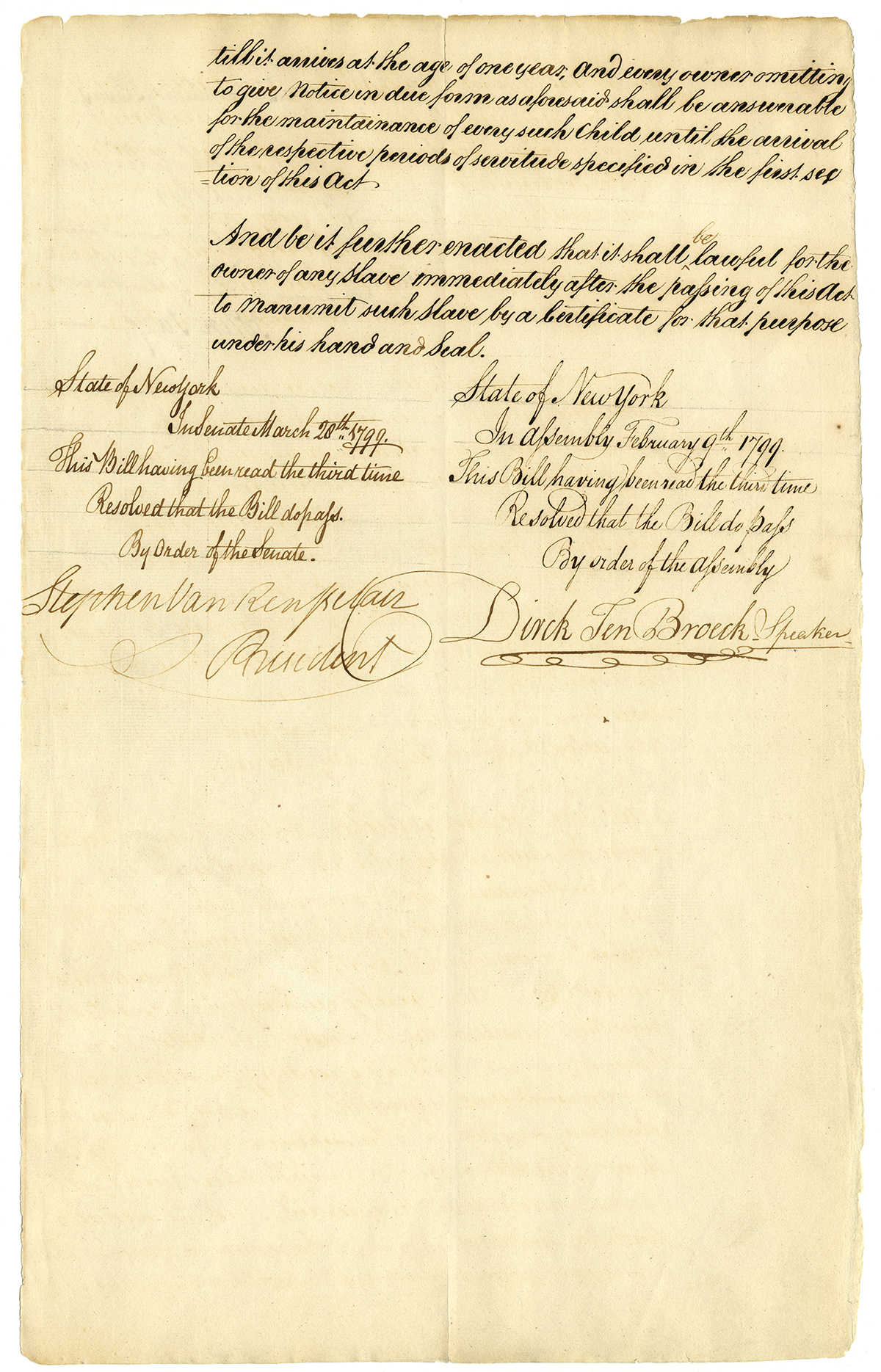
A Black New Yorker born after July 4, 1799 could “still be
the servant of the legal proprietor of his or her mother, until such servant if
male shall arrive at the age of twenty eight years, and if a female at the age
of twenty five years.”* However, the
children of the enslaved could be legally “abandoned” by their slave holders, a
process by which “every child abandoned […] shall be considered as paupers of
the respective Town or City […] and liable to be bound out by the Overseers of
the Poor.”* This Act convinced former slaveholders they weren’t losing what
they thought of as “property” but instead were benefitting from what Dr. David
Gellman calls “entitlement to servitude”**
The Newburgh Almshouse Commissioner’s Examination Log
Book painfully documents the reality of the gradual abolition of slavery in
New York, which, rather than abolishing, reinvented slavery by another name:
that of servitude. In this manner, reparations were paid not to the enslaved,
but rather those slave holders who could be incentivized to relinquish the most
unappealing aspects of slavery (care for the enslaved) and still benefit from
the profits of free (or otherwise heavily subsided) labor. With the cooperation
of towns’ and cities’ Almhouses, by 1827 New York had fully developed a
prototype for the type state-sponsored criminalization of Blackness and poverty
that the rest of the country would not see until the post-Reconstruction era
with the advent of convict-leasing programs. In this light, the emancipation of
Black New Yorkers appears less as a miracle and more like the status quo.
A sincere debt of gratitude is owed to Michael Van Der Voort, Montgomery’s SPOMA (Sacred Place of My Ancestors) Committee member who brought this important historical record into this project’s fold. Mr. Van Der Voort has compiled much a wealth of data from the Newburgh Almshouse Commissioner’s Examination Log Book.
* Act for the Gradual Abolition of Slavery, passed by the New York Legislature, March 29, 1799
** Emancipating New York, David Gellman
A sincere debt of gratitude is owed to Michael Van Der Voort, Montgomery’s SPOMA (Sacred Place of My Ancestors) Committee member who brought this important historical record into this project’s fold. Mr. Van Der Voort has compiled much a wealth of data from the Newburgh Almshouse Commissioner’s Examination Log Book.
* Act for the Gradual Abolition of Slavery, passed by the New York Legislature, March 29, 1799
** Emancipating New York, David Gellman
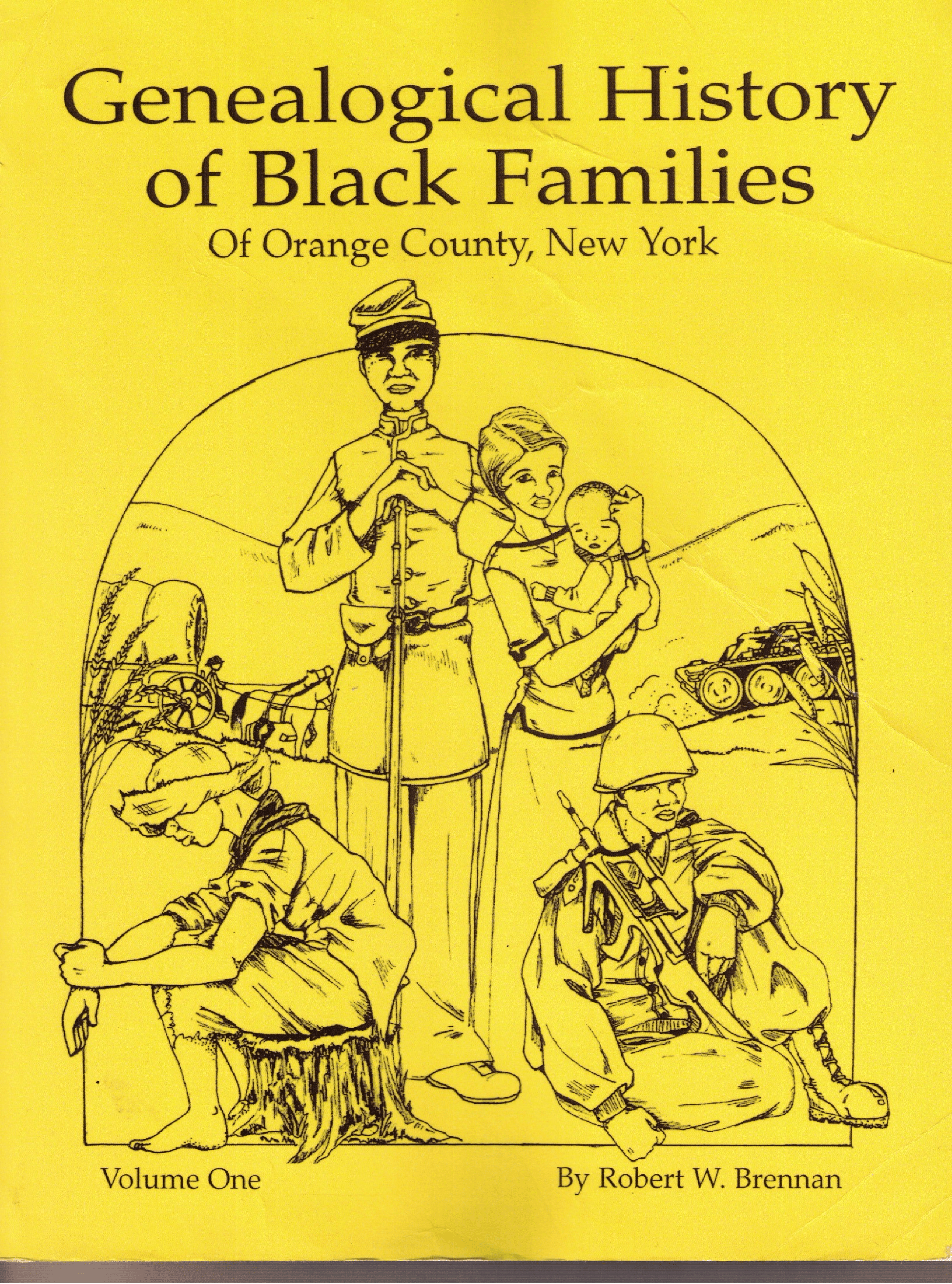


Genealogy of Black Families of Orange County, New York cover, acknowledgements, and introduction
Genealogy of Black Families
of Orange County, New York
by Robert W. Brennan, published by the
Orange County Genealogical Society
This voluminous work was compiled thanks to the labor of a sincerely devoted local genealogist who posed a seemingly simple question; “How does a young [B]lack person get started [in their research]?" when considering “the scarcity of material on local [B]lack history here in Orange County.” Compiling and cross-referencing such primary source materials as local, State and Federal census records, marriages, obituaries, and Civil War records, Robert Brennan’s stated goal “to provide a starting point for a person of African-American heritage […] in their research” has resulted in a database of over 2,200 individuals; a significant testament to this goal’s achievement.
Genealogy of Black Families of Orange County served as a valuable resource in researching several names of individuals who may have also been buried in Newburgh Colored Burial Ground, most notably, members of the Dolson family.

William King/Dolson Jr., born 1842
Under “Descendants of William Dolson” (page 24) Genealogy
of Black Families of Orange County lists the first generation of children
born to William Dolson and Maria King who also appear in the Newburgh
Almshouse Commissioner’s Examination Log Book, along with two of their
children, William Dolson Jr. and Albert Dolson.


When cross-referencing the sources above, both William
Dolson Jr. and William King are listed as the son of William Dolson and Maria
King. Since according to these records, they also share the same year of birth,
it can be assumed that William Dolson Jr. and William King are the same person.
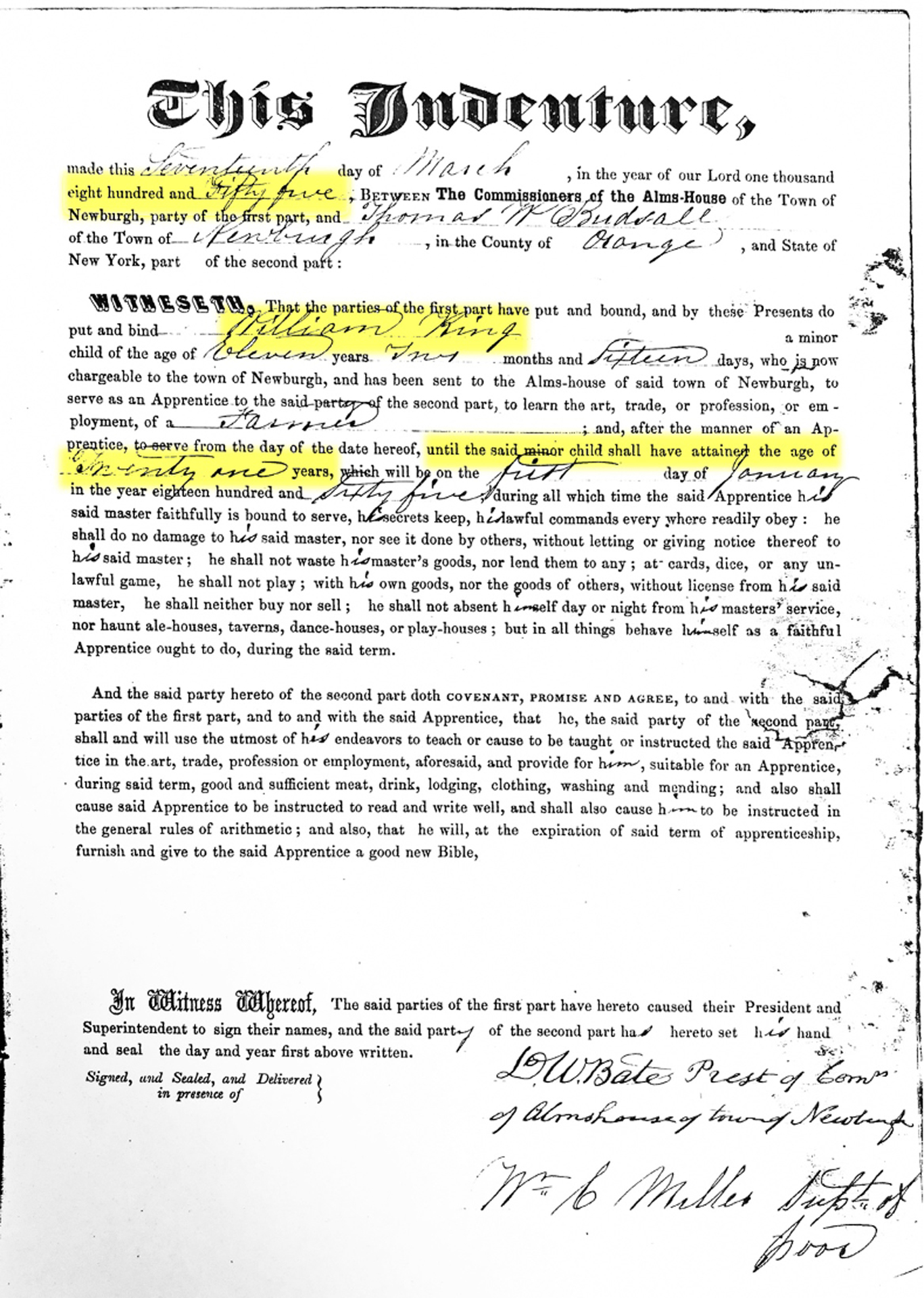
After having been charged In 1853 as vagrant at the age of 9 and taken to the
Almshouse, later, in 1855, William King shows up in an indenture to a Thomas
Budsall for a period of “apprenticeship” as a farmer for 10 years, or until
1865, when he would have turned 21.
Instead, we know that William Dolson Jr. released himself from his indenture to Thomas Budsall at the age of 19, two years early, to enlist in the 14th Rhode Island Regiment in 1863.
Instead, we know that William Dolson Jr. released himself from his indenture to Thomas Budsall at the age of 19, two years early, to enlist in the 14th Rhode Island Regiment in 1863.
Albert Dolson, b. July 04, 1847, Newburgh, NY; d.
September 27, 1934, Washingtonville, NY

While it is not yet known how many of the seven children of
William Dolson and Maria King survived childhood, there is a wealth of
information about their fifth child, Albert Dolson, thanks to Genealogy of
Black Families of Orange County. Sadly, we know that in 1858, at the
age of 10, Albert Dolson suffered the
same fate as his brother William and was sent to the Almshouse after his
mother, Maria King, had died. Had she been in the care of the Almshouse in her
remaining years, she (and any of her children who did not reach adulthood) can
be expected to have been buried in Newburgh’s Colored Burial Ground.

Genealogy of Black Families of Orange County includes
an obituary for Albert Dolson from the Orange County Newspaper from September
1934 which describes Albert Dolson, who lived to the ripe age of 92 years, as
“formerly employed by the Cemetery Association in Washingtonville[.]” Having
witnessed the death, and perhaps the burial, of his mother at such a young age,
one can only wonder whether it had an influence on Albert Dolson’s occupation of
honorably laying his community’s departed loved ones to rest.
The legacy of William Dolson and Maria King are the generations of Dolsons whose names still fill attendance sheets at Newburgh’s City School District to this day. Genealogy of Black Families of Orange County is an excellent resource that has proven invaluable in providing a link to the descendant community that can be associated with Newburgh’s Colored Burial Ground.
Genealogy of Black Families of Orange County, New York, by Robert W. Brennan, published by the Orange County Genealogical Society**, who generously allowed selected portions to be reproduced here.
**Orange County Genealogical Society, 101 Main St. Goshen, New York
The legacy of William Dolson and Maria King are the generations of Dolsons whose names still fill attendance sheets at Newburgh’s City School District to this day. Genealogy of Black Families of Orange County is an excellent resource that has proven invaluable in providing a link to the descendant community that can be associated with Newburgh’s Colored Burial Ground.
Genealogy of Black Families of Orange County, New York, by Robert W. Brennan, published by the Orange County Genealogical Society**, who generously allowed selected portions to be reproduced here.
**Orange County Genealogical Society, 101 Main St. Goshen, New York
From the Ground UP is made possible with support from:
![]()
![]()